


More news on this day
Dubai is confronting renewed travel disruption as a cluster of cancellations by Flydubai, Saudia and other regional carriers affects at least five flights linking the emirate with major cities including Riyadh, Jeddah and Islamabad, according to newly published operational updates and local reporting.
Get the latest news straight to your inbox!
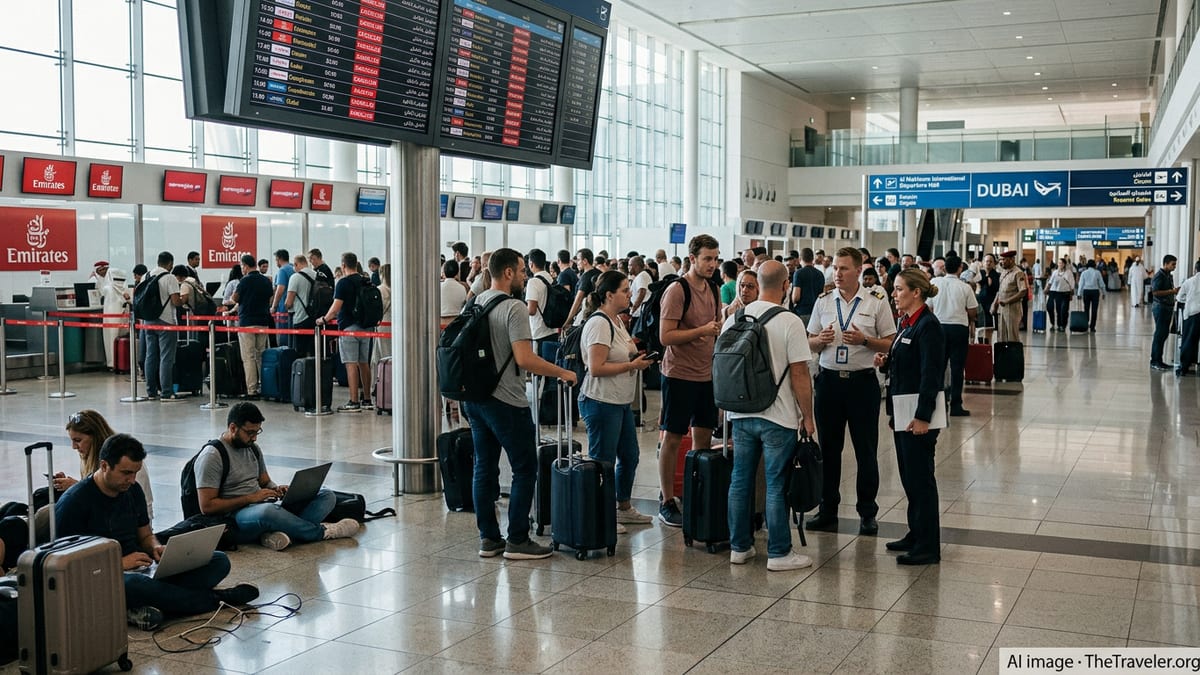
Latest Cancellations Focus On Gulf And Pakistan Routes
Operational notices from carriers and flight-tracking data indicate that a limited but disruptive set of flights touching Dubai have been withdrawn from schedules, concentrating on services to Saudi Arabia and Pakistan. Flydubai has been a particular focus, with several departures linking Dubai to Riyadh and other Saudi gateways flagged as cancelled or “affected” in recent days, alongside selected Saudia services that route via Dubai, Jeddah and Riyadh.
The pattern comes on top of a broader reshaping of regional networks in 2026, with airlines continuing to respond to higher fuel costs, altered airspace corridors and periodic demand swings. While most flights at Dubai International are operating normally, even a handful of targeted cancellations can cause missed connections and extended layovers for travelers using the hub as a gateway between Asia, the Gulf and Europe.
Publicly available schedules also show continuing disruption on Pakistan routes. Earlier updates from Flydubai’s customer channels in Pakistan detailed a suspension of flights linking Dubai with Islamabad, Lahore and Peshawar for several months, formally attributed to operational reasons but unfolding against a backdrop of elevated fuel prices and a fragile regional travel recovery.
The result is a patchwork of cancellations that, while modest in number, disproportionately affect travelers relying on specific city pairs such as Dubai to Riyadh, Jeddah or Islamabad, particularly those with onward long haul itineraries.
Flydubai Operational Changes Add To Passenger Uncertainty
Flydubai’s own operational-update pages highlight a fluid environment in which schedules are still being fine-tuned across parts of its network. Recent notices outline changes to how the airline uses terminals in Riyadh and emphasize the need for passengers to check flight status and disruption pages shortly before travel, underlining a continuing risk of late operational adjustments.
Independent coverage from regional outlets has pointed to Flydubai’s temporary withdrawal from several Pakistan routes, including Islamabad and Lahore, through late October. That suspension followed earlier reports of repeated cancellations on Islamabad services, which left some passengers unable to secure timely alternatives during peak travel periods.
Although the airline has not publicly tied these route decisions to any single factor, analysts note that Flydubai and other Gulf carriers have been grappling with higher operating costs and a complex security backdrop that has periodically forced longer routings around sensitive airspace. For a mid sized low cost operator, even small shifts in demand or flight times can prompt a review of marginal routes.
For passengers, the practical impact is heightened uncertainty. Travelers connecting through Dubai from South Asia or the Gulf into Europe and North America can find carefully sequenced itineraries undermined when a single regional leg is cancelled or retimed at short notice.
Saudia And Regional Carriers Adjust Networks Around Dubai
Saudia, the Saudi flag carrier, has also been adjusting parts of its network amid the same regional pressures. Consumer facing information and traveler reports describe sporadic cancellations and schedule changes on routes touching Jeddah, Riyadh and Dubai, often accompanied by rebookings through alternative Saudi hubs or on partner airlines.
Earlier in the year, broader disruptions tied to regional airspace closures prompted a series of suspensions and delays across the Middle East, including at Jeddah and Doha. While most of those large scale restrictions have eased, residual schedule adjustments are still working their way through airline planning cycles, and some services have not yet returned to pre crisis frequencies.
Industry commentary suggests that Saudia’s strategy, like that of other Gulf and regional carriers, has been to protect core trunk routes while trimming or consolidating selected frequencies where demand is softer or operating costs have risen sharply. In practice, this can translate into isolated flight cuts that nonetheless have significant knock on effects for travelers who depend on specific connections between Saudi Arabia, Dubai and onward Asian destinations.
Dubai’s role as a transfer point amplifies the impact of even a handful of cancelled flights. When a Saudia or Flydubai sector into or out of Dubai is withdrawn, passengers can find their entire multi segment journey disrupted, especially if onward flights are running near capacity.
Travelers Confront Vouchers, Rebookings And Longer Routings
Alongside the immediate inconvenience of cancellations, passengers are also navigating a shifting landscape of refunds, vouchers and rebooking options. Recent traveler accounts circulating on public forums describe Flydubai issuing travel credits rather than automatic cash refunds following cancellation of Dubai bound flights, in line with the carrier’s disruption policies. Some customers have described lengthy timelines to secure alternative arrangements or contest voucher only outcomes through card issuers.
Reports relating to Saudia highlight a slightly different pattern, with some passengers being rerouted on partner airlines or alternative Saudi hubs after Dubai legs were withdrawn, while others received partial refunds when connecting sectors were no longer viable. The experience can vary depending on where the ticket was purchased, the fare conditions and whether the itinerary was assembled by a travel agency or booked directly with the carrier.
Across the region, rerouting often involves longer flight times and additional stops as airlines continue to avoid certain airspace corridors or consolidate loads onto fewer services. Travelers heading between Dubai, Riyadh and Jeddah, or using Dubai as a stepping stone to Pakistan, may find themselves offered indirect routings via other Gulf or Saudi airports that add hours to the journey.
Consumer advocates generally advise passengers to document cancellation notices, keep records of all communications and review both airline conditions of carriage and any applicable local consumer protection rules before accepting vouchers or alternative itineraries. For those with time sensitive trips, same day or next day rebooking can be limited, especially during busy pilgrimage or holiday periods when many flights are already close to full.
What The Disruption Means For Upcoming Trips Via Dubai
For travelers planning to transit Dubai in the coming weeks, the latest cancellations serve as a reminder that the regional aviation system is still in a period of adjustment. Most flights are operating normally, yet targeted cuts by Flydubai, Saudia and other airlines on specific city pairs can create unexpected bottlenecks for those relying on tightly timed connections through the hub.
Experts monitoring the Middle East market note that airlines are simultaneously rebuilding capacity and hedging against renewed volatility in fuel prices and geopolitics. That balancing act is particularly visible on short and medium haul services, where carriers can add or remove individual rotations with relatively little lead time as conditions evolve.
Travel planners suggest that passengers with essential journeys between Dubai and cities such as Riyadh, Jeddah and Islamabad consider allowing extra connection time, monitoring flight status closely and remaining flexible on routing where possible. Booking on a single ticket, rather than separate point to point segments, may also improve access to rebooking options if one leg is cancelled.
While the latest round of cancellations is limited in scope, the experience of affected passengers underscores how even a handful of withdrawn flights can reverberate across the wider network, particularly at a major transit hub like Dubai International Airport.