


More news on this day
A freight train derailment near Bucyrus, Ohio, involving a tipped tanker car suspected of carrying hydrochloric acid prompted late-night evacuations, emergency shelter operations, and travel disruptions as responders moved to secure the scene and assess air quality risks for nearby neighborhoods.
Get the latest news straight to your inbox!
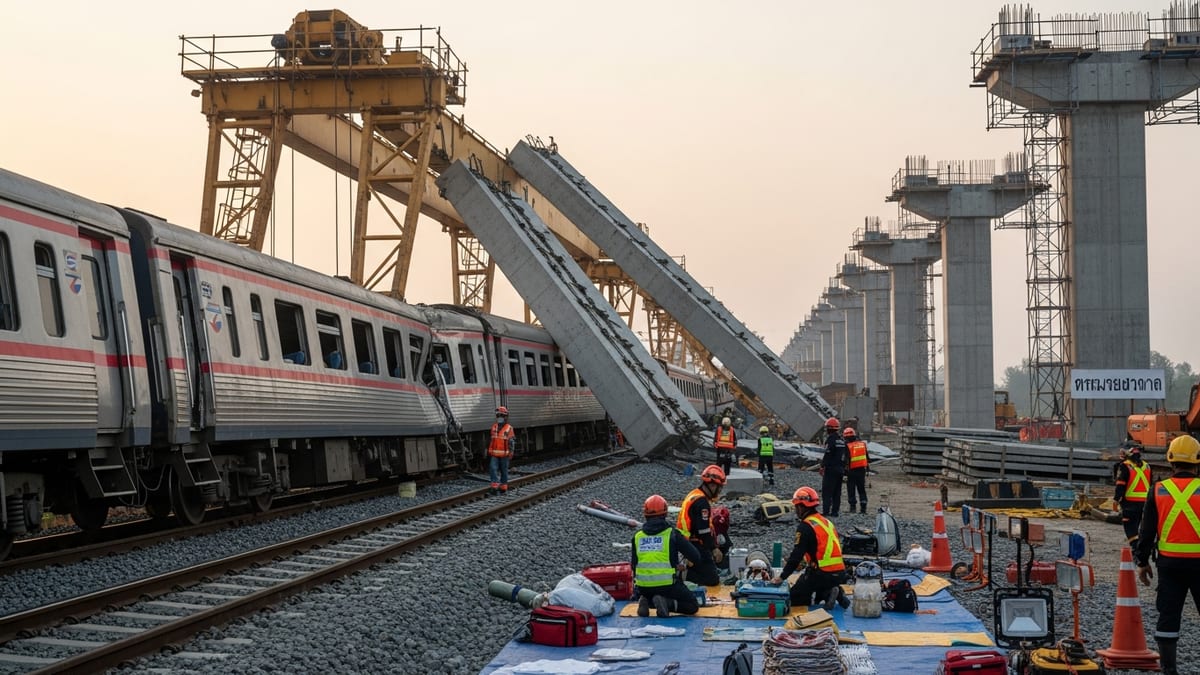
Evacuation Orders and Shelter Operations in Bucyrus
Publicly available information shows that the derailment occurred Sunday night near a railroad crossing in Bucyrus, when several freight cars left the tracks and at least one tanker ended up tipped beside the rail line. Initial reports indicated concern that the tanker might be leaking hydrochloric acid, a corrosive substance that can cause respiratory irritation and burns at high concentrations.
Out of caution, residents within a defined radius of the derailment site were urged to leave their homes while specialists evaluated the condition of the tanker and monitored the surrounding air. Early guidance in local coverage referenced evacuation distances of up to one mile, though subsequent updates indicated that the formal evacuation zone was more limited and was later narrowed as assessments continued.
According to published coverage, Bucyrus High School opened as an emergency shelter for evacuees, offering a place to sleep and access basic services while the situation unfolded. Local emergency management agencies used social media and regional news outlets to relay updates on the evacuation area, shelter availability, and when residents living just outside the core zone could safely remain in place.
By late Monday morning, updated public information indicated that the immediate evacuation order had been lifted, with residents allowed to return home once air monitoring did not show hazardous concentrations near the affected neighborhood. Even as people went back, responders remained at the scene to stabilize rail cars and continue inspections of the tipped tanker.
Hazard Concerns Around the Tipped Tanker
The tipped tanker at the center of concern was reported to be carrying hydrochloric acid, a widely used industrial chemical that can pose health and environmental risks if released in significant quantities. At the time of the derailment, there were no widespread reports of serious injuries linked directly to exposure, but the potential for a leak prompted the precautionary evacuation and close monitoring.
Hydrochloric acid in rail transport is typically contained within pressurized or insulated tank cars designed to reduce the risk of catastrophic failure. However, a derailment that leaves a tanker on its side, as seen in Bucyrus, raises immediate questions about structural damage, valve integrity, and the possibility of slow leaks that may not be obvious at first glance.
Publicly available guidance from past rail incidents involving corrosive materials underscores why responders in Bucyrus treated the tipped tanker with caution. Similar derailments elsewhere in the United States and Canada have led to localized evacuations while crews conducted product transfer, neutralization, or controlled venting operations to reduce risk to surrounding communities.
In Bucyrus, coverage of the incident indicates that hazmat teams focused on visual inspections, instrumentation checks, and air quality measurements around the derailment site and into nearby residential blocks. The decision to gradually shrink the evacuation zone appears to have been tied to these measurements, which did not show expanding contamination beyond the immediate rail corridor.
Impact on Local Travel and Regional Rail Traffic
For travelers and residents moving through northern Ohio, the Bucyrus derailment produced short-term disruptions on both local roads and regional rail routes. The incident occurred near a crossing used by local traffic, prompting immediate closures while crews worked around the site and inspected the damaged cars.
Drivers in Bucyrus faced detours and temporary congestion as authorities rerouted vehicles away from the affected crossing. Published coverage notes that some roads remained closed into Monday while rail and hazmat teams continued their operations and heavy equipment was brought in to re-rail undamaged cars or remove those too badly damaged to move on their own.
Freight rail traffic through the corridor was also affected, with trains delayed or held outside the immediate zone until the line could be inspected and cleared. For travelers using rail-adjacent highways or planning trips through the region, the derailment served as a reminder that incidents involving hazardous cargo can have ripple effects well beyond the immediate evacuation area.
There were no indications in available reporting of long-term closures that would significantly alter regional tourism or business travel to Bucyrus and surrounding communities. However, transportation planners and local businesses are likely to review how quickly detours can be communicated to visitors when major rail incidents occur near key road crossings.
Emergency Response and Communication Lessons
The Bucyrus derailment has renewed attention on how communities prepare for and communicate about hazardous rail incidents, particularly in regions where freight lines run close to homes, schools, and small business districts. From the early hours of the incident, local agencies relied on social media, regional broadcasters, and alert systems to convey basic instructions about evacuation distances and shelter locations.
Some early accounts referenced broader avoidance zones than those ultimately adopted, reflecting the uncertainty that often accompanies a first response to a tipped tanker with potentially corrosive contents. As more technical information became available and air monitoring data accumulated, guidance was adjusted, and the formal evacuation perimeter was scaled back.
Observers of recent rail incidents in other parts of Ohio and the wider Midwest have emphasized the importance of clear, consistent public messaging about what substances may be involved and what symptoms residents should watch for. In Bucyrus, the focus on potential respiratory irritation and the recommendation that people within the evacuation zone relocate temporarily aligned with established safety practices for corrosive gas risks.
The incident is likely to prompt further discussion among local leaders about notification tools for both residents and visitors, including whether text-alert systems, highway message signs, or coordinated updates with nearby accommodations can help ensure that travelers receive timely, comprehensible information during similar events.
Broader Context of Hazardous Rail Cargo and Small Communities
The Bucyrus derailment arrives amid ongoing national conversation about the movement of hazardous materials by rail and the particular vulnerability of smaller communities located along busy freight corridors. Although most hazardous-material shipments reach their destinations without incident, high-profile derailments in recent years have highlighted how even a single tipped or leaking tanker can disrupt daily life for entire neighborhoods.
Communities like Bucyrus, which host both through-freight routes and local passenger traffic on nearby roads, have been exploring ways to better understand what travels through their jurisdictions. Publicly accessible reports and after-action reviews from previous derailments suggest growing interest in clearer information-sharing between rail carriers and local emergency managers, especially regarding train consists and the location of hazardous cars within long trains.
For travelers, the Bucyrus incident may serve as a case study in how quickly conditions can shift around a rail corridor, particularly when hazardous cargo is involved. Nighttime evacuations, shelter openings, and temporary road closures can all affect people passing through town for work, tourism, or family visits.
While current reporting does not indicate lasting environmental damage or long-term restrictions tied to the Bucyrus derailment, the event adds one more data point to the debate over infrastructure investment, rail safety regulations, and the resources available to smaller cities when faced with complex hazardous-material emergencies.