


More news on this day
A freight train derailment in Repentigny, Quebec, left railcars scattered near a busy residential corridor but caused no serious injuries, a turn of events the city’s mayor publicly described as being “very lucky in our misfortune.”
Get the latest news straight to your inbox!
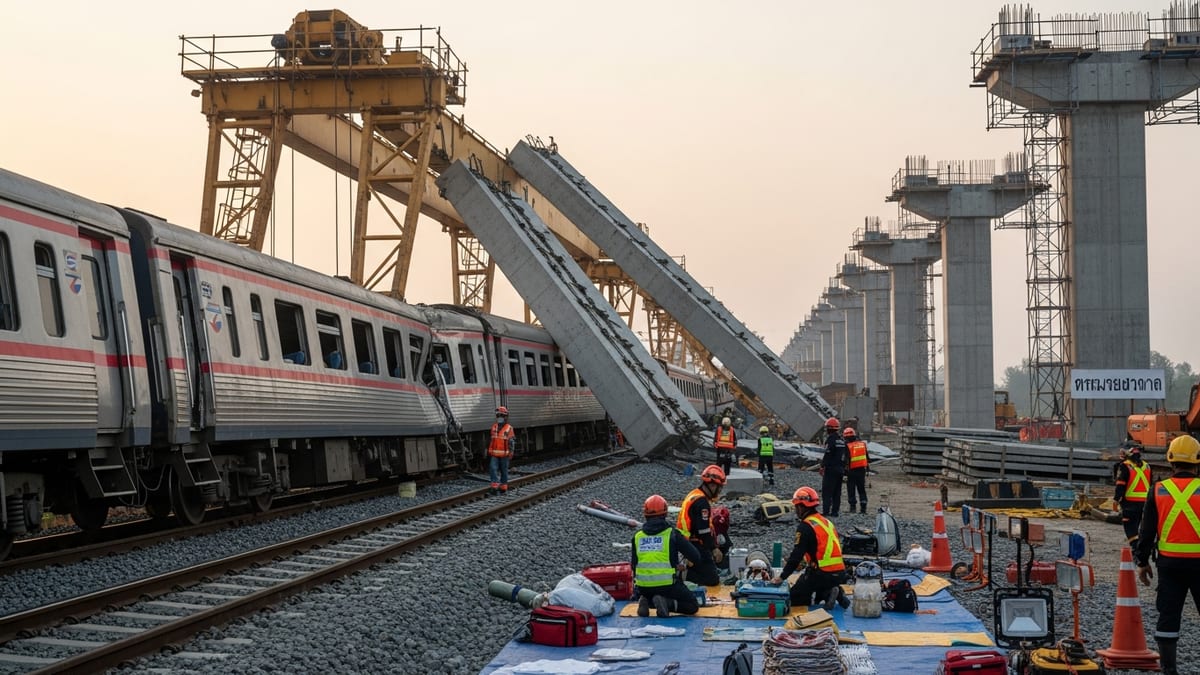
Freight Cars Leave Tracks Near Residential Sector
According to published coverage, the derailment occurred when several Canadian National freight cars left the tracks near the Repentigny station area, east of Montreal. Images shared through local news reports showed tilted and jackknifed railcars along the right of way, some carrying containers and others apparently used for general freight.
Publicly available information indicates that the incident took place close to housing, roads, and community amenities, raising immediate concerns about what might have happened if the train had been hauling more hazardous material or if the derailment had occurred at a busier time of day. Early assessments reported damage to railway infrastructure and nearby property but no fatalities.
Local coverage notes that emergency teams quickly cordoned off the area and began assessing potential fuel leaks, structural damage, and risks to residents. Passenger rail service in the wider Montreal–Quebec City corridor experienced delays while rail inspectors and cleanup crews worked to secure the site.
In the days following the derailment, Repentigny residents described a mix of relief and unease, expressing gratitude that the consequences were not worse while also questioning how such an incident could unfold so close to homes and schools.
Mayor Highlights Narrow Escape and Community Impact
In comments reported by Quebec media, Repentigny mayor Nicolas Dufour characterized the derailment as a near miss for the city, using the phrase “very lucky in our misfortune” to describe how serious harm was avoided despite the scale of the incident. His remarks captured a sentiment shared across the community, where many residents awoke to a large emergency presence but relatively limited physical damage.
Publicly available information shows that municipal leaders focused first on confirming there were no serious injuries before turning to questions about cleanup and accountability. City representatives emphasized the importance of transparent communication with residents about the condition of the site and the timeline for restoring normal rail operations.
Reports indicate that the derailment left some homeowners worried about long term property values and potential environmental impacts from spilled fuel or cargo residues. City staff have pointed to ongoing assessments to determine whether any soil remediation or additional monitoring is required.
The tone from local officials has balanced reassurance with a call for detailed explanations. While there has been relief that Repentigny avoided a more severe catastrophe, the incident has increased expectations that both the municipality and the rail operator will provide clear answers about what went wrong.
Investigation Focuses on Track Conditions and Train Operations
According to national and provincial media reports, federal transportation investigators and experts from the rail company have begun examining the condition of the tracks, signalling systems, and rolling stock involved in the Repentigny derailment. Standard procedures in such cases include reviewing the train’s speed, brake performance, track geometry, and recent maintenance records.
Analysts are also expected to look at the composition of the train, including the types of wagons, their loading patterns, and the presence of any hazardous materials, even if none were released. The goal is to determine whether the derailment resulted from human error, mechanical failure, infrastructure fatigue, or a combination of factors.
Publicly available information suggests that investigators will review onboard data recorders and communications logs to reconstruct the final minutes before the cars left the tracks. That process can take weeks or months, with preliminary findings often released ahead of a full technical report.
Safety advocates note that the outcome of this inquiry may influence future standards for freight movements through densely populated suburbs around Montreal, especially where tracks run in close proximity to homes, schools, and commercial areas.
Renewed Scrutiny of Rail Safety Near Canadian Communities
The Repentigny derailment has revived broader debates in Quebec and across Canada about the risks posed by freight trains traveling through urban and suburban corridors. Previous high profile rail incidents in the country have already pushed federal authorities and rail operators to strengthen rules on train speeds, inspection frequencies, and the carriage of dangerous goods.
Published commentary in Canadian outlets indicates that residents and local leaders are seeking assurances that lessons from past tragedies are being fully applied to current operations. Questions have resurfaced about whether additional physical protections, such as reinforced barriers, setbacks, or reconfigured routes, may be necessary in certain locations.
Some transportation specialists, quoted in recent coverage, have suggested that near misses like the Repentigny event can be as instructive as more devastating accidents. When a derailment causes limited damage, investigators are often able to collect more complete evidence, potentially offering clearer insights into underlying weaknesses in infrastructure, equipment, or operating practices.
For communities along major freight corridors, the Repentigny case is a reminder that rail remains both an essential economic lifeline and a source of risk that must be carefully managed. Residents are watching closely to see whether upcoming findings translate into visible safety improvements on the ground.
Travelers Face Disruptions but Also Look for Reassurance
While the derailment itself involved a freight train, the resulting disruption has affected passenger movements through the greater Montreal region, a key gateway for both domestic and international travelers. Reports indicate that some intercity and regional services experienced delays or temporary reroutings while the damaged section of track was inspected and repaired.
For visitors passing through the area, the incident has underscored the importance of checking schedules and service alerts before departure, particularly when traveling on busy summer weekends. Travel industry observers note that rail operators typically prioritize rapid restoration of mainline capacity, but safety inspections and equipment recovery can take time.
At the same time, transportation analysts point out that Canada’s overall rail safety record has improved in recent years, even as freight volumes have grown. The Repentigny derailment, they say, will likely add to pressure for continuous upgrades in track monitoring technology, crew training, and emergency planning in communities along key routes.
For Repentigny and neighboring municipalities, the near miss has turned into a catalyst for fresh conversations about how to balance the benefits of rail connectivity with the need to protect people living and traveling near the tracks. As the investigation proceeds, travelers and residents alike are seeking clear, factual updates on what happened and what will change as a result.