


More news on this day
Regional travelers moving through Nantucket Memorial Airport this week faced a fresh wave of disruption as at least ten flights were canceled and one additional service delayed, constraining already tight capacity on key shuttle routes connecting the island with Teterboro, Boston and other Northeast cities.
Get the latest news straight to your inbox!
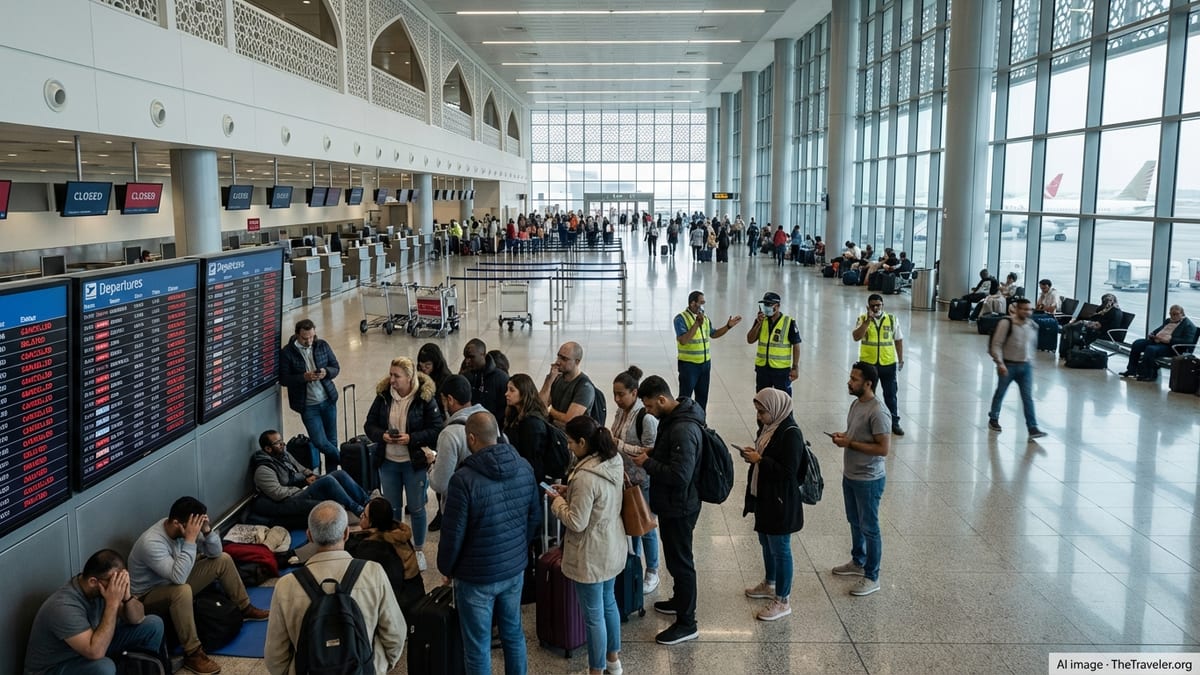
Cluster of Cancellations Hits Peak Shoulder-Season Traffic
Publicly available flight-status boards and aviation tracking data for the late-May travel period indicate that a concentrated run of cancellations has interrupted operations at Nantucket Memorial Airport. At least ten flights operated by regional carriers, including Tradewind Aviation, were marked as canceled over a short window, with one further flight logged as significantly delayed. The disruptions have come just as early-summer demand begins to build on leisure-heavy routes serving the island.
Reports from flight-tracking platforms show that the cancellations were not confined to a single city pair, but instead affected a web of connections that typically move passengers between Nantucket and mainland gateways. Services linking the island with Teterboro in northern New Jersey, Boston Logan, and several secondary Northeast airports were among those disrupted, narrowing options for travelers who often rely on high-frequency shuttles to keep trips flexible.
Although the majority of Nantucket operations continued to run, the loss of ten rotations in a compressed period represents a notable reduction in capacity for an airport that leans heavily on regional turboprops and small jets. With many routes already operating with modest seat counts, even a handful of cancellations can quickly translate into full remaining flights, extended layovers and missed connections across the broader US network.
According to published coverage tracking the situation, the latest cluster of cancellations has been layered on top of earlier disruptions recorded in May, pointing to a choppy start to the island’s crucial summer ramp-up. For frequent flyers and island residents, the pattern is reinforcing concerns that this season may bring more irregular operations than usual across the regional system.
Tradewind Routes From Teterboro and Boston Under Pressure
Tradewind Aviation, one of the best-known premium regional operators in the Northeast, has been among the carriers most visibly affected in the latest wave of schedule adjustments around Nantucket. Flight-status pages for recent days show multiple Tradewind services touching Nantucket listed as canceled, including flights that normally tie the island to Teterboro and to the Boston catchment area.
The Teterboro to Nantucket pairing is a key link for affluent leisure and second-home travelers who prefer private-terminal style operations over major hubs. Cancellations on this route can be particularly disruptive, as passengers are less able to simply roll over to large-airline alternatives from Newark or JFK without reconfiguring entire itineraries. When these niche flights drop off the board, the practical effect on customers can be outsized compared with a cancellation on a high-frequency trunk route.
Boston-area connectivity has also come under strain. While most commercial Nantucket traffic to Boston uses Logan International, Tradewind’s growing footprint at nearby regional fields and its marketing to Boston-based flyers mean that disruptions ripple through the broader metropolitan catchment. Reduced reliability on shuttle-style services complicates planning for weekend travelers and for business passengers who depend on tight turnarounds between the city and the island.
Published reviews and corporate updates about Tradewind’s expanding schedule into summer 2026 highlight how central Nantucket has become to the carrier’s Northeast strategy. That reliance magnifies the impact when operational issues, weather, or airspace constraints lead to the cancellation of multiple rotations in quick succession.
Knock-on Effects Across the US Regional Network
While the disruption is focused on a relatively small airport, the consequences reach into the wider US regional system. Routes linking Nantucket with Teterboro, Boston, Westchester and Cape Cod airports often serve as feeders into larger domestic and international journeys. When ten flights are canceled and a further service is delayed, passengers can lose onward connections in New York, Boston and beyond, amplifying the initial local problem into a multi-city issue.
Travel industry analyses of similar events in recent seasons show how small-aircraft networks are particularly vulnerable to cascading effects. With fewer spare aircraft and tighter crew scheduling margins, a weather or technical issue on a single leg can force operators to trim multiple rotations to restore balance. For island and resort destinations, where many trips are nonessential but time-sensitive, even brief outages can prompt travelers to reroute through entirely different airports or postpone trips altogether.
The latest turbulence around Nantucket comes at a time when regional aviation across the United States is already navigating pilot availability challenges, evolving demand patterns, and air traffic management constraints in busy Northeast corridors. When these structural pressures intersect with the kind of localized disruption now evident at Nantucket Memorial, the result is often a patchwork of cancellations scattered across several connected airports rather than a single, easily isolated incident.
Observers note that this pattern is visible in the current situation, in which cancellations linked to Nantucket have implications not only for island-bound travelers but also for operations and passenger flows at Teterboro, Boston and smaller New England fields that support seasonal traffic.
Travelers Confront Tight Capacity and Limited Alternatives
For passengers booked on affected flights, the immediate challenge has been the limited number of back-up options. Many regional routes into Nantucket operate at relatively low frequencies outside the very peak summer weeks, and even then rely on small aircraft with constrained seating. Once a block of flights is canceled, remaining services can quickly sell out, leaving travelers to piece together alternative routings through larger hubs or to shift travel dates.
Recent consumer travel advice covering the Nantucket disruptions has emphasized the importance of monitoring flight status closely via airline apps and independent tracking platforms, particularly in the 24 hours before departure. Same-day schedule changes have been a recurring feature of the current spell of irregular operations, meaning that travelers who wait to check status at the airport risk discovering that their options have already narrowed.
Rebooking is further complicated by the nature of some of the impacted services. Premium scheduled charter flights from airports such as Teterboro do not always have direct equivalents on major carriers, and passengers seeking to salvage trips may be forced to switch to entirely different departure points in the New York area. That shift can add ground-transport time and cost, eroding some of the convenience that originally attracted travelers to semi-private regional links.
With the broader summer season still ahead, travel commentators suggest that passengers using regional airports like Nantucket, Teterboro and smaller Boston-area fields build more slack into itineraries, particularly when planning same-day connections onto long-haul flights. The latest run of cancellations around Nantucket illustrates how quickly regional capacity can tighten when a handful of key services come off the schedule, reshaping travel plans far beyond the island itself.