


More news on this day
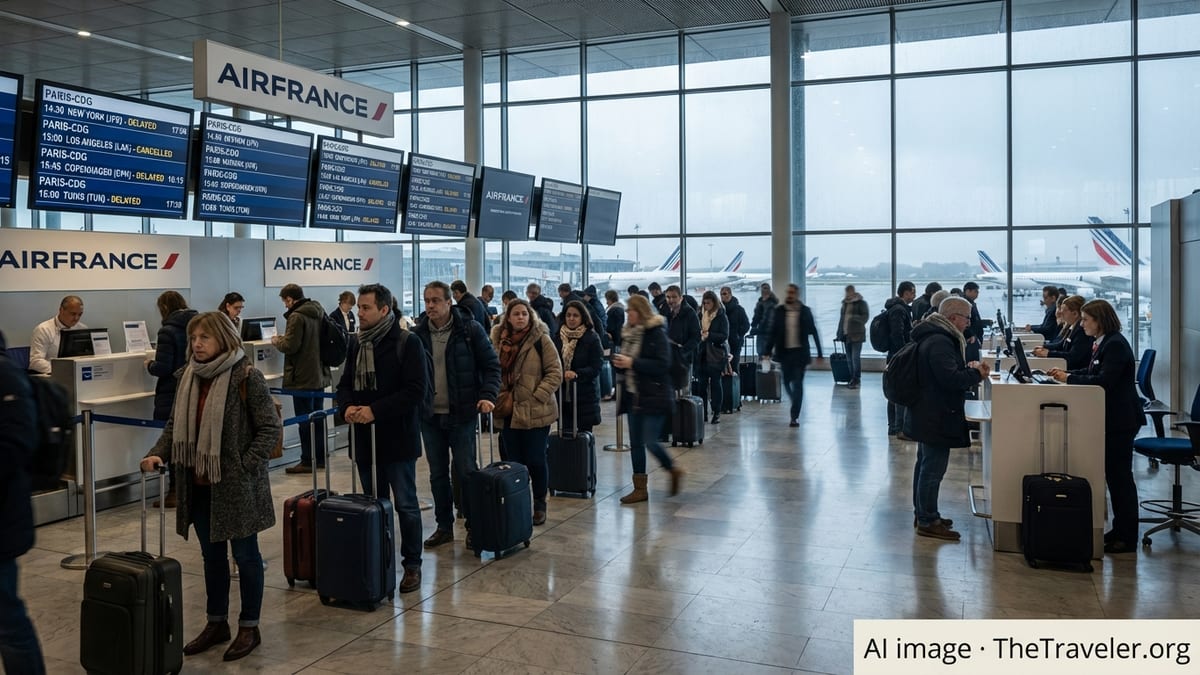
Operations at Paris Charles de Gaulle Airport were severely disrupted on Thursday, with around 230 flights delayed and at least three cancellations reported, affecting a wide range of European and long haul services operated by Air France, Lufthansa, British Airways, KLM, Emirates and other carriers.
Get the latest news straight to your inbox!
Wide Ripple Effect Across Major Airlines and Hubs
Publicly available flight-tracking data for May 28 indicates an unusually high volume of delayed departures from Charles de Gaulle, with late pushbacks affecting both intra-European services and long haul routes to key hubs such as London, New York and Dubai. Average delays on some transatlantic departures from Paris to the United States reached around 20 to 40 minutes, with knock-on impacts for aircraft rotations later in the day.
Air France, which uses Charles de Gaulle as its primary hub, appeared among the most affected, given its dense schedule of short and medium haul connections feeding long haul flights. The airline has already been concentrating more of its France and European operations at Charles de Gaulle after winding down most scheduled services at Paris Orly in preparation for the 2026 summer network, putting additional pressure on the Roissy hub during disruption days.
Other European network carriers, including Lufthansa, KLM and British Airways, also faced delays on Paris-bound and Paris-originating services. Published schedules show that these airlines rely heavily on Charles de Gaulle for connecting traffic between European cities and long haul destinations, amplifying the impact when departures bunch up or miss their allocated slots.
Gulf and Asian connections were not spared, with Emirates and other long haul operators experiencing delays on eastbound services that often depart in concentrated waves from Paris. These flights depend on precise timing to feed late-night connection banks at onward hubs, meaning even modest delays at departure can cascade into missed connections for travelers headed beyond Dubai and other transit points.
Operational Strain at a Congested European Gateway
Charles de Gaulle consistently ranks among Europe’s busiest airports, handling tens of millions of passengers each year and serving as a primary intercontinental gateway for France. Recent corporate and planning documents highlight that the Roissy hub is projected to carry a growing share of Air France group traffic in coming seasons as flights migrate from Orly, reinforcing its role as a central node in the airline’s network.
The volume of delays recorded on Thursday underscores how sensitive such a large hub is to any constraint, whether related to air traffic management, staff availability, congestion at border controls or weather. Travelers passing through Charles de Gaulle in recent weeks have reported long waits at passport control during peak departure banks, particularly at automated gates where technical issues can compound queues, leaving less margin for late-arriving passengers to make their flights.
Industry briefings on European air travel in 2026 point to a complex environment marked by intermittent industrial action, air traffic control capacity limits and rerouted long haul services around conflict zones. All of these factors can reduce flexibility in the wider network, making it harder for airports such as Charles de Gaulle to absorb local delays without broader ripple effects.
On high-traffic days, this can translate into aircraft waiting for departure slots, runway queues building up during busy morning and afternoon waves, and inbound flights arriving off-schedule. Each of these elements adds friction to tightly timed turnarounds, ultimately leading to the kind of accumulation of delayed flights seen in Paris on Thursday.
Knock-on Impacts for European and Transatlantic Travelers
The latest disruption at Charles de Gaulle comes at a time when many European travelers are relying on hub connections to reach summer destinations, particularly as other parts of the continent face their own operational challenges. In Italy, for example, nationwide air transport strikes scheduled around late May have already been stranding passengers and forcing mass cancellations, pushing more travelers to rebook through alternative hubs such as Paris, Amsterdam, Frankfurt and London.
For passengers flying between European cities, even modest delays at Charles de Gaulle can have outsized effects. Missed onward flights often require same-day rebooking in already busy cabins, and available seats can be scarce when multiple airlines are managing simultaneous disruptions across the region. This is particularly true on business-heavy routes linking Paris with major economic centers such as London, Frankfurt, Amsterdam and Milan.
Transatlantic passengers face a different set of complications. Delays out of Paris to New York and other North American gateways not only shorten connection times onward but can also run up against night curfews or arrival slot constraints at destination airports. Airlines may be forced to swap aircraft, crew or routings to keep schedules broadly intact, which can in turn shift disruption onto other routes that otherwise would have operated on time.
Travelers heading east toward Dubai and beyond are also vulnerable when departures from Charles de Gaulle slide outside their planned windows. Gulf and Asian super-connector hubs generally operate tightly coordinated overnight banks of flights, and missed connections can mean long layovers or the need to reroute entirely, especially at a time when some long haul services in the wider region remain reduced or rerouted due to security concerns.
Passenger Rights and Practical Advice During Disruptions
The latest wave of delays at Paris Charles de Gaulle is a reminder of the protections available to travelers under European Union rules. Under EU Regulation 261, passengers departing from an EU airport on any airline may be entitled to compensation if their flight arrives at its final destination with a long delay or is canceled, provided the disruption is not caused by extraordinary circumstances. The level of compensation depends on distance and the length of delay at arrival.
Recent public discussions among travelers highlight that some airlines initially offer vouchers or goodwill gestures instead of full cash compensation, particularly on medium haul routes from Paris when delays stretch beyond three hours. Passengers seeking to rely on EU rules are generally advised in consumer guidance to document the delay, keep boarding passes and request written confirmation of the cause of disruption in order to pursue claims if necessary.
Beyond legal rights, practical considerations can make a significant difference on disruption-prone days at major hubs such as Charles de Gaulle. Travel advisories from airlines and airports frequently recommend longer connection times, especially where passport control is involved or where terminals are linked by buses or automated people movers. For Paris in particular, recent traveler accounts suggest allowing generous buffers at departure to navigate security and border checks during busy hours.
Experts in air travel operations also stress the value of monitoring flights across multiple channels, including airline apps, departure boards and independent flight-tracking services, since schedule changes can occur with little advance warning during congested periods. On a day when more than 200 flights at a single hub experience delays, flexibility in routing, awareness of alternative connections and an understanding of passenger rights can help travelers manage the disruption more effectively.
Strain on a Network Already Adjusting to Global Shocks
The disruption at Charles de Gaulle unfolds against a broader backdrop of volatility for international aviation in 2026. Airlines serving Europe have been reworking their long haul schedules in response to increased fuel costs, shifting demand patterns and prolonged airspace restrictions linked to conflicts in the Middle East, which have forced widespread rerouting or suspension of services through key Gulf hubs.
Carriers such as Air France-KLM and Lufthansa Group have been adjusting network plans, hedging fuel exposure and seeking alternative routings, all while maintaining ambitious summer schedules to capture resurgent leisure and business demand. Specialist aviation briefings note that many airlines are operating close to the limits of fleet and crew availability, leaving less resilience in the system when major hubs like Paris experience an unusually high volume of delays.
Strategic decisions to consolidate operations at fewer hubs, such as Air France’s move to reinforce Charles de Gaulle as its primary platform for both domestic and international traffic, can offer long term efficiencies but also concentrate risk. On heavy travel days, any local constraint at a single airport can disrupt a wide swath of the global network, as seen in the impact on flights spanning Europe, North America and the Gulf.
For travelers, the combination of network-level pressures and local operational challenges at Charles de Gaulle translates into a travel environment where delays like those recorded on Thursday may recur, particularly during peak holiday and business periods. While airlines continue to refine schedules and invest in resilience, passengers connecting through major European hubs may need to plan for added buffers and remain alert to evolving conditions throughout their journeys.