


More news on this day
Travelers at Phoenix Sky Harbor International Airport faced another difficult travel window this week as regional carrier SkyWest and major operators Southwest and American Airlines suspended six flights and logged more than 100 delays, disrupting some of the airport’s busiest domestic links to Orlando, Boston, Chicago, Miami, Portland and other key cities.
Get the latest news straight to your inbox!
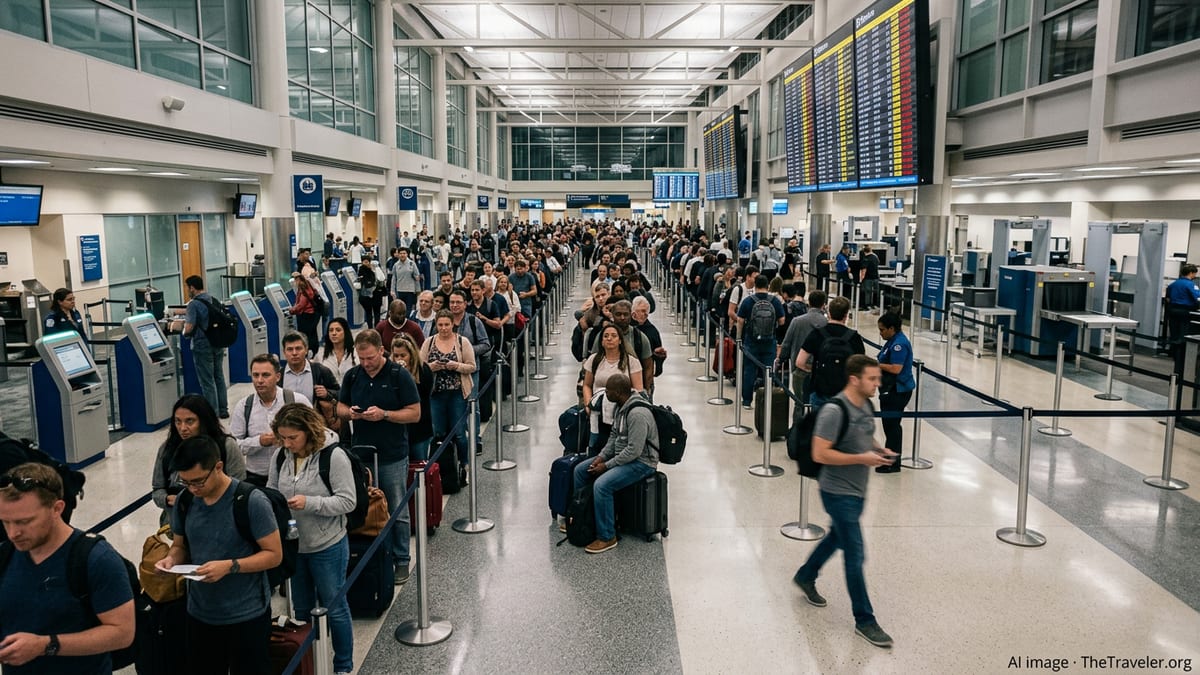
Clusters of Delays at a Key Southwestern Hub
Publicly available operational data and recent industry coverage indicate that Phoenix Sky Harbor has experienced clusters of disruptions in recent days, with a mix of cancellations and a significantly larger wave of delays. Within one peak operating period, six flights operated by SkyWest, Southwest and American were suspended, while more than 100 services were delayed, affecting departures and arrivals across the national network.
The pattern fits into a broader picture of summer strain at the Arizona hub, where analysis of flight status data shows elevated levels of delayed departures on some days, particularly for Southwest and American. Reports describe departure boards heavily populated with late flights and rolling schedule changes that extend into the evening, complicating connections for travelers heading to or from the Southwest and Mountain West.
Although the overall number of outright cancellations remained limited compared with the scale of delays, the temporary suspension of a handful of services has had an outsized impact on affected passengers. For those booked on the six canceled flights, rebooking options have often involved longer routings or overnight stays, especially when attempting to preserve onward international connections.
Major Routes to Orlando, Boston, Chicago, Miami and Portland Affected
The latest disruption has been felt most sharply on trunk routes that tie Phoenix to major leisure and business markets across the United States. According to compiled flight information, services touching Orlando, Boston, Chicago, Miami and Portland were among those hit by schedule changes, with delayed departures and arrivals cascading into missed connections at both ends.
Boston and Chicago are among Phoenix’s busiest long haul domestic markets, and delays on these routes can reverberate throughout the day. When early flights depart late, aircraft often arrive behind schedule at connecting hubs, compressing turnaround times and increasing the risk of further slippage on subsequent legs. Travelers connecting through Chicago to East Coast or Midwest destinations, or through Boston to transatlantic flights, have been particularly exposed.
Orlando and Miami, by contrast, are heavily trafficked leisure and family travel markets. Disruptions there tend to create crowded gate areas, rebooking lines and pressure on hotel availability during high season. Reports from recent days describe rolling delays on Phoenix bound and Phoenix originating flights that serve Florida, with some services arriving hours later than scheduled.
Portland and other West Coast cities have also felt the impact as late running aircraft shuttle between hubs. Published performance snapshots show that when Phoenix experiences delay clusters, services linking the airport with Pacific Northwest gateways are frequently among those pushed back, often by accumulations of 30 to 90 minutes over the course of the operating day.
SkyWest, Southwest and American at the Center of the Disruptions
SkyWest, Southwest and American play distinct but interconnected roles in Phoenix’s daily operations, which helps explain why issues affecting even a limited number of their flights can spread widely. SkyWest operates regional services under the banners of major airlines, feeding passengers from smaller markets into larger hubs such as Phoenix. When a SkyWest leg is delayed or canceled, travelers can lose their onward connections on mainline flights to cities including Chicago, Orlando or Miami.
Southwest, which relies on a dense point to point network rather than a traditional hub and spoke system, can see minor schedule problems ripple quickly when a station like Phoenix encounters weather or air traffic control constraints. Past performance analyses highlight how late inbound aircraft and tight turn times can compound delays, turning what begins as a short holdup into a rolling pattern that affects multiple departures throughout the day.
American, one of the leading carriers at Phoenix, connects the airport to major hubs such as Chicago and Miami as well as to key East Coast cities like Boston. Industry data shared in recent months shows that when national weather systems or congestion affect American’s large hub network, Phoenix can experience clusters of delays that mirror conditions at Chicago O’Hare or other key nodes.
For travelers on the ground, the distinctions between these carriers matter less than the shared outcome: crowded terminals, frequent gate changes and departure times that continue to slide. With all three operators present in significant numbers at Phoenix, disruption on their combined schedules has an immediate visible effect on the airport’s overall rhythm.
Weather, Congestion and Network Complexity Behind the Numbers
Recent coverage of Phoenix Sky Harbor’s operational performance points to a familiar mix of contributing factors behind the latest wave of delays. Summer thunderstorms across the Southwest and Mountain West, high demand for peak travel days and national air traffic management programs have all been cited as sources of pressure on schedules into and out of Arizona.
Weather in distant parts of the network can be particularly disruptive. When storms slow operations at other major hubs such as Chicago or Denver, aircraft destined for Phoenix may depart late, compressing already tight rotation windows. Once an inbound flight arrives behind schedule, crews and ground teams have less time to turn the aircraft around for its next leg to cities like Orlando, Boston or Portland.
Network complexity further magnifies the impact. Airlines use Phoenix as both an origin and connecting point, meaning a delay on a regional SkyWest flight or a single Southwest leg can unsettle itineraries spanning several time zones. Publicly available statistics from recent years underscore that Phoenix regularly handles millions of passengers per month, with Southwest and American among the largest operators, leaving little slack when multiple flights fall out of their planned sequence.
Capacity constraints in the national airspace system also play a role. When flow control measures are introduced to manage traffic volume over busy corridors, Phoenix bound or Phoenix originating flights may receive longer routing or ground holds. These measures are designed to maintain safety and manage congestion, but they also increase the likelihood that departure boards at Sky Harbor will show a high concentration of late flights during affected periods.
What Travelers Can Expect in the Coming Days
While the suspension of six flights and more than 100 delays represent a snapshot in time, travel analysts note that similar patterns are likely to recur throughout the busy summer period. As demand remains strong and airlines attempt to operate full schedules with limited buffer, even modest disruptions can have cascading effects on airports such as Phoenix that connect multiple regions of the country.
Passengers with upcoming itineraries through Phoenix Sky Harbor, particularly on routes to Orlando, Boston, Chicago, Miami and Portland, may wish to build additional time into their plans. Published guidance from travel industry observers consistently recommends avoiding tight connections, especially in the afternoon and evening, when the cumulative effect of earlier delays is most pronounced.
Monitoring flight status closely on the day of travel and being prepared for gate or timing adjustments remains essential. In recent episodes of disruption at Phoenix, some travelers have been able to minimize inconvenience by shifting to earlier departures, rerouting through alternative hubs or moving between carriers when ticket rules allowed.
Even as operations stabilize between episodes of disruption, the recent combination of six suspended flights and more than 100 delays at Phoenix Sky Harbor underscores the fragility of tightly wound summer schedules. For now, the Arizona hub continues to function as a vital bridge between regions, but one where small disturbances can quickly ripple outward along major routes to both coasts.