


More news on this day
Airlines are cautiously reinstating some services to the Middle East after months of war-related disruption, but a patchwork of route suspensions, diversions and capacity cuts continues to unsettle travel plans well into the summer of 2026.
Get the latest news straight to your inbox!
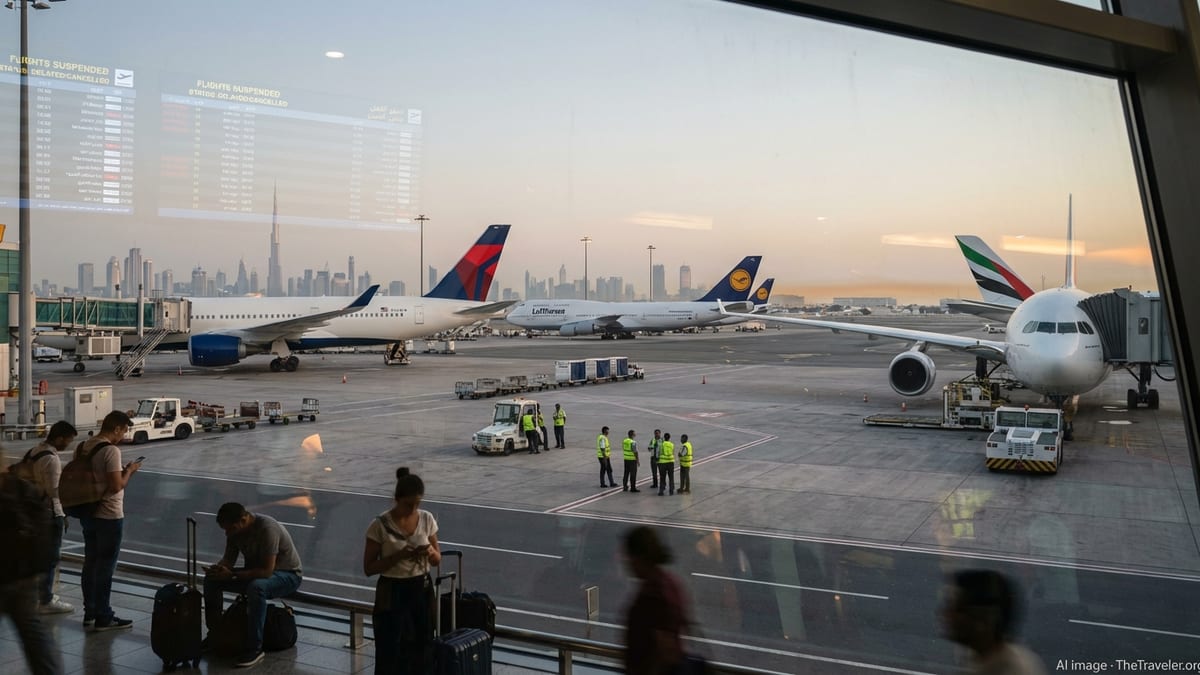
Selective Resumptions After Spring Shutdowns
Published coverage indicates that the gradual rebuild of Middle East flight schedules follows severe turmoil triggered by the 2026 Iran conflict, which led to sweeping airspace closures across Iran, Israel and several Gulf states in March and April. Many international carriers halted services outright to hubs such as Dubai, Doha, Abu Dhabi and Tel Aviv, while others diverted long-haul traffic around the region, adding hours to journey times.
By late April and May, data compiled by industry trackers and news outlets showed that some European and regional airlines had begun reinstating limited services, particularly on routes to Tel Aviv and key Gulf gateways. Greek, Spanish and other European carriers announced phased returns on selected city pairs, often starting with a handful of weekly rotations and keeping broader suspensions in place on more vulnerable routes.
Recent roundups of schedule changes describe a clear pattern: airlines are returning first to markets where they can rely on strong point-to-point demand or essential connectivity, while leaving more marginal links on hold. Network planners appear to be prioritising routes that can sustain higher fares and strong load factors, given the combination of geopolitical risk and sharply elevated fuel costs.
Despite these resumptions, the overall level of service to and over the Middle East remains well below pre-conflict expectations for summer 2026. Industry analyses suggest that thousands of flights originally planned for the peak season have been removed from schedules or retimed, especially on connections that would normally cross Iranian or adjacent airspace.
Key Routes Reopen While Others Stay Grounded
A series of recent factbox-style updates from global newswires highlights just how uneven the recovery is. Some airlines have restarted or scheduled near-term resumptions of flights to Tel Aviv, with select European carriers restoring services from late April through late June and a Spanish airline resuming its Tel Aviv operations on 29 June. In the transatlantic market, one major United States carrier intends to bring back New York–Tel Aviv flights on 6 September, while an originally planned Boston–Tel Aviv launch has been postponed indefinitely.
Elsewhere in the region, Gulf connectivity remains constrained. Publicly available information shows that a Finnish carrier has cancelled its Doha services until at least 2 October and continues to route around the airspace of Iraq, Iran, Syria and Israel, reflecting ongoing caution about direct overflight. Other European airlines have kept long suspensions in place for Beirut and certain Saudi Arabian destinations, in some cases pushing any return to those markets into late 2026 or even into future summer seasons.
Low-cost operators are also playing a significant role in shaping the new landscape. Reports on schedule filings show that one prominent budget airline has pushed back the resumption of flights to Israel until May, while keeping services from mainland Europe to Dubai, Abu Dhabi and Amman suspended until mid-September. Another carrier has indicated that its Dubai route will only return as a limited winter seasonal service, underlining the shift away from year-round flying on some Middle East leisure and business corridors.
For travelers, the result is a patchwork of possibilities: it may now be feasible to reach certain airports such as Tel Aviv or Dubai on non-stop flights from specific hubs, yet direct options remain scarce or nonexistent from others. In many cases, previously simple one-stop itineraries now require additional connections or a change of routing through alternative regions.
Rerouting, Longer Flight Times and Higher Costs
Even where flights are operating, many do so on significantly altered routings. Aviation and logistics bulletins released since March describe how carriers that would normally overfly Iran and neighboring states have shifted to longer paths skirting the region, often using corridors over Saudi Arabia, Egypt or the Eastern Mediterranean where available. These detours add flying time and fuel burn, intensifying cost pressures for airlines and contributing to higher fares on some long-haul sectors linking Europe, Asia and Africa.
Analysis from airline associations and consultancies points to a substantial reduction in planned capacity across the Middle East for the key summer months of June through August 2026. Industry estimates indicate that a notable share of scheduled seats to, from and over the region has been stripped out compared with plans drawn up before the conflict escalated, as airlines try to match supply with the new risk environment and volatile fuel prices.
Logistics updates focused on cargo and supply chains reinforce the picture of an industry still in flux. While major airports in Saudi Arabia and parts of the Gulf remain operational, capacity constraints, curfews and selective overflight restrictions have created bottlenecks on some lanes. Shipments and passenger services that depend on Middle East hubs for onward connections are facing longer transit times, less predictable schedules and, in certain cases, long waiting lists for available space.
For end passengers, these operational realities translate into practical challenges such as longer journey durations, tighter minimum connection times and a greater risk of missed onward flights. Travel advisors recommend allowing extra buffer time for transfers, particularly on itineraries that still rely on Middle Eastern hubs or that involve airlines known to be using extended detours around restricted airspace.
Regional Hubs Under Strain as Networks Realign
The disruptions have also altered the competitive dynamics among global hubs. As parts of the Middle East saw large numbers of flights cancelled in April and May, airports in Europe, South Asia and parts of Africa absorbed additional traffic, often serving as alternative waypoints for journeys that once flowed through Gulf super-connectors. Some carriers have boosted capacity on routes to India, Africa or Southern Europe to capture travelers rerouted away from traditional Middle Eastern stopovers.
According to recent travel industry coverage, airlines based outside the immediate conflict zone, including those in Asia and Europe, are reassessing the balance of their networks. Several have reduced or postponed growth in the Middle East while reinforcing services on more stable corridors, such as transatlantic links or intra-Asian routes, where operational risks and airspace uncertainties are lower. At the same time, regional players within the Middle East are working to rebuild their schedules and protect their role as connectors between continents, even if that means operating smaller networks for an extended period.
For major Gulf hubs, the gradual return of flights offers some relief after an intense period of cancellations, but passenger flows remain fragile. Travel demand into and through the region is sensitive not only to safety perceptions but also to visa rules, insurance conditions and corporate travel policies, many of which still impose restrictions on non-essential trips to certain countries affected by the conflict.
Industry observers note that the duration of this network realignment will largely depend on the course of regional diplomacy and security developments. While recent diplomatic efforts have encouraged some airlines to restore limited operations, a durable rebound in capacity and connectivity would likely require a more sustained easing of tensions and greater clarity around long-term overflight permissions.
What Travelers Should Expect Through Late 2026
For travelers planning trips in the second half of 2026, publicly available schedules and expert commentary suggest that conditions will remain changeable. Some key routes, including transatlantic links to Tel Aviv and European flights to Gulf hubs, are pencilled in to return over the coming months, but with caveats about potential date shifts or further temporary suspensions. Other destinations, such as certain Lebanese and Saudi airports, may see only intermittent or seasonal service for the foreseeable future.
Air passenger rights organizations stress that, even where flights are cancelled due to security-related airspace closures, airlines are generally still expected to offer refunds or rebooking options. However, compensation rules in many jurisdictions treat armed conflict as an extraordinary circumstance, which means travelers are less likely to be eligible for additional payouts when disruption stems directly from the regional crisis.
Experienced travel planners recommend that passengers with essential journeys build flexibility into their itineraries. That can include booking changeable tickets, monitoring airline schedule updates closely in the weeks before departure and, where possible, considering alternative routings that avoid the most volatile areas of airspace. Travelers with non-essential trips to the Middle East are increasingly opting to postpone or reroute via other regions until the outlook becomes clearer.
For now, the picture is one of cautious, uneven recovery: airlines are returning to the Middle East, but not on pre-war terms. Until airspace, security assessments and fuel markets stabilise, global flyers can expect a Middle East network that remains thinner, more fragmented and more vulnerable to renewed shocks than it was just a year ago.