


More news on this day
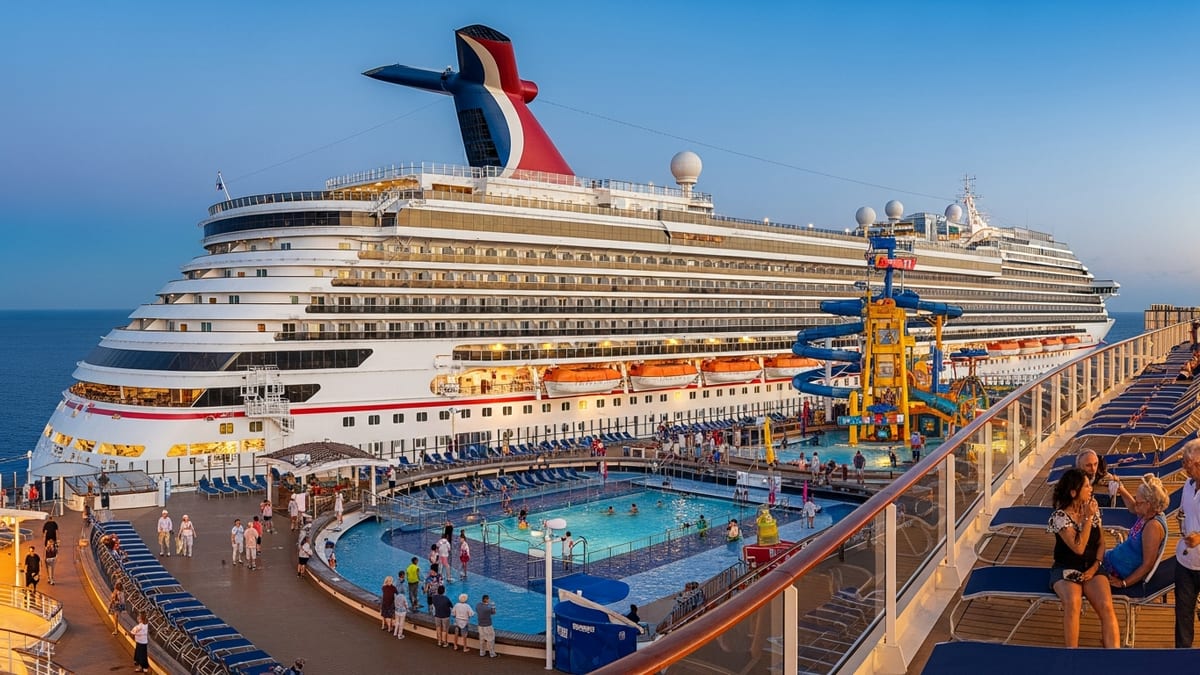
A routine sea day in the Baltic Sea for guests on Carnival Legend quickly turned into an online mystery this month, as social media posts claimed the cruise ship had run aground on a sandbar between Estonia and Finland. Within hours, tracking screenshots, secondhand accounts and anxious comments circulated widely, raising questions about what had actually happened in the busy northern shipping lanes.
Get the latest news straight to your inbox!
How the Sandbar Story Emerged
The episode unfolded on the evening of June 12, 2026, as Carnival Legend sailed from Tallinn, Estonia, toward Helsinki, Finland on a 12-night Scandinavia and Baltic itinerary. Passengers began sharing reports that the vessel had slowed sharply and appeared to be turning in circles, an unusual pattern that was quickly picked up by cruise-focused social media groups and message boards.
According to publicly available cruise-tracking maps referenced in multiple online reports, the ship did in fact reduce speed and make a series of course alterations in relatively shallow waters of the Gulf of Finland. To observers watching the track from shore, the looping path resembled the movements of a vessel that might be attempting to free itself after touching bottom.
Within a short time, blogs and smaller cruise news sites amplified passenger accounts, some describing what they believed was an “apparent grounding” near Estonia. One such report characterized the situation as a possible sandbar incident and noted that guests were unsure why the ship had paused during the overnight transit.
The combination of unusual navigation, limited real-time context and the inherently confined nature of cruise travel helped the rumor spread. Several accounts suggested that the ship might be waiting for assistance, even though there was no simultaneous evidence of distress calls or emergency diversions in marine safety bulletins.
What Tracking Data and Timetables Show
Subsequent analysis of the voyage, drawing on marine-traffic archives and cruise schedule information, points to a less dramatic scenario than the initial social media narrative. Tracking records reviewed by cruise-industry publications show Carnival Legend maintaining propulsion and maneuverability throughout the period in question, with speed variations typical of a vessel adjusting course in a congested or shallow area.
Published coverage citing those datasets notes that the ship did not remain stationary for extended periods consistent with a serious grounding. Instead, the track indicates a sequence of controlled turns before the vessel resumed its northwesterly route toward Helsinki. Marine navigation warnings issued in the broader Baltic region in June focused largely on military exercises and standard hazards, not on a stricken cruise ship blocking a key corridor.
Port timetables for Helsinki and subsequent calls also support the view that operations continued largely as planned. According to cruise schedule aggregators and travel agency listings, Carnival Legend arrived in Helsinki without major delay and went on to reach Nynäshamn, the gateway port for Stockholm, on June 14 with typical morning arrival and late-afternoon departure times.
These movements are consistent with a ship that may have temporarily adjusted its course or speed, but not one that had to be pulled free from the seabed or diverted for inspection at a nearby port. No widespread reports have emerged of itinerary cancellations, tendering disruptions, or emergency repairs tied to the June 12 sailing segment.
Clarifying Whether a Grounding Occurred
In the days after the incident, several cruise news outlets revisited the rumor, comparing passenger impressions with independent marine data. One widely shared analysis concluded that Carnival Legend had not struck a sandbar and had not been stranded, describing the event instead as a brief navigational adjustment that appeared unusual to those on board and watching online.
Those assessments point out that genuine groundings in confined waters typically leave clearer traces: abrupt halts in forward motion, prolonged periods with little or no progress, official notices to mariners, and often delayed or altered port calls. None of those indicators have been documented in connection with the June 12 transit.
Reports drawing on ship position logs emphasize that the vessel’s speed reductions were temporary and that course corrections were followed by a steady run toward Helsinki. Publicly available maritime safety databases for the Baltic region have not recorded a major casualty involving Carnival Legend in mid-June 2026.
On that basis, most recent coverage characterizes the sandbar story as an overstatement born from limited vantage points and the rapid amplification typical of social platforms, rather than a confirmed grounding or serious incident at sea.
Why the Baltic Can Confuse Cruise Watchers
The Baltic Sea, and particularly the Gulf of Finland, presents a complex navigational environment that can easily puzzle passengers and shore-based observers. The region combines shallow banks, narrow channels and dense commercial traffic, all of which often require large vessels to vary speed, change headings and follow traffic separation schemes that look odd on consumer mapping apps.
Cruise-tracking maps commonly used by enthusiasts simplify that complexity into a single moving icon and a trail of recent positions. When a ship slows to coordinate with pilots, avoid fishing vessels, or follow routing instructions in busy lanes, the resulting pattern can resemble circles, loops or zigzags that might be misread as signs of trouble.
In addition, satellite-based tracking feeds sometimes display delayed or fragmented position updates. This can create the impression that a vessel has stopped for long stretches when, in reality, it is continuing at reduced speed or briefly changing transmission intervals. In high-latitude regions like the Baltic, technical factors can further affect how smooth that digital track appears.
For cruise guests unused to seeing these patterns, an unannounced course alteration during evening or overnight hours may feel abrupt, especially when combined with vibration changes or scenery that seems to pause outside cabin windows. Those perceptions, shared in real time online, can quickly gain momentum before more complete data becomes widely discussed.
Passenger Concerns and the Importance of Transparency
The Carnival Legend sandbar rumor highlights the tension between real-time passenger experiences and the slower pace at which verified information tends to emerge. Guests reporting confusion on social platforms expressed frustration at not fully understanding why the ship had slowed or changed direction on a relatively short leg between two ports.
While publicly accessible data now suggests the voyage continued safely and without confirmed grounding, the episode underscores how quickly uncertainty at sea can evolve into a perceived incident. In an environment where cruise lines and port agencies are closely watched, even minor navigational maneuvers can generate an outsized reaction when not clearly contextualized.
Industry analysts note that clear, timely communication about speed reductions, weather deviations or traffic-related delays can help curb speculation and reassure guests, even when no emergency exists. At the same time, observers caution that not every operational adjustment can be preemptively explained, particularly on complex routes like those in the Baltic.
For travelers considering Northern Europe sailings, the Carnival Legend case serves as a reminder that online narratives about maritime events can be incomplete or misleading in their early stages. Comparing social posts with subsequent tracking reviews and published analyses provides a fuller picture of what actually occurred between the piers of Tallinn and Helsinki.