


More news on this day
Royal Caribbean guests booked on an upcoming sailing have been advised to delay their arrival at the embarkation terminal after the ship’s return to port was pushed back, prompting revised check in windows and raising fresh questions about how cruise lines manage tight turnarounds.
Get the latest news straight to your inbox!
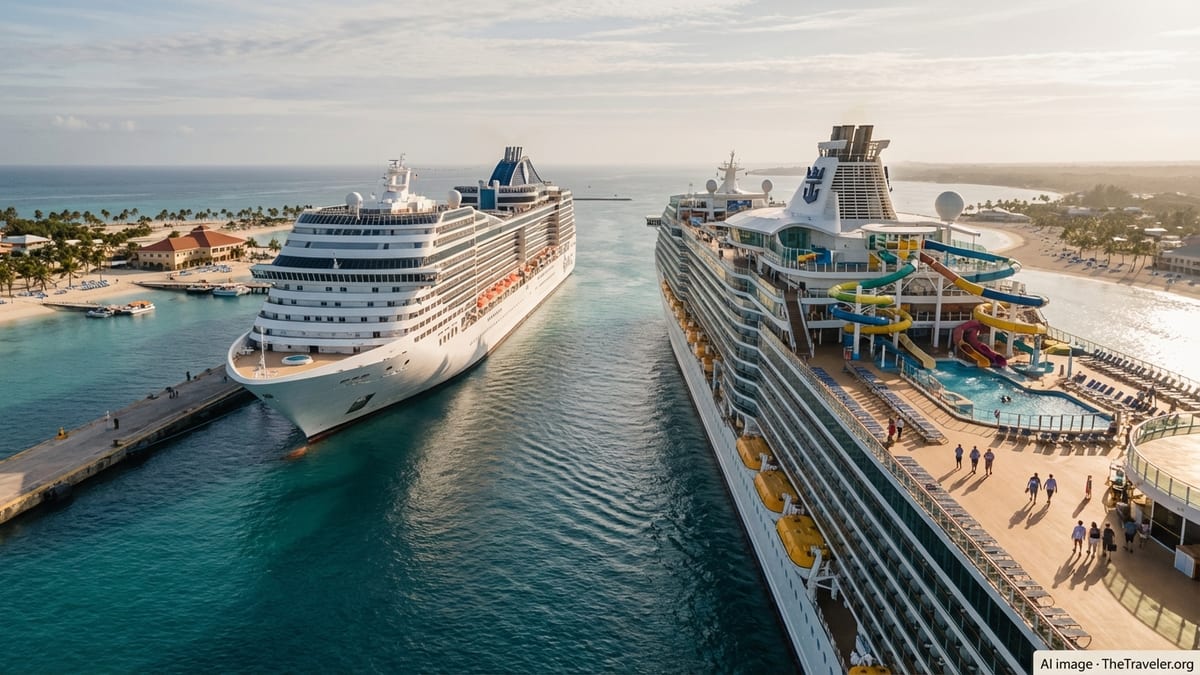
Late Return Disrupts Standard Turnaround Schedule
Reports from cruise tracking sites and port schedules indicate that a Royal Caribbean ship arriving later than planned has forced adjustments to the usual same day turnaround timetable. Cruise vessels typically arrive in the early morning, disembark thousands of guests, restock, and welcome new passengers within a matter of hours. When arrival is delayed, that compressed schedule leaves less time for security checks, provisioning, and cabin preparation.
In this instance, publicly available port information shows the ship’s scheduled morning docking shifted to a later slot, narrowing the window between final disembarkation and the next departure. Travel forums and social media posts suggest that, as the updated arrival time became clear, guests on the following sailing began receiving notifications to arrive later than originally scheduled in their cruise documents.
Royal Caribbean’s general travel updates emphasize that itineraries, port calls, and timings may change at short notice for operational or safety reasons. When a turnaround is affected, cruise lines frequently rely on staggered embarkation windows to control crowding inside the terminal and give onboard crews extra time to ready the vessel for new passengers.
While late returns remain relatively uncommon compared with on time arrivals, travelers familiar with large homeports note that even a modest delay can ripple through the day, affecting everything from ground transportation flows to the timing of pre booked dining and entertainment once aboard.
Guests Urged to Monitor Apps and Email Before Leaving Home
According to published guidance on the company’s website, Royal Caribbean uses its mobile app, email, and online check in tools to communicate updated boarding details, including assigned arrival windows. Travel discussion boards show guests comparing screenshots of revised check in times and advising others not to head for the cruise terminal before confirming the latest instructions on their devices.
Embarkation experts note that cruise lines increasingly rely on digital tools to smooth the boarding process. Assigned arrival slots are designed to avoid long queues at security and check in counters and to reduce waiting in confined indoor spaces. When a ship docks late, shifting those slots by an hour or more can prevent congestion and allow terminal staff to complete customs and immigration formalities for disembarking guests before the next wave arrives.
Recent conversations among Royal Caribbean passengers describe similar scenarios in which Coast Guard inspections, weather, or earlier technical checks led to slightly later boarding. In most cases, boarding simply began closer to midday than midmorning, with minimal impact on the overall cruise. Travelers are nevertheless encouraged to build flexibility into their plans by keeping mobile data active en route to the port or checking airport and hotel Wi Fi for last minute notices before arranging a ride to the terminal.
Publicly available FAQs from the cruise line stress that all guests must still complete standard pre boarding steps, including digital check in and required health and identity documentation, regardless of any timing changes. Having those items ready can help speed processing once embarkation finally begins.
Implications for Flights, Transfers and Shore Arrangements
For many passengers, the most immediate concern around a delayed return is how it affects same day travel plans. Fly cruise guests, in particular, often time their airport transfers to arrive near the early end of the original boarding window, hoping to settle into their cabins and explore the ship by lunchtime. When the ship arrives late and boarding shifts back, these travelers may face longer waits at nearby hotels, airports, or cruise terminals.
Booking conditions for Royal Caribbean indicate that the line does not guarantee specific arrival or departure times and that schedules may change due to factors outside the company’s control. For guests who have purchased air or transfers through the cruise line, adjustments are typically coordinated within the broader package, but travelers arranging their own flights may have fewer options once tickets are booked.
Travel advisers observing the latest disruption suggest that guests with late day boarding on the same date as arrival should consider flexible transfer arrangements and avoid tightly timed plans in the port city. Some recommend allowing extra time between flight arrival and terminal check in and being prepared to wait in a hotel lobby, café, or airport area if the cruise app indicates that boarding has not yet opened.
Shore side operators located near major cruise terminals also watch for these schedule shifts. When a vessel’s arrival and departure pattern changes, local tour departures, luggage storage operations, and private transfer services may need to adjust pick up windows to match the new flow of passengers heading to and from the pier.
How Cruise Lines Handle Operational Delays
Operational delays are a known risk in the cruise industry, and lines outline this in their ticket contracts and booking conditions. These documents generally state that the ship’s master and the company retain discretion to alter routes, port calls, and timings in response to weather, port congestion, safety inspections, or technical needs. In practice, a late return on turnaround day typically translates into restricted terminal access rather than a wholesale cancellation of the voyage.
Industry observers note that modern cruise ships operate on finely tuned schedules, with overnight sailing speeds and departure times calculated to match slot allocations in each port. When a storm system, medical diversion, or mechanical inspection interrupts that rhythm, crews work to recover the timetable without compromising safety or regulatory requirements. Guests joining the next sailing may only see the final stage of that process as a notification advising them to arrive later than planned.
Discussion threads from recent Royal Caribbean voyages suggest that, when late docking disrupts disembarkation and boarding, the company has on occasion offered small gestures such as adjusted onboard credit, revised shore excursion plans, or priority processing for affected guests. However, any response varies by sailing, and the line’s published terms emphasize that compensation is not guaranteed for delays beyond its control.
Cruise commentators add that, although delays can cause frustration at the start or end of a holiday, they can also reflect a cautious operational approach, particularly when port authorities, pilots, or maritime safety agencies impose speed reductions or temporary closures along busy coastal approaches.
Advice for Travelers Facing a Delayed Embarkation
Seasoned cruisers following the latest Royal Caribbean disruption are offering practical suggestions for those preparing to sail. Chief among them is the recommendation to treat printed cruise documents as provisional and to rely instead on the most current details in the cruise line’s app or online portal. Guests are also encouraged to enable notifications and verify check in times before ordering a taxi, rideshare, or shuttle to the pier.
Travel planners advise allowing more buffer time than might seem strictly necessary between a morning flight and an afternoon boarding, particularly during seasons prone to storms or heavy port traffic. Booking flights that land earlier in the day and considering an overnight stay near the departure port can reduce stress if the ship’s return is delayed or if embarkation is pushed back.
For those already en route when a notification arrives, observers note that arriving slightly early at the terminal is usually preferable to cutting it too close to the final check in deadline, even when the cruise line asks guests not to show up before their assigned slot. Port staff may direct early arrivals to waiting areas until the building is cleared and ready, whereas late arrivals risk missing boarding once security closes.
As the latest Royal Caribbean sailing illustrates, a delayed ship return can quickly cascade into a more crowded, compressed embarkation process. Travelers who stay informed, remain flexible with their schedules, and prepare for potential waiting time at the port are generally better positioned to start their cruise with minimal disruption.