


More news on this day
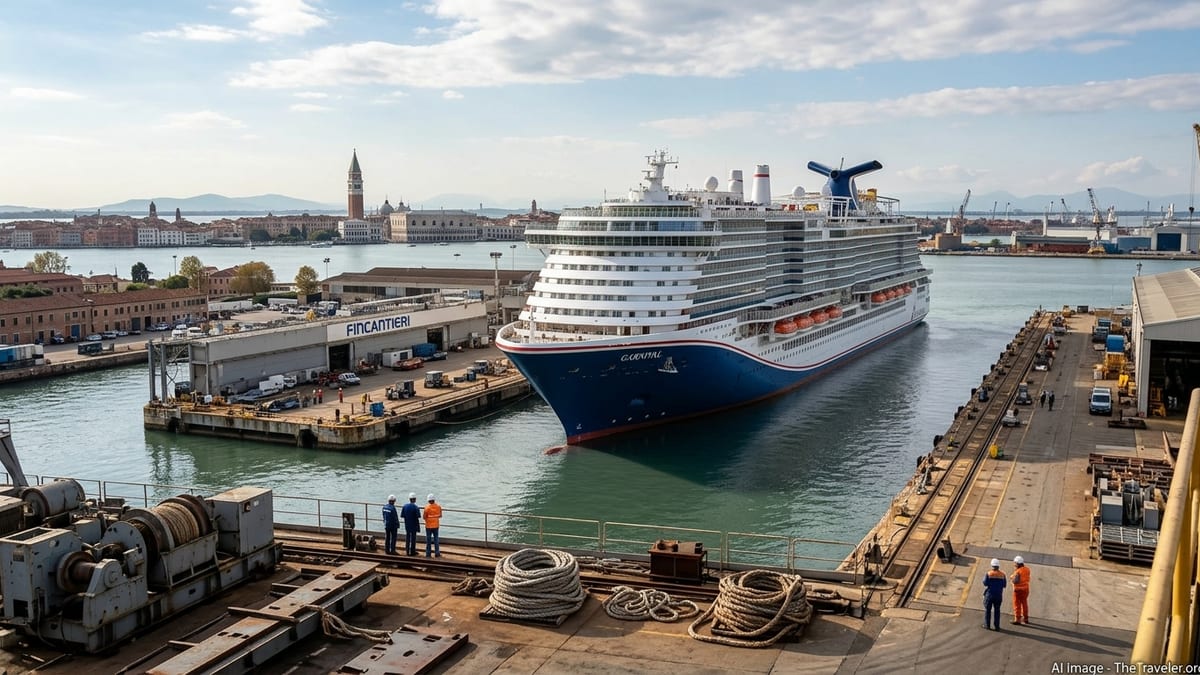
Carnival Cruise Line has ordered two new LNG-powered cruise ships from Italian builder Fincantieri, a more than US$2.2 billion investment in a mid-size class intentionally designed to reach more ports than the line’s current megaships, with deliveries scheduled for 2033 and 2035.
Get the latest news straight to your inbox!
What Carnival Has Ordered and When They Arrive
The newly signed contract between Carnival Corporation and Fincantieri covers two dual-fuel, LNG-powered ships of about 130,000 gross tons, each with roughly 1,650 guest cabins. The vessels will be built at Fincantieri’s Marghera shipyard near Venice, extending a long-running shipbuilding relationship between the U.S. cruise giant and the Italian yard.
According to statements from both companies, deliveries are planned for 2033 and 2035, placing these ships firmly in the next phase of Carnival’s fleet growth rather than its current booking horizon. As with any decade-long shipbuilding program, these dates are targets rather than guarantees for travelers, and deployment specifics will only be confirmed closer to launch.
Financial disclosures from Fincantieri and market reports value the order at more than 2 billion euros, equivalent to upwards of US$2.2 billion at current exchange rates. That figure reflects not just the physical construction but also a new platform that incorporates Carnival’s latest design, digital and energy-efficiency features.
A Deliberate Pivot Toward Mid-Size Flexibility
Carnival describes the new class as “intentionally designed on a smaller scale” compared with its Excel-class megaships, which are over 180,000 gross tons. The cruise line has explicitly linked the mid-size tonnage to its goal of accessing more ports and broadening destination choices, particularly from U.S. homeports where harbor depth, pier length or terminal capacity can limit the largest vessels.
At around 130,000 gross tons, the new ships sit between Carnival’s current Excel class and its older Vista and Dream classes, which already operate from a variety of U.S. and Mediterranean ports. This size bracket is significant for planners because it can ease constraints on berth availability and maneuvering in tighter harbors, potentially supporting itineraries that combine marquee cities with smaller coastal calls.
For travelers, the key implication is variety rather than an immediate change to available sailings. Carnival has not yet announced homeports, regions or onboard concepts for the new class. The company’s messaging, however, positions these ships as tools to expand geographic options over the next decade rather than simply adding more capacity on its busiest big-ship routes.
How the New Class Fits Alongside Carnival’s Megaships
The order does not replace Carnival’s investment in its largest Excel-class vessels. The line’s fleet plan now includes two more Excel ships scheduled for 2027 and 2028, as well as three even larger LNG-powered ships being built by Fincantieri for delivery starting in 2029 under a separate program. The newly announced 130,000‑GT duo will follow later, adding a different size category rather than signaling a retreat from megaships.
This staggered pipeline means that through the early 2030s Carnival will take delivery of both very large and mid-size LNG ships. For travelers, that translates into a wider choice between high-capacity “floating resort” experiences and ships that are still sizable but better suited to a broader mix of ports.
Carnival has not released capacity figures or design details for the new class beyond gross tonnage, cabin count and LNG propulsion. Until deck plans, public-space concepts and passenger numbers are published, comparisons with existing classes can only be framed in terms of ship size and fuel type rather than specific onboard amenities.
Italy, Venice Rules and the LNG Dimension
Building the ships at Marghera connects the project directly to Italy’s historic cruise shipbuilding industry, even as the country has tightened rules on where large cruise ships can sail. Since 2021, Italian law has permanently prohibited large cruise vessels from transiting Venice’s San Marco basin and Giudecca Canal, with national authorities working to redirect traffic to alternative ports in the region instead of the historic center.
The new Carnival order is not framed as a direct response to Venice’s restrictions, and the company has made no specific claims about deploying the ships there or to any other Italian city. However, the choice of a mid-size platform aligns with a broader regulatory and community focus in Europe on ship size, port access and the distribution of cruise traffic beyond the most sensitive urban waterfronts.
LNG will be the primary fuel for the new class, consistent with Carnival’s existing Excel ships and other LNG-powered vessels across its parent company’s brands. LNG propulsion can significantly reduce certain air pollutants compared with conventional marine fuel, but it is not emissions-free and the companies have stopped short of describing these ships as a complete environmental solution. Travelers should view LNG as one element of an efficiency-focused design rather than a guarantee of low-impact cruising.
What Travelers Should Watch Next
Because deliveries are scheduled for 2033 and 2035, the new class does not affect near-term booking decisions. No itineraries, homeports or deployment regions have been announced, and there is no indication yet of when the first sailings will go on sale. Prospective passengers should expect concrete details, including ship names and initial routes, to emerge gradually in the late 2020s and early 2030s.
In practical terms, the news signals that Carnival plans to balance very large ships with slightly smaller LNG vessels designed to unlock a wider range of coastal ports in the United States, Italy and the broader Mediterranean, subject to local regulations and port infrastructure. Travelers interested in itineraries that mix big-city calls with secondary harbors may find more options once this class enters service.
Given the long lead times and potential for schedule adjustments, anyone considering future travel on these yet-to-be-built ships should reconfirm launch timelines, homeport assignments and route details before making plans tied to specific years. For now, the announcement mainly offers a preview of how “America’s Cruise Line” is shaping its fleet for the next decade of coastal cruising.