


If you spend your vacation days chasing sea breezes and sail-away parties, the Carnival World Mastercard can look like an easy way to turn everyday purchases into free drinks and onboard credit. But cruise credit cards are rarely simple. Between FunPoints, intro bonuses, and shifting loyalty rules, it can be hard to tell whether this card is a smart rewards tool or just cruise-themed plastic. This review takes a real-world, cruiser-focused look at what the Carnival World Mastercard actually offers today, and whether it deserves a spot in your wallet.
Get the latest updates straight to your inbox!
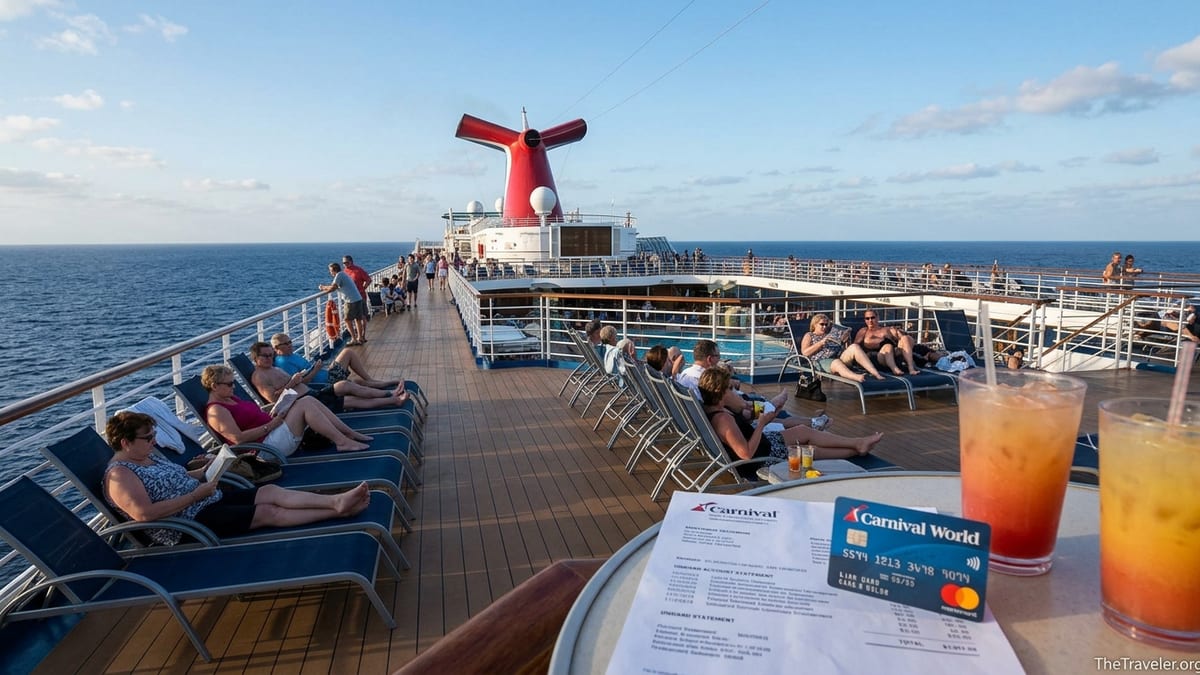
How the Carnival World Mastercard Works Today
The Carnival World Mastercard is issued by Barclays and co-branded with Carnival Cruise Line. The core sales pitch is straightforward: no annual fee, a welcome bonus that converts into onboard credit, and extra rewards on Carnival purchases. As of mid-2026, the publicly advertised offer is 30,000 FunPoints after you spend 1,000 dollars in the first 90 days, which Carnival markets as worth 300 dollars in onboard credit on a future sailing. That is essentially a one-time rebate toward a cruise you are already planning to take, provided you redeem correctly.
On an ongoing basis, the earning structure is simple but not especially rich compared with broader travel cards. You earn 2 FunPoints per dollar on purchases with Carnival Cruise Line and other Carnival Corporation brands such as Princess Cruises, Holland America Line, Cunard, Costa, AIDA, P&O Cruises, P&O Cruises Australia, and Seabourn. All other purchases earn 1 FunPoint per dollar. There are no rotating categories, no caps, and, at present, no expiration on unused FunPoints as long as your account remains open and in good standing.
From a cruiser’s perspective, the other headline features matter just as much as the points. The card currently has no annual fee and no foreign transaction fees on international purchases, which immediately separates it from many entry-level rewards cards that still charge around 3 percent on overseas transactions. Carnival and Barclays also run a 0 percent promotional APR for six months on qualifying Carnival cruise bookings made with the card, after which a variable rate in roughly the high teens to upper 20s percent applies depending on your credit profile. That promotional window can soften the blow of a big family cruise if you are disciplined about paying it off before interest kicks in.
In short, the Carnival World Mastercard is structurally a simple, fee-free co-branded card that earns modest rewards and offers financing perks tailored to Carnival loyalists. The real question is not what it does, but whether what it does is actually valuable for the way you cruise and spend.
Earning FunPoints: What You Actually Get for Your Spending
To understand if this card is “worth it,” you have to translate FunPoints into something closer to cash. The card advertises 2 FunPoints per dollar on Carnival and associated cruise brands and 1 point per dollar elsewhere. When redeemed optimally toward Carnival cruise purchases or onboard credit, those points typically line up close to 1 cent per point. That means 2 FunPoints per dollar is roughly a 2 percent return in value, while 1 FunPoint per dollar is about 1 percent back.
To put that in concrete terms, imagine you book a 2,000 dollar Caribbean sailing on Carnival Celebration and charge it to the Carnival World Mastercard. You would earn about 4,000 FunPoints from that booking. If you later redeem those points at roughly 1 cent each toward onboard credit on your next cruise, you are looking at around 40 dollars in value. Add in another 500 dollars in onboard spending on that first sailing, plus 10 months of everyday purchases at 1 point per dollar, and a realistic cruiser might end the year with 10,000 to 15,000 FunPoints worth perhaps 100 to 150 dollars.
For a traveler who cruises once a year with Carnival and uses the card purely for those expenses, that is not terrible, but it is not exceptional either. A simple 2 percent cash-back card used on all purchases, including your cruise, would net you roughly the same 40 dollars on a 2,000 dollar booking and then deliver more value on everyday categories like groceries and gas. Where the Carnival card’s earning structure becomes more compelling is for guests who sail Carnival or its sister brands multiple times per year, or who like the idea of building a specific cruise-only piggy bank in the form of FunPoints rather than flexible cash or transferable points.
It is also important to recognize what you do not earn. Compared with many general travel cards that offer 3x or more on dining, supermarkets, or travel generally, the Carnival World Mastercard gives you just 1x FunPoints in those categories when you are not paying Carnival or its cruise siblings directly. If much of your spending happens on land at restaurants, rideshares, hotels and home, you could be leaving a meaningful amount of rewards on the table by making this your everyday card rather than a niche tool for cruise purchases.
Redeeming FunPoints: Onboard Credit, Cruise Purchases, and Pitfalls
Where cruise cards often sink or swim is on their redemption side, and the Carnival World Mastercard is no exception. The cleanest and usually best-value way to use FunPoints is to apply them as statement credits against qualifying Carnival purchases or to turn them into onboard credit for a future sailing. In the current program design, 30,000 FunPoints from the welcome bonus are marketed as yielding 300 dollars in onboard credit. That works out to roughly 1 cent per point, which is competitive for a no-annual-fee, co-branded product.
Consider a real-world scenario. A couple books a seven-night Western Caribbean itinerary on Mardi Gras for 2,400 dollars and uses the card to pay in full. Between the 30,000-point welcome bonus and the 4,800 points from the fare itself, they end up with around 34,800 FunPoints in their first three months. Before their next cruise the following year, they call Barclays and redeem 30,000 points for 300 dollars of onboard credit, which they then use to cover specialty dinners, cocktails by the pool, and a shore excursion in Cozumel. In this use case, the card has directly reduced the cost of their vacation in a tangible way.
The picture gets murkier when you stray from that optimal path. Some alternative redemption options, such as gift cards or general statement credits unrelated to Carnival purchases, may work out to less than 1 cent per point. Until recently, many savvy cruisers also noted that targeting large cruise purchases could occasionally yield better-than-1-cent value, but this sort of sweet spot is not something you can reliably count on, especially as Carnival and Barclays periodically adjust terms and minimum redemption thresholds.
Another pitfall is psychological. Because FunPoints live in a closed ecosystem tied to Carnival, it is easy to treat them as “free money” and overspend onboard. Charging a 150 dollar spa treatment on Carnival Vista feels different when it is covered by 15,000 points you accumulated over the year. In reality, those points came from your previous spending and could just as easily have been 150 dollars in flexible cash back or travel points with a more general card. If you use the Carnival World Mastercard, it helps to treat every 100 points as roughly 1 dollar you have earned and to decide whether a redemption really aligns with something you value.
Practically speaking, most cruisers who are methodical about their bookings can extract close to that 1 cent per point value by planning ahead. Applying points toward a future cruise or pre-purchasing beverage packages and excursions is usually the safest strategy, while one-off merchandise or lower-value gift card redemptions should be approached with more caution.
Fees, Foreign Spending, and Travel Protections for Real Travelers
From a fee standpoint, the Carnival World Mastercard is appealingly simple. There is no annual fee, so holding the card costs nothing as long as you do not pay interest. For many budget-conscious cruisers, this is a major selling point. You can open the card for the sign-up bonus, keep it in a drawer when you are not cruising, and not worry about offsetting a yearly charge.
The lack of foreign transaction fees matters both onboard and ashore. Most credit cards that do charge foreign transaction fees add about 3 percent to any purchase processed overseas. For a family who spends 1,500 dollars in Europe on shore excursions, meals in port, and souvenirs, that would be around 45 dollars in extra, invisible fees if they used the wrong card. Because the Carnival World Mastercard waives this surcharge, you can use it in Cozumel, Nassau, Barcelona or Athens without that extra penalty. That is particularly helpful on European or Mediterranean itineraries where every port stop involves foreign merchants.
However, the card is not a full-featured travel powerhouse. While Mastercard’s World-level benefits add some baseline travel and purchase protections, the Carnival World Mastercard does not typically include the more robust insurance perks of premium travel cards. You should not expect comprehensive trip cancellation coverage, generous trip delay reimbursements or primary rental car insurance like you would find on a mid-tier travel card from Chase or Capital One. For example, if your flight to Miami is canceled and you miss embarkation for Carnival Magic, relying solely on this card’s protections may leave you paying out of pocket for hotels and rebooking costs.
In realistic travel planning terms, that means the Carnival World Mastercard works best as a specialized tool: excellent for purchasing your cruise, using onboard, and swiping in foreign ports at no extra fee, but less ideal as your only card for complex multi-leg trips. Many frequent cruisers pair it with a broader travel rewards card that provides richer insurance and higher earning rates on flights, hotels, dining and everyday spending, then bring both cards on board.
How It Compares to Other Travel and Cruise Credit Cards
Co-branded cruise credit cards generally follow a similar pattern: no annual fee, modest sign-up bonus, solid perks if you are deeply loyal to one line, and lackluster rewards everywhere else. The Carnival World Mastercard fits this template almost exactly. If you look at competitors like the Norwegian Cruise Line World Mastercard or the Royal Caribbean Visa, you will see comparable 2x earning on line-specific purchases and 1x elsewhere, along with welcome bonuses in the 150 to 250 dollar range. Where the differences often emerge is in how easy the points are to redeem and whether the underlying issuer offers extras like companion discounts or higher-value onboard perks.
Against general travel cards, the Carnival World Mastercard has a harder time standing out. A popular no-annual-fee travel card might offer 1.5 percent back on everything or 3x points on dining, groceries, or all travel purchases, including airline tickets and hotels. If you spend most of your year on land and only step onto a Carnival ship once every couple of seasons, those general cards can often generate two or three times the rewards value for the same lifestyle. For instance, putting 20,000 dollars of combined groceries, gas, dining, and travel onto a flat 2 percent cash-back card would yield 400 dollars in rewards. The same spending on the Carnival card, largely at 1x, might produce only about 200 dollars’ worth of FunPoints.
For truly devoted Carnival fans, however, value is not only about math. The ability to funnel rewards into a specifically earmarked cruise fund can be motivating. Many frequent cruisers like knowing that every grocery run and streaming subscription payment is chipping away at a future balcony upgrade on Carnival Jubilee or a special Chef’s Table dinner. In that sense, the Carnival World Mastercard functions like a purpose-built savings tool that keeps cruise dreams top of mind. If that psychological benefit keeps you engaged and helps you plan better vacations without incurring interest, it is a legitimate part of the card’s appeal.
The other aspect to watch is Carnival’s evolving loyalty ecosystem. In recent years Carnival has begun tying credit card spending and separate “Carnival Rewards” points more closely to onboard status levels. The details continue to change and overlap with its long-running VIFP loyalty program, but the clear direction is that heavy spenders on Carnival-branded financial products may be able to accelerate progress toward perks like priority boarding, laundry benefits, and exclusive offers. If you are aiming for higher tiers and expect to cruise with Carnival for the next decade, that evolving integration may tilt the scales slightly in favor of having the card, even if your pure cents-per-point calculation looks average.
Who Should Get the Carnival World Mastercard (and Who Should Skip It)
Looking at the card from a cruiser’s point of view, there are three main profiles for whom the Carnival World Mastercard makes sense. First are Carnival loyalists who sail the brand or its sister lines at least once a year and like the simplicity of having a dedicated cruise card with no annual fee. For these travelers, opening the card, grabbing the 30,000-point welcome bonus, and then using it for each new cruise booking can reliably shave a few hundred dollars off vacation costs over time.
Second are travelers who frequently cruise in regions where foreign transaction fees would otherwise eat into their budgets, such as European or transatlantic itineraries. A couple taking a Mediterranean sailing on Carnival Legend that includes Spain, Italy, and Greece could easily spend 1,000 to 1,500 dollars in port on tours and meals. Having a no-foreign-transaction-fee card like this one ensures they avoid the extra 30 to 45 dollars many mainstream cash-back cards would quietly tack onto those transactions.
Third are budget-conscious travelers who need short-term interest-free financing on a specific Carnival booking and are confident they can pay the balance in six months. A family booking a 3,000 dollar holiday cruise on Carnival Panorama might appreciate the ability to divide that cost over half a year at 0 percent promotional APR instead of tying up savings or using a higher-interest card. Provided they pay off the entire amount before the regular APR kicks in, the value of that financing can outweigh the relatively modest rewards structure.
On the flip side, you should likely skip the Carnival World Mastercard if you only sail Carnival every few years, if you prioritize maximum rewards on everyday categories like dining and groceries, or if you already hold a strong general travel card with better earning rates and trip protections. In those situations, treating your cruise like any other travel purchase and using a more flexible rewards card will usually leave you with more usable value. It can also make it easier to pivot to other lines like Royal Caribbean or Norwegian without feeling locked into a single ecosystem.
The Takeaway
Viewed through a clear-eyed, cruiser-focused lens, the Carnival World Mastercard is neither a must-have gem nor a useless gimmick. It is a solid, no-annual-fee co-branded card that does exactly what it promises: earns modest FunPoints on Carnival and sister-brand purchases, provides a straightforward welcome bonus worth about 300 dollars in onboard credit, and lets you spend abroad without foreign transaction fees.
Where it falls short is in its everyday earning power and its relatively narrow redemption universe. For many travelers, a general travel or cash-back card will generate more total value on the same spending and offer stronger travel protections on flights and hotels. But if you find yourself repeatedly drawn back to Carnival’s fleet, enjoy the idea of building a cruise-only rewards stash, and appreciate not having to manage annual fees, the Carnival World Mastercard can be a practical, targeted addition to your wallet.
The key is to treat it like a specialized tool: use it to book your Carnival cruises, capture the welcome bonus and 2x earnings on cruise purchases, redeem points smartly for onboard credit or cruise charges, and then let a more flexible card handle the rest of your life. Approach it that way, and the Carnival World Mastercard can quietly, and consistently, make your days at sea just a little more affordable.
FAQ
Q1. Does the Carnival World Mastercard have an annual fee?
The Carnival World Mastercard currently has no annual fee, so you can keep it open without paying a yearly charge as long as you avoid interest.
Q2. What is the current welcome bonus on the Carnival World Mastercard?
As of mid-2026, the card is offering 30,000 FunPoints after you spend 1,000 dollars in the first 90 days, which Carnival advertises as worth 300 dollars in onboard credit.
Q3. How many points do I earn on Carnival cruise purchases?
You earn 2 FunPoints per dollar spent on eligible purchases with Carnival Cruise Line and other Carnival Corporation brands such as Princess, Holland America, and Cunard.
Q4. How many points do I earn on everyday spending that is not with Carnival?
On all other purchases that are not with Carnival or its sister brands, the Carnival World Mastercard earns 1 FunPoint per dollar, which is roughly equivalent to about 1 percent back in value.
Q5. What is the best way to redeem Carnival FunPoints?
The most practical and usually highest-value option is redeeming FunPoints as statement credits against Carnival cruise purchases or as onboard credit for a future sailing, where they tend to be worth about 1 cent per point.
Q6. Do FunPoints expire if I do not cruise every year?
Under current terms, FunPoints do not expire as long as your Carnival World Mastercard account remains open and in good standing, though program rules can change and should be checked before relying on long-term storage.
Q7. Does the Carnival World Mastercard charge foreign transaction fees?
No, the card does not charge foreign transaction fees on international purchases, which makes it useful in foreign ports and on itineraries that visit multiple countries.
Q8. Is the Carnival World Mastercard a good primary travel card?
For most travelers, it works better as a secondary, cruise-specific card. General travel cards typically offer higher earning rates on flights, hotels, and dining, plus stronger travel insurance and protections.
Q9. Can I use FunPoints for things other than cruises?
There are alternative redemption options such as some gift cards or general statement credits, but these can deliver lower value than using points directly toward Carnival cruises or onboard spending.
Q10. Will using the Carnival World Mastercard help my Carnival loyalty status?
Carnival has been integrating credit card activity into its broader rewards ecosystem, and heavy spending may contribute to certain status-related benefits, but the details are evolving and you should review current program rules before counting on it.