


More news on this day
Royal Caribbean has resurrected one of its most storied ship names, Legend of the Seas, for a new Icon-class megaship entering service in 2026, inviting inevitable comparisons with the compact 1990s original that helped shape the line’s modern fleet.
Get the latest news straight to your inbox!
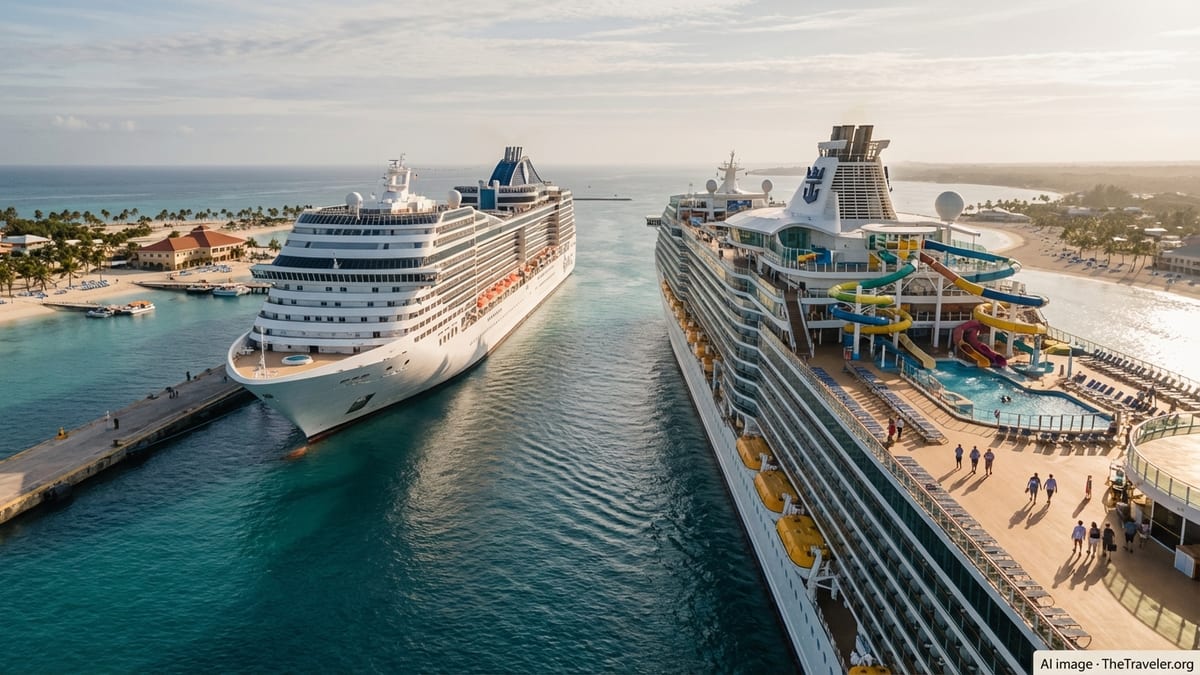
From Vision-Class Pioneer to Retired Workhorse
The original Legend of the Seas entered service in the mid-1990s as part of Royal Caribbean’s Vision class, a series of ships defined by their relatively modest size and glass-heavy superstructure that emphasized ocean views. Public information indicates that the ship measured roughly 69,000 gross tons and carried around 1,800 passengers at double occupancy, a scale that at the time placed it firmly in the mainstream market rather than the mega-ship category.
Reports on the vessel’s specifications show that Legend of the Seas was built at the Chantiers de l’Atlantique yard in France and tailored for longer itineraries, including extended seasons in Asia and Europe. Its design featured a rock-climbing wall, a signature Royal Caribbean amenity of the era, as well as a single golf area and a traditional main dining room supplemented by casual venues typical of 1990s cruise hardware.
Over its Royal Caribbean career, the original Legend of the Seas served an evolving role as newer, larger ships joined the fleet. It transitioned toward secondary markets and less capacity-intensive deployments, reflecting the brand’s move toward bigger resort-style vessels. Eventually Royal Caribbean sold the ship, and it was renamed Marella Discovery 2 under the Marella Cruises banner, continuing to operate in the British holiday market as a mid-sized, family-friendly cruise ship.
The retirement of the original vessel from the Royal Caribbean fleet left the Legend of the Seas name dormant for several years. As the company expanded into ever-larger newbuilds, the Vision-class ship stood as a reminder of an era when sub-70,000-ton vessels could still be considered cutting-edge for a family cruise line.
A Name Reborn on an Icon-Class Megaship
Royal Caribbean announced in 2025 that its third Icon-class ship would revive the Legend of the Seas name, placing it on one of the largest cruise ships yet built. According to published coverage and company materials, the new Legend of the Seas comes in at approximately 250,000 gross tons, more than tripling the size of its 1990s predecessor and positioning it among the world’s largest passenger vessels.
The ship was constructed at the Meyer Turku shipyard in Finland, part of the same program that produced Icon of the Seas and Star of the Seas. Publicly available information shows that Royal Caribbean took delivery of the new Legend of the Seas in June 2026, following sea trials in the Baltic and a float-out that drew attention from cruise industry watchers for the ship’s scale and onboard amenities.
The new Legend of the Seas is scheduled to begin commercial service in mid-2026, with early reports indicating inaugural itineraries in the Mediterranean before repositioning to the Caribbean. The decision to attach a historically significant name to an Icon-class ship underscores Royal Caribbean’s effort to blend brand nostalgia with its latest generation of hardware.
Industry observers note that the reuse of a legacy ship name on a flagship vessel is part of a broader pattern in cruise branding, where lines seek continuity between older fleets and new tonnage. In this case, the contrast between the two Legends highlights how dramatically Royal Caribbean’s scale and ambitions have grown over the past three decades.
Design Evolution: Glassy Vision-Class to Floating Resort City
While the original Legend of the Seas was considered advanced for its time, with large windows and ample outdoor deck space, its layout followed a traditional linear progression of lounges, dining rooms, and cabins. The ship featured a single main pool area, a small spa and fitness center, and limited specialty dining, reflecting the prevailing cruise model of the 1990s.
By contrast, the new Legend of the Seas adopts the Icon-class approach of dividing the vessel into themed neighborhoods. Published descriptions highlight multiple distinct zones, including family-focused areas, adult-only sanctuaries, and high-activity spaces built around headline attractions. Reports indicate that the ship will feature seven pools, among them Royal Bay, billed as the largest pool at sea, and the Hideaway, an adults-only retreat with a suspended infinity-style pool.
The water-based amenities alone represent a leap in ambition compared with the first Legend. The new ship will debut Category 6, described in public materials as the largest waterpark at sea, complete with multi-story slides. Another signature feature, Crown’s Edge, combines a skywalk, ropes course, and thrill ride extended high over the ocean, marking a far more extreme interpretation of the action-oriented features that began with simple rock-climbing walls on the earlier Vision-class ships.
Interior design has evolved as well. Where the original Legend focused on lounges and theaters with conventional seating, the new Icon-class namesake incorporates immersive entertainment venues and interactive dining concepts. One standout example cited in coverage is Royal Railway – Legend Station, a specialty restaurant that recreates a train journey with a multi-course menu and visual storytelling, a concept far removed from the flat-plan main dining rooms of the 1990s vessel.
Onboard Experience: From Classic Cruising to Multi-Generational Hub
The first Legend of the Seas targeted a broad but relatively traditional cruise demographic, with entertainment centered on mainstage shows, casino gaming, and scheduled activities led by staff. Children’s facilities were comparatively modest, and dining revolved around fixed-seating dinner in the main restaurant, with one or two casual alternatives catering to buffet and snack demand.
In contrast, the new Legend of the Seas is overtly framed as a multi-generational destination in its own right. Publicly available materials emphasize that the ship offers 28 dining options, ranging from casual quick-service counters to upscale specialty venues, allowing families and groups to dine flexibly without repeating venues during a typical week-long itinerary. This proliferation of restaurants is emblematic of how modern mega-ships seek to compete directly with land-based resorts.
The family experience has also expanded. The Icon-class platform integrates Surfside, a dedicated family neighborhood with splash areas, kid-focused eateries, and accommodations designed for parents and children traveling together. The new Legend of the Seas inherits and refines this model, setting it apart from the original Legend, where family programming was largely limited to a children’s club, a main pool, and a video arcade.
Nightlife has undergone a similar transformation. While the 1990s vessel offered a handful of bars, lounges, and a late-night disco, the new ship layers in themed bars, live music venues, and headline evening productions staged in advanced theaters. Reports note that the entertainment lineup is designed so guests can choose between multiple large-scale shows and more intimate performances on any given night, a level of variety not feasible on a ship the size of the original Legend.
Capacity, Itineraries and Environmental Footprint
One of the starkest differences between the two ships is capacity. The original Legend of the Seas carried under 2,000 guests at double occupancy, with a crew complement of roughly 700. That ratio supported a more intimate onboard atmosphere but limited the revenue potential per sailing, especially as rival lines introduced ever-larger vessels in the 2000s and 2010s.
The new Legend of the Seas, by comparison, is expected to accommodate several thousand passengers, with some published estimates approaching or exceeding 7,000 guests when fully occupied. That expansion reflects the economics of contemporary shipbuilding, where larger vessels can offer more chargeable experiences while benefiting from economies of scale in fuel consumption and staffing.
Itinerary strategy has evolved alongside capacity. The original Legend spent much of its career in varied deployment, including Asia, Europe, and occasionally North America, serving as a flexible mid-sized platform. The Icon-class Legend is slated to launch with high-profile Mediterranean sailings before repositioning to the Caribbean, concentrating on marquee destinations that can handle its size and throughput at the pier.
Environmental performance is another area where the new ship diverges sharply from its predecessor. While specific technical details for the 1990s Legend reflected standards of its era, the new Icon-class Legend incorporates more advanced technologies, including modern waste treatment systems and energy-efficient design features. Industry reports highlight these upgrades as part of a broader shift in cruise ship engineering, as large operators respond to regulatory pressure and growing consumer scrutiny regarding emissions and sustainability.
For passengers familiar with the original Legend of the Seas, the reborn name now represents a very different kind of cruise experience. Where the 1990s ship offered a relatively traditional holiday at sea, the 2026 Icon-class vessel functions as a floating resort city, signaling just how far Royal Caribbean has traveled from its mid-sized roots while still drawing on the legacy of one of its early international workhorses.