


The Caxton prepaid travel card has been a familiar name for UK holidaymakers for more than a decade, promising easy spending abroad, no overseas ATM fees from Caxton, and the ability to lock in exchange rates before you fly. But in 2026, with digital challengers such as Wise, Revolut and fee-free debit cards from mainstream banks muscling in on the market, many travellers are asking a simple question: is the Caxton card still a smart way to manage travel money and foreign spending, or has it been overtaken by newer options?
Get the latest updates straight to your inbox!
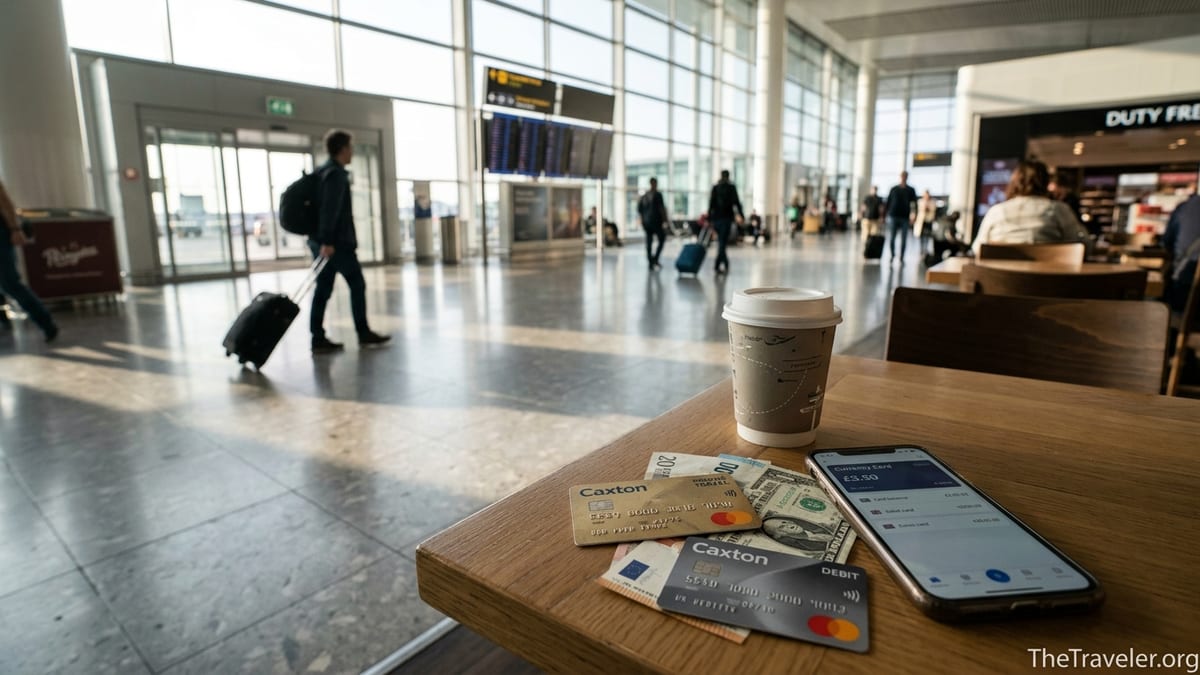
What the Caxton Card Is and How It Works
The Caxton card is a prepaid Mastercard designed primarily for UK residents who want a dedicated card for overseas spending. You add money to the card from your UK bank account, choose which currencies to hold, and then spend abroad using the balance you have loaded. Because it is prepaid rather than a credit card, you are limited to the money you have already loaded, which some travellers find useful for keeping a lid on holiday budgets.
In practical terms, using the card feels much like using any contactless debit card. You tap to pay for a cappuccino in Rome, a metro ticket in Paris or museum entry in New York, and the amount is deducted from your Caxton balance. If you have already loaded euros before your European city break, the payment will be taken in euros. If you are spending in a currency you have not preloaded, Caxton automatically converts from your sterling balance.
Caxton positions the card as a safer alternative to carrying large amounts of cash on trips. If your wallet is lost in Barcelona or your backpack is stolen on a night train in Eastern Europe, you can freeze the card in the Caxton app or by phone, and your main current account remains untouched. For nervous first-time travellers or parents loading a card for a gap-year student, that separation from your core bank account is often one of the strongest psychological benefits.
The card can be used in shops, restaurants and ATMs worldwide wherever Mastercard is accepted, which covers most mainstream destinations. That means a Caxton customer can pay for petrol on a self-drive trip across France, withdraw pesos from an ATM in Mexico City, and settle a hotel bill in Bangkok with the same piece of plastic, as long as they remember to top up the balance first.
Fees, Exchange Rates and the Real Cost of Using Caxton
At first glance, Caxton markets itself around the absence of certain headline fees. The standard personal card has no application fee and no monthly charge, and Caxton says it does not levy its own ATM withdrawal fee abroad. That alone can save a family making several cash withdrawals on a two-week July beach holiday perhaps £15 to £25 compared with a typical high street debit card that adds both a percentage foreign transaction fee and a flat cash withdrawal fee on every overseas ATM use.
However, travellers should not confuse “no ATM fee from Caxton” with completely free foreign spending. The core cost of using the Caxton card lies in its foreign exchange markup. Independent comparisons in 2026 suggest that Caxton typically adds around 1.5 percent on top of the underlying Mastercard rate for most day-to-day transactions. This is still usually cheaper than a standard UK bank debit card, which often charges around 2.75 to 3 percent on each purchase abroad, but it is more expensive than newer low-cost players that work close to the interbank or mid-market rate.
To put that into context, imagine a couple spending the equivalent of £1,500 during a week in Florida. With Caxton, a 1.5 percent FX markup means paying roughly £22.50 in embedded currency conversion costs. A traditional debit card from a big UK bank might cost nearer £45 once you add the higher FX margin and per-transaction fees, while a specialist app-based card that passes on the mid-market rate with a small transparent fee might come in under £10. The saving with Caxton compared with your usual debit card is real, but it is not the absolute rock-bottom option for every traveller.
There are a few other fees to watch for. Caxton applies a dormancy charge to accounts that have been left unused for a prolonged period while still holding a positive balance. In practice this means that if you top up for a holiday, come home with money left on the card, and then forget about it for a couple of years, you could gradually see that balance eroded by inactivity fees. For this reason, regular travellers tend to keep their Caxton card in rotation, while those who only travel occasionally are better off withdrawing or spending down any leftover balance soon after returning to the UK.
Using the Caxton Card Around the World: Real-World Scenarios
On the ground, Caxton works smoothly across most major tourist destinations. For example, a family spending a half-term break in Spain might preload euros before leaving the UK, using Caxton’s website or app to convert from pounds when they see a rate they are comfortable with. They could then use the card for everyday spending: restaurant bills in Malaga, supermarket shops on the Costa del Sol, or entrance fees to attractions in Seville, all charged in euros against the preloaded balance.
In the United States, where card payments are ubiquitous, UK travellers can use Caxton to avoid their bank’s foreign purchase fee on everything from ride-hailing apps in New York to theme park tickets in Orlando. If they have not preloaded dollars, the card will convert directly from sterling at the Caxton rate at the time of each transaction. Some visitors prefer this “spend-as-you-go” FX approach so they do not have to second-guess currency movements weeks in advance.
ATMs are a particularly important use case. Imagine a solo traveller arriving late at night at Bangkok’s Suvarnabhumi Airport. They can insert their Caxton card into a local bank ATM and withdraw a few thousand baht for taxis and street food without worrying about Caxton adding an extra fee just for taking out cash. They may still see a local ATM charge from the Thai bank, which is beyond Caxton’s control, but they will avoid the additional percentage penalty that many UK banks impose. Over the course of a three-week trip around Southeast Asia, that can easily save the cost of several restaurant meals.
One practical limitation that crops up occasionally is acceptance at certain “high-risk” merchant types. Like many prepaid travel cards, Caxton does not always work well at automated petrol pumps, toll roads or as a security deposit for car hire or hotel incidentals. A road trip through rural Italy, for example, is smoother if you carry a mainstream credit card for car rental holds and motorway toll booths, using the Caxton card for day-to-day food, fuel paid inside the kiosk, and sightseeing. Experienced users treat Caxton as part of a small wallet toolkit rather than their only payment method abroad.
Caxton vs Rivals: Where It Shines and Where It Falls Short
The travel money landscape has shifted sharply in recent years. App-based providers and some challenger banks now offer cards that use the mid-market exchange rate with only a small transparent fee, or even no fee for a limited amount of monthly foreign spending. Compared with these, Caxton’s approximate 1.5 percent FX markup looks less compelling for value-driven frequent travellers, especially those comfortable managing their finances entirely through a smartphone app.
Against Revolut or Wise, for instance, the Caxton card typically loses on raw exchange rate competitiveness, particularly on larger spends such as hotel bills or long-haul flight bookings. A family paying £3,000 equivalent for a villa rental in Portugal might find they are £30 to £40 better off overall by using a mid-market-rate provider instead of Caxton over the course of a single holiday. Over several trips a year, that gap widens.
However, Caxton still has a niche. Its proposition is simple and does not rely on a broader banking relationship, multiple tiers or complicated fee menus. For travellers who are wary of using a fintech app as their main account, but want better value than their usual debit card, Caxton can be an accessible stepping stone. It is also widely recommended by some tour operators and travel agents who prefer the clear separation of a prepaid card from the rest of a traveller’s finances.
There is also a difference in how people actually use these products. Many Caxton cardholders treat it as a dedicated “holiday wallet” that they top up only when they have a trip planned, then ignore between journeys. By contrast, customers of multi-currency app accounts often use them year-round for online purchases in foreign currencies, international transfers and subscription services that bill in dollars or euros. If you mostly want something to spend safely on a one-off summer holiday, the heavier feature sets of the newest platforms may be unnecessary.
Managing Your Card: Loading, Security and Everyday Practicalities
Loading a Caxton card is straightforward. You move money from a UK bank account by bank transfer or debit card and choose which currencies to hold. You can load sterling and convert when needed, or lock in a rate ahead of time by converting a chunk into euros, dollars or another supported currency. Someone heading to a winter sun break in the Canary Islands, for example, might convert £1,000 into euros a few days before departure to avoid watching the exchange rate every day while they pack.
The accompanying app and online dashboard let you track transactions in near real time, check your balance and freeze or unfreeze the card if you misplace it. That matters in everyday situations such as leaving the card behind in a restaurant in Lisbon or dropping it in a taxi in Dubai. Freezing the card immediately and ordering a replacement gives peace of mind, especially when you are thousands of miles from home.
Security features are broadly in line with other prepaid travel cards. Purchases are protected by chip and PIN or contactless limits, while online shopping uses standard Mastercard security checks. For example, if you are booking internal flights in Australia from a hotel room in Sydney, you can expect the usual verification prompts that you would see with a UK debit card, reducing the risk of unauthorised use.
Daily limits are worth noting for travellers who expect to withdraw or spend larger sums. Roughly speaking, Caxton’s ATM withdrawal cap is set at a level suitable for normal holiday use, such as drawing out the equivalent of a couple of hundred pounds per day for cash-heavy destinations. For more expensive trips, like paying for a safari package in South Africa or settling a high-end hotel bill in Dubai, it can be wise to use a credit card or check your Caxton limits in advance to ensure you will not be constrained at the wrong moment.
Who the Caxton Card Suits Best in 2026
In 2026, the Caxton card occupies a middle ground between traditional bank cards with hefty foreign usage fees and the very cheapest specialist options on the market. It tends to suit UK travellers who value simplicity and separation over shaving every last fraction of a percentage point off their FX costs. That might include retired couples heading on an annual cruise, parents loading spending money for teenagers on a language exchange in France, or package holidaymakers who want a ring-fenced pot for bar tabs and excursions.
It also remains a reasonable secondary card for more experienced travellers who primarily use a leading low-fee provider but want a backup in case their main card is lost, compromised or simply not accepted by a particular merchant. For instance, a digital nomad who relies on a multi-currency app account might still carry a Caxton card in a separate bag, preloaded with enough to cover a few days of expenses if their primary card fails while moving between Airbnbs in South America.
On the other hand, those who travel frequently, spend heavily abroad or are comfortable managing money through modern apps will usually find better value elsewhere. If you are a freelancer billing overseas clients, a long-term remote worker or a frequent city-break traveller, the cumulative savings from lower FX margins and additional features such as local bank details in multiple currencies can easily outweigh the familiarity of sticking with a legacy prepaid card.
Ultimately, whether Caxton is “worth it” depends on your baseline. Compared with doing nothing and relying on a typical high street debit card, it can still deliver a meaningful cut in overseas fees and a more controlled holiday budget. Compared with the most competitive travel money cards and accounts available in 2026, it now occupies a solid but unremarkable middle tier.
The Takeaway
The Caxton prepaid travel card remains a functional, easy-to-understand tool for managing travel money and foreign spending, especially for UK holidaymakers who prefer to keep their main current account at arm’s length while abroad. Its lack of Caxton-imposed overseas ATM fees and straightforward loading process make it an appealing upgrade from using a standard debit card for a once-a-year summer escape or a long-awaited family city break.
Yet the competitive landscape has moved on. With newer products offering closer-to-mid-market exchange rates, powerful apps and often no monthly fee, Caxton is no longer the automatic first choice for value-conscious frequent travellers. Its FX markup, dormancy fees on long-unused balances and occasional acceptance quirks at certain merchant types mean it sits as a good, but not outstanding, option.
If you want a simple prepaid card to ring-fence your holiday budget, reduce the sting of your bank’s foreign usage charges, and enjoy the comfort of a well-established brand, Caxton still does the job in 2026. But if you are willing to compare alternatives and handle your travel finances through more modern platforms, you can probably trim your costs further. The smartest approach for many travellers is to use Caxton as one card in a small mix, alongside at least one fee-free debit or credit card, so that you always have a backup and can choose the best tool for each transaction abroad.
FAQ
Q1. Is the Caxton card really fee-free to use abroad?
The Caxton card does not charge its own overseas ATM or point-of-sale fees in most cases, but there is still an embedded foreign exchange markup on the rate you receive and local ATMs may add their own charges.
Q2. How good are Caxton’s exchange rates compared with other travel cards?
Caxton’s rates are generally better than those of a typical UK high street debit card, which often adds close to 3 percent in foreign usage charges, but they are usually less competitive than specialist app-based providers that operate close to the mid-market rate.
Q3. Can I use the Caxton card for car hire deposits or hotel preauthorisations?
Sometimes, but not always. Because it is a prepaid card, some car rental firms and hotels prefer or require a credit card for security deposits. In practice, it is safer to carry a mainstream credit card for deposits and use Caxton for everyday spending.
Q4. What happens if there is money left on my Caxton card after my trip?
You can keep the balance for a future trip, withdraw it at an ATM within the relevant limits or convert it back to pounds. However, if you leave a positive balance unused for a long time, inactivity fees may begin to reduce it, so it is best to tidy up your balance within a reasonable period after you return.
Q5. Is the Caxton card safe for solo travellers and students abroad?
Yes, many solo travellers and students use Caxton because it separates their travel money from their main bank account, and the card can be frozen quickly via the app if it is lost or stolen. As with any card, they should still keep a backup payment method and be cautious at ATMs.
Q6. How easy is it to top up the Caxton card while I am overseas?
You can usually top up online or via the app from a linked UK bank account or debit card. This allows you to add funds mid-trip, for example if you extend your stay in Europe by a few days or decide on an extra excursion.
Q7. Are there limits on how much I can withdraw from ATMs with Caxton?
Yes, there are daily ATM withdrawal limits designed to suit typical holiday needs. These are high enough for normal cash requirements, such as daily spending money in European cities, but may not be sufficient for very large cash payments, so it is wise to check your limits before you travel if you expect to withdraw significant amounts.
Q8. Will the Caxton card work everywhere Mastercard is accepted?
In most everyday situations, yes. The card is a Mastercard and is widely accepted for contactless and chip and PIN payments. Some edge cases such as automated fuel pumps, toll roads and certain security deposit transactions can be problematic, which is why carrying a backup card is sensible.
Q9. Who is the Caxton card best suited to in 2026?
It tends to suit UK travellers who want a clear, separate travel wallet, dislike the high foreign fees on their main bank card, and are not especially focused on squeezing out the very lowest possible exchange rate available on the market.
Q10. Should I rely on Caxton as my only payment method when travelling?
No. While the Caxton card is a useful part of your travel money plan, it should ideally sit alongside at least one other card, such as a fee-free debit or credit card, plus a small amount of local cash, so you are covered if a merchant declines prepaid cards or your Caxton card is lost or damaged.