


More news on this day
Passenger rail in Poland is experiencing a rare combination of record traffic and record investment, with new figures and funding decisions suggesting the country is on track to become one of Europe’s fastest growing rail markets.
Get the latest news straight to your inbox!
Record Passenger Numbers Signal a Rail Revival
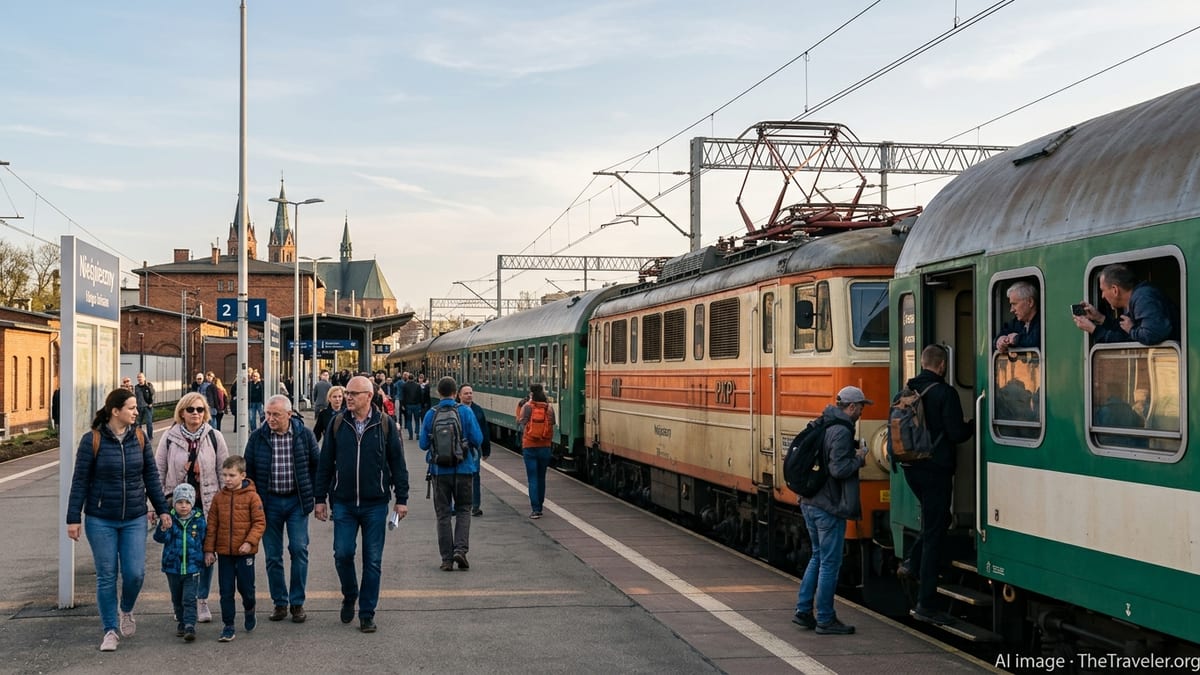
Recent market data from Poland’s rail regulator and government agencies show that passenger numbers on the country’s trains have surged to their highest levels in decades. Publicly available information on 2023 operations indicates that more than 374 million passengers traveled by rail that year, the strongest result since the late 1990s and a sharp rebound from the pandemic period. The trend has continued through 2024, with monthly statistics for the autumn period repeatedly setting new records compared with every year since at least 2012.
Officials monitoring the sector point out that this growth is not a one off spike but the continuation of a multi year rise in demand. Analysts link the renewed popularity of rail to several factors, including rising road congestion, higher fuel prices, and increasing awareness of the environmental impact of car and air travel. In Poland’s largest cities, rail networks now act as backbones for regional mobility, feeding expanding metropolitan transport systems and offering competitive journey times on the busiest intercity corridors.
Industry observers also note that the profile of passengers is changing as services improve. Where long distance trains were once seen as a last resort for budget travelers, faster intercity services and modern rolling stock have attracted business users, tourists and daily commuters who previously relied on cars or coaches. The steady expansion of park and ride facilities and better integration with local tram and bus networks have further increased rail’s appeal.
Massive Funding Wave Targets Tracks, Stations and High Speed Lines
The surge in ridership is closely tied to a wave of investment in infrastructure that is reshaping the national rail map. Government documents and investor presentations describe a multi year financing pipeline worth well over one hundred billion złoty for rail alone, much of it running up to 2032. Plans under the Integrated Railway Network and related national programs prioritize higher speeds on key corridors, more passing loops and double tracking, upgraded signaling systems and modernized stations.
One of the most visible pillars of this strategy is the rail component of Poland’s Central Communication Port, known by its Polish acronym CPK. A revised multiannual program approved in late 2024 allocates tens of billions of złoty to high speed rail links that will connect Warsaw and Łódź with major western cities such as Poznań and Wrocław. According to publicly available material on the project, the first phase aims to deliver new high speed infrastructure and a modern hub airport by 2032, creating a backbone that will later extend towards Kraków, Katowice and the Tricity on the Baltic coast.
Beyond CPK, conventional routes are also being upgraded to approach or reach high speed thresholds. Work continues on the Central Trunk Line between Warsaw and southern Poland, with signaling and track improvements designed to enable top speeds of around 250 kilometers per hour. Across the country, projects co financed by European Union funds are renewing bridges, tunnels and level crossings, replacing outdated equipment and improving safety standards on lines that had seen little capital spending in previous decades.
PKP Intercity Expands Fleet to Keep Up With Demand
At the operational level, national long distance operator PKP Intercity is in the midst of the largest rolling stock renewal program in its history. Information released by the company and the infrastructure ministry highlights multi billion złoty contracts for new coaches, locomotives and technical facilities, with an emphasis on energy efficient, air conditioned and fully accessible trains. In mid 2024 PKP Intercity signed agreements for hundreds of new passenger cars and the extension of maintenance depots, while separate funding from recovery and cohesion instruments supports the purchase of zero emission locomotives and the modernization of existing carriages.
This investment is designed to boost both capacity and quality. New trainsets and upgraded coaches are equipped with amenities such as power sockets at every seat, improved onboard information systems, quiet zones and dedicated spaces for bicycles. Higher maximum speeds and better acceleration reduce travel times on refurbished lines, making rail more competitive against domestic flights on medium distance routes. At the same time, enhanced workshop infrastructure and expanded stabling yards are intended to improve reliability, with more maintenance carried out overnight to keep daytime schedules dense.
Observers of the Polish market say that the carrier’s strategy is starting to be reflected in usage figures. Long distance volumes have risen strongly in recent years, with many flagship services regularly running at or near capacity on weekends and holiday periods. Advance booking is increasingly necessary on popular routes such as Warsaw to the Baltic coast or mountain destinations in the south, a marked change from a decade ago when empty seats were common even at peak times.
High Speed Ambitions Reshape the Map
Looking ahead, the most transformative element of Poland’s rail plans is the construction of a true high speed network. The CPK program and related initiatives envision trains running at 300 to 320 kilometers per hour on new dedicated lines linking the country’s largest metropolitan areas. Preparatory work has already produced detailed corridor studies and environmental assessments, and tender procedures have begun for civil engineering, electrification and advanced control systems on the first sections between Warsaw and Łódź.
Technical documentation published by project partners indicates that the new lines will be built to international high speed standards, including modern signaling, grade separation and a 2x25 kilovolt AC traction system on initial segments. The aim is to reduce journey times between major cities to approximately two hours or less, allowing day trips between regions that are currently separated by far longer rail or road journeys. The design also seeks to integrate regional communities along the route, with new stops planned near medium sized cities that today sit far from the fastest rail services.
While timelines extend into the next decade, analysts say the sheer scale of the planned network marks a step change for Central and Eastern European transport. If completed as described in official planning documents, Poland would gain one of the largest high speed systems in the region, strengthening north south and east west links and improving connections to neighboring countries. The rapid growth in current passenger volumes is often cited as evidence that the market is ready for such capacity.
Balancing Growth With Funding, Coordination and Public Support
The rapid expansion of Poland’s railway sector also brings challenges. Construction activity on busy corridors can lead to temporary service disruptions and slower journeys, testing passenger patience during multi year upgrade programs. Some planned high speed alignments have raised concerns among local communities about noise, expropriation and environmental impact, prompting route adjustments and more extensive consultation exercises. Balancing national transport goals with local interests is emerging as a critical test for policymakers.
Financing is another pressure point. Although substantial national and European funds have been earmarked for rail, the scale of the portfolio means that cost control and project management are under close scrutiny. Rising prices in the construction sector and the complexity of building tunnels, viaducts and new stations increase the risk of overruns. Sector analysts stress that staging projects in realistic phases and coordinating them with existing networks will be key to avoiding bottlenecks and ensuring that new capacity is fully used once it comes online.
Despite these obstacles, sentiment in the industry remains broadly positive. With record numbers of passengers choosing trains, a growing pipeline of modern rolling stock and some of Europe’s most ambitious high speed plans, Poland has positioned rail as a central pillar of its future transport system. The coming decade will show whether the current investment boom can translate sustained public interest into a lasting shift towards cleaner, faster and more connected mobility.