


More news on this day
Fresh aviation data from live tracking dashboards indicates that 3,657 flight delays and 224 cancellations across Asian airports have disrupted travel plans for tens of thousands of passengers in a single 24 hour period, underscoring how quickly adverse weather, haze and airspace constraints can ripple across one of the world’s busiest aviation regions.
Get the latest news straight to your inbox!
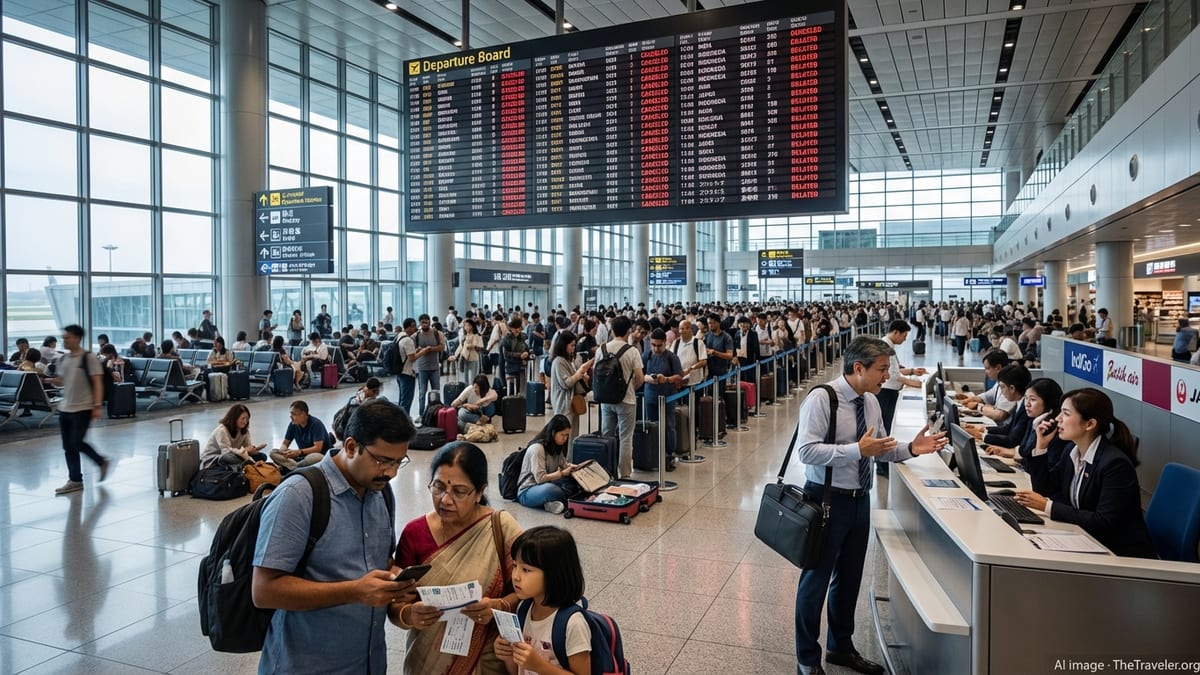
Disruption Concentrated at Key Asian Hubs
Published coverage drawing on live flight tracking platforms and aggregated airline statistics points to a concentration of delays and cancellations at major hubs in East, South and Southeast Asia. Recent reporting notes that around 39 of the region’s busiest airports logged more than 3,600 delays and just under 500 cancellations in early September, with a significant share of those disruptions occurring at large connecting gateways such as Jakarta, New Delhi, Shanghai and Beijing.
Within that wider pattern, the most recent data snapshot isolating 3,657 delays and 224 cancellations reflects a slightly less severe operational window, but one that still leaves schedules under heavy strain. Regional experts highlight that once daily delay totals pass the low thousands across multiple hubs, even a lower cancellation count is enough to create missed connections, tight turnaround pressures and aircraft out of position for subsequent rotations.
Airport disruption indices published by real time trackers further illustrate the pattern. Several Asian hubs have moved into ranges associated with minor to moderate operational problems during parts of the day, characterized by elevated shares of delayed departures, longer average delays per flight and a modest but persistent volume of cancellations.
Weather, Haze and Airspace Constraints Drive Delays
Reports from aviation analytics outlets and regional media attribute much of the current disruption cycle to a combination of seasonal storms, lingering monsoon conditions, and cross border smoke haze from forest and land fires in parts of Southeast Asia. In earlier September reporting, Jakarta, Bali and several secondary Indonesian gateways recorded high delay totals as low visibility and air quality concerns complicated already dense traffic patterns.
Further north, congested airspace and convective weather over northern India and southern China have contributed to stacked holding patterns and runway sequencing challenges. Published breakdowns of recent disruption events show large hubs such as New Delhi, Guangzhou, Shanghai and Beijing regularly appearing near the top of regional delay and cancellation tables, particularly during peak morning and evening banks when local and connecting flows overlap.
On top of weather and haze, evolving regional security tensions have led to precautionary rerouting and schedule adjustments on some long haul services that cross West and Central Asian airspace. Travel advisories updated in early September describe delayed and canceled services at Gulf and United Arab Emirates hubs that handle significant traffic to and from Asian destinations, adding another layer of knock on risk for passengers connecting between continents.
Impact on Travellers Across the Network
For travellers, a disruption profile featuring 3,657 delays and 224 cancellations in a day translates into long queues at check in and transfer desks, crowded gate areas and a sharp rise in missed onward connections. Even when flights operate, elevated average delay times at key hubs can cascade across multi segment itineraries, particularly for passengers connecting between domestic feeders and long haul services.
According to publicly available information compiled from tracking dashboards and airline status feeds, many of the affected flights are operating with delays in the 30 to 60 minute range, but a meaningful minority are experiencing significantly longer waits. This pattern places pressure on minimum connection times at busy hubs, where tight schedule buffers may no longer be sufficient when several waves of flights are running behind schedule.
Travel advocacy groups and consumer facing travel sites emphasize that the practical impact is unevenly distributed. Passengers on point to point routes may experience a single delay but still reach their destination the same day, while travellers on complex itineraries, including those linking smaller Asian cities to Europe or North America via regional hubs, are more exposed to missed connections, force rebooking and overnight stays.
Which Airports and Airlines Are Most Affected
Recent tallies of Asia wide disruptions highlight a recurring cluster of heavily affected airports. Large metropolitan gateways such as Jakarta Soekarno Hatta, New Delhi Indira Gandhi, Beijing Capital and Shanghai’s main airports frequently appear among the top contributors to regional delay and cancellation totals, reflecting both their size and the sensitivity of intricate banked schedules to weather and airspace constraints.
Secondary but strategically important hubs including Bali Ngurah Rai, Taipei Taoyuan, Shenzhen, Guangzhou and Hong Kong have also recorded elevated disruption indices on several days in early September, according to data visualized on airport disruption maps. While not every airport in this group is experiencing major cancellations at the same time, many are reporting high percentages of delayed departures and arrivals that push the broader network toward instability.
Airline specific breakdowns in earlier coverage of this disruption cycle show that large regional carriers and major international airlines with dense Asian schedules bear much of the operational burden. Some China based airlines, Gulf carriers linking Asia with Europe and North America, and full service airlines headquartered in Southeast Asia have all logged heightened delay counts as operations teams work to re sequence flights and reposition aircraft.
What Travellers Can Do Right Now
With disruption indicators still elevated and weather related risks persisting over several key regions, published travel guidance emphasizes the importance of active trip management. Aviation data outlets and consumer travel platforms advise passengers to monitor flight status frequently through airline apps and independent tracking sites, particularly in the 24 hours before departure and again on the day of travel.
Many airlines in the region have activated flexible rebooking options during recent disruption episodes, allowing passengers on affected flights to shift departure dates or times without additional change fees, subject to fare rules and seat availability. Publicly available information suggests that these waivers are often time limited and tied to specific travel dates, so travellers are encouraged to review airline notices promptly when delays or cancellations occur.
Insurance guidance featured in recent coverage also stresses the value of retaining documentation. When flights are significantly delayed or canceled, some travel insurance policies require proof of disruption such as airline notifications, boarding passes or delay certificates issued at the airport in order to process claims for hotels, meals or alternative transport. Taking basic steps such as photographing departure boards, saving app alerts and requesting written confirmations can make it easier to recover costs after the trip.
Looking ahead, industry observers note that Asia’s aviation system is likely to face intermittent bouts of disruption as seasonal weather patterns, infrastructure bottlenecks and regional geopolitical tensions interact with strong passenger demand. For now, the latest count of 3,657 delays and 224 cancellations serves as another reminder that travellers across the region should build extra time into itineraries, remain flexible where possible and stay closely informed as conditions evolve.
Flightradar24 Asia airport disruption dashboard
FlightAware global delay and cancellation statistics