


More news on this day
Passengers traveling through Paris Charles de Gaulle Airport over the past 24 hours have faced another bout of disruption, as a cluster of Air France and SAS cancellations on key European routes left travelers to cities such as Rome, Florence, Naples, Barcelona, and Manchester unexpectedly stranded or rebooked at short notice.
Get the latest news straight to your inbox!
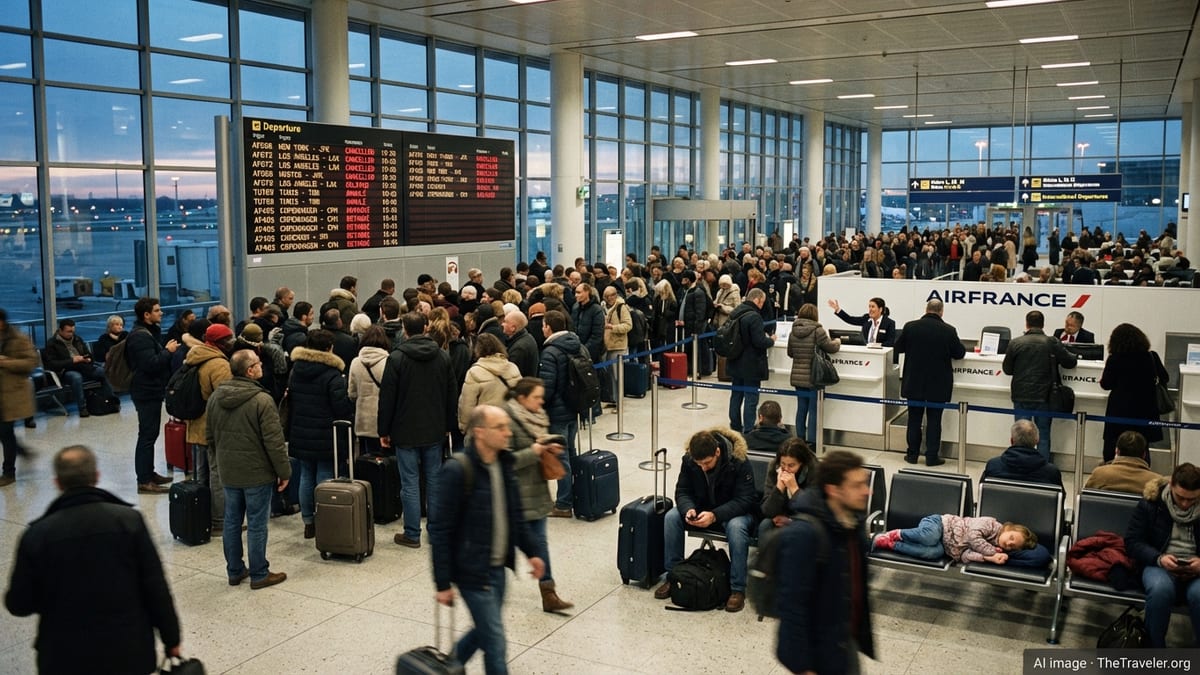
Dozens of Cancellations Concentrated at Paris Charles de Gaulle
Real-time schedule data and recent travel alerts indicate that Paris Charles de Gaulle (CDG) has once again become a focal point for flight disruption, with a dozen or more short haul services on European routes scrubbed or heavily altered in a short window. The latest wave has primarily affected departures operated by or jointly marketed with Air France and SAS, with some flights removed from departure boards only hours before scheduled takeoff.
The affected services are largely high traffic links between Paris and major European hubs, including Rome Fiumicino, Florence, Naples, Barcelona, and Manchester. Several of these flights are sold as codeshares across the Air France KLM and SAS networks, meaning a single cancellation can impact passengers holding tickets under different airline codes.
Operational data from recent days shows multiple schedule changes and cancellations on Air France services out of CDG that also carry SAS codes, a sign of tightly interlinked networks where adjustments by one carrier reverberate across alliance partners. Observers note that even a relatively small cluster of cancellations at CDG can trigger wider knock on effects across the European system, as aircraft and crews fall out of position and connecting itineraries unravel.
While the absolute number of cancelled flights remains a fraction of the total daily schedule at CDG, the impact is magnified for travelers booked on the most popular city pairs. Reports from passenger forums and travel disruption trackers describe individuals and families facing missed holidays, broken business itineraries, and involuntary overnight stays far from their intended destinations.
Knock On Effects Across Key Routes to Italy, Spain, and the UK
The routes bearing the brunt of the disruption mirror some of Europe’s most in demand leisure and city break destinations. Rome and Naples serve as major gateways to central and southern Italy, while Florence links into Tuscany’s tourism economy. On the Iberian side, Barcelona remains one of the continent’s busiest city destinations, and Manchester is a critical hub for northern England.
Published route data and schedule trackers show that when a single Paris to Rome or Paris to Barcelona rotation is canceled, there can be a cascading effect: returning sectors are also lost, later rotations operate with delays, and passengers on connecting long haul services through CDG find themselves without their planned feeder flights. Travelers heading onward to Mediterranean cruises, rail connections, or internal Italian and Spanish flights are particularly exposed.
In practice, this has meant that some passengers traveling from northern Europe to Italy or Spain via Paris have had to accept rebookings that route them through entirely different hubs, such as Amsterdam or Frankfurt, or on overnight departures that arrive a full day later than planned. Others have been offered rerouting on alternative airlines under interline agreements, but at the cost of extended connection times and, in some cases, additional self funded expenses on the ground.
Travel commentary circulating since late April has highlighted that Italian and Spanish airports are already dealing with their own waves of capacity constraints and strikes, which can compound the effect of cancellations at CDG. When flights from Paris do not depart on schedule, local congestion at airports such as Rome Fiumicino and Barcelona El Prat can briefly ease, but the passengers stranded upstream in France often pay the price in missed events and nonrefundable bookings.
Why Air France and SAS Flights Are Vulnerable Right Now
Publicly available information on recent operational performance in France points to a mix of factors behind the latest disruptions, ranging from lingering staffing shortages and aircraft rotations to weather variability and regional air traffic control constraints. Previous incident reports this year have shown that when winter weather or air traffic restrictions hit France, Air France’s domestic and intra European services are frequently the first to be trimmed in order to preserve long haul connections.
SAS has also been operating under tight schedule conditions, with travel alerts in recent weeks outlining selective cancellations and rebookings on European routes. Where SAS markets seats on Air France operated services via codeshare, any last minute change by the French carrier can affect SAS customers who may only discover the disruption through their booking reference or airport screens rather than the operating airline’s direct communication.
Industry analysis published in recent months has repeatedly underlined the structural fragility of major French hubs during peak travel periods. Even modest disruptions, such as localized storms or staffing gaps in ground handling, can rapidly translate into delays and canceled departures at CDG. When those cancellations involve aircraft and crews that feed into broader European networks shared by alliance partners like SAS, the end result is a web of missed connections that extends far beyond Paris itself.
Travel rights organizations note that demand at or near pre pandemic levels, combined with infrastructure changes and ongoing labor pressures, leaves airlines with limited slack to recover from midweek shocks. As a result, the burden of irregular operations increasingly falls on passengers who have little choice but to navigate complex rebooking options and pursue compensation after the fact.
What Stranded Passengers Are Experiencing on the Ground
Accounts collated from passenger rights platforms, flight tracking dashboards, and social media over the last several weeks paint a consistent picture of the traveler experience when a Paris departure is abruptly canceled. Many passengers report initially finding out via airport display boards or third party tracking apps rather than direct messages, particularly when tickets were bought through online travel agencies or using frequent flyer miles issued by a partner airline.
At CDG itself, cancellation clusters quickly translate into long queues at airline service desks as travelers attempt to secure same day alternatives. Those booked on early morning services to Rome, Florence, or Barcelona who miss a narrow weather or staffing window can face a race against time to be confirmed on midmorning or afternoon departures before these, too, fill with displaced passengers.
For some travelers heading to events with fixed start times, such as cruises from Italian ports or football matches in Spain or the UK, the loss of even one leg can effectively nullify the purpose of the trip. Reports also describe passengers struggling with accommodation costs for unexpected overnight stays in Paris or their point of departure, as well as difficulties reclaiming prebooked hotel nights and prearranged tours at their intended destinations.
Despite these challenges, there are also examples of passengers using alliance partnerships and multi airline itineraries to salvage their plans. Those able to access customer support via airline apps or elite status phone lines sometimes secure rerouting via alternative hubs, while others lean on travel insurance policies that reimburse parts of their additional outlay. However, outcomes vary widely, adding to a sense of unpredictability whenever disruption strikes CDG.
Passenger Rights and Practical Steps for Upcoming Trips
Travel experts and passenger advocacy groups continue to point toward European Union Regulation 261 as the core reference for travelers affected by cancellations from EU airports. Under this framework, most passengers departing from Paris on Air France or SAS services that are canceled are generally entitled to a choice between a refund and rebooking on the next available flight, in addition to assistance at the airport such as meals and, where necessary, hotel accommodation.
Whether passengers also qualify for financial compensation depends on several factors, including the cause of the disruption and how far in advance the cancellation was communicated. If the airline can demonstrate that extraordinary circumstances such as severe weather or sudden airspace closures were the primary reason, compensation may not be payable even though care and assistance remain due.
For travelers with upcoming journeys through CDG, publicly available guidance emphasizes a few practical steps. Monitoring flight status closely in the 24 hours before departure, using both the airline’s official channels and airport information, can provide early warning of emerging disruption. Building longer connection times into itineraries that route through Paris, especially when heading to southern Europe during busy holiday periods, can also reduce the risk of missed onward flights.
Where a cancellation does occur, passengers are often advised to document all communications, keep receipts for meals, transport, and hotels, and submit claims promptly via the operating airline’s official channels. In complex cases involving codeshares between Air France and SAS, it is important to identify which airline actually operated the canceled flight, as this will typically determine who is responsible for processing refunds and compensation.