


More news on this day
Mactan-Cebu International Airport is rapidly consolidating its role as the primary gateway to the central and southern Philippines, with new routes, upgraded terminals, and digital border systems promising faster transfers and more seamless access to the country’s top island destinations.
Get the latest news straight to your inbox!
Cebu’s Airport Scales Up as a Regional Hub
Mactan-Cebu International Airport, the country’s second-busiest gateway, has steadily expanded to serve as the main entry point to the Central Visayas and much of Mindanao. Industry data show that the airport’s dual-terminal complex now has capacity for around 12.5 million passengers a year, positioning Cebu as a viable alternative entry to the Philippines for both regional and long-haul travelers.
Terminal 2, the international building known for its resort-style timber arches and spacious check-in halls, was developed under a public-private partnership and designed to ease pressure on Manila by absorbing more overseas arrivals. Airport-focused analyses describe it as one of Asia’s more distinctive “resort airports,” with architecture that signals a beach holiday long before passengers reach the shoreline.
Terminal 1, which handles the bulk of domestic operations, has been progressively upgraded to function as the beating heart of inter-island connectivity. Recent refurbishments and layout changes are aimed at reducing congestion at security and check-in, shortening walking distances, and improving the overall experience for passengers making tight domestic connections.
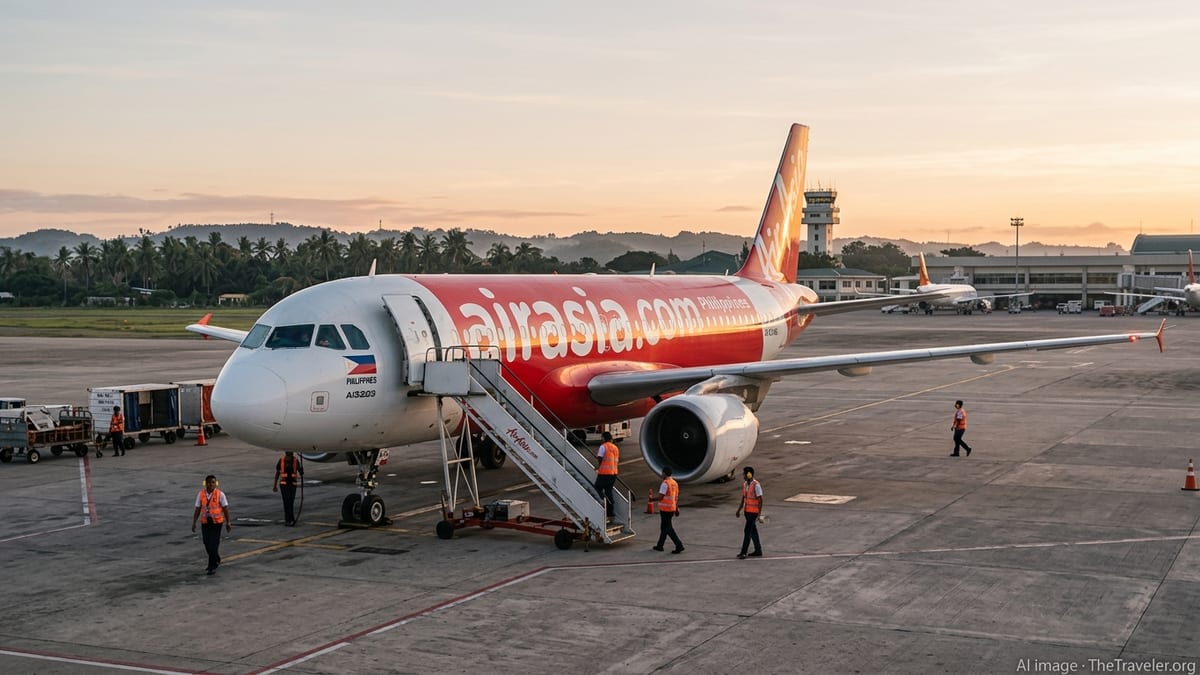
With Philippine Airlines using Cebu as a hub and low-cost carriers such as Cebu Pacific and Philippines AirAsia maintaining strong bases there, the airport has become a central node in the country’s aviation network rather than a mere secondary stop.
New International Routes Broaden Direct Access
Over the past year, Cebu’s route map has continued to widen, reinforcing its status as an international gateway. Airline and airport announcements highlight an expanded portfolio of direct services linking Mactan-Cebu to cities across East and Southeast Asia, including Japan, South Korea, Singapore, Hong Kong, and Vietnam, alongside services to the Middle East and selected Australian destinations.
Reports indicate that Cebu Pacific and other carriers have launched and announced new routes such as Cebu to Ho Chi Minh City, while industry coverage notes additional planned services to markets like Brisbane and Kuala Lumpur. These developments are part of a broader push to make Cebu a first port of call for travelers originating in Australia, Europe, and North America who can connect through Asian hubs and avoid Manila altogether.
Travel guides and airport briefings emphasize that international passengers arriving in Cebu can now reach many of the Philippines’ key tourism regions with a single domestic hop or, in some cases, by transferring directly to ferries serving nearby islands. This combination of air and sea options is central to Cebu’s branding as a “one-stop” access point to central and southern Philippine destinations.
The broader network strategy is supported by infrastructure investment across the Visayas, including the modernization of Bohol-Panglao International Airport and planned improvements at Laguindingan Airport in Northern Mindanao. Public filings show that Cebu’s private airport operator is positioning MCIA as the primary connectivity hub within this wider system.
Faster Transfers Through Digital and Physical Upgrades
Recent policy and technology changes are also reshaping the on-the-ground experience for passengers using Cebu as a transfer point. The national eTravel system, which consolidates immigration, health, and customs declarations into a single digital platform, has been rolled out across major Philippine gateways and is fully implemented at Mactan-Cebu.
Government advisories explain that international travelers are now required to register their details online before arrival or departure, generating a QR code that is scanned on entry or exit. In Cebu, this has been complemented by the introduction of an eTravel Customs System that allows inbound passengers to file baggage and currency declarations in advance, with Customs officials citing the airport as one of the first locations to adopt the scheme.
In parallel, national immigration reports highlight a multi-year expansion of electronic gates and self-service kiosks from 2024 to 2026, with Mactan-Cebu included in the rollout. For eligible travelers, these e-gates automate passport checks and eliminate the need for manual arrival stickers, a move that is publicly presented as part of efforts to streamline processing and cut queue times.
Inside the terminal complex, upgrades such as centralized security screening, added check-in counters, and expanded “village” areas for meeters and greeters are designed to ease bottlenecks at peak periods. Independent airport guides published in 2026 describe transfer times between Terminal 2 and Terminal 1 as manageable for typical domestic connections, provided passengers have completed eTravel registration in advance and allow adequate layover windows.
Air-to-Sea Links Tighten Cebu’s Grip on Island Tourism
Beyond the terminals, Cebu is developing new multimodal links that tie the airport more closely to nearby islands. Local business coverage and travel industry reports describe plans for a seamless air-to-sea transfer product connecting Mactan-Cebu International Airport with Mactan Marina Wharf. The service, positioned as an extension of earlier curbside and inter-terminal transfer initiatives, is intended to channel arriving visitors directly toward ferries bound for Bohol, Siquijor, and the Camotes Islands.
This strategy aligns with Cebu’s long-standing role as the maritime hub of the central Philippines. Existing ferry routes already link Cebu City’s piers to popular destinations such as Bohol and Leyte, but the development of dedicated airport-to-pier shuttles and packaged transfers is expected to reduce friction for international travelers who may be unfamiliar with local transport.
Parallel aviation developments are reinforcing these maritime links. Bohol-Panglao International Airport, located less than an hour’s flight from Cebu, has been earmarked for upgrade and expansion under new concession agreements. Project documents frame Cebu as the principal transfer airport, with Panglao serving as a specialized leisure hub for Bohol’s UNESCO Global Geopark attractions, illustrating how the two airports are being planned as a coordinated tourism corridor.
Combined with direct flights from Cebu to secondary cities like Siargao, Davao, Cagayan de Oro, and Puerto Princesa, the emerging network allows travelers to reach many of the country’s celebrated beaches and dive sites while bypassing Manila altogether.
Competitive Edge Over Manila for Overseas Arrivals
As these initiatives take shape, Cebu is increasingly being promoted in travel media and airline marketing as the more relaxed and efficient gateway into the Philippines. Commentaries from frequent travelers often point to shorter lines, fresher facilities, and easier domestic connections compared with the capital’s congested airport complex.
Operational statistics underline Cebu’s growing importance: it is already the primary international gateway for the Central Visayas and the country’s main alternative to Manila for overseas traffic. With further expansion of direct routes and continued investment in digital border controls, industry observers expect its share of international arrivals to rise.
The combination of architecture tailored to leisure travelers, a dense web of domestic routes, emerging air-to-sea transfer services, and nationwide digitalization of border formalities has effectively repositioned Mactan-Cebu International Airport from a regional facility into a full-service hub. For visitors whose itineraries focus on the country’s iconic islands rather than the capital, Cebu is increasingly becoming the logical first step into the Philippines.