


When you leave the United States, small banking fees can quietly eat into your travel budget. Two popular low-cost options, Chime and Wise, promise to make spending abroad cheaper and easier than traditional banks. Yet they work very differently, and the one that saves you more money depends heavily on how and where you travel. This guide breaks down the real costs, with practical examples from common trips, so you can decide whether Chime or Wise deserves the front slot in your wallet.
Get the latest updates straight to your inbox!
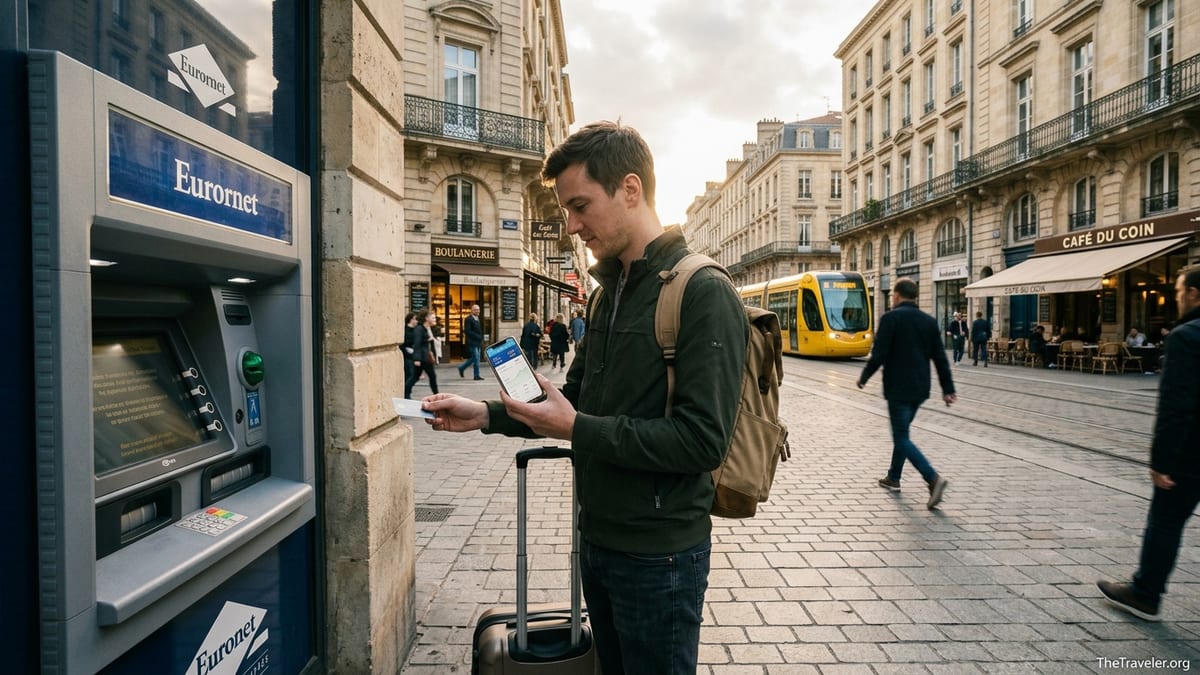
How Chime and Wise Work for Travelers
Chime is a U.S.-based financial technology company that partners with banks to offer fee-friendly checking-style accounts and debit or credit builder cards. For travelers, its key selling point is that it does not charge foreign transaction fees on card purchases in other currencies, a sharp contrast to many big U.S. banks that still add about 3 percent on every overseas card swipe. Chime cards run on the Visa network, so you can pay wherever Visa is accepted in most countries, from a Paris café to a supermarket in Mexico City.
Wise, by contrast, is built from the ground up as a multi-currency account. With Wise, you hold balances in dozens of currencies at once and spend directly from them with a debit card. When you do not already hold the local currency, Wise converts at something very close to the real mid-market rate, adding a transparent, relatively low fee instead of baking a markup into the rate. Wise also lets you receive money in several currencies, which matters if you are paid or reimbursed in euros, pounds or Australian dollars.
In practice, that means Chime feels familiar if you already bank in the United States and mostly just want to use your card abroad without extra card fees. Wise feels more like a travel toolkit: you can pre-convert money when rates look good, park local currencies for multiple countries, and withdraw cash internationally with a clearly published fee structure. For long trips, multi-country itineraries or remote work abroad, that flexibility can add up to significant savings.
Understanding these structural differences is the foundation for choosing between them. Once you know that Chime is essentially a no-foreign-transaction-fee U.S. checking account and Wise is a global multi-currency account with a travel card, you can compare concrete costs such as exchange rates, ATM fees and limits.
Card Purchases Abroad: Who Wins on Exchange Rates?
For in-store and online purchases abroad, both Chime and Wise aim to undercut traditional banks, but they do so in different ways. Chime relies on the Visa exchange rate, with no extra foreign transaction fee layered on top. Wise converts at a rate very close to the mid-market rate you would see on a currency converter, then charges a small, explicit conversion fee that varies by currency pair and market conditions. In many cases, that Wise fee is well under 1 percent, though not zero.
Consider a week in Italy with about 1,000 euros in card spending at hotels, restaurants and trains. If you pay with Chime, Visa will convert your euro purchases to dollars at its daily rate. Historically, Visa’s rate tends to sit roughly within about 0.5 to 1 percent of the real market rate, though it can vary. Because Chime does not add its own foreign transaction fee, your total cost is effectively that Visa rate. Compared with a typical big-bank debit card that charges around 3 percent, you could save roughly 25 to 30 dollars on that week’s spending simply by using Chime instead.
With Wise, you could either preload euros into your account before departure or let Wise auto-convert with each transaction. Suppose Wise charges a variable fee around 0.5 to 0.7 percent on USD to EUR conversions during your trip. If the underlying exchange is at the mid-market rate, your all-in cost might often be similar to or slightly better than the Visa rate used by Chime. On 1,000 euros of spending, the difference might only be a few dollars one way or the other, depending on the specific dates and currencies.
The biggest risk to avoid with either card is dynamic currency conversion, where a shop, hotel or ATM offers to charge your card in U.S. dollars instead of the local currency. In that scenario, the merchant or ATM operator picks the rate, often adding an extra 3 to 7 percent on top. With both Chime and Wise, you typically save more by declining that offer and insisting on being charged in the local currency, letting Visa or Wise handle the conversion instead.
ATM Withdrawals: Where Costs Diverge Sharply
Withdrawals from ATMs are where Chime and Wise start to look quite different for travelers. Chime customers enjoy fee-free cash access at a large network of in-network ATMs in the United States, but once you step outside those networks or the country, Chime charges a flat out-of-network fee. Recent Chime help center guidance notes a 2.50 dollar fee for each international ATM withdrawal, on top of any charges the ATM owner decides to add.
In real terms, imagine you land in Mexico City and withdraw the equivalent of 200 dollars in pesos from a local ATM using Chime. If that ATM charges a local operator fee of 70 pesos, roughly 4 dollars, and Chime adds its 2.50 dollar international withdrawal fee, your total cost just to get cash is around 6.50 dollars, or more than 3 percent of the withdrawal amount. Make the same withdrawal three times on a weeklong trip and you have spent close to 20 dollars purely on ATM fees.
Wise’s model is more tiered and can be friendlier to frequent travelers. According to Wise’s current pricing, U.S.-issued cards receive a limited amount of free ATM withdrawals up to a certain monthly threshold, after which a combination of a small fixed fee per withdrawal and a percentage charge kicks in. As of mid-2026, Wise advertises that you can withdraw up to a few hundred dollars per month without a Wise ATM fee, then pay roughly a couple of dollars plus a percentage on subsequent withdrawals, though exact allowances depend on where your card was issued.
Returning to Mexico City, suppose you withdraw that same 200 dollars equivalent with Wise. If it is within your free monthly allowance, Wise does not charge a withdrawal fee, though the ATM owner may still add its own surcharge. If you exceed the free threshold, you might pay a Wise fee that still often comes in lower as a percentage than the combined 2.50 dollar Chime fee plus local charges if you keep your withdrawals to fewer, larger amounts. The result is that Wise can be significantly cheaper than Chime for trips where you withdraw cash several times in a month, especially in destinations where ATMs are plentiful but card acceptance is limited.
Real-World Trip Scenarios and Cost Comparisons
To see when each option wins, it helps to run through concrete itineraries. Picture a five-day city break in Paris where you pay for almost everything by card and need cash only once or twice. If you spend about 800 euros on hotels, dining and metro passes, and withdraw 100 euros in cash, the biggest driver of your costs is the exchange rate on card purchases. In this scenario, both Chime and Wise will likely be far cheaper than a traditional bank card with a 3 percent foreign transaction fee, and the difference between Chime and Wise may be modest, perhaps a handful of dollars either way depending on exact rates and Wise conversion fees.
If, however, you plan a three-week backpacking trip through Southeast Asia, hopping between Thailand, Vietnam and Cambodia, your pattern may flip. You may need to use cash extensively for street food, local buses and family-run guesthouses. A traveler on such a route might withdraw small amounts every few days for security reasons. With Chime, each of those many withdrawals will trigger a 2.50 dollar international ATM fee, plus whatever fee a Thai or Vietnamese bank charges at its machines. Over several weeks, that can easily add up to 40 to 60 dollars in Chime and ATM fees alone.
With Wise, that same traveler could pre-convert a portion of their budget into Thai baht and Vietnamese dong inside the app when the dollar is strong, then withdraw larger amounts less often to maximize the free allowance and minimize per-withdrawal charges. Wise’s global ATM fee structure is designed with this sort of regular travel in mind. In this case, Wise generally edges out Chime, because repeated ATM usage is comparatively expensive with Chime once you leave the U.S. in-network environment.
For digital nomads or long stays, such as spending three months working remotely in Lisbon or Bali, Wise’s ability to hold and receive local currency can also tip the scales. If your freelance client pays you in euros or pounds, you can keep those funds in that currency, spend locally with minimal conversion, and avoid double exchanges from foreign currency back to dollars and then again into local money. Chime, centered on U.S. dollar balances, cannot match that multi-currency flexibility, even though its lack of foreign transaction fees still makes everyday card spending overseas more affordable than many traditional U.S. banks.
Limits, Access and Practical Friction While Abroad
Fees are only one part of the calculation. It also pays to consider how easily you can access your money and manage problems from another time zone. Chime sets daily limits on ATM withdrawals and card spending, similar to many U.S. banks. Publicly available information and user reports suggest a daily ATM withdrawal cap in the range of several hundred dollars, which is enough for typical daily use but can be restrictive if you need a large cash payment for rent or a tour operator abroad. You would need to plan ahead or spread withdrawals across multiple days.
Wise also enforces ATM and spending limits for security reasons, but these are transparent in the app. You can pull up your current daily and monthly ATM caps, and in some regions you can adjust limits downward for extra safety. Both services allow you to freeze your card instantly in the app if it is lost or stolen, an important safeguard when you are in a busy market or crowded metro, where card theft is more common.
Another consideration is where the services may not work well or allow full access. Chime’s own support materials stress that, although you can use your card in most countries where Visa is accepted, there are certain restricted jurisdictions where card use or even app access is blocked for security and compliance reasons. That matters if your travels take you off the classic tourist trail. Wise has a similar list of unsupported or restricted countries, though its coverage is broad and tailored to its multi-currency model.
Customer support access matters too. If your card is declined at a hotel front desk late at night in a foreign country, getting help quickly can be the difference between checking in and sleeping in the lobby. Chime offers in-app chat and U.S.-based phone support. Wise offers chat and regional support centers, and its app makes it relatively straightforward to see why a given transaction may have failed. In both cases, you will want to make sure your phone has roaming or reliable Wi-Fi so you can reach support channels while abroad.
Security, Card Controls and Travel Protections
From a security perspective, both Chime and Wise operate on modern card networks that include standard fraud protections, but there are differences in how they fit into your broader financial life. Chime functions as a primary checking-style account for many users, meaning that if your card is compromised, it is tied directly to your everyday funds. Wise, when used as a dedicated travel wallet, can be kept separate from your main accounts. You can load only what you expect to spend on a trip, limiting the damage if something goes wrong.
Both apps let you freeze and unfreeze the card instantly, receive real-time transaction notifications, and sometimes change PINs or adjust limits from your phone. For a traveler, these features may be even more important than saving a few dollars on exchange rates, because fraud events and blocked cards are more likely to disrupt a trip than a marginally higher fee.
One area where traditional credit cards can still have an edge over both Chime and Wise is travel-specific perks such as built-in rental car coverage, extended purchase protections or strong dispute resolution processes for large travel purchases. Neither Chime’s debit card nor the Wise card is engineered as a premium travel rewards card with lounge access or comprehensive insurance. Many frequent travelers therefore pair a low-fee solution such as Wise or Chime for everyday spending and cash with a no-foreign-transaction-fee credit card for big-ticket items like flights and car rentals, gaining both savings and better buyer protections.
For budget-minded travelers who do not want to open a new rewards card, however, the combination of real-time app control, relatively low fees and modern security tools makes both Chime and Wise attractive alternatives to older-style bank debit cards that carry high foreign transaction and ATM fees.
When Chime Makes More Sense Than Wise
Chime shines for travelers who want something simple and are primarily card spenders. If you live and work in the United States, receive your paycheck in U.S. dollars and mostly travel for short vacations to card-friendly destinations such as Western Europe, Canada, Japan or Australia, Chime may be all you realistically need. You get no foreign transaction fees on card purchases, straightforward app controls and a familiar user experience that mirrors your everyday banking at home.
For example, a long weekend in Toronto with about 600 Canadian dollars in card usage and one modest cash withdrawal might cost significantly less with Chime than with a big-bank debit card that tacks on a few percent for every foreign transaction. You do not have to manage multiple currencies, worry about topping up an extra account or juggle different fee tables. You simply use your Chime card much as you would in the United States, while keeping an eye out for dynamic currency conversion prompts to avoid unnecessary markups.
Chime can also work well as a backup card when traveling with other tools. Because it is a full-featured U.S. checking-style account with direct deposit, bills and everyday spending, it may already be the card in your pocket. Adding Wise solely for international trips may feel like an extra step some travelers would rather skip. In that case, leaning on Chime for most purchases, and using a local debit card or another specialized solution for heavy cash withdrawals, can strike a reasonable balance between convenience and cost.
Finally, for travelers who are uncomfortable managing multiple financial apps or who prefer to keep their financial life centralized, Chime’s straightforward fee schedule and U.S.-centric design reduce complexity. While they might leave a small amount of money on the table compared with micromanaging conversions in a Wise account, they gain in simplicity and familiarity, which can be worth a lot when you are navigating language barriers and jet lag.
When Wise Is Likely to Save You More
Wise tends to pull ahead when your travel involves multiple currencies, frequent international trips, significant ATM use or receiving income from abroad. Digital nomads, frequent fliers and long-term backpackers are the classic examples. If you spend three months working remotely in Lisbon, take weekend trips to Spain and Morocco, and get paid in euros by a European client, Wise’s multi-currency account can simplify your life and reduce conversion costs.
Instead of having your earnings converted to dollars and then back to euros each time you spend, you can hold and spend in euros directly. If you hop from Portugal to Thailand for a month, you can convert a chunk of your euro or dollar balance to Thai baht in advance once you are comfortable with the rate, then withdraw locally as needed. That level of control is something Chime does not offer because it is fundamentally a U.S.-dollar account.
Wise is also well suited for trips where card acceptance is patchier and you rely heavily on cash. In parts of Southeast Asia, Eastern Europe or South America, you may find that small guesthouses and food stalls are cash-only. While Chime’s 2.50 dollar fee per international ATM withdrawal is manageable for one or two larger withdrawals, it becomes expensive if you are withdrawing small amounts every few days. Wise’s free allowance for ATM withdrawals, followed by modest fees on additional withdrawals, is designed to be more forgiving for repeated use.
Travelers who split their time between countries or who routinely receive reimbursements in foreign currencies, such as consultants paid by overseas clients or students receiving funds from family abroad, can also run day-to-day finances through Wise. In those situations, Wise is not just a travel card but a core financial account for cross-border life, providing both travel savings and practical payment tools that Chime, as a primarily domestic product, does not aim to replicate.
The Takeaway
Both Chime and Wise deliver meaningful savings for travelers compared with many traditional U.S. bank debit cards, particularly by avoiding or sharply reducing foreign transaction fees. The better choice for you depends on how you travel and how much effort you are willing to invest in managing currencies. For short, card-heavy trips from the United States to popular destinations, Chime’s no-foreign-transaction-fee structure and simple U.S.-centric design may be more than adequate, trimming costs without adding complexity.
If your travels are longer, involve multiple countries and currencies, or rely heavily on ATM withdrawals and cross-border income, Wise usually has the edge. Its multi-currency account, near mid-market exchange rates and carefully tiered ATM fee structure can translate into real money saved over months or repeated trips. Many seasoned travelers end up using both: a Wise account as their primary travel wallet and Chime as a domestic hub and backup card.
Ultimately, the smartest move is to map your own travel patterns. Estimate your likely spend on card purchases versus cash, think about how often you travel and to where, and then run those numbers through each provider’s current pricing. With that concrete picture, you can decide whether Chime, Wise or a mix of both will keep more of your money in your pocket and less in the hands of banks and ATM operators.
FAQ
Q1: Does Chime charge foreign transaction fees on purchases abroad?
Chime does not currently charge foreign transaction fees on card purchases made in other currencies. Your transactions are converted at the Visa exchange rate without an extra Chime surcharge.
Q2: How does Wise’s exchange rate compare with Chime’s when traveling?
Wise typically uses a rate very close to the mid-market figure and adds a small, explicit fee, while Chime relies on the Visa rate with no added foreign transaction fee. In many cases the total cost is similar, with small differences depending on the currency and timing.
Q3: Which is cheaper for ATM withdrawals overseas, Chime or Wise?
For occasional withdrawals, the difference may be small, but for frequent cash use Wise usually wins. Chime charges a flat international ATM fee per withdrawal, plus any local machine charge, while Wise offers some free withdrawals each month and then modest fees after that.
Q4: Can I hold multiple currencies with Chime like I can with Wise?
No. Chime accounts are denominated in U.S. dollars, and all foreign transactions are converted back to dollars. Wise allows you to hold and spend in many currencies, such as euros, pounds and Australian dollars.
Q5: Is Wise accepted as widely as Chime when I pay abroad?
Wise issues cards on major networks such as Visa or Mastercard, so acceptance is broadly similar to any standard debit card. In practice, both Chime and Wise work wherever those networks are supported, though specific restrictions can apply in certain countries.
Q6: Which is better for a short vacation to Europe?
For a typical one- or two-week European trip where you mostly pay by card and use ATMs only a couple of times, Chime is often sufficient and easy to use, while Wise can offer slightly better control over exchange rates if you are comfortable managing a separate travel account.
Q7: Which is better for long-term or multi-country travel?
For longer trips, digital nomad life or itineraries across several countries and currencies, Wise generally saves more because you can hold local currencies, manage conversion timing and use ATMs more flexibly without paying a flat fee every time.
Q8: Should I rely only on Chime or Wise, or carry a backup card?
It is usually safer to carry at least two cards from different providers. Many travelers pair Chime or Wise with a no-foreign-transaction-fee credit card for larger purchases and keep some emergency cash on hand.
Q9: Are there countries where Chime or Wise will not work?
Both providers maintain lists of restricted or unsupported countries for security and regulatory reasons. Before traveling to less common destinations, it is wise to check each service’s current country coverage inside the app or on its help pages.
Q10: Can I use Chime and Wise together to optimize my travel spending?
Yes. A common strategy is to use Wise as your primary travel wallet, especially for ATM withdrawals and multi-currency needs, while keeping Chime as your main U.S. account and backup card for purchases and domestic withdrawals.