


Mobile-first banking has gone from novelty to norm, and for many US travelers the Chime app is one of the first names that comes to mind. Zero monthly fees, early direct deposit, and a slick app are appealing when you are planning a trip. But when you are relying on one card to pay for a hotel in Lisbon, pull cash from an ATM in Bangkok, or cover a rental car hold in Mexico City, the question gets serious fast: is Chime actually legit for travel banking, and where are its limits?
Get the latest updates straight to your inbox!
What Chime Is (and Is Not) From a Traveler’s Perspective
Chime is a financial technology company that delivers checking-style and savings accounts through partner banks rather than holding deposits itself. For travelers, this matters less day to day than it sounds. When you open a Chime Checking Account in the United States, your money is actually held at either The Bancorp Bank, N.A. or Stride Bank, N.A., both of which are insured by the Federal Deposit Insurance Corporation up to the standard limits per depositor. In plain English, if the underlying bank failed, your eligible deposits would be covered up to the FDIC limit, just as they would be at a traditional US bank.
What Chime does provide directly is the mobile app, debit card, and surrounding services like transaction alerts, budgeting tools, and customer support. That means most of your real-world experience, from freezing a lost card in Rome to disputing a fraudulent charge after a trip to Miami, will be handled through Chime’s systems and policies. For a traveler, the critical question is not just “is my money insured” but “how smoothly do things work when I am 6 time zones away and something goes wrong.”
Chime has grown into one of the largest US neobanks, with millions of customers who use it as their primary account or as a secondary fee-free card. Its scale and partnerships with established banks give it more legitimacy than a tiny, newly launched fintech. At the same time, it still operates under a different model than a full-service bank with branches and a broad product suite, which has implications for travel reliability, cash access, and support.
Understanding this split identity helps set expectations. You are not dealing with “some app holding your money on its own,” but you are also not dealing with Chase, Bank of America, or another big brick-and-mortar bank that has international offices and a wide ATM footprint. Chime sits squarely in the middle: tech-forward and low-fee, but somewhat leaner when it comes to global infrastructure.
Is Your Money Safe With Chime While You Travel?
Safety for travelers has two components: institutional safety (what happens if the bank or its partners fail) and operational safety (what happens if your account is frozen, your card is cloned, or your phone is stolen abroad). On the institutional side, US travelers are primarily shielded by FDIC insurance at Chime’s partner banks. Deposits held in checking and savings accounts are insured up to the statutory limit per depositor, per insured bank, per ownership category. For the typical traveler who keeps a few hundred to a few thousand dollars in a Chime account to fund trips, that limit is ample.
Operationally, Chime behaves like a modern card issuer: you get instant transaction alerts, the ability to lock and unlock your debit card in the app, and the option to move funds between checking and savings accounts if you temporarily want to reduce exposure on the debit card. For example, if you are backpacking around Eastern Europe with a Chime card as your main payment method, you might keep only 300 to 500 dollars’ worth of funds in checking and the rest in savings. If your card data is skimmed at an ATM in Prague, the thief can only attempt to spend what is in checking, and you see the attempted charges in real time through push notifications.
Chime also uses standard encryption and fraud monitoring comparable to mainstream US banks. In practical terms, that looks like text or email alerts about unusual transactions and occasional precautionary blocks if you suddenly start spending in a foreign country. That is a double-edged sword: the systems that protect you at home can become a headache if you do not warn Chime you are traveling or if you cannot receive texts because your US phone number is offline abroad.
Where travelers can run into anxiety is not usually outright loss of insured funds, but temporary holds, freezes, or disputes that take days to resolve. Reddit and Better Business Bureau complaints contain stories of accounts locked for fraud review after large mobile check deposits or unusual spending. Imagine landing in Cancun, paying a beachfront hotel for a week up front, and then seeing your account locked the next morning because the system flagged your pattern as suspicious. Your money is still legally yours and insured in the partner bank, but practically you cannot access it right away. This risk exists at many banks, but with a mobile-only institution it can feel more acute if you cannot easily walk into a branch.
How Well Does Chime Actually Work Abroad?
From a pure card network perspective, Chime rides on Visa. That means the debit card should work in most countries where Visa is widely accepted, provided the merchant or ATM supports foreign-issued cards and your Chime account is in good standing. Travelers routinely report using Chime to pay for metro fares in Paris via contactless payments, tap to pay for coffees in London, and withdraw cash from ATMs in Mexico, Thailand, and Spain without issues, aside from occasional local ATM quirks.
However, Chime does not work absolutely everywhere. Like many US card issuers, it maintains a list of restricted countries where transactions are blocked, often due to sanctions or elevated fraud risk. Destinations such as Cuba, Iran, or North Korea are off-limits for US-issued cards in general, but users have also mentioned historically seeing other countries on Chime’s blocked list that might surprise travelers. For instance, in prior years Russia and a handful of other destinations were listed even before broader sanctions and geopolitical tensions made them problematic for many issuers.
In practice, this means that if you are planning a trip to a less common destination such as Ethiopia or a remote Pacific island, you should confirm ahead of time whether Chime cards are expected to function there. Because Chime updates its policies periodically, a country that worked smoothly for one traveler in 2021 might not be supported in the same way in 2026. For mainstream destinations in Europe, North America, much of Asia, and Latin America, the card is generally usable wherever Visa is taken, including at hotels, restaurants, and larger retailers.
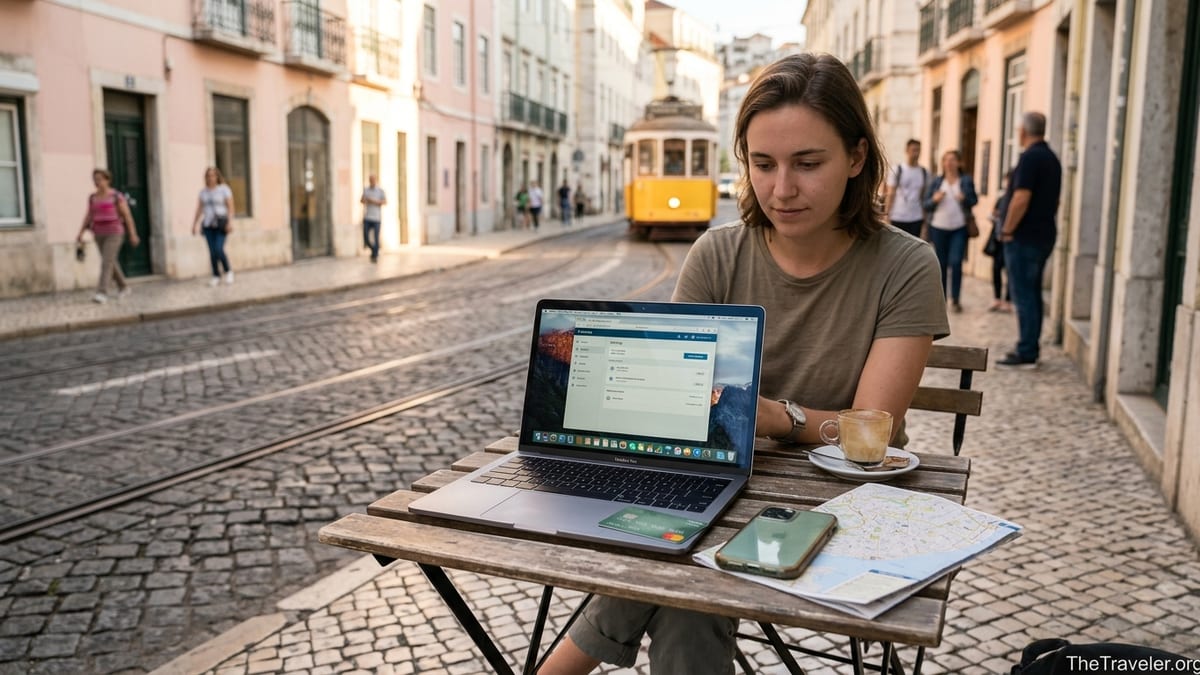
One convenience some travelers appreciate is how naturally Chime cards integrate into digital wallets. A Chime debit card added to Apple Pay or Google Pay can be used at many contactless terminals worldwide. For example, a traveler spending a month working remotely in Lisbon might never pull the physical Chime card out of their wallet, instead using their phone or smartwatch for metro rides, supermarket runs, and cafe payments, all routed back to a US-based Chime account in dollars.
Fees, Exchange Rates, and ATMs: What Travel Costs With Chime
Chime’s biggest selling point for travel is its light fee structure. The company does not charge a foreign transaction fee on debit card purchases, which sets it apart from many traditional US checking accounts that add 1 to 3 percent to every overseas card purchase. If you pay 120 euros for a hotel night in Berlin and the card network’s conversion rate that day makes that about 130 US dollars, you would see roughly 130 dollars on your statement with Chime, not 133 or 134 dollars after extra bank fees.
Exchange rates for Chime purchases are set by the Visa network, not by Chime itself. Visa’s rates are generally close to the market mid-rate, though they can differ by a small margin. For typical tourist spending, that difference is minor compared with a dedicated travel credit card from a premium issuer, and often far better than exchanging cash at a kiosk in a touristy part of town. The important nuance for travelers is to avoid dynamic currency conversion, where a foreign merchant or ATM offers to charge your US card in dollars instead of the local currency. Choosing dollars at the terminal usually means a much worse rate. With Chime, as with most cards, you will almost always get a better deal letting Visa convert from local currency to US dollars.
ATM use is more complicated. Chime offers a large free ATM network within the United States through partners, but once you are abroad you are almost always using out-of-network ATMs. Chime itself may charge a modest flat fee for out-of-network withdrawals, and foreign ATM operators often tack on their own fees, which can range from the equivalent of 1 to 7 dollars per withdrawal, depending on the country and bank. For example, a traveler in Tokyo might find that one convenience-store ATM charges around 2 US dollars per withdrawal, while another in the same neighborhood charges closer to 5 dollars. Chime cannot control the local bank’s surcharge, so you feel it on top of any Chime fee.
Because of this, Chime is generally more cost-effective for card purchases than for frequent ATM cash withdrawals abroad. A practical strategy would be to use Chime for most day-to-day card payments in countries where cards are widely accepted, and rely on a separate account such as a Charles Schwab or certain credit union debit card for heavy cash needs, since those sometimes reimburse ATM surcharges and also skip foreign transaction fees.
Real-World Pros and Cons for Frequent Travelers
In real travel scenarios, Chime’s strengths show up clearly. Someone taking a month-long trip through Portugal, Spain, and Italy might use Chime as their everyday debit card and notice that they are not paying monthly maintenance fees, not being charged extra percentages on restaurant and hotel bills, and receiving real-time alerts in the app each time a charge hits. They can split their budget by keeping a base cushion in savings, instantly moving funds to checking as needed. If they misplace the card on a train between Porto and Lisbon, they can lock it in the app immediately and continue making payments via Apple Pay on their phone once they confirm the physical card is actually lost and request a replacement mailed back home.
Chime can also shine for travelers on tighter budgets or working seasonal jobs. A Florida resident heading to seasonal hospitality work in Alaska might rely on Chime’s early direct deposit feature to get paychecks one or two days ahead of schedule, which can help when booking last-minute flights or hotel nights at peak season. The lack of overdraft fees can also be appealing, though overdraft itself is limited and subject to eligibility, so it should not be viewed as a guaranteed line of credit to cover travel emergencies.
On the flip side, there are consistent pain points. Customer support is primarily online and by phone, with no branches to walk into if something serious happens while you are abroad. Complaints have described long hold times or difficulty resolving disputes about fraud, especially when travel makes it hard to stay on the phone. For example, a traveler in Costa Rica who discovers a string of unauthorized ATM withdrawals might have to coordinate time zones, internet connectivity, and identity verification documents all while on the road, without the option to sit across from a banker in person.
There is also the risk of automated fraud systems erring on the side of caution. Sudden high-value purchases in a foreign country, back-to-back card attempts in several cities over a short period, or large mobile check deposits just before departure can trigger reviews or temporary restrictions. If Chime is your only card and your only bank account, such a freeze can derail a trip. This is not unique to Chime, but for a mobile-only service, having no physical backup infrastructure can amplify the perception of instability in a crisis.
Best Practices if You Take Chime on the Road
Used thoughtfully, Chime can be a very useful travel tool, especially for US travelers who appreciate a low-fee debit card and a straightforward app. The key is not to treat it as your sole lifeline. Before leaving the United States, it is wise to test your Chime card with a small international purchase if possible, such as booking a refundable hotel or buying a low-cost ticket from an overseas airline website, to ensure that the card behaves correctly on foreign transactions.
Travelers should also build redundancy into their financial setup. That might mean pairing Chime with at least one no-foreign-transaction-fee credit card from a traditional issuer, plus a second debit card from another bank. For example, a traveler could carry a Chime debit card for daily small purchases and ATM access, a major credit card like a no-fee Visa or Mastercard from a large bank for hotels and car rentals, and a backup debit card with a credit union known for reimbursing ATM fees. If Chime has an issue mid-trip, you are inconvenienced rather than stranded.
Managing phone access is equally important. Because Chime relies heavily on text messages and app notifications for verification, having your US SIM completely offline can create verification hurdles. Solutions include enabling Wi-Fi calling with your US number, using an eSIM that lets you keep your US line active, or having secure access to email-based verification as a backup. Before departing, confirm your contact details in the app and store Chime’s support numbers in a place where you can reach them even if you lose your phone.
Finally, watch your balance and account activity closely while on the road. Check your transaction history each night back at the hotel or guesthouse Wi-Fi, and report suspicious activity right away. If you are heading somewhere with limited connectivity, consider moving most of your funds to savings, leaving only what you plan to spend in checking, then topping up when you are back in a connected area. This keeps your exposure lower if your card is compromised in a place where contacting support is difficult.
The Takeaway
Chime is a legitimate, large-scale US fintech platform that uses FDIC-insured partner banks to hold customer deposits, and its debit card can be a solid, low-fee option for travel spending. Its strengths are clear: no foreign transaction fees on purchases, modern security tools such as instant card locking and real-time alerts, and a simple, app-based experience that fits how many travelers already manage their lives on the road.
At the same time, Chime is not a full-service international bank and should not be treated as a single point of failure on long or complex trips. Restrictions in certain countries, reliance on remote customer support, and the possibility of automated fraud flags mean that travelers who depend exclusively on Chime are taking on more risk than those who carry a diversified wallet with multiple cards and institutions behind them.
For US travelers in 2026, the most realistic stance is to view Chime as a highly useful piece of a broader travel banking strategy. Use it to avoid nickel-and-dime fees on everyday purchases abroad, pair it with at least one strong credit card and a backup debit card, and keep an eye on your connectivity and verification options. Approached this way, Chime can absolutely be part of a safe, legit setup for managing money while you explore the world.
FAQ
Q1. Is Chime actually safe to use when I am traveling abroad? Chime accounts are held at partner banks that are FDIC insured up to standard limits, and the app includes common security features like encryption, instant transaction alerts, and the ability to lock your card. For most travelers, the main safety consideration is not loss of insured funds, but the inconvenience if the account is frozen or if support is slow to respond while you are overseas.
Q2. Does Chime charge foreign transaction fees on international purchases? Chime does not add its own foreign transaction fee on debit card purchases abroad. Your transactions are converted from local currency to US dollars at the Visa network’s exchange rate, so you typically avoid the 1 to 3 percent surcharge many traditional banks add, though normal currency conversion differences still apply.
Q3. Can I use my Chime card at foreign ATMs to withdraw cash? In many countries you can withdraw local currency using your Chime debit card at ATMs that accept Visa, but out-of-network ATM withdrawals may incur a fee from Chime as well as a separate fee from the foreign ATM operator. Because those combined costs can add up, it is usually better to take out larger amounts less often or pair Chime with another debit card that reimburses ATM fees.
Q4. Will my Chime card work everywhere in the world? No. Like most US card issuers, Chime maintains a list of restricted countries where transactions are blocked, typically due to sanctions or fraud concerns. While the card generally works in popular destinations across Europe, Asia, and Latin America, you should always verify expected coverage for less common destinations before you travel, and carry at least one backup card.
Q5. What happens if my Chime card is lost or stolen while I am on a trip? If you lose your card, you can lock it immediately through the Chime app to prevent new purchases, and then request a replacement. While you wait, you may still be able to use a digital wallet such as Apple Pay or Google Pay if your device remains in your possession and the card is still provisioned there. This is another reason it is wise to carry a second, unrelated card as a backup.
Q6. Is Chime a good choice for long-term travel or living abroad? Chime can work for long-term travel if you keep a US address, maintain reliable ways to receive verification codes, and treat it as one of several financial tools rather than your only account. However, it is not designed to function as a local bank in another country, so if you are relocating abroad for many months or years, you will usually want to open a local account alongside Chime.
Q7. How should I prepare my Chime account before an international trip? Before departure, confirm your contact details in the app, test a small international transaction if possible, and make sure your debit card is added to your preferred digital wallets. It is also wise to notify any other banks and card issuers you will be using, set realistic spending limits, and decide how much you will keep in checking versus savings while you are away.
Q8. Can I rely on Chime for rental cars, hotel holds, and security deposits abroad? You can often use a Chime debit card for these holds, but many hotels and car rental companies strongly prefer or require a credit card. Holds placed on a debit card immediately reduce your available balance, which can be inconvenient when traveling. For these types of transactions, a traditional no-foreign-transaction-fee credit card is usually more practical, with Chime reserved for everyday purchases and ATM access.
Q9. How does Chime compare to a traditional bank account for travel? Compared with many basic checking accounts at large US banks, Chime typically offers fewer fees on everyday card use, a more modern app experience, and strong real-time controls. Traditional banks may offer broader in-person support, larger product suites, and sometimes better options for frequent ATM withdrawals overseas. The ideal setup for travel often combines the best of both rather than relying on just one.
Q10. Should I keep all my travel money in Chime or split it between accounts? It is generally safer to split your travel funds between at least two institutions so a single technical issue or fraud review cannot completely cut off your access to money. Many travelers keep a portion of their budget in Chime for low-fee spending and another portion in a different bank account or on a credit card, adjusting balances as the trip progresses to manage risk and fees.