


More news on this day
An evening commute north of Boston was abruptly interrupted when downed power lines caused a shower of sparks beside a Massachusetts Bay Transportation Authority (MBTA) commuter rail train, prompting an emergency evacuation and significant delays across the busy corridor.
Get the latest news straight to your inbox!
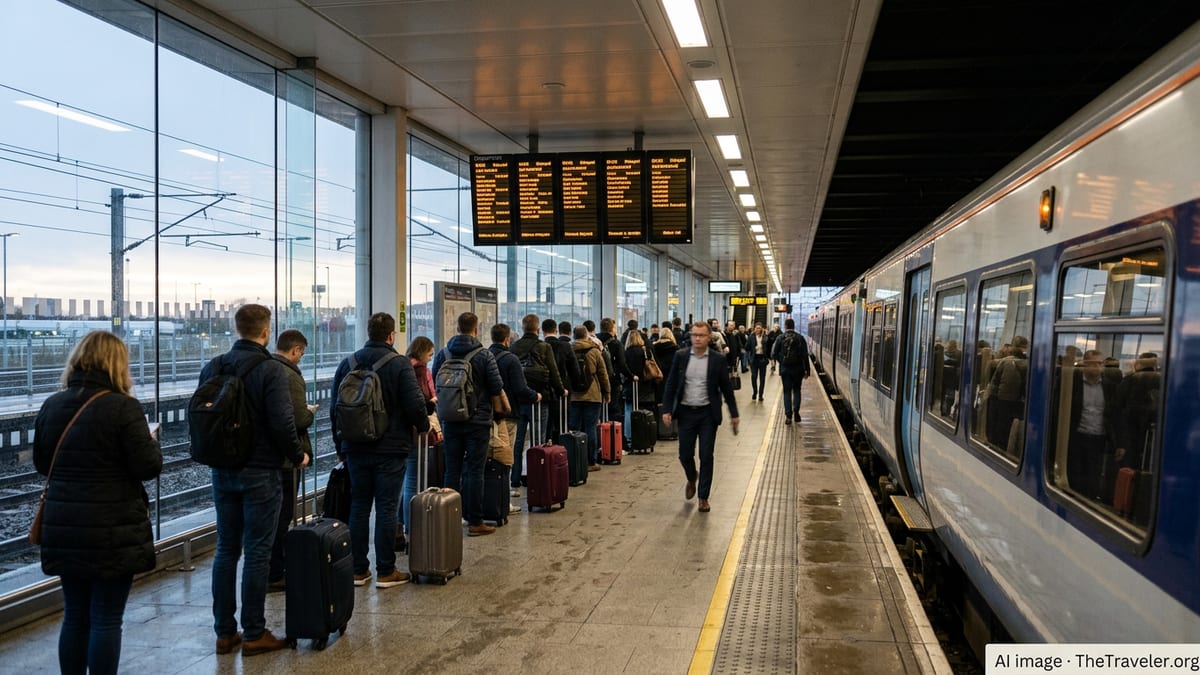
Power Lines Fall Beside Moving Train
According to early regional news coverage, the incident occurred on a northbound MBTA commuter rail train traveling through the Boston area when overhead electrical infrastructure failed and power lines came down alongside the moving coaches. Video and images shared on social media show a burst of light and a cascade of sparks near the tracks as the train came to a halt.
Initial reports indicate that the lines either sagged or detached, contacting equipment near the train and sending up a visible shower of sparks in the darkness. Passengers described seeing flashes outside the windows just before the train stopped and the lights flickered, adding to the sense of confusion on board.
The affected stretch of track is part of a heavily used commuter route serving communities north of Boston. Disruptions in this corridor can quickly ripple across the wider MBTA network, especially during peak travel hours when trains are running at close intervals.
Rail operations in the immediate area were suspended while crews assessed the damage and verified that the downed lines were de-energized. Nearby trains were held in place or rerouted where possible, leading to extended wait times for riders already in transit.
Passengers Guided Through Trackside Evacuation
Publicly available information shows that the train was unable to move under its own power after the lines came down, prompting staff to coordinate a trackside evacuation. Riders were directed from the cars onto the rail bed and escorted along the right of way to a safer location away from the damaged electrical equipment.
Images from the scene show passengers walking in single file beside the train in low light, some using phone flashlights to navigate the uneven ballast near the tracks. Transit staff and emergency responders assisted with the process, working to keep the group together and clear of any remaining hazards.
There were no immediate reports of serious injuries associated with the evacuation, although some passengers described the experience as unnerving and disorienting. The combination of sparks, sudden darkness, and the unfamiliar environment outside the train contributed to a tense atmosphere.
The decision to evacuate along the tracks is typically taken only when moving the train is not considered safe. In this case, the proximity of the downed power lines and uncertainty about the condition of the overhead system led to a cautious approach focused on getting riders away from the affected area.
Service Disruptions Ripple Across the Network
The failure of the power lines triggered substantial delays on the impacted commuter rail line, with trains behind the incident forced to hold while the scene was secured. Published updates from transit trackers and local coverage describe cancellations, reduced schedules, and residual congestion persisting for hours after the initial shutdown.
Travelers heading into and out of Boston reported missed connections and extended travel times as they waited for substitute trains or sought alternative routes. Some riders turned to regional bus services or rideshare options, adding pressure to road networks already busy with rush hour traffic.
Rail infrastructure incidents of this kind can be especially disruptive on lines that share tracks or junctions with other services. Even once the immediate hazard is removed, dispatchers often need additional time to reposition equipment, restore normal signal operations, and move delayed trains through bottlenecked segments.
By late evening, limited service had reportedly resumed on portions of the route, though riders were advised to expect ongoing delays and crowding as the system worked through the accumulated backlog.
Investigation Focuses on Overhead Infrastructure
In the wake of the incident, attention has turned to the condition and maintenance of the overhead power system that supplies electricity to parts of the Boston-area rail network. Early reporting suggests that investigators will review the integrity of the support structures, connections, and insulators in the area where the lines failed.
Transit safety records show that extreme weather, corrosion, and component fatigue can all contribute to overhead line issues, particularly on aging infrastructure that is used intensively during peak periods. Strong winds or falling tree limbs can also place added stress on power lines and their supports.
According to published accounts, crews remained on scene overnight to inspect the damaged equipment, clear debris, and confirm that there was no ongoing risk to nearby neighborhoods. The work includes checking for heat damage, verifying clearances, and testing related systems before trains are allowed to pass at normal speeds.
Any formal findings are expected to inform future maintenance and inspection schedules, as well as potential upgrades to hardware or monitoring systems intended to detect problems before they result in visible arcing or downed lines.
Renewed Scrutiny of Passenger Rail Resilience
The Boston incident has added to a broader public discussion about the resilience of U.S. passenger rail systems, particularly in corridors that blend older infrastructure with growing ridership. Recent disruptions in several metropolitan regions have highlighted how a single point of failure can strand hundreds of passengers and reverberate across a full day of operations.
Transit observers note that overhead electrical systems can offer environmental and performance benefits, but they also require vigilant maintenance and investment to withstand changing weather patterns and heavier service demands. Failures involving visible sparks or smoke tend to resonate strongly with passengers, who may already feel wary about crowding and delays.
Advocates for improved rail funding argue that targeted investments in power systems, signal upgrades, and real-time monitoring technology could reduce the frequency and severity of such incidents. Published analyses of similar events in other cities point to the importance of redundancy, quicker isolation of faults, and clearly communicated contingency plans for affected riders.
For Boston-area travelers, the images of a shower of sparks beside their halted train are likely to linger, serving as a vivid reminder of the complexities behind everyday commutes and the importance of infrastructure that is both safe and reliable.