


For many travelers, Chime has become a go-to banking option that promises low fees, modern apps, and fewer headaches than traditional banks. But “no hidden fees” does not mean “no fees at all.” If you are planning a road trip across the United States or a month-long journey through Europe or Southeast Asia, understanding exactly what Chime charges can make the difference between a smooth, low-cost trip and an expensive surprise at the ATM.
Get the latest updates straight to your inbox!
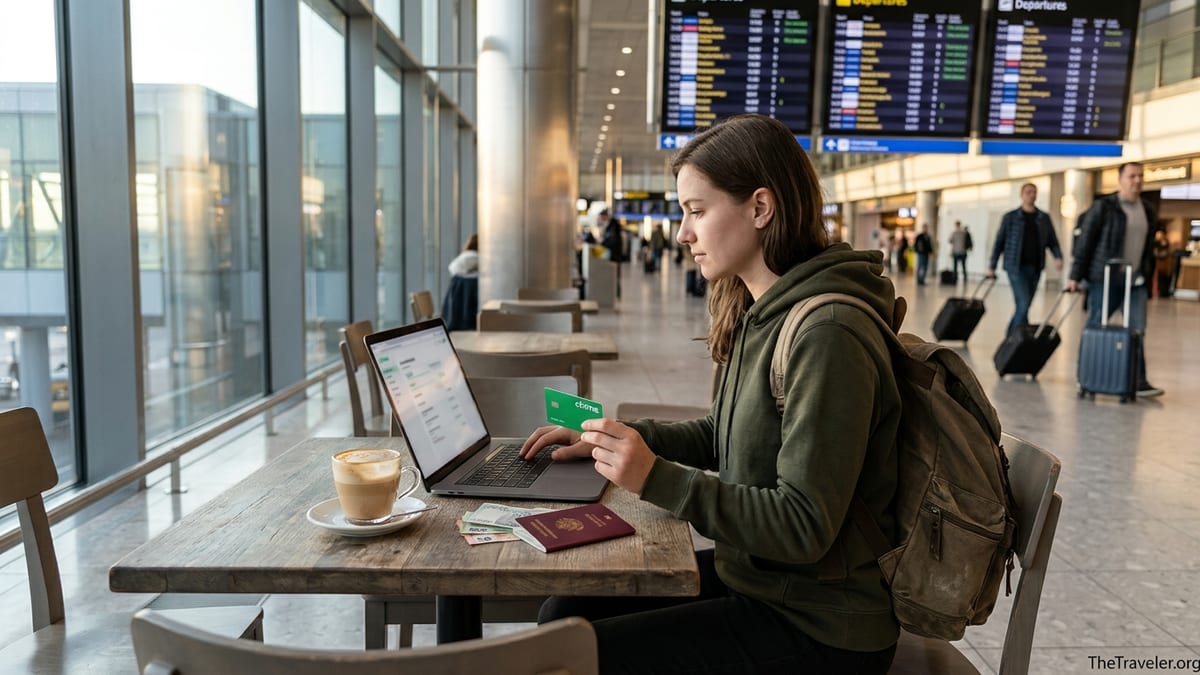
How Chime Works and Where the Fees Actually Are
Chime is a U.S.-based financial technology company that offers checking, savings and credit builder products through partner banks. It markets itself heavily on simplicity: no monthly maintenance fees, no minimum balance, no overdraft fees in the traditional sense, and no foreign transaction fees on card purchases. For travelers who have been stung by $15 monthly charges or $35 overdrafts at big banks, that pitch is compelling.
In practice, though, Chime does have fees, and they matter most when you wander outside its sweet spot. The clearest example is cash withdrawals. As of mid 2026, Chime charges $2.50 each time you withdraw cash from an out of network ATM in the United States or abroad, on top of any fee the local ATM owner charges. That means grabbing $40 in cash at a small convenience store ATM that charges $3 could actually cost you $45.50 by the time Chime’s own $2.50 fee is added.
Chime also charges 1.75 percent on instant transfers of money out of your account to an external bank. If you need to move $500 quickly to a traditional bank to pay a landlord or book a tour that only accepts wires, that instant move could cost you $8.75, although you can still send standard ACH transfers for free if you are willing to wait a day or two. So while Chime removes a lot of the classic bank fees, it replaces them with a small set of targeted charges that you will feel most when you rely heavily on cash or last minute transfers.
Understanding where these fees sit in the fine print is the first step to deciding whether Chime belongs at the center of your travel wallet or as a convenient backup card.
Core Chime Fees in Plain Language
The easiest way to understand Chime’s pricing is to separate what you will almost never pay from what you might pay often if you are not careful. On the “rarely pay” side, Chime does not charge a monthly account fee, does not require a minimum balance, and does not add its own foreign transaction fee when you pay with the Chime Visa debit card or the Chime Credit Builder secured card. For a traveler booking a $600 hotel stay in Paris or a $75 dinner in Mexico City, that means you generally avoid the 1 to 3 percent foreign fee that many bank cards still add.
On the “likely to pay” side sits the out of network ATM withdrawal fee of $2.50 per transaction. Chime partners with large fee free networks such as Allpoint and Visa Plus Alliance in the United States, and with selected networks abroad. If you pull $200 from a partner ATM in a New York City CVS or a 7-Eleven in Phoenix, you will typically pay no fee at all to Chime or the ATM owner. But if you hit a random machine outside a bar in Miami Beach or at a small gas station in rural Utah, you are very likely looking at Chime’s $2.50, plus an ATM surcharge that often runs between $3 and $5.
Another fee that catches frequent movers of money is the instant transfer charge. If you use Chime’s “instant transfer” feature to push money to another bank or sometimes to certain external cards, the 1.75 percent fee can add up for larger sums. For example, instantly sending $1,000 to another bank before a big trip would cost you $17.50, whereas a standard ACH transfer scheduled a few days earlier would be free. For travelers, this often comes up when a hostel or apartment rental insists on a traditional bank transfer and you find yourself moving funds at the last minute.
It is also worth noting what Chime does not offer. You cannot send or receive traditional wire transfers directly from a Chime checking account. Instead, you would need a separate bank for that, which can be a limitation if you are paying for a long term rental abroad or settling a bill with a tour operator that only accepts wires. There is no extra “Chime fee” here, but the lack of service can push you back toward a fee heavy traditional bank if you do not plan ahead.
Traveling Internationally With Chime: Fees and Friction
For international travelers, Chime’s headline advantage is the lack of foreign transaction fees on card purchases. If you tap your Chime debit card for a 50 euro train ticket in Berlin or a 1,500 baht meal in Bangkok, Chime will not add a separate foreign fee. The purchase is converted into U.S. dollars at the Visa network rate on the day it settles, which is typically close to the market exchange rate, though Chime does not detail any small margins that may be baked into that rate.
This lack of foreign transaction fees makes Chime competitive with many dedicated travel credit cards from big banks, especially if you do not care about earning airline miles or hotel points. For instance, a traditional card that charges a 3 percent foreign transaction fee would add $18 to a $600 hotel bill in Rome. With Chime, that $18 stays in your pocket, assuming you pay by card and not by cash from an ATM.
The trade off arrives when you need cash abroad. Chime’s $2.50 out of network ATM fee still applies when you are outside the United States. Add in the fee from a foreign ATM operator, which can easily be the equivalent of $4 to $6 in many European and Asian cities, and a single withdrawal can cost you around $8 to $10 in combined charges. Pulling the equivalent of $100 in local currency from an ATM in Barcelona or Tokyo multiple times in a week can therefore erode much of the saving you gained from no foreign transaction fees on card spend.
You also need to consider practical restrictions. Chime cards generally work in most countries where Visa is accepted, but they are blocked in certain high risk jurisdictions, including countries such as Cuba, Iran, North Korea, and others. On top of that, Chime may restrict access to your app or online account if it detects you connecting from some of these locations. For many mainstream travel routes in Europe, Latin America, and much of Asia, this will not be an issue, but it is something to check if your itinerary includes more politically sensitive destinations.
Using ATMs, Cash Deposits, and SpotMe While Traveling
For many Chime users, the real world test comes at the ATM. Imagine you land in Denver on a cross country road trip and need cash for a national park entry fee that only takes paper bills. If you use the ATM locator in the Chime app and walk a few extra minutes to a fee free Allpoint ATM at a nearby grocery store, you can withdraw $100 with no fee from Chime and no surcharge from the ATM owner. Take the easy route and use a generic standalone ATM inside a small liquor store next door, and you may face a $3 owner fee plus Chime’s $2.50 out of network charge, essentially paying 5.5 percent just for access to your own cash.
Abroad, the effect is similar but amplified. A traveler in Mexico City might withdraw 4,000 pesos (roughly $230, depending on rates) from an out of network ATM that charges the equivalent of $4 in local fees, plus the $2.50 from Chime. That $6.50 is nearly 3 percent of the withdrawal. Do that three times during a week long trip and you have paid close to $20 in ATM costs alone. Planning to take out larger amounts less frequently and relying more on card payments where possible can soften that blow.
Chime’s SpotMe feature can also matter for travelers who occasionally run tight on cash. SpotMe allows eligible members with qualifying direct deposits to overdraft debit card purchases and ATM withdrawals with no dedicated overdraft fee, up to a limit that often ranges from around $20 to $200 and can change over time. In practice, that might mean your $35 dinner in Chicago or your $60 gas fill up in rural Nevada still goes through even if your account balance is only $10, so long as it stays within your SpotMe limit. The negative balance is then automatically repaid when your next paycheck or transfer hits.
The catch is that while Chime does not charge a separate overdraft fee for SpotMe usage, any ATM withdrawal that uses SpotMe still has to contend with the $2.50 out of network ATM fee if you do not use a partner machine, along with whatever the ATM owner adds. A traveler with only $5 left in their Chime account and a $40 SpotMe limit, trying to withdraw $40 at a pricey independent ATM near a tourist attraction, may find the transaction declined once the combined fees push the total over their SpotMe limit. Using the fee free networks that Chime highlights in its ATM map is especially important when you are close to zero.
How Chime Compares to Traditional Banks and Other Travel Options
To decide if Chime is worth it, you have to compare its fee structure to the alternatives you are likely to use on the road. Take a common scenario: a traveler with a checking account at a major U.S. bank like Bank of America or Wells Fargo, plus perhaps a standard cash back credit card that charges foreign transaction fees. Traditional banks often charge monthly maintenance fees of $10 to $15 unless you meet certain balance or direct deposit requirements, overdraft fees around $30 per incident, and foreign transaction fees of 3 percent on many debit and credit cards.
Imagine you are on a two week trip in Italy and spend $2,000 on your bank’s standard credit card that carries a 3 percent foreign transaction fee. That is $60 in fees just for the privilege of using your card abroad. Add one overdraft during the year when a hotel hold and a restaurant charge overlap on your account, and you could easily pay another $30 to $35. In contrast, a Chime user who does the same trip and pays everything by card would avoid those specific charges, though they might run into a handful of $2.50 ATM fees if they insist on using cash more than necessary.
There are also specialized travel friendly banks and brokerages to consider. For instance, some brokerage linked bank accounts reimburse all ATM fees worldwide, effectively giving you fee free cash at any machine, though they might require you to keep a certain amount invested. In practice, many frequent travelers pair a Chime account with one of these reimbursement style debit cards. Chime handles everyday spending, SpotMe coverage, and early direct deposit of paychecks, while the second account becomes the dedicated ATM card for international trips.
Compared to many app based competitors in the United States that charge monthly subscription fees for metal cards or higher savings rates, Chime keeps its pricing straightforward. There is no separate monthly fee for basic access, and even advanced features like its Credit Builder card do not carry annual charges. That simplicity makes Chime especially appealing to occasional travelers, students on study abroad, or digital nomads who prefer to minimize fixed banking costs and can tolerate being careful around ATMs.
Is Chime Worth It for Different Types of Travelers?
Whether Chime is “worth it” depends heavily on your travel style and your tolerance for managing around its few, but real, fees. If you are a mostly card first traveler who rarely needs cash, Chime looks very attractive. A couple from Seattle heading to Spain for two weeks, paying for hotels, train tickets, and most meals with their Chime debit card, might go the entire trip without incurring a single bank fee, as long as they avoid expensive ATMs and accept that they cannot send international wires directly from Chime.
Budget travelers who lean heavily on cash will have a different experience. A backpacker in South America staying in hostels, buying street food, and paying for budget buses that only accept cash may need to visit ATMs several times a week. If each withdrawal carries the local ATM’s $4 fee plus Chime’s $2.50, they could see $25 or more evaporate in fees over a month. In that scenario, Chime can still be part of the solution, but it makes sense to either withdraw larger amounts less frequently or pair Chime with a card that reimburses ATM fees.
Domestic road trippers sit somewhere in the middle. Within the United States, Chime’s large fee free ATM network in chains like 7 Eleven, some grocery stores, and drugstores means many travelers can plan their fuel, food, and cash stops around partner ATMs and avoid fees entirely. A family driving from Dallas to the Grand Canyon could, with a bit of planning using Chime’s ATM map, hit only in network machines at major exits and save $20 or more over the course of a long trip compared with using random highway ATMs.
Finally, digital nomads and long term travelers may value Chime for its early access to paychecks and its ability to work smoothly with peer to peer payment apps. Getting your U.S. paycheck up to two days early and routing it through Chime while working remotely from Lisbon or Mexico City can smooth cash flow when different currencies and time zones are in play. The trade offs around ATM fees and the lack of wire transfers become manageable if you are comfortable layering Chime with at least one additional bank account optimized for international cash use.
The Takeaway
Chime has built its reputation on eliminating many of the most painful traditional bank fees, and for many travelers that promise largely holds up. There are no monthly maintenance charges to worry about while your account sits idle between trips, no overdraft fees piling up when a restaurant bill hits a day earlier than expected, and no extra foreign transaction fees when you pay by card in another currency. For everyday spending at home and abroad, that can deliver very real savings compared with a standard big bank setup.
At the same time, Chime is not a magic free money card. The $2.50 out of network ATM withdrawal fee, especially when paired with local ATM surcharges, is a recurring cost that can quietly eat into a travel budget if you take out small amounts of cash often or ignore Chime’s fee free ATM map. The 1.75 percent fee on instant outbound transfers can also sting if you build a habit of moving large amounts at the last minute instead of planning free ACH transfers in advance.
For most travelers, the smartest approach is to treat Chime as one strong tool among several. Use it for fee free spending, early paychecks, and flexible overdraft support through SpotMe. Pair it with a second account or card that offers global ATM fee reimbursements or supports wire transfers for big ticket international payments. With that combination and a habit of checking the ATM locator before you withdraw, Chime can absolutely be worth it, delivering much of what it promises while leaving you in control of the few fees that remain.
FAQ
Q1. Does Chime charge a monthly fee for its accounts?
Chime does not charge a monthly maintenance fee on its checking or savings accounts, and there is no minimum balance requirement, which makes it appealing for travelers who go months between big trips.
Q2. What ATM fees does Chime actually charge?
Chime charges a $2.50 fee for each cash withdrawal at an out of network ATM, whether in the United States or abroad, and the ATM owner may add its own surcharge on top of that.
Q3. Are there really no foreign transaction fees with Chime?
Chime does not add a foreign transaction fee when you use its debit card or Credit Builder card for purchases in another currency, although standard Visa network exchange rates still apply when the transaction is converted to U.S. dollars.
Q4. How can I avoid ATM fees while traveling with Chime?
The best way is to use the ATM locator in the Chime app to find fee free partner ATMs, withdraw larger amounts less often, and prioritize card payments for hotels, restaurants, and transport whenever possible.
Q5. Does Chime reimburse third party ATM fees like some travel cards?
No. Unlike certain brokerage linked debit cards that refund all ATM surcharges, Chime does not reimburse fees charged by ATM owners, so you are responsible for both the ATM’s fee and Chime’s own out of network charge.
Q6. What is SpotMe and how does it affect fees when traveling?
SpotMe is Chime’s overdraft feature that lets eligible members make debit card purchases and some ATM withdrawals that dip their balance below zero without a specific overdraft fee, up to a personalized limit, though regular ATM withdrawal fees still apply on out of network machines.
Q7. Can I use my Chime card everywhere in the world?
Chime cards work in most countries where Visa is accepted, but they are blocked in certain higher risk countries and territories, so it is important to check current restrictions before planning travel to more sensitive destinations.
Q8. Does Chime allow international wire transfers for big travel payments?
No. Chime does not support sending or receiving traditional wire transfers, domestic or international, so you may need a separate bank account if your landlord, tour operator, or school abroad requires payment by wire.
Q9. When is Chime not the best choice for travel?
Chime is less ideal if your itinerary relies heavily on cash, frequent ATM withdrawals in countries with high surcharges, or regular wire transfers, in which case a dedicated travel friendly bank or brokerage account may be more cost effective.
Q10. Is Chime alone enough for long term international travel?
Many long term travelers find Chime most effective as part of a small mix of accounts: it can handle everyday card spending, early access to paychecks, and overdraft support, while a second card optimizes cash withdrawals and wire transfers.