


More news on this day
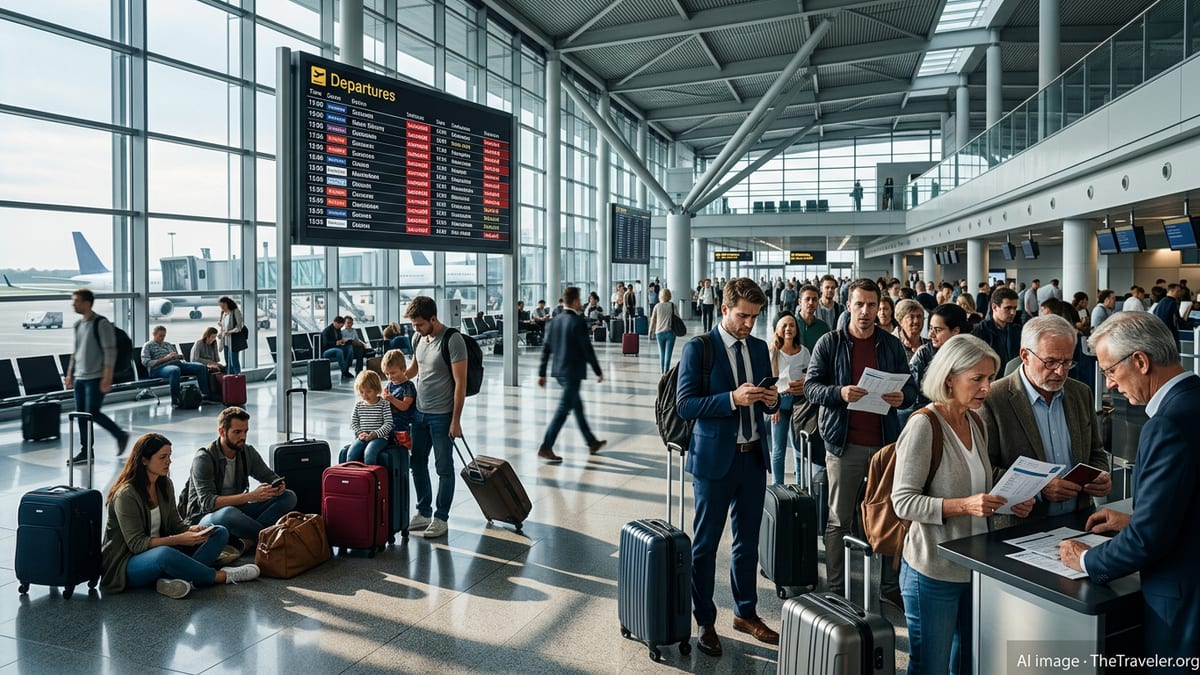
Hundreds of passengers have been left stranded or forced into lengthy rebookings across China as China Eastern Airlines scrapped around 20 flights and delayed more than 350 others, disrupting operations at Shanghai Pudong, Beijing Daxing, Kunming Changshui, Xi’an Xianyang, Shanghai Hongqiao and several secondary airports.
Get the latest news straight to your inbox!
Widespread Disruptions Across China’s Busiest Airports
Operational data compiled from live flight-tracking dashboards and aviation analytics platforms on Tuesday indicate that China Eastern’s network has come under particular strain, with cancellations and rolling delays concentrated on trunk routes linking Shanghai, Beijing and major provincial capitals. Aggregated feeds show at least 20 China Eastern departures scrubbed during the day and roughly 368 delayed, with knock-on effects radiating beyond the carrier’s core hubs.
Shanghai Pudong International Airport, the airline’s primary base, has experienced a dense cluster of late departures and schedule changes, especially on east coast and short-haul regional sectors. Beijing Daxing, where China Eastern has a growing presence, has also seen a higher than usual proportion of late running flights, compounding congestion during peak evening waves.
Further south and west, Kunming Changshui and Xi’an Xianyang have reported banks of delayed departures that align with aircraft previously scheduled through Shanghai and Beijing. Shanghai Hongqiao, an important domestic gateway, has likewise recorded a series of extended turnaround times, suggesting that aircraft and crew rotations across the network are being disrupted rather than problems being confined to a single airport or region.
Other airports, including fast-growing inland and coastal gateways served by China Eastern and its subsidiaries, have reported sporadic delays tied to aircraft arriving late from Shanghai and Beijing. The pattern points to a system-wide operational pinch rather than isolated route cancellations.
Passengers Report Long Queues, Missed Connections and Limited Information
Travelers posting to public forums and social media channels have described long queues at China Eastern service counters, particularly at Shanghai and Kunming, as they seek rebooking options or refunds. Several passengers recount learning of cancellations only when attempting to check in at the airport, leaving little time to adjust plans or secure alternative connections.
Accounts shared online mention missed long haul connections as a recurring problem, with some travelers forced to overnight in transit cities when domestic links into Shanghai or Beijing ran late or were removed from the board. In a number of cases, passengers describe needing to purchase new tickets on alternative carriers or reroute through different hubs at short notice to salvage international itineraries.
Publicly available discussions also highlight inconsistent communication regarding the precise reasons for cancellations. Standardized announcements referring broadly to “airline reasons” have frustrated some travelers who are seeking more specific explanations, particularly where entire itineraries or time-sensitive trips such as visas, tours or cruises are at stake.
Despite these frustrations, some reports indicate that rebooking has been possible in many cases, though often involving significant schedule changes, longer layovers or additional domestic legs. For travelers with fixed dates or complex multi-city itineraries, however, these workarounds can still result in substantial disruption and added expense.
Operational Pressures Behind the Wave of Cancellations and Delays
While China Eastern has not issued a detailed public breakdown of the causes behind Tuesday’s wave of disruptions, aviation analysts note that Chinese carriers are operating in a challenging environment this summer. Domestic demand has rebounded strongly toward and in some cases beyond pre-2020 levels, while airlines simultaneously push ahead with ambitious international expansion plans out of Shanghai and Beijing.
Industry coverage in recent weeks has highlighted how this growth drive is colliding with capacity constraints stemming from aircraft availability, maintenance windows and ongoing air traffic flow management across busy air corridors. Even modest schedule perturbations can cascade rapidly through tightly timed banks of flights at hubs such as Shanghai Pudong and Beijing Daxing, producing clusters of delays and same-day cancellations.
Data from recent on-time performance analyses show that China Eastern generally posts competitive punctuality on many key routes. However, analysts caution that such statistics are averages taken over longer periods and can mask pronounced volatility on particular high-demand days, especially during peak travel seasons and holiday periods.
Network models used by airline planners aim to absorb a certain level of operational stress through buffers and spare aircraft, but when several factors converge, carriers may prioritize safety and maintenance requirements by cancelling flights outright. That approach can protect the broader schedule over subsequent days, even as it severely inconveniences passengers on the affected services.
What Stranded Travelers Are Being Told They Can Do
Publicly available passenger guidance and consumer-rights information for flights departing from Chinese airports indicate that travelers whose flights are cancelled for operational reasons are typically offered a choice between rebooking on a later service with the same carrier or receiving a refund. In cases of long delays, airlines may provide meal vouchers or hotel accommodation where passengers are forced to remain overnight.
Travel forums and recent case studies suggest that outcomes for affected China Eastern passengers can vary widely depending on the origin and destination of the journey, the type of ticket purchased and whether itineraries involve codeshares or separate tickets. Travelers on tightly linked international connections have reported more complex rebooking processes, particularly when onward flights are operated by partner airlines with different policies.
Consumer advocates writing about disruptions involving Chinese carriers advise passengers to keep detailed records of boarding passes, booking confirmations, receipts and time-stamped photos of airport information screens. Such documentation can be important when pursuing refunds, compensation under applicable local or foreign regulations, or claims through travel insurance providers.
Travelers are also urged to monitor flight status in multiple places, including airline apps and independent tracking platforms, as same-day schedule changes can occur repeatedly. Where possible, contacting the airline or travel agency before heading to the airport can shorten time spent in queues and increase the options for alternative routings.
Implications for China’s Peak Travel Season
The latest surge of cancellations and delays at China Eastern comes as Chinese airlines navigate an intense summer travel period that has already seen days of heavy disruption at major hubs. Previous episodes this month involving multiple carriers have demonstrated how quickly operational bottlenecks can ripple across the country’s interconnected domestic network.
Chinese aviation’s rapid post-pandemic recovery, combined with renewed international expansion from Shanghai and Beijing, has left airlines juggling high load factors, evolving route maps and careful capacity management. As carriers add new long haul links from Shanghai Pudong and increase frequencies on popular regional routes, their networks become more sensitive to localized shocks such as weather, airspace flow restrictions or maintenance-related groundings.
For travelers planning trips through China in the coming weeks, the latest disruptions serve as a reminder to build in additional buffers between domestic and international legs, particularly when transiting through Shanghai Pudong, Shanghai Hongqiao or Beijing Daxing. Travel specialists recommend considering longer layovers, avoiding tight self-connected itineraries and confirming minimum connecting times with airlines or airports.
As airlines work to stabilize schedules and clear backlogs from the current wave of irregular operations, observers note that how carriers handle customer service, communication and aftercare will be closely watched by the traveling public. For now, passengers across several Chinese hubs are facing another difficult day of uncertainty, packed departure halls and rapidly changing departure boards.