


Paraga Beach is one of Mykonos’s most photogenic stretches of sand, a south-coast bay with clear water, a low rocky headland and beach clubs that glow at golden hour. It can also feel overwhelmingly busy in peak summer. If you are timing a trip for sweeping views, relaxed swims and space to stretch out your towel, choosing the right month, week and even time of day will shape your experience more than almost anything else.
Get the latest updates straight to your inbox!
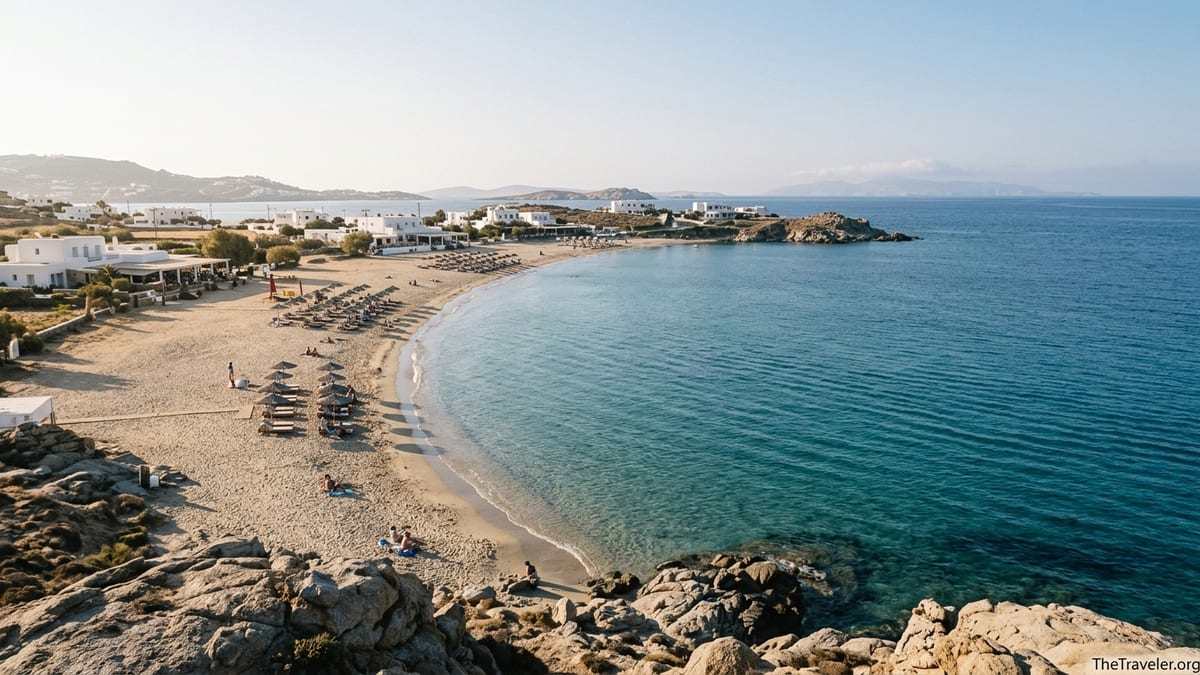
Understanding Paraga Beach: Layout, Light and Atmosphere
Paraga Beach sits on the sheltered south coast of Mykonos, roughly 15 minutes by bus or taxi from Mykonos Town. The bay is split into two main sections: a more developed side lined with sunbeds and beach bars, and a slightly quieter end where the sand gives way to a mix of fine shingle and flat rocks. Because of its position, the beach faces southeast to south, which means it catches soft morning light, bright overhead sun in the middle of the day, and a warm glow in late afternoon as the sun drops behind the low hills.
This orientation is part of what makes Paraga so photogenic. In the morning, the sea often looks glassy and pale turquoise, especially on calmer days, ideal if you are shooting wide, postcard-style images of the whole bay from the rocky headland. By mid-afternoon, when the sun is high and the atmosphere at nearby venues is livelier, the colors turn more saturated: intense blue water, golden sand, and the pastel tones of parasols and daybeds.
The atmosphere shifts through the day as well. Before about 11 a.m., you are likely to see a mix of early-rising couples, solo swimmers and a few locals walking the shoreline. After lunch, especially in high season, the beach clubs start to fill, music gets louder and the narrow road above the bay sees a steady stream of taxis, buses and quad bikes. That makes early and late hours the best time if you want clear views and a quieter feel.
Understanding these rhythms will help you decide not only when to travel to Mykonos, but also how to plan individual days so you can enjoy the views without feeling hemmed in by rows of sunbeds and peak-hour crowds.
Seasons at Paraga: How the Calendar Changes the Beach
Mykonos is highly seasonal, and Paraga Beach reflects those patterns. Broadly speaking, the beach season runs from late April to late October, with most hotels, tavernas and beach clubs on the island opening sometime between Orthodox Easter and mid-May, and then shutting down again progressively from early to late October. Within that window, the feel of Paraga shifts dramatically from month to month.
Late April and May are the start of the season. On a sunny day in mid-May, you might find the sea still cool but swimmable, with a good chance of bright blue skies and daytime temperatures often in the low to mid 70s Fahrenheit. Some of the larger beach venues may still be ramping up, but sunbeds are usually out and there is space between them. If you walk down to the quieter end of Paraga at 10 a.m. in mid-May, you might share the bay with only a few dozen people, mostly European spring travelers and weekenders from Athens.
June through early September is the high-summer period. That is when cruise ships call daily at Mykonos and charter flights arrive in waves. On a typical August afternoon, every organized section of Paraga is lined edge-to-edge with sunbeds, many pre-booked days in advance. Beach clubs schedule well-known DJs, minimum spends for front-row loungers can be high, and the road above the bay can back up with minibuses doing drop-offs. If you are seeking space and serenity, this is the most challenging time, although even then there are strategies to carve out quieter hours.
September and early October are the autumn shoulder season. Sea temperatures are usually at their warmest after storing up heat all summer, but crowds thin noticeably once European school holidays end. Towels reappear between the sunbeds, last-chance offers appear at hotels across the island, and the average age on the beach tends to skew a little older and more relaxed. By late October the weather becomes more variable and some businesses close, but you can still have sparkling, almost empty beach days if you are flexible with conditions.
Weather, Winds and Why the South Coast Matters
Mykonos is sometimes called the “Island of Winds” because of the strong seasonal northerlies that blow across the Aegean in summer. These winds, often referred to as the Meltemi, are most common from roughly mid-May to mid-September and tend to peak in July and August. On blustery days, the exposed north-coast beaches can see powerful waves and flying sand, while the south coast, including Paraga, is significantly more sheltered.
In practical terms, this means that Paraga often remains usable on days when the wind makes other parts of the island uncomfortable. Travelers who wake in Mykonos Town to find whitecaps offshore often re-route to south-facing bays such as Paraga, Platis Gialos or Psarou, where the sea is calmer and conditions are better for swimming. This sheltering effect can make Paraga busier on windy days, but it also enhances views, as the water stays clear and relatively wave-free compared to more exposed shores.
For photographers, wind affects not only comfort but also the look of the water and sky. A light northerly breeze in late June might ruffle the surface just enough to create texture without heavy chop, making wide shots of the bay more interesting. On very windy days, the air can be exceptionally clear, with long-distance visibility that lets you capture surrounding islets and the pale line of Naxos or Paros on the horizon.
If you are planning a trip primarily around beach time, a weather-aware strategy pays off. Some travelers choose June or September as a balance between warm water, a good chance of settled conditions and less intense heat than August. Others prefer May or early October, when the sun is milder and the strongest Meltemi days are fewer, even if there is a slightly higher chance of a passing shower or cooler evening.
Month-by-Month: When You Will Find Better Views and Fewer Crowds
For Paraga Beach, the sweet spots tend to be the shoulder periods: May to mid-June and early September to early October. In early May, you might find daily highs in the upper 60s to low 70s Fahrenheit, which feels pleasant for walking the shoreline or sitting on the rocky outcrop taking photos. The sea can still feel brisk, so swimmers often limit their dips or use short wetsuit tops, but the trade-off is that you can photograph the bay with large stretches of empty sand and unobstructed water.
By late May and into early June, more beach clubs are fully operational, but crowd levels remain manageable. On a weekday in early June, it is realistic to arrive mid-morning and still find a front-row pair of loungers at one of the main venues without booking days in advance, especially if you are willing to take a second row or sit closer to the quieter side of the beach. Prices per sunbed set vary widely, but compared with August, rates are often lower and minimum spends more relaxed.
September is arguably the best all-round month for Paraga if you care about both views and comfort. The sea is usually pleasantly warm, the sun strong but not brutal, and crowd levels step down week by week once August holidays end. For example, a couple visiting in the second week of September can breakfast in Mykonos Town, catch a mid-morning bus from Fabrika, and still find open towels-only space at the unorganized end of Paraga where they can photograph the curve of the bay without a dense forest of umbrellas.
Early October rewards travelers who are flexible. Some days feel like a softer version of summer, with bright skies and warm water, but there can also be cooler, overcast spells and the occasional stormy day. Many seasonal venues near Paraga remain open at least through the first week, although closing parties and reduced hours are common later in the month. The reward is space: you may share the whole bay with only a handful of people on a calm Tuesday afternoon, making it ideal for long-exposure shoreline shots or simply sitting on the rocks watching the light change.
Best Days and Times: How to Outrun the Crowds
Even in busy months, the day-of-week and time-of-day choices you make have a big impact on your experience of Paraga Beach. Weekends from late June through early September see the highest volumes, as island residents, Greek mainland visitors and international travelers converge. Fridays and Saturdays that coincide with major DJ events at nearby beach clubs can feel especially intense from mid-afternoon onward, with the sound carrying across the entire bay.
If your schedule allows, target Monday through Thursday for Paraga in high season. On these days, there may still be a steady flow of visitors, but the likelihood of every lounger being occupied by mid-morning is lower, and the atmosphere tends to be more relaxed. For travelers staying on Mykonos for a week, one strategy is to save Paraga for a midweek morning and visit more remote beaches such as Agrari or Fokos on the busier weekend days.
Time of day matters even more. Sunrise to about 10:30 a.m. is the golden window for both tranquility and photography. Early in the day, light falls at a gentle angle across the bay, and you can frame shots with long shadows and subtle gradients of blue in the water. It is common in July or August to see only a handful of swimmers at this hour, even on days that will be packed by mid-afternoon. By arriving early, you can also secure a preferred lounger position or a free spot on the natural rock platform at the east end of the beach, then retreat to shade when the sun climbs.
Late afternoon and early evening, roughly from 5:30 p.m. onward in summer, is another good moment for views, though not always for solitude. As the sun drops, the cliffs and buildings around Paraga catch warm light and the sky over the sea can turn softly pastel. This is when beach clubs often shift into their sunset sets, so expect a livelier soundtrack. To keep things calmer, stand or sit on the rocky headland between Paraga and neighboring beaches, where you can photograph the bay from above while staying slightly removed from the densest crowds below.
Where to Stand and Sit for the Best Views
Paraga Beach rewards small changes in position. One of the most popular spots for panoramic views is the low, walkable headland at the eastern end of the bay. A short scramble up from the sand brings you to natural rock platforms where you can look back across the entire curve of the beach, the shallow turquoise shallows near the shore, and the deeper blue water beyond. In the right light, sunbeds and umbrellas below become small, colorful accents rather than the main subject, making images feel less crowded even on busy days.
Closer to water level, the quieter western end of Paraga often offers clearer sightlines. Here, the sand is mixed with small pebbles, and organized loungers are fewer, leaving more open sections where you can lay a towel or set up a lightweight travel tripod without being hemmed in. From this angle, you can compose shots that frame the bay diagonally, using the shoreline as a leading line that draws the eye from foreground rocks out to the horizon.
Another strategy is to walk the coastal path that connects Paraga with neighboring beaches. Within ten to fifteen minutes on foot, you can reach small viewpoints where the bay opens up below in a wide arc, ideal for wide-angle shots of the coastline that do not show the busier access road or parking areas overhead. Many travelers find that stepping just a few minutes away from the densest cluster of sunbeds transforms both the feel and the photographic potential of Paraga.
For those who prefer to stay put, choosing the right beach setup helps. Some venues position their front row directly at the waterline, which can appear crowded in photos but offers uninterrupted sea views from your lounger. Others hold loungers slightly back from the shore, leaving a narrow public strip of sand in front where you can walk and take photos at the water’s edge without feeling you are intruding on private space. When reserving, it is worth asking how tightly packed loungers are and whether there is a quieter section toward one end of the concession.
Practical Planning: Transport, Costs and Booking Strategies
To time your visit to Paraga well, it helps to understand how people arrive and what that means for crowd patterns. From Mykonos Town, frequent buses run from the Fabrika terminal to Paraga in peak season, typically starting in the morning and running into the evening. The busiest outbound buses tend to be late morning and early afternoon, when cruise passengers and day-trippers head for the beach after exploring the town. Returning services around sunset and just after dark can be packed, especially when events finish at nearby beach clubs.
If you want to arrive early and leave before the rush, aim for one of the first buses of the day or arrange a taxi at a specific time through your accommodation. Taxi costs within the island can add up, especially in July and August, but splitting a ride among three or four people often works out close to or only slightly higher than separate bus tickets, particularly if you are staying farther from the main terminals.
Costs at Paraga itself vary with season. In late May or early June, two loungers and an umbrella at a midrange venue might cost noticeably less than in late July, and minimum spends for front-row seats are typically more forgiving. Spending patterns differ from place to place, but travelers often report that simply shifting their dates by two or three weeks, for example from early July to mid-June or from late August to mid-September, can make a visible difference to both prices and ease of finding space.
Booking ahead is essential if you plan to visit Paraga in peak season and want a specific beach club experience or a guaranteed front-row lounger with uninterrupted sea views. Many venues accept reservations through their own reservation desks or by phone and will hold seats until a set time in the morning or early afternoon. Outside of July and August, walk-ins are more viable, and in May or October you may be able to choose your spot on arrival, especially earlier in the day.
The Takeaway
Choosing when to visit Paraga Beach is ultimately about balancing light, weather and human activity. The beach’s southeast-facing bay, relatively sheltered position on the south coast and mix of developed and quieter sections give you options in every season. But if your priorities are wide-open views, gentle conditions and room to move, the edges of the season are your strongest allies.
For many travelers, that means planning a trip between early May and mid-June or between early September and early October, then targeting weekdays and early-morning or late-afternoon hours once on the island. Within this framework, you can adapt to the day’s wind and cloud cover, choosing higher vantage points on clearer days and hugging the water’s edge when the air is hazier or the sea especially calm.
Paraga will never be an undiscovered secret. Its easy access, beautiful water and lively venues guarantee a steady flow of visitors throughout the core season. Yet with thoughtful timing and a willingness to walk a few extra minutes along the shore or up onto the rocks, you can still find moments when the bay feels almost yours alone, the horizon wide open and the only sound the wash of the Aegean against the sand.
FAQ
Q1. What is the single best month to visit Paraga Beach for fewer crowds and good weather?
Many travelers find September the best compromise, with warm sea temperatures, mostly settled weather and noticeably lighter crowds than in August.
Q2. Is May too early in the year to enjoy Paraga Beach?
No, May can be excellent if you prefer quieter shores and cooler air. Some venues may still be ramping up, and the sea can feel brisk, but sunny days are common and views are often crystal clear.
Q3. How busy does Paraga Beach get in July and August?
In late July and August, Paraga can feel very crowded, especially from late morning through sunset. Sunbeds often sell out, beach clubs are lively, and the access road can see regular traffic.
Q4. Are mornings really that much quieter than afternoons at Paraga?
Yes. Even in peak season, arriving before about 10:30 a.m. usually means fewer people, softer light and more choice of where to sit, whether on loungers or directly on the sand.
Q5. Does the Meltemi wind make Paraga Beach unpleasant in summer?
Paraga is on the more sheltered south coast, so it is often more comfortable than north-facing beaches on windy days. Strong winds can still bring some chop, but the bay is usually usable for swimming.
Q6. Is early October still a good time to swim at Paraga Beach?
Often yes, especially in the first half of October. The sea has stored up summer warmth, though air temperatures can vary and there is a slightly higher chance of cloud or showers.
Q7. Which days of the week are quietest at Paraga?
Monday through Thursday are typically calmer than weekends in high season. Saturdays linked to major events nearby can be especially busy from mid-afternoon onward.
Q8. Can I enjoy Paraga Beach without paying for a sunbed?
Yes. While much of the beach is occupied by organized loungers, there are still public sections, particularly toward the quieter end and among the rocks, where you can lay a towel for free.
Q9. How early should I reserve loungers in peak season?
In July and August, it is wise to reserve at least a few days ahead for popular venues, especially if you want front-row seats with uninterrupted sea views at specific times of day.
Q10. Is Paraga Beach suitable for travelers who prefer a relaxed vibe over parties?
It can be, especially in May, June, September and early October, and at earlier times of day. Choosing a quieter section of the beach or visiting outside major event days helps keep things mellow.