


More news on this day
Flight tracking dashboards show more than 100 flights to, from and within China cancelled today, disrupting operations at major hubs including Ningbo Lishe, Penglai International, Shanghai Pudong and Shenzhen Bao’an and stranding large numbers of passengers across the country.
Get the latest news straight to your inbox!
Major Airports Experience Widespread Disruption
Publicly available flight status boards indicate that cancellations are spread across a wide swath of China’s aviation network, led by coastal hubs that typically handle dense domestic and regional traffic. Ningbo Lishe International Airport, a key gateway for Zhejiang Province, is reporting clusters of scrubbed departures and arrivals alongside rolling delays on remaining services.
Further north, Penglai International Airport, serving Yantai and the surrounding Shandong Peninsula, is also recording cancellations that are rippling through connections to larger hubs such as Beijing and Shanghai. These secondary hubs often act as feeders into the country’s trunk routes, so disruptions there can quickly cascade into missed onward connections and congested rebooking queues at larger airports.
In the Yangtze River Delta, Shanghai Pudong International Airport, one of China’s busiest international gateways, is seeing schedules repeatedly updated as cancellations and late-running flights accumulate. While the majority of services remain operational, the removed flights are concentrated on high-frequency domestic routes where airlines can consolidate passengers onto fewer services, creating crowded departure gates and pressure on customer service desks.
In southern China, Shenzhen Bao’an International Airport, a critical hub for the Pearl River Delta and a major base for several Chinese carriers, is likewise registering a steady count of cancelled flights. Real-time trackers show a combination of outright cancellations and extended delays, indicating broader operational strain across multiple airlines and routes.
China Eastern, Air China and China Southern Among Affected Carriers
The cancellations are affecting a broad mix of Chinese airlines, including the country’s largest full-service carriers. Flight data services show China Eastern, Air China and China Southern among the operators with services removed from today’s schedules at airports such as Shanghai Pudong and Shenzhen Bao’an. Affiliated and regional brands, including Shanghai Airlines and various subsidiaries and codeshare partners, are also impacted where they share aircraft, crews or route patterns.
On several trunk and regional routes, carriers appear to be consolidating demand by cancelling lower-demand frequencies and rerouting passengers onto remaining flights. This can help airlines manage aircraft utilization and crew availability, but it also increases the risk of longer waits at airports as passengers compete for limited seats on alternative departures. Reports from Chinese-language travel forums and live-tracking dashboards suggest that many affected travelers are being rebooked onto later flights the same day or the following day, depending on route and seat availability.
Low-cost and regional airlines serving secondary cities also feature in today’s cancellation lists, adding complexity for passengers who may lack multiple daily alternatives on their chosen routes. Where only one or two flights operate per day, a single cancellation can trigger overnight stays and missed onward journeys, particularly for those connecting to international services through Shanghai Pudong or other major hubs.
The pattern of disruption suggests an industry-wide operational challenge rather than an issue limited to any single carrier. The combined effect across China Eastern, Air China, China Southern, Shanghai Airlines and other operators is a patchwork of cancelled services that is difficult for travelers to anticipate without checking live status for individual flights.
Passengers Face Long Queues, Rebookings and Changing Plans
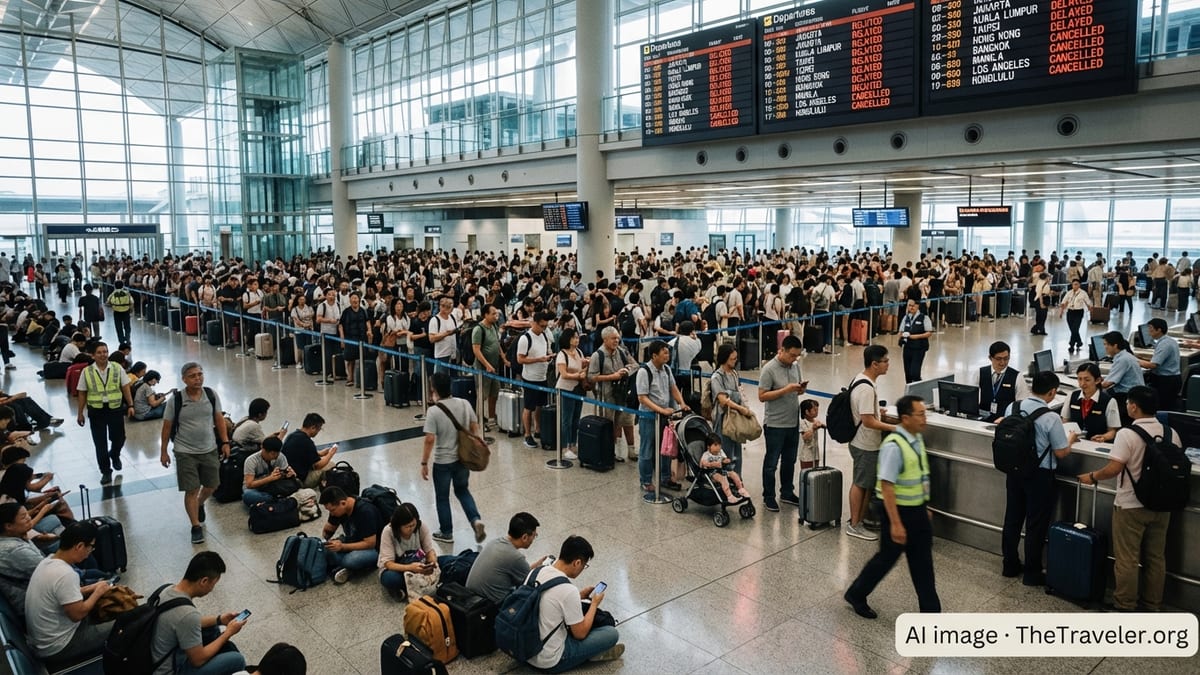
The immediate impact for travelers is visible in extended queues at check-in counters, ticketing offices and transfer desks at affected airports. With more than 100 cancellations reported nationwide today, thousands of passengers are seeking rebooking, refunds or new travel arrangements, placing heavy pressure on both airline staff and digital self-service channels.
According to information shared on public travel platforms, many travelers are being advised to use airline apps and websites as the fastest way to obtain updated boarding passes or request refunds. However, peak demand can slow digital channels, pushing more customers back toward in-person counters. This can lead to crowded terminal areas at hubs such as Shanghai Pudong and Shenzhen Bao’an, particularly during morning and evening bank periods when multiple departures are scheduled close together.
Accommodation and ground transport are also being affected. When same-day rebooking is not available, some passengers are reportedly searching for last-minute hotel rooms near airports or in city centers, often at elevated prices. Ride-hailing and taxi services see spikes in demand when flights are cancelled late in the day, as travelers pivot to rail, long-distance buses or overnight stays instead of flying.
For international travelers connecting through China, the disruption can be particularly challenging, as missed onward flights may require complex re-ticketing across multiple airlines. Travel insurance providers and consumer rights organizations generally advise affected passengers to retain all receipts for additional expenses and to document cancellation notices, which can be important for later compensation or reimbursement claims where applicable under airline policies or local regulations.
Likely Drivers and What Travelers Should Do Next
While specific causes for individual cancellations vary by route and airline, publicly accessible aviation analysis frequently cites a combination of operational factors, including weather disruptions, airspace constraints, crew and aircraft rotation issues, and peak-season congestion, as common triggers for large-scale schedule changes in China. When several of these pressures coincide on the same day, the result can be clusters of cancellations across multiple hubs and carriers, as is being observed today.
Given the fluid situation, travel industry guidance strongly emphasizes proactive monitoring. Passengers with flights involving Ningbo Lishe, Penglai International, Shanghai Pudong, Shenzhen Bao’an or other major Chinese airports today are being urged by airlines and travel agencies, through public statements and customer advisories, to check their flight status repeatedly before heading to the airport. Many carriers update status in near real time via mobile apps and messaging services, which can provide earlier warning of cancellations or significant delays.
Travelers already at the airport are generally advised by consumer advocacy groups to seek assistance through multiple channels at once: queuing at service counters while simultaneously using apps, websites or automated kiosks to request rebooking can increase the chances of securing a suitable alternative. Where long delays or overnight stays appear unavoidable, passengers are encouraged to ask airline staff about meal vouchers, hotel arrangements or transportation to accommodation, in line with the carrier’s published disruption policies.
With disruption across a broad stretch of China’s aviation network and major airlines such as China Eastern, Air China, China Southern and Shanghai Airlines adjusting schedules in real time, the overall situation remains dynamic. Travelers planning to depart or connect in China over the next 24 hours may benefit from building in extra time, keeping itineraries flexible where possible, and closely tracking any new updates that emerge from airline and airport information channels.