


More news on this day
A quarter-century after entering a niche engineering field, a specialist independent supplier of propulsion systems is using its 25-year milestone to showcase how rapidly power and propulsion technologies are reshaping marine, rail, aviation and even space travel.
Get the latest news straight to your inbox!
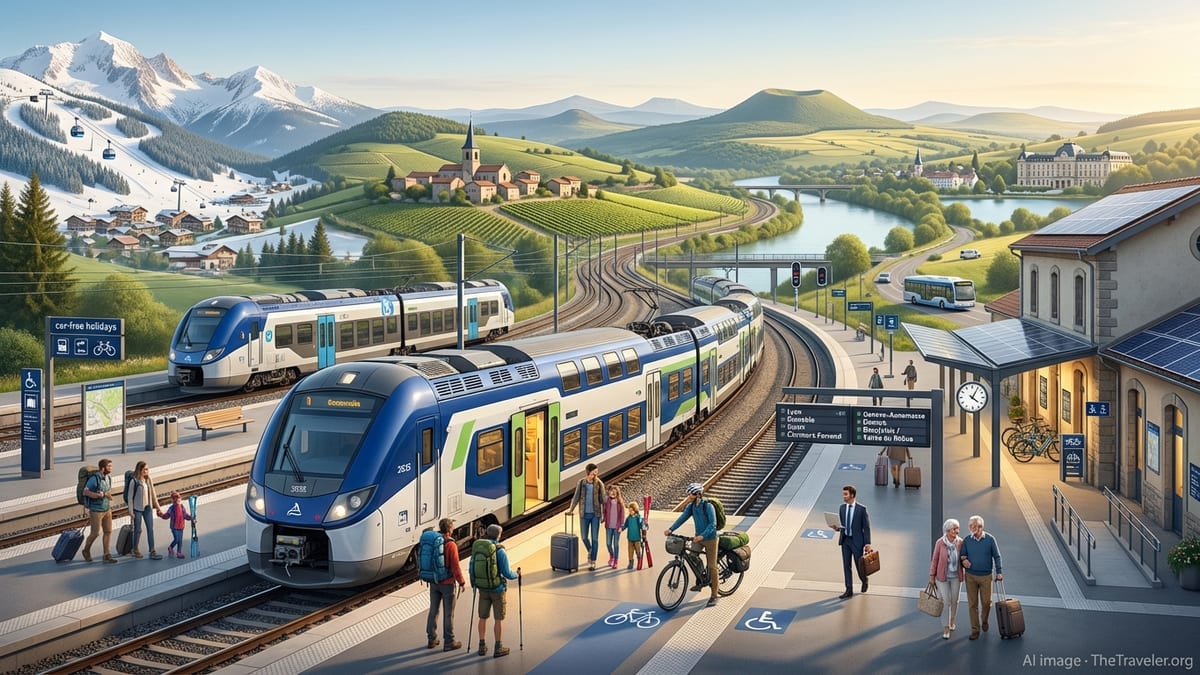
From Niche Supplier to Multisector Partner
Independent propulsion companies that emerged in the late 1990s and early 2000s typically began as niche engineering outfits focused on a single sector, often marine or rail. Over 25 years, many have expanded into broader power and propulsion roles, driven by rising demand for efficient, customized systems that large original equipment manufacturers do not always provide.
Publicly available company overviews show that independent propulsion suppliers today work across a mix of segments, including coastal shipping, inland waterways, regional rail, offshore energy and specialized industrial power. Their expertise ranges from conventional diesel and gas engines to hybrid and fully electric packages, as well as control and integration services that bring disparate components together into a single operating system.
Industry profiles indicate that these firms often operate as system integrators, supplying complete propulsion lines, thrusters, power management and electronic control systems from a single source. That model has allowed independents to win work on refits and newbuilds where owners are looking for tailored solutions rather than standardized platforms, particularly in workboat, ferry and short-sea markets.
Reaching a 25-year mark in this environment signals that an independent supplier has navigated several industry cycles, from pre-2008 expansion to post-crisis consolidation and, more recently, the acceleration of decarbonization policy in shipping and transport. Longevity has become a selling point in itself for operators evaluating complex, long-lived propulsion investments.
Hybrid and Electric Propulsion Move Mainstream
The past decade has seen a pronounced tilt toward hybrid and electric propulsion, and independent suppliers have played a prominent role in that shift. Technical literature and product briefings describe how electric drives, variable frequency systems and battery integration are now central to many new propulsion projects, especially in ferries, harbor craft and support vessels.
In marine applications, electric and hybrid architectures allow propeller speed to be controlled independently of engine speed, improving maneuverability and enabling engines to run closer to their optimal efficiency points. For operators, that translates into lower fuel use, reduced maintenance and the flexibility to combine different power sources, from conventional diesel to alternative fuels and battery packs, within a single propulsion train.
Independent firms have also become key contributors to propulsion control and automation, delivering software and monitoring systems that optimize how engines, generators, batteries and propulsors work together. As systems grow more complex, these controls help crews manage mode changes between pure electric, hybrid and conventional operation, an area where specialists with 20 to 25 years of integration experience have developed significant know-how.
Travel and tourism transport is directly affected. Short-sea passenger ferries, expedition cruise vessels and river ships are increasingly delivered with hybrid or fully electric propulsion packages supplied or integrated by independent providers. For travelers, the change is often noticeable as quieter transits, less vibration and growing visibility of low-emission branding on vessels serving ports around the world.
Decarbonization Targets Reshape Propulsion Demand
International regulatory pressure is accelerating the transformation of propulsion markets as climate and air-quality rules tighten for shipping, rail and aviation. Public information from classification societies and industry coalitions outlines a trajectory toward lower carbon intensity, with interim milestones this decade that are already influencing ordering patterns for new vessels and the retrofitting of existing fleets.
Independent propulsion suppliers at the 25-year mark increasingly present themselves as enablers of this transition, emphasizing fuel-efficient designs, alternative-fuel readiness and compatibility with future upgrades such as larger battery banks or fuel-cell modules. Some specialize in systems that support renewable or low-carbon fuels, including biogas or hydrogen-derived options in inland marine and workboat segments.
For travel-focused operators, propulsion strategy has become a core element of sustainability commitments. Ferry lines, cruise brands and rail operators serving tourism corridors are under pressure from regulators, investors and passengers to cut emissions. Independent propulsion firms that can combine proven mechanical products with modern electrification and control technologies are positioned to win projects where environmental performance is a key tender criterion.
This shift is also altering procurement dynamics. Rather than buying individual components, owners are asking for integrated propulsion and power packages with documented lifecycle performance. Independents with 25 years of operational data across different regions and vessel types are using that track record to support business cases for new investments and to measure real-world gains in fuel savings and emission reductions.
New Frontiers: From Advanced Aviation to Space
The propulsion landscape has broadened beyond traditional marine and rail sectors, creating opportunities for specialist suppliers and technology developers. In aviation, a new wave of companies is working on high-efficiency electric motors, inverters and hybrid powertrains aimed at regional aircraft and emerging air mobility concepts. These efforts seek to reduce fuel burn and emissions while maintaining performance on routes that are central to business and leisure travel.
Alongside aviation projects, experimental propulsion concepts for satellites and spacecraft, including fuel-free or electricity-only systems, are moving from laboratory demonstrations toward commercial readiness. Industry announcements describe test campaigns designed to validate thrust performance and increase technology readiness levels, laying groundwork for potential integration into future orbital missions.
While these space and advanced aviation projects are often led by start-ups or specialized engineering groups rather than legacy marine-focused suppliers, they share common themes with the wider propulsion market: an emphasis on efficiency, modularity, and compatibility with cleaner energy sources. Lessons learned from 25 years of system integration, thermal management and digital controls in marine and rail environments are informing approaches in these newer domains.
For the travel sector, such innovations could eventually shorten journey times, reduce the environmental impact of air transport and open new types of itineraries that rely on more efficient propulsion architectures. The cross-pollination of ideas between established independent suppliers and younger technology firms is emerging as a notable feature of the current propulsion era.
A Global Network Supporting Travel and Trade
Reaching a 25-year milestone as an independent propulsion supplier also reflects a shift in how these companies operate geographically. Publicly available company histories show that many have built networks of regional service centers, agents and partner yards across major maritime hubs and inland transport corridors, from North America and Europe to Asia-Pacific.
These networks are critical for travel and tourism operators whose ships and trains must remain in service with minimal downtime. Independent propulsion firms typically provide field support, spare parts logistics and remote diagnostics, allowing work to be scheduled around peak travel seasons and port calls. Their ability to respond quickly has become a competitive differentiator when operators weigh lifetime support costs.
Over 25 years, independent propulsion specialists have evolved from component suppliers to long-term partners in fleet planning, refit decisions and newbuild design. As passenger expectations rise and environmental regulations tighten, their role in shaping how travelers move by sea, rail and air is likely to grow, reinforcing the significance of this quarter-century milestone in the wider story of modern transport.