


More news on this day
Air Canada has issued travel warnings for six major United States hub airports in 2026 as a series of severe storm systems disrupts operations across North America, triggering hundreds of flight delays and cancellations and forcing carriers to activate flexible rebooking policies.
Get the latest news straight to your inbox!
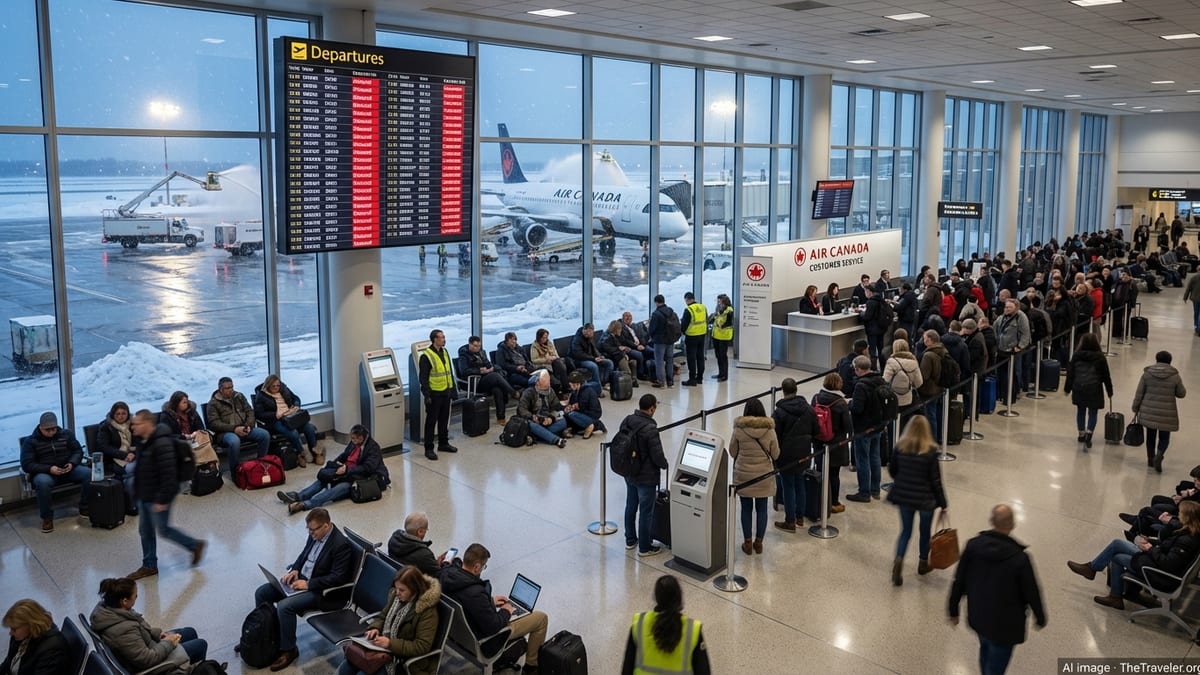
Storm Systems Disrupt Transborder Schedules
According to publicly available airline operations data and national airspace status reports, a cluster of powerful storm systems in 2026 has repeatedly swept across key US regions, including the Northeast, Midwest and central Plains, leading to heightened disruption at several of the country’s largest hub airports. These hubs serve as critical transit points for Air Canada’s transborder network, and weather-driven ground stops and reduced arrival rates have resulted in cascading schedule impacts.
Reports on recent winter storms and severe convective weather patterns show that heavy snow, ice, thunderstorms and low visibility have all contributed to extended runway closures and deicing delays at major US facilities. With many of Air Canada’s flights to and from the United States concentrated at a limited set of large connecting airports, any prolonged disruption at those locations quickly narrows options for rerouting passengers and aircraft.
In response, Air Canada’s daily travel outlook and customer alerts have highlighted potential and confirmed disruptions at six major US hubs where the carrier either operates direct services or relies heavily on connections through partner airlines. The warnings have emphasized the risk of last minute schedule changes and longer-than-normal recovery periods as airports work through backlogs.
Operational updates indicate that cancellations linked to storm activity at these hubs have at times forced the airline to trim frequencies, consolidate departures and temporarily suspend some flights, especially during the peak of winter and early spring weather events in 2026.
Six Key US Hubs Under Weather Advisory
Air Canada has not publicly designated a formal list of its own “hub” airports within the United States, but schedule data and network maps for 2026 point to a set of large US nodes that function as primary gateways for Canadian travelers. These include major connecting centers such as New York area airports, Chicago, Washington, Boston and key southern and western hubs that link Canadian cities with domestic US networks.
Based on published coverage of recent storms and the concentration of transborder services, Air Canada’s weather-focused advisories this year have repeatedly referenced disruptions at six of these large US facilities. The hubs have faced a mix of winter storms, severe thunderstorms and associated air traffic control programs, prompting heightened caution for travelers operating via those airports.
Travel industry reports describe how even a short sequence of ground stops or arrival rate reductions at any of these hubs can significantly impact cross-border traffic. Aircraft and crews that are scheduled to operate multiple legs between Canada and the United States can become quickly displaced, limiting same-day recovery options and prompting preemptive cancellations.
The warnings for these six hubs have underscored that passengers with tight connections or complex itineraries are especially vulnerable to disruption and may need to consider alternative routing or longer connecting times when severe weather is in the forecast.
Spike in Cancellations Across North America
Broader aviation statistics for 2026 show that North American carriers collectively experienced a sharp spike in cancellations during several major storm episodes, particularly during a late January winter system and subsequent blizzards that affected both the United States and Canada. Publicly available data and retrospective analyses note that one multi-day event in January ranked among the most disruptive weather-related periods for flight operations in recent US history.
For Air Canada, those storms coincided with peak transborder travel demand, prompting widespread schedule adjustments. Flight-tracking summaries and airline advisories indicate that the carrier cancelled a significant number of departures touching the six affected US hubs on the worst days of the disruptions, while numerous other flights were subject to extended delays.
Industry analyses of extreme weather impacts on aviation highlight the compounding nature of such events. When storms simultaneously affect multiple hub airports, the usual strategies of rerouting through unaffected cities or swapping aircraft become less effective. This has appeared to be the case during several 2026 storm systems, when both US and Canadian hubs faced challenging weather within the same timeframes.
While most operations have returned to normal within a few days after each major storm, residual effects such as out-of-position aircraft and crew have in some cases extended the period of irregular operations, particularly on thinner transborder routes that operate only once or twice per day.
Flexible Policies and Passenger Options
Publicly available information on Air Canada’s customer service plan and travel advisory pages shows that the airline continues to emphasize flexibility during severe weather events. When storms are forecast to affect the six key US hubs, the carrier typically introduces travel alerts that allow eligible passengers to make one-time changes without additional fees, subject to fare rules and seat availability.
The airline’s documentation also details how cancellations caused by weather fall into a different category from disruptions within its control, influencing the type of assistance that may be offered. While weather-related events do not usually trigger compensation obligations under Canadian regulations, Air Canada’s published guidance encourages customers to monitor their itineraries closely and consider travel insurance for additional protection against extended delays or overnight stays.
Travel experts note that passengers can improve their chances of avoiding long disruptions by booking earlier flights in the day, seeking routings through less weather-prone hubs when possible, and allowing additional time for connections during storm seasons. Many observers also point out that rebooking through alternative airports that remain outside the core weather zone can sometimes restore travel plans more quickly than waiting for operations to normalize at an impacted hub.
Air Canada’s digital channels and airport messaging continue to advise travelers heading to or through the six US hubs under advisory to confirm flight status frequently on the day of departure and to be prepared for last minute gate or schedule changes as storm systems evolve.
What Travelers Should Watch For Next
Meteorological outlooks for the remainder of 2026 indicate a continued risk of significant weather swings across North America, including periods of intense heat, severe thunderstorms and the potential for additional early or late-season snow events in some regions. This volatility raises the likelihood that hub airports in the United States and Canada will face further bouts of disruption.
Aviation analysts observe that airlines now integrate more sophisticated weather forecasting and operational planning tools than in previous years, but the dense traffic levels at major hubs still leave limited margin when storm systems align with peak travel periods. This dynamic suggests that even with better planning, days of elevated cancellations and delays remain probable during the most active weather windows.
For travelers relying on Air Canada’s transborder network, the six US hubs currently under frequent weather advisory status will remain focal points to watch in the coming months. Monitoring both airline travel outlooks and national airspace reports can provide an early indication of when a particular storm may begin to affect operations.
Industry observers expect that carriers, including Air Canada, will continue to refine their use of preemptive cancellations and flexible booking policies to manage these events. Passengers planning journeys through the affected hubs are likely to see a steady emphasis on advance communication, self-service rebooking tools and real-time updates as the 2026 travel year progresses.