


More news on this day
Travelers moving through Austin Bergstrom International Airport on June 8 are facing another difficult day, as publicly available data points to at least 85 delayed flights and 11 cancellations affecting services operated by American Airlines, Envoy Air, Southwest and several other carriers across the United States and on international routes.
Get the latest news straight to your inbox!
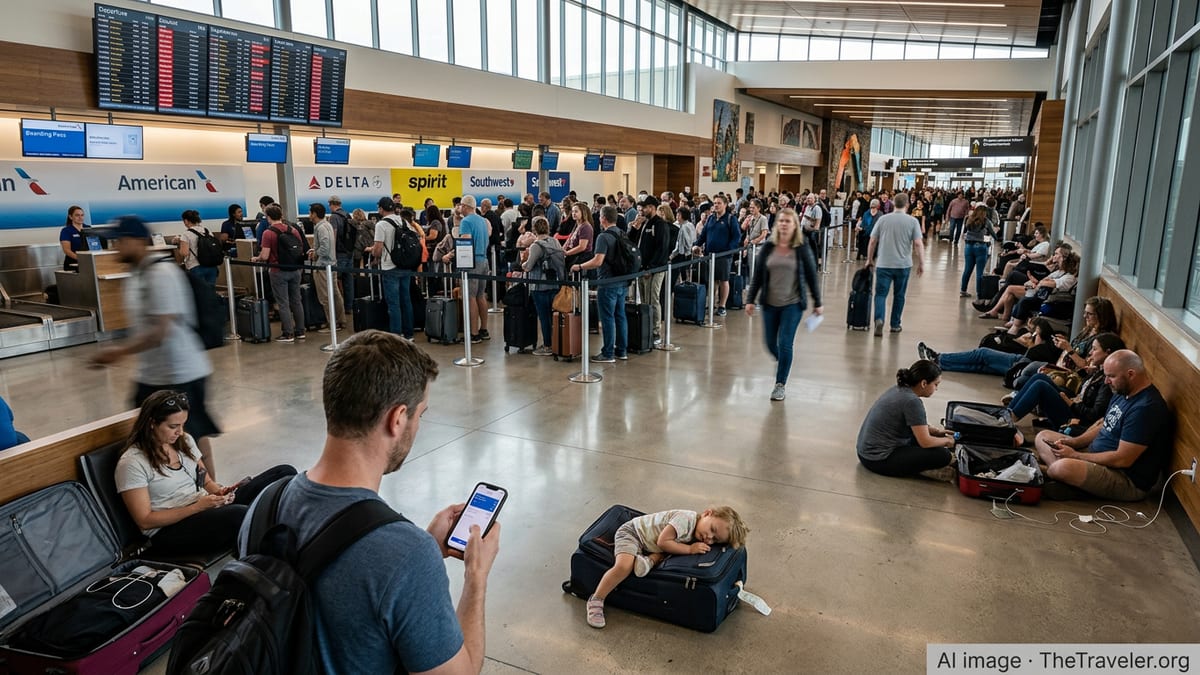
Fresh Disruptions at a Stressed Texas Hub
The latest wave of irregular operations comes at a time when Austin Bergstrom International Airport has already drawn attention for its high rate of significant delays. A recent analysis of 180 minute or longer disruptions ranked Austin as one of the worst performing U.S. hubs for lengthy waits, underscoring how vulnerable the rapidly growing airport has become during busy travel periods.
The 85 delays and 11 cancellations recorded on June 8 reflect a mixture of late inbound aircraft, weather impacts at connecting hubs and ongoing operational strains at major airlines. Publicly available flight tracking boards show late departures and arrivals for American Airlines, its regional affiliate Envoy Air, Southwest, United and other carriers serving Austin, with knock on effects for passengers connecting through Dallas Fort Worth, Houston, Phoenix and other key nodes.
Although the majority of services are still operating, the volume of disrupted flights is enough to create longer lines at check in and security, tighter connection windows and last minute gate changes. Social media posts and consumer flight tracking tools indicate that many travelers are rebooked onto later flights or rerouted through alternative hubs, increasing overall journey times and crowding already busy aircraft.
American, Envoy and Southwest Among the Hardest Hit
Operational data published by federal regulators and industry trackers for recent months show that American Airlines, regional affiliate Envoy Air and Southwest handle a substantial share of passenger traffic at Austin Bergstrom. When schedule reliability deteriorates, those carriers tend to account for a large proportion of delays and cancellations simply because of the scale of their operations in Texas.
On June 8, departures and arrivals involving American and Envoy are showing multiple instances of late pushes from the gate and extended taxi or holding times. Recent days have also seen American adjust its broader summer schedule, including suspensions on several domestic routes, as the airline refines capacity in response to staffing and operational pressures. While those structural changes are separate from the Austin specific disruptions, they add to a general sense of fragility around the carrier’s network performance.
Southwest, which has been growing its presence in Austin and preparing a crew base at the airport, is likewise contending with ripple effects from weather and congestion at other airports. Flight status boards highlight a series of Southwest departures leaving later than planned, particularly on routes that rely on aircraft arriving from storm affected regions or already congested hubs.
Other airlines serving Austin, including United and Delta, are also experiencing scattered delays, particularly on short haul links to major connecting airports where thunderstorms and air traffic management programs have slowed traffic flows. The pattern illustrates how disruptions at one or two large hubs can quickly cascade through a national network and be felt by travelers departing from or arriving in Austin.
Weather, Network Congestion and Structural Challenges
The current problems at Austin are unfolding against a backdrop of unsettled early summer weather across parts of the central and southern United States. Federal airspace status reports for June 7 and June 8 show a series of ground delay programs and flow restrictions at large hubs, forcing airlines to reduce takeoff rates, stretch out arrival spacing and, in some cases, cancel flights when rotations fall irretrievably behind.
Industry and government data released this spring indicate that long delays and cancellations have become more common since the travel rebound that followed the pandemic era downturn. Carriers are operating tight schedules with high aircraft utilization, so any extended storm system, temporary runway closure or crew shortage can push an already busy day into significant disruption. Analysts note that when aircraft and crews do not have much slack built into their rotations, a single delay early in the day can cascade into several later flights.
Austin’s own challenges are magnified by rapid growth in passenger numbers and evolving infrastructure. City documentation and airport reports from late 2025 and early 2026 show that the field is in the midst of expansion and terminal reconfiguration projects designed to accommodate rising demand. In the short term, construction, constrained gate availability and airfield works can all contribute to congestion, longer taxi times and schedule compression, even as they aim to improve capacity in the long run.
Travel industry assessments published in recent months have repeatedly flagged Austin Bergstrom as an airport where long waits are relatively common. That ranking does not mean every trip will be disrupted, but it helps explain why days of widespread national irregular operations tend to translate into an outsized number of delays and cancellations for passengers using the Texas capital as an origin or destination.
Impact on Passengers and Travel Plans
For travelers, the numbers behind the current disruptions translate into missed connections, shortened vacations and, in some cases, unexpected overnight stays. Airline customer forums and social media posts over the past week include reports of passengers arriving hours late from Austin, being diverted during storms, or missing onward international services after long ground holds at connecting airports.
Consumer advocates point out that delayed and canceled flights can generate a range of extra costs for passengers, including hotel stays, meals, rebooked ground transport and, for some international itineraries, change fees on nonrefundable bookings made with other carriers. While U.S. regulations require airlines to provide refunds when flights are canceled or significantly changed and the passenger chooses not to travel, there is no blanket federal requirement for compensation for delays. As a result, travelers often rely on individual airline policies, credit card protections or separate travel insurance to recover expenses.
At Austin Bergstrom, long security lines and crowded gate areas have become more common during recent disruption events, based on reports shared by local travelers using publicly available wait time tracking tools. On heavily affected days, passengers may spend more time in queues and at the gate than in the air, adding to the frustration when flights ultimately depart late or are removed from the schedule.
Airport guidance and travel industry resources generally advise travelers departing from Austin during periods of operational stress to arrive earlier than usual, monitor flight status continuously and remain flexible regarding connections and seat assignments. For those with essential trips, such as weddings, cruises or international tours, advisers often recommend building in extra buffer days and considering earlier flights to reduce the risk of a single disruption derailing a larger plan.
Outlook for the Remainder of the Weekend
Forecasts for the coming 24 to 48 hours suggest that scattered thunderstorms and unsettled conditions may persist across parts of Texas and neighboring states, leaving the potential for further air traffic restrictions at major hubs. If those storms intersect with peak travel periods on Sunday evening and Monday morning, airlines operating through Austin and their partner hubs could struggle to clear existing backlogs quickly.
Historical performance data from federal aviation reports show that early summer weekends often see elevated rates of delay as leisure demand peaks and weather patterns become more volatile. For an airport like Austin Bergstrom, which is already handling a growing number of nonstop domestic and international routes, that seasonal pressure can test both infrastructure and airline staffing levels.
Despite the present disruption, airlines are expected to continue adjusting schedules, swapping aircraft and rerouting crews in an effort to stabilize the operation over the rest of the weekend. Travel analysts note that once storm systems move east or dissipate, recovery can be relatively swift on some routes, but residual aircraft and crew imbalances may linger for several days on more complex networks.
For now, passengers flying into or out of Austin are being urged by public travel resources to treat flight times as provisional, check their status regularly, and prepare backup options where possible. With delays and cancellations continuing to fluctuate in real time, flexibility and up to date information remain the key tools for navigating another unsettled day in the skies above Texas and beyond.