


More news on this day
New aviation links, revived e-visa services and fresh marketing pushes between China and the Philippines are converging to reopen a once-lucrative travel corridor, providing a key test for how quickly Asian tourism can move from fragile recovery to sustained growth.
Get the latest news straight to your inbox!
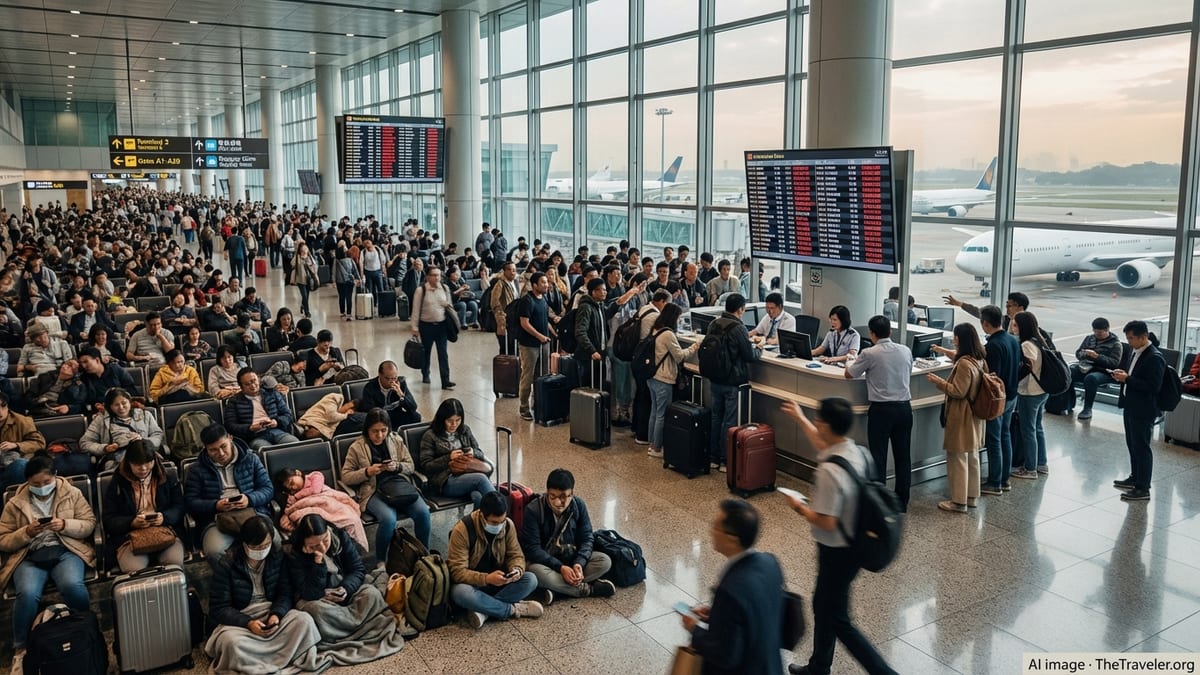
New Flight Routes Put Capacity Back Into the Skies
The most visible sign of the renewed push on cross-border tourism is in the air. In early May 2026, a new direct route between Chongqing and Manila was launched, expanding Air China’s Philippine network to three routes and 15 weekly round-trip flights. Publicly available information on the launch highlights its role in supporting travel, trade and people-to-people exchanges at a time when both countries are seeking to stabilise broader economic ties.
This new service joins a gradual rebuilding of connectivity that began in 2023 and 2024, when Chinese and Philippine carriers restarted or increased services linking major hubs such as Beijing, Shanghai, Guangzhou, Xiamen and Manila or Cebu. While total seat capacity is still below pre-pandemic peaks, aviation data and government statistics indicate that the number of city pairs and weekly frequencies between the two countries has risen steadily over the past two years.
The additional flights are meant to address a structural bottleneck. Analysts across the region have pointed to limited air capacity as a core reason Chinese outbound travel has lagged, even as domestic tourism within China has surged. For the Philippines, which depends heavily on air arrivals in the absence of land borders, every new route brings the potential to unlock previously untapped secondary cities in China and spread visitor flows beyond Metro Manila.
Industry observers note that airlines are calibrating capacity carefully, preferring incremental increases tied to seasonal peaks and forward bookings rather than a rapid return to 2019 levels. That strategy reflects lingering uncertainty about demand, but it also positions carriers to ramp up quickly if policy signals and marketing campaigns succeed in reigniting interest among Chinese travellers.
Visa and Entry Reforms Aim to Lower Friction
Alongside new flights, both sides are adjusting visa and border policies to make travel easier. China has rolled out an expansive programme of visa-free entry and simplified visa applications for dozens of countries since late 2023, part of a broader effort to reinvigorate inbound tourism. Although the Philippines is not yet among the economies covered by unilateral visa-free access, international coverage describes these steps as China’s most ambitious opening to foreign visitors in years.
On the outbound side, the Philippines has focused on rebuilding the pipeline of Chinese travellers by easing its own requirements. Public statements from the Department of Tourism in Manila over the past year have repeatedly framed the resumption and expansion of e-visa services for Chinese applicants as a priority, arguing that digital processing is essential to compete with Southeast Asian neighbours that allow visa-free or visa-on-arrival entry.
In late 2025, a new e-visa platform for Chinese residents was rolled out through a specialist outsourcing provider, offering online applications for tourism and business visits to the Philippines. Travel industry briefings on the launch indicate that the system is designed to streamline documentation, reduce processing times and centralise appointment handling across multiple Philippine foreign service posts in China.
Officials in both countries have also promoted more predictable health and entry protocols, a shift away from the complex testing regimes and sudden rule changes that characterised the early reopening phase. For tour operators and airlines, this increased clarity is seen as critical to rebuilding confidence among group travellers and high-spending segments that plan trips months in advance.
Tourism Numbers Reveal a Slow but Crucial Rebuild
Traffic data show that the road back to pre-pandemic levels is long. Reports from the Philippine statistics and tourism agencies indicate that the country welcomed roughly 5.9 million foreign visitors in 2024, still significantly below 2019’s peak. Within that total, arrivals from China were a fraction of pre-crisis volumes, accounting for about 5 percent of the market compared with more than 20 percent before border closures.
Analytical pieces from regional think tanks and business media describe the Philippines as lagging many Southeast Asian peers in recapturing Chinese visitors. Factors cited include geopolitical tensions in the South China Sea, the earlier suspension of e-visa services and fierce competition from destinations such as Thailand and Vietnam that moved more quickly on both air connectivity and visa-free entry.
Even so, recent figures suggest a turning point. Year-on-year comparisons for 2024 and early 2025 show Chinese arrivals growing from a very low base, with double-digit percentage gains recorded despite the overall shortfall. Tourism research firms tracking the wider Asia-Pacific market forecast that the continuing recovery of China’s outbound sector, combined with targeted policies, could lift arrivals to the Philippines more substantially from 2026 onward.
For China, the renewed flow of Filipino visitors and business travellers adds to a broader narrative of inbound revival. Official data compiled by international organisations and cited in regional tourism outlook reports note that China’s hotel occupancy, domestic tourism spending and select inbound segments all strengthened through 2024 and 2025, even as long-haul markets remained uneven.
Joint Campaigns Seek to Rebuild Trust and Brand Appeal
Marketing is emerging as the third pillar of the China–Philippines tourism reset. Since 2023, Philippine tourism teams based in China have stepped up participation in travel fairs, roadshows and digital campaigns on Chinese social media platforms, positioning the archipelago’s beaches, dive sites and English-language learning programmes as value-for-money options for families and young professionals.
Media reports on these initiatives highlight a shift away from purely price-driven promotions toward messaging that emphasises safety, service improvements and diversified products beyond traditional hotspots such as Boracay and Palawan. There is also growing emphasis on niche segments, including golf tourism, meetings and incentives, and film or content production travel linked to popular Chinese streaming platforms.
China, for its part, has been promoting its own destinations to Southeast Asian travellers through multi-city roadshows, themed years of culture and tourism, and relaxed requirements for group tours. Filipino travellers have been targeted with packages combining major cities with lesser-known historical or nature destinations, mirroring a broader push to distribute visitor flows away from heavily saturated hubs.
Cross-border partnerships between airlines, online travel agencies and payment platforms are supporting these campaigns. Co-branded fare promotions, integrated hotel-and-flight bundles and expanded acceptance of Chinese digital wallets in Philippine tourist centres are meant to smooth the end-to-end journey, from trip inspiration to on-the-ground spending.
Implications for Wider Asian Tourism Recovery
The recalibration between China and the Philippines is being closely watched across Asia as a gauge of how quickly the region can restore one of its most important travel corridors. Before the pandemic, Chinese tourists were a cornerstone of outbound flows in East and Southeast Asia, underpinning investment in hotels, airports and attractions tuned to their preferences.
Regional tourism outlook reports underscore that a full recovery in Chinese outbound travel is central to lifting Asia’s aggregate visitor numbers back to 2019 levels. If new air links, visa facilitation and targeted marketing succeed in reversing the slump in Chinese arrivals to the Philippines, analysts argue that similar strategies could be replicated in other markets that have struggled to regain share.
The effort also has broader economic implications. Tourism in the Philippines accounted for nearly 9 percent of gross domestic product in 2024, according to international datasets drawing on official figures, and it remains a major employer. A sustained rebound in Chinese guests, who historically spend more per trip than many other segments, would support fiscal revenues, regional airports and small tourism enterprises that were hit hard by extended border closures.
At the same time, the cautious pace of the recovery serves as a reminder that air links and visa tweaks alone may not be enough. Perceptions of safety, service quality, infrastructure and political stability all influence destination choices. For both China and the Philippines, the coming seasons will test whether current initiatives can overcome these headwinds and anchor a more resilient phase of Asian tourism growth.