


More news on this day
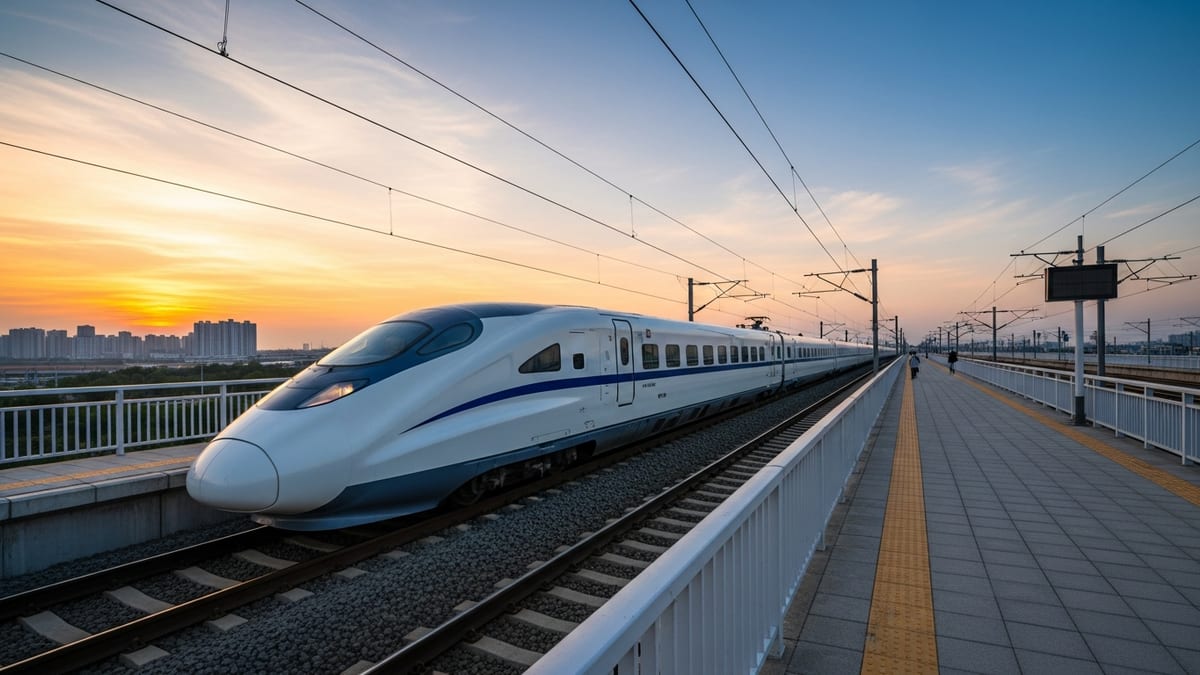
China’s vast rail system is bracing for one of its most intense travel periods in years as the 2026 Mid-Autumn Festival and October Golden Week approach, with booking data, government notices and travel platforms all pointing to surging demand on the country’s already record-breaking high-speed network.
Get the latest news straight to your inbox!
Separated Holidays, Single Wave of Rail Demand
China’s 2026 public holiday calendar creates a rare gap between the Mid-Autumn Festival and the National Day Golden Week, but rail booking patterns suggest the two breaks are merging into a single extended travel season. The official Mid-Autumn holiday runs from Friday 25 September to Sunday 27 September 2026, while National Day Golden Week begins on Thursday 1 October and continues through Wednesday 7 October, giving many workers an incentive to stretch leave across both periods.
Public travel guides and holiday-planning sites note that Mid-Autumn, traditionally focused on short family visits and regional leisure trips, is already pushing up rail demand around major hubs such as Beijing, Shanghai, Guangzhou and Chengdu. Travel advisories compiled from railway booking rules highlight that tickets for the Mid-Autumn weekend started opening in early September, with many popular high-speed services expected to sell out within minutes of release.
Analysts tracking China’s domestic tourism market point out that Golden Week remains the main driver of long-distance journeys, but the extra three-day festival in late September is encouraging earlier departures and staggered returns. This is expected to create sustained pressure on the rail network from around 24 September through at least 8 October, rather than the more traditional single spike centered on the first days of October.
High-Speed Rail Network Reaches New Scale
The holiday surge comes as China’s rail network reaches a new level of capacity and geographic coverage. Official figures and industry research show that by the end of 2025 the country had surpassed 50,000 kilometers of operating high-speed rail lines, consolidating its position as the world’s largest high-speed network and extending fast services deeper into inland provinces and smaller cities.
Published economic and infrastructure reports describe how this expansion has been underpinned by sustained investment through the country’s latest five-year plan period, with new corridors linking central and western regions to coastal hubs. World Bank assessments and domestic transport journals emphasize that the maturing grid of high-speed routes has compressed travel times between major cities to between one and three hours on many of the busiest corridors, reshaping how Chinese travelers plan festival and holiday trips.
Railway passenger statistics from recent years underline how quickly travelers have adopted the system. Data compiled by national and independent transport trackers indicate that China’s railways handled more than 4.5 billion passenger journeys in 2025, with high-speed services accounting for the majority. During the combined National Day and Mid-Autumn holiday in 2025, rail passenger volumes reached record daily highs, providing a benchmark many analysts expect will be surpassed in 2026 if weather and operational conditions remain stable.
Booking Windows Tighten as Platforms Flag Peak Risk
For passengers, the main sign of mounting pressure is the increasingly competitive ticketing cycle. Guidance published by municipal portals and travel-planning sites notes that China Railway’s 12306 platform generally opens most long-distance tickets 15 to 20 days ahead of departure, with a mix of fixed releases and flexible reservation options for peak periods such as National Day.
Local government information pages summarizing 12306 rules for 2026 advise that travelers who secure a reservation must complete payment by the stipulated evening cut-off or risk losing the ticket and, in cases of repeated non-payment, facing temporary restrictions on future bookings. Public-facing advisories suggest using broader time windows, multiple train numbers and different seat classes when searching, in order to increase the chance of securing a seat during the busiest days at the start and end of the holiday.
Independent travel guides focused on Golden Week 2026 warn that high-speed routes between China’s most visited destinations, including Beijing–Shanghai, Shanghai–Hangzhou–Huangshan, Guangzhou–Guilin and Chengdu–Chongqing, can sell out within minutes once booking opens. Third-party trip planners recommend avoiding same-day rail connections to international flights during the peak period because station crowds, ticket collection lines and potential delays can quickly erode transfer margins, particularly at mega-hubs such as Beijing South, Shanghai Hongqiao and Guangzhou South.
From Festival Homecomings to Tourism Corridors
While the rail system is central to festival homecomings, its role in supporting domestic tourism has grown significantly over the past decade. Tourism and travel data providers report that Golden Week remains one of the most important annual windows for China’s leisure sector, with hundreds of millions of people traveling to cultural landmarks, scenic areas, theme parks and emerging rural tourism destinations. The majority of these trips, especially those under 1,000 kilometers, are increasingly made by train rather than air or long-distance coach.
Analyses of past Golden Week patterns show that passenger flows often peak at the start of the holiday as travelers leave major metropolitan areas, then again at the end as they return to work. For 2026, sector commentary expects an additional crest around the Mid-Autumn weekend, particularly on short-haul routes linking provincial capitals with surrounding smaller cities. Regions with strong cultural ties to the festival, such as eastern and southern coastal provinces, are anticipated to see especially dense rail usage.
At the same time, the continued rollout of new high-speed lines and upgraded conventional routes is redirecting some holiday traffic to emerging tourism corridors. Destinations within convenient rail reach of multiple large cities are marketing short festival breaks that rely on fast, frequent train connections rather than air links. This dynamic is reinforcing what transport researchers describe as a rail-centered national tourism grid, in which new lines quickly attract holidaymakers once they appear in online booking systems.
Implications for International Visitors
The 2026 holiday configuration is drawing heightened interest from international travelers planning late-September and early-October itineraries in China. English-language rail guides and cross-border eSIM and travel advisory platforms consistently caution that, although Mid-Autumn is somewhat less intense than Golden Week, the combined effect of the two holidays still produces one of the world’s most crowded transport seasons.
These sources generally advise foreign visitors either to avoid major intercity train movements on the key peak days or to secure tickets as soon as booking windows open using 12306-linked apps or reputable agents. They also highlight that many urban attractions, from sections of the Great Wall near Beijing to classic gardens in eastern cities, may experience heavy crowding even on days between the two holidays, as domestic travelers take advantage of flexible leave arrangements.
For those whose dates cannot be shifted, traveler-focused platforms recommend building itineraries that minimize cross-country moves once Golden Week begins. Suggested strategies include completing longer rail legs before 1 October, focusing on one region during the core of the holiday, and leaving additional time for station procedures such as security checks, navigation within large hubs and potential schedule changes. With China’s high-speed rail network operating at unprecedented scale, 2026 is shaping up as both a showcase of the system’s capacity and a stress test for anyone journeying during the country’s most anticipated festival season.
Beijing Municipal Portal: 2026 Mid-Autumn & National Day rail ticket notice
TravelChinaGuide: China Railway passenger transport and Golden Week overview
China This Way: China Golden Week 2026 dates and train planning
Roaming eSIM: China Golden Week 2026 travel and rail guidance
China Travel Flow: September 2026 travel and Mid-Autumn rail demand