


More news on this day
Hundreds of passengers at London Stansted Airport faced hours of disruption on Sunday, October 25, after a sudden power surge hit key terminal systems, bringing parts of the airport to a standstill and leaving travellers stranded in long queues with uncertain departure times, according to multiple media and social media reports.
Get the latest news straight to your inbox!
Sudden electrical fault ripples through key airport systems
Publicly available information indicates that the disruption began when a power surge affected London Stansted Airport and parts of the surrounding area on Sunday afternoon. While the surge itself was brief, reports suggest it temporarily knocked out or degraded several core systems within the single-terminal airport, including security screening lanes, baggage handling infrastructure and some elements of the check-in process.
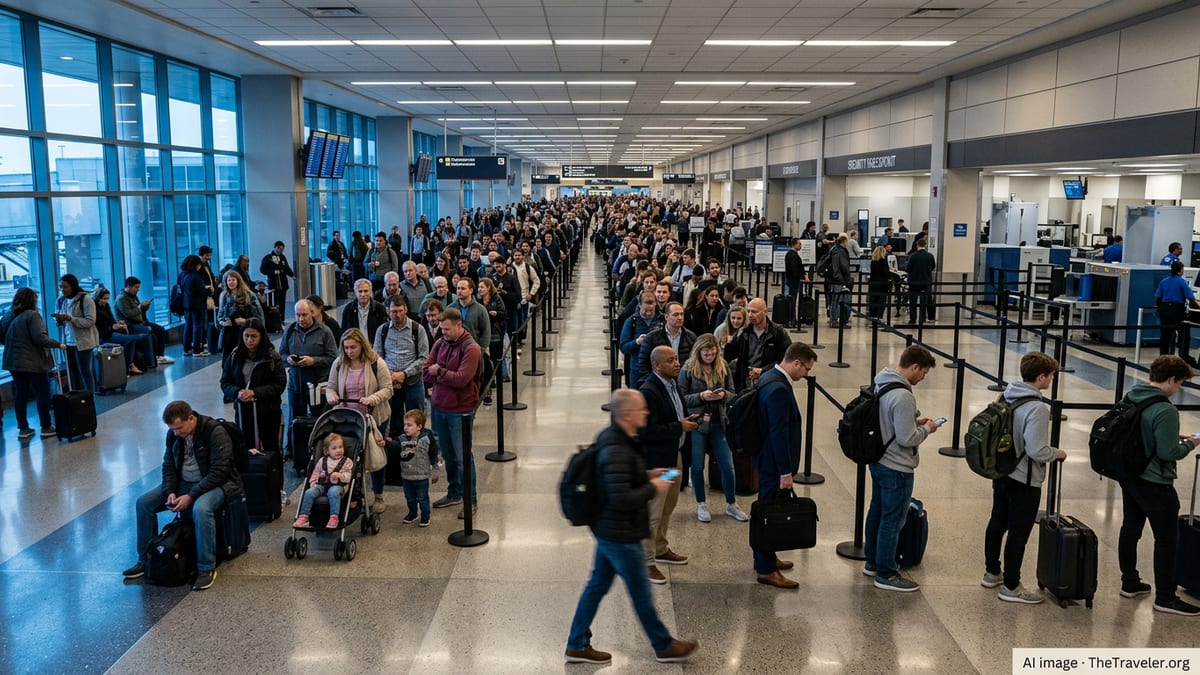
Images and descriptions carried by outlets such as the BBC and regional UK media, as well as posts on social platforms, show packed departure halls and static queues stretching far beyond the usual security and check-in areas. Travellers reported that electronic screening equipment and automated processes had to be reset, with staff reverting to slower manual checks while systems were brought back into service.
Operational data available from flight-tracking services on Sunday showed elevated delay levels at Stansted, with average departure delays approaching an hour at points in the afternoon. While runway operations and air traffic control were not reported to be directly affected by the power surge, the bottlenecks created inside the terminal left many flights waiting on late-arriving passengers and, in some cases, unable to depart with all ticketed travellers on board.
The incident comes as Stansted, one of the United Kingdom’s busiest airports and a major base for low-cost carriers, continues to push towards record passenger volumes within the constraints of a single, highly concentrated terminal layout. Industry assessments have previously highlighted power resilience and recovery time as key operational risks for airports of this type, particularly during peak leisure-travel periods.
Passengers report hours-long queues and missed departures
Accounts compiled from news coverage and social media suggest that many travellers arriving at Stansted on Sunday encountered queues of well over an hour to clear initial security checks, with some describing waits of up to two hours or more before reaching the screening area. Photos shared publicly show zigzag lines snaking across the departures hall, with little space between passengers and few available seats for those waiting.
Several travellers described feeling effectively stranded inside the building: unwilling to leave the terminal and risk missing updated boarding calls, but also unable to progress toward their gates as security capacity lagged behind the surge in passenger numbers. Families with young children and older passengers appeared particularly affected, with some accounts highlighting difficulty accessing seating, water and food while queues remained static.
Reports indicate that while some airlines held departures to allow additional time for delayed passengers to reach the gates, other flights left with empty or partially empty seats because travellers could not clear security in time. Publicly available flight data for the afternoon and early evening showed a cluster of delayed departures from Stansted, alongside a smaller number of flights that appeared to depart close to schedule despite the disruption inside the terminal.
Passengers whose flights left without them now face the task of working directly with airlines on rebooking options, refunds or alternative transport arrangements. Travel-law commentary frequently notes that compensation rules for air passengers in such situations can be complex, particularly when disruption is linked to airport infrastructure or power issues rather than an airline-specific fault.
Security, baggage and people-mover issues compound delays
Reports from the scene indicate that the most visible impact for passengers came at security screening, where the power surge interrupted scanners and conveyor systems that normally process large volumes of hand luggage. In some areas, publicly shared accounts suggest that staff switched to manual bag searches while automated equipment was rebooted, significantly slowing the flow of travellers through the checkpoint.
Baggage handling systems were also reported to be affected, with some travellers stating that they were warned their checked luggage might be delayed or might not travel on the same aircraft. This type of disruption can have knock-on effects long after the initial power problem is resolved, as unaccompanied bags must be reconciled and late-arriving luggage forwarded to passengers at their destination.
The impact of the electrical fault was felt beyond the main departures hall. Recent separate coverage has highlighted problems affecting Stansted’s internal people-mover system that connects parts of the airport complex, with some passengers on earlier days reporting being stuck in transit areas with limited access to toilets or drinking water when that system stalled. Although the Sunday power surge was a distinct event, travellers’ reports from this and earlier episodes underline how dependent the airport’s layout is on a small number of critical systems.
Available guidance from the airport states that real-time information on arrivals and departures is displayed on screens in check-in, departure and arrivals halls, and is also accessible online. During Sunday’s disruption, however, several passengers posting on social media described difficulty obtaining clear, timely updates on whether their flights were still operating, significantly delayed or in the process of closing boarding.
Growing pressure on a key low-cost travel hub
The timing of the power surge added to its impact. The incident unfolded on October 25, coinciding with a busy weekend for leisure travel linked to school half-term holidays in parts of England. Stansted serves more than 150 destinations across Europe, North Africa and beyond, and is heavily used by budget airlines offering early-morning and late-evening departures that concentrate footfall into defined peaks.
Trade and aviation data published in recent months indicate that Stansted’s passenger numbers have been tracking close to or above pre-pandemic levels, even as airlines introduce new routes and additional frequencies. Within a single-terminal environment, this growth leaves limited spare capacity when a key element of the system, such as power supply to screening or baggage equipment, fails or needs to be reset.
Historical planning and resilience documents produced for UK airports have highlighted the risks associated with power interruptions, including the time required to safely shut down and restart interconnected systems. At large hubs, measures such as dual power feeds and uninterruptible power supplies are often put in place to protect critical safety-related infrastructure, but non-safety systems can still experience outages that translate into visible delays for passengers.
The latest incident at Stansted follows a series of high-profile disruption events across the UK aviation network in recent years, ranging from national air traffic control technical failures to terminal-specific power cuts at other major airports. For travellers, these episodes have reinforced the importance of factoring potential disruption into itineraries, particularly when making tight connections or onward ground-transport arrangements.
What travellers can do if flying via Stansted
For those due to travel through London Stansted in the coming days, publicly available guidance suggests checking live departure information and airline communications closely before setting out, particularly for early-morning or late-evening flights when staffing and transport options may be more limited. Airlines typically advise passengers to arrive at the airport at least two hours before short-haul departures, but after Sunday’s disruption many travel advisers are recommending allowing additional buffer time while the operation stabilises.
Passengers are encouraged by consumer advocacy groups to ensure they are familiar with their airline’s rebooking and compensation policies, as well as with applicable UK and European air passenger rights rules. In practice, outcomes may vary depending on whether a delay or missed flight is attributed to extraordinary circumstances affecting airport infrastructure or to factors within an individual carrier’s control.
For those making same-day rail or coach connections from Stansted into central London or other parts of the UK, longer-than-usual processing times at security and passport control may warrant more generous connection windows. Recent local and national reports have also documented weather-related and technical disruption on some rail links serving major UK airports, underlining the value of flexible tickets where possible.
While Sunday’s power surge was temporary, the extended queues and missed departures it triggered show how quickly a localised electrical fault can cascade through a busy hub. For travellers, building in extra time, carrying essentials such as water and medications in hand luggage, and monitoring airport and airline channels for updates remain the most practical safeguards when passing through one of the UK’s most heavily used low-cost gateways.