


More news on this day
A disabled United Airlines passenger says she was left shaking after being stranded alone and locked inside a jet bridge in Vancouver, British Columbia, with no wheelchair and no place to sit while crew and fellow travelers moved on.
Get the latest news straight to your inbox!
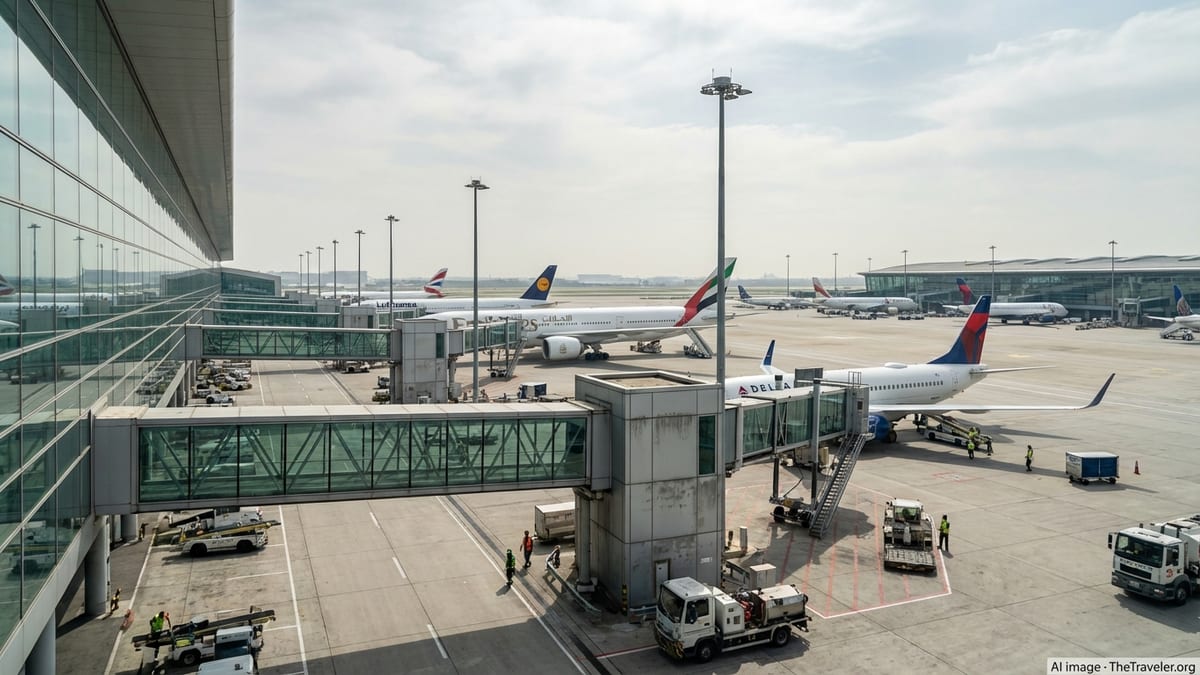
Viral video shows passenger alone between plane and terminal
Publicly available footage shared on TikTok by user Birdie, identified in multiple news reports as a Florida-based traveler, shows her standing on a dimly lit jet bridge after a United Airlines flight from the United States to Vancouver International Airport on September 9, 2026. In the clip, she describes being stuck between the aircraft and the terminal, with both doors appearing closed and no staff visibly present.
Coverage from outlets including USA Today, Yahoo News and niche travel sites indicates the traveler had requested wheelchair assistance for the international journey and was using a cane and walker. Reports state that cabin crew had been aware of her disability and had stored her cane during the flight, returning it before arrival and positioning her other mobility aids just outside the aircraft door.
According to published accounts summarizing Birdie’s posts, she expected an attendant with a wheelchair to be waiting at the top of the jet bridge. Instead, she recounts watching as other passengers disembarked and staff left the aircraft area while she remained alone in the enclosed corridor, unsure when help would arrive.
In subsequent TikTok updates referenced by several outlets, the traveler said she was left there for an estimated 20 to 30 minutes before a gate agent returned with a wheelchair escort, allowing her to proceed through Canadian customs and into the terminal.
United’s response and questions over jet bridge access
According to reporting that cites a statement provided to USA Today, United Airlines said its local team in Vancouver responded after learning the customer required assistance. The airline said a gate agent checked on the traveler while arrangements were made for an escort authorized to accompany passengers through Canadian border controls.
Those accounts also describe the airline emphasizing its commitment to accommodating passengers with disabilities and noting that staff had assisted the traveler on earlier segments of her journey. However, the episode has prompted fresh questions about how communication breaks down between cabin crew, gate agents and contracted wheelchair providers at the end of a flight.
Several reports note that the passenger described being told at one point that the jet bridge door would be locked while she waited, a detail that has resonated widely online. In comments highlighted by digital outlets, observers have questioned whether it was appropriate to leave a disabled passenger alone in a confined, elevated walkway without seating or a clear timeline for when support would arrive.
United has not publicly disclosed additional operational details about the incident, such as which company provided ground handling services in Vancouver that evening or what internal review processes were triggered. There is no indication from available coverage that aviation regulators in Canada or the United States have opened a formal investigation specific to this case.
Disability rights rules put obligations on U.S. airlines
The case is drawing attention to the legal framework that governs air travel for passengers with disabilities. Under the U.S. Air Carrier Access Act, regulations enforced by the Department of Transportation require U.S. airlines to provide prompt boarding and deplaning assistance, including wheelchairs and escorts, when requested by eligible travelers.
Guidance on the agency’s public site indicates that these obligations apply to U.S.-flag carriers on both domestic and international routes, even when flights operate to or from foreign airports. That means a United flight arriving in Vancouver is subject to U.S. disability access rules in addition to any Canadian requirements.
Past enforcement actions show that regulators have previously penalized airlines for failing to provide timely help. Public records highlight a 2016 consent order in which United paid a multi-million-dollar civil penalty after the Department of Transportation found repeated instances where passengers with disabilities did not receive prompt and adequate enplaning and deplaning assistance at several hubs.
Advocacy organizations argue that while airlines have improved policies on paper, implementation at the gate and on the jet bridge often depends on staffing, training and coordination across multiple contractors. They point to recurring complaints involving long waits for wheelchairs, lack of accessible seating in constrained spaces and confusion over who remains with a passenger once an aircraft door is closed.
Pattern of viral complaints over mobility assistance
Birdie’s experience follows a series of high profile social media posts in recent years from disabled travelers who say they were left in vulnerable situations after flights. Public reporting has documented cases in which passengers’ personal wheelchairs were damaged in transit or not returned to the jet bridge in time, forcing them to wait onboard until other travelers had already left.
Other widely covered incidents include accounts of blind or mobility-impaired passengers being forgotten on aircraft after all other travelers and many crew members had disembarked, in some instances prompting regulatory complaints and airline apologies. Disability advocates say these stories point to systemic issues, not isolated lapses.
Online reaction to the Vancouver jet bridge episode, as summarized by outlets covering the story, has ranged from anger at the idea of locking a disabled traveler alone in a secure corridor to calls for stronger oversight of third party wheelchair contractors. Some commenters with disabilities have shared their own experiences of being left unsupervised in jet bridges or gate areas late at night, reinforcing concerns raised by the latest video.
Industry analysts note that airlines are facing heightened scrutiny as travel demand remains strong and staffing constraints persist at airports. Viral clips capturing distressing moments on board or on the jet bridge can spread rapidly, shaping public perception of carriers’ customer service practices long before official reviews are completed.
What the case could mean for future accessibility standards
While there is no indication yet of new enforcement action linked directly to the Vancouver flight, legal and policy specialists following aviation accessibility say the incident is likely to feed into ongoing debates in both Washington and Ottawa about how best to protect disabled passengers.
In the United States, regulators have already been weighing additional requirements around the handling of wheelchairs and other mobility devices, including proposals that would increase reporting obligations when equipment is damaged or delayed. Episodes involving passengers left unattended on jet bridges or in other secure areas may spur calls for more precise rules on supervision until a requested wheelchair or escort actually arrives.
For travelers, the incident serves as a reminder to request wheelchair assistance and other accommodations as early as possible in the booking process and to verify those requests at check in and at the departure gate. Disability advocates also encourage passengers to document delays or lapses in assistance in real time, including through formal complaints to transport authorities, which can inform future regulatory changes and enforcement priorities.
As of late October 2026, United has not publicly announced specific policy changes in response to the case, based on available reporting. However, with the TikTok video continuing to circulate and disability rights groups amplifying the story, pressure is likely to remain on airlines and airport partners to demonstrate that what happened on that Vancouver jet bridge does not become a template for future travel experiences.