


More news on this day
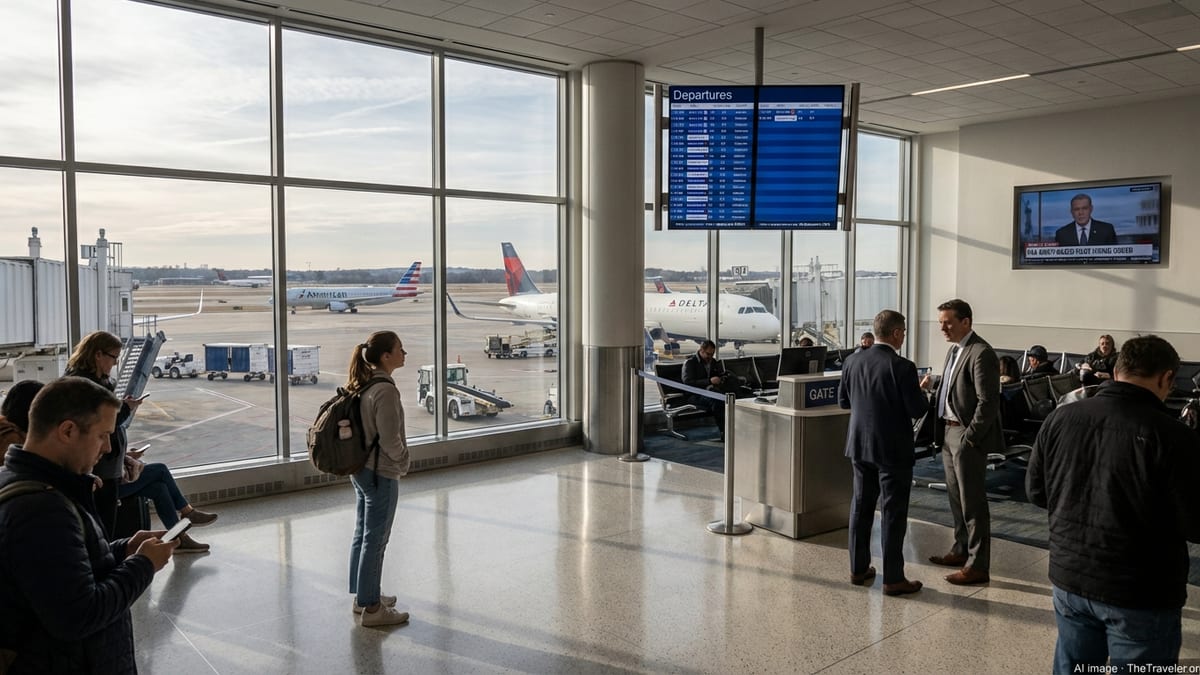
Hundreds of passengers were left stranded at Ronald Reagan Washington National Airport over the weekend as a wave of 86 cancellations and more than 200 delays on American, Frontier, United, Southwest, JetBlue and other carriers rippled across Los Angeles, New York, Chicago, Atlanta, Miami and other major U.S. cities, according to live tracking data and published reports.
Get the latest news straight to your inbox!
Weather, Congestion and Construction Converge on Busy Travel Day
Publicly available flight-tracking information and media coverage indicate that the disruption at Ronald Reagan Washington National Airport followed a familiar pattern seen across the domestic network in recent months, where severe weather and tight schedules leave little margin when storms roll through busy hubs. A combination of thunderstorms, low clouds and wind constraints in several regions forced the Federal Aviation Administration to slow arrivals and departures, triggering a cascade of knock-on delays.
Recent storm systems affecting airports in Chicago, Houston and the broader Mid-Atlantic have already led to ground stops and extended delay programs, and those conditions continued to strain airline operations. As aircraft and crews arrived late into Washington, New York and other East Coast airports, airlines struggled to reset schedules, leading to same-day cancellations at Reagan National and beyond.
Long-planned construction at key airports has also narrowed operational flexibility. Federal transportation documents for 2026 show runway and terminal projects at major hubs including Los Angeles International, Miami International, Chicago Midway and Reagan National, which can reduce capacity at peak hours. When heavy traffic coincides with adverse weather at these airports, even modest schedule changes can translate into large numbers of canceled and delayed flights.
The timing of the latest disruption, during a peak summer travel period, further amplified the effect on passengers. With many flights already operating near full capacity, rebooking options were limited, leaving some travelers in Washington and other hubs facing overnight stays or lengthy detours to reach their destinations.
Nationwide Impact From Los Angeles to New York
While the most visible scenes of stranded travelers were at Reagan National, delay data show that the problem was national in scope. Flights to and from Los Angeles, New York, Chicago, Atlanta and Miami experienced rolling disruptions as storms moved through the central and eastern United States and traffic-management measures rippled through the system.
Chicago, New York and Atlanta, in particular, are frequent pressure points in the national airspace system. Ground delay programs and reduced arrival rates at O’Hare, LaGuardia and Hartsfield Jackson can quickly affect departures from Washington, Miami and Los Angeles, since many aircraft and flight crews rotate among these airports over the course of a day. When one leg in that chain is delayed or canceled, subsequent flights often cannot operate on time.
In Miami and other Southeast gateways, thunderstorms are a routine summer hazard, but the knock-on effects can be more severe when capacity elsewhere is already constrained. Recent travel waivers and customer alerts issued by several carriers for the East Coast and Midwest underscored how a single weather pattern can touch multiple hubs, from New York and Washington to Atlanta and Chicago, within hours.
The result was a highly fragmented experience for travelers. Some flights between major cities still departed close to schedule, while adjacent departures on the same route were pushed back for hours or removed from the schedule entirely, depending on aircraft positioning, crew availability and local weather conditions at intermediate airports.
Major U.S. Airlines Struggle to Recover
The latest wave of cancellations at Reagan National and other airports affected a cross section of the country’s largest airlines. Public dashboards and airline status pages showed flights scrubbed or heavily delayed on American, Frontier, United, Southwest, JetBlue and several regional partners operating under their brands, reflecting the interconnected nature of modern hub-and-spoke operations.
American Airlines, which maintains a significant schedule at Reagan National and multiple East Coast airports, has been particularly exposed during recent bouts of disruptive weather due to the density of its short-haul network. When high-frequency shuttle routes into New York or Boston are slowed by traffic restrictions, even small timetable shifts can multiply into dozens of misaligned crew and aircraft assignments.
Low cost and leisure-focused carriers also felt the strain. Frontier, Southwest and JetBlue all serve combinations of the affected markets, including Los Angeles, Miami, Atlanta and New York, where delays can be harder to absorb because schedules are often optimized for aircraft utilization. If a single aircraft is late on an early-morning departure from one hub, that delay can cascade across multiple cities as the jet cycles through its daily lineup.
United Airlines, with its own dense schedule along the East Coast and through major hubs like Chicago, likewise saw disruptions as flights into constrained airports were placed into holding patterns or required additional ground time. In such conditions, carriers may proactively cancel flights they see little chance of operating reliably in order to preserve what punctuality they can for the remainder of the day.
Passengers Face Long Lines, Limited Information and Tough Choices
For passengers at Reagan National and other affected airports, the operational details translated into long security lines, crowded gate areas and difficult rebooking decisions. Social media posts and traveler accounts from Washington, New York and Miami described departure boards dense with red “canceled” and “delayed” notifications, as well as repeated schedule pushes of 30 to 60 minutes at a time.
When a high volume of flights is disrupted simultaneously, customer-service channels can quickly become overwhelmed. Airline apps and websites typically offer self-service options to select alternative connections or request refunds, but those tools are limited by actual seat availability. At times of widespread disruption, many flights that are operating may already be full, forcing travelers to weigh whether to accept a multi-stop reroute, wait for seats on the following day, or abandon their trip entirely.
Airport services such as food outlets, lounges and on-site hotels also come under pressure. Extended delays into late evening hours, particularly at business-focused airports like Reagan National and LaGuardia with early curfews, can leave stranded travelers competing for a finite number of nearby hotel rooms and late-night dining options.
Some passengers, especially those on short-haul routes between East Coast cities, reported choosing ground transportation as an alternative when faced with repeated flight pushes. On corridors such as Washington to New York or Philadelphia, rail and bus services can provide a backup, though they too may begin to sell out once aviation delays become widespread.
Systemic Vulnerabilities Highlighted Ahead of Peak Summer Travel
The episode at Reagan National and across major hubs highlights broader structural challenges facing U.S. air travel as the industry heads into the heart of the summer season. Demand remains robust, and airlines have rebuilt schedules close to or above pre-pandemic levels, but staffing levels and infrastructure have not always kept pace, particularly in critical roles like air traffic control.
Federal reports in recent months have pointed to ongoing controller shortages at key facilities, including those overseeing traffic into the congested Northeast corridor and the Washington area. When combined with construction-related capacity reductions and frequent convective weather in late spring and early summer, the system can become highly sensitive to relatively minor disruptions.
Airline executives have previously emphasized investments in technology and schedule smoothing to improve resilience, but the persistence of high-volume delay days suggests that further adjustments may be necessary. Options include building more slack into schedules on routes vulnerable to thunderstorms, shifting some flights to less congested time bands, and coordinating more closely with transportation authorities around major construction phases.
For travelers, the pattern underscores the importance of preparation during peak seasons. Experts generally recommend early-morning departures, extended connection times in weather-prone hubs, and careful monitoring of flight-status alerts before heading to the airport. As the latest disruption at Reagan National showed, a single day of storms and congestion can leave hundreds of passengers stranded and ripple across the country from Los Angeles and Miami to New York and Chicago.