


More news on this day
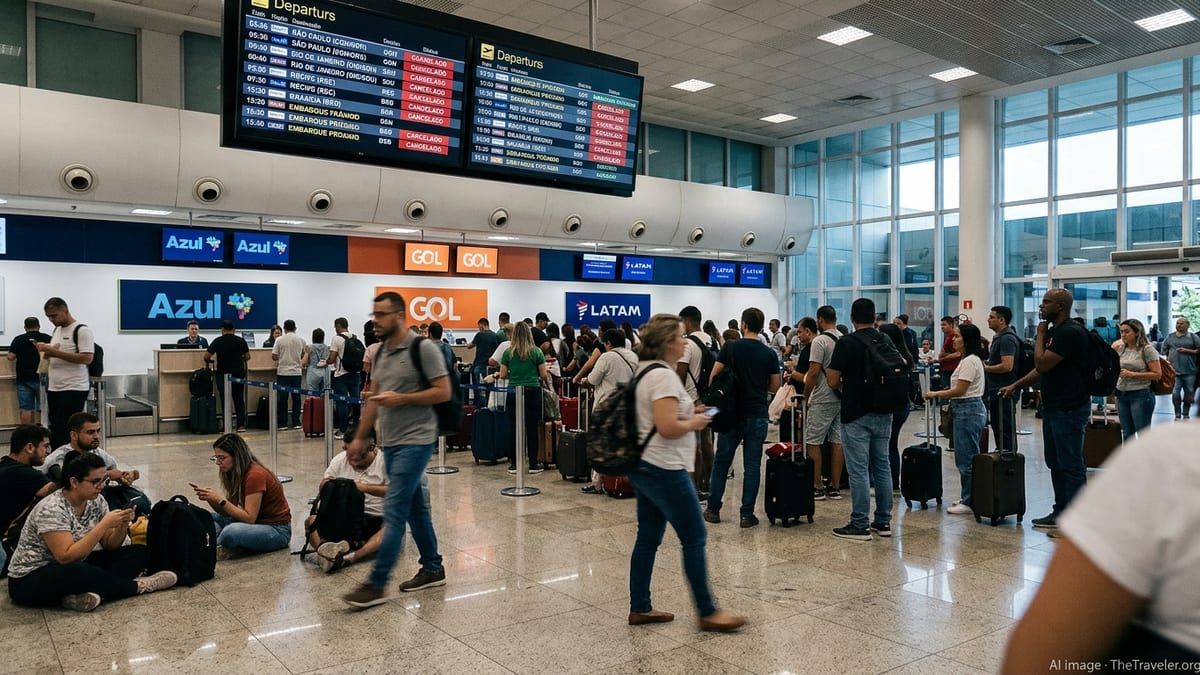
Hundreds of air travelers were left stranded in Brazil today as a powerful cold front and rough seas combined with operational constraints to cancel at least 20 flights and delay nearly 100 more across Rio de Janeiro, São Paulo, Curitiba and Cuiabá, affecting services operated by GOL Linhas Aéreas Inteligentes, LATAM Brasil, Azul, TAP Air Portugal, Ethiopian Airlines and other carriers.
Get the latest news straight to your inbox!
Weather System Overwhelms Busy Brazilian Air Corridors
The latest disruption follows a surge of polar air that pushed into Brazil’s south and southeast on the morning of May 12, dropping temperatures to the lowest levels of the year in major urban centers. Publicly available meteorological data shows São Paulo waking to single digit temperatures and Curitiba forecast near 5 degrees Celsius, while coastal areas in Rio de Janeiro and São Paulo entered high surf alerts with waves reaching up to three meters.
Reports from Brazilian broadcasters and aviation tracking platforms indicate that the severe conditions have slowed aircraft rotations and forced extended separation between arrivals and departures, particularly at Santos Dumont and Galeão in Rio de Janeiro and Congonhas and Guarulhos in São Paulo. Knock-on effects have rippled through the network, with regional feeds from Curitiba and Cuiabá experiencing significant timetable pressure.
According to aggregated flight status data, at least 20 services were fully canceled today on domestic and regional routes, while around 98 recorded delays beyond scheduled departure or arrival times. The pattern mirrors wider Mother’s Day weekend turbulence, when a large frontal system began disrupting air and road travel across much of the country.
The combination of weather volatility and already constrained airspace around Brazil’s largest metropolitan areas has magnified the impact, leaving aircraft and crews out of position and pushing airports to operate close to their practical capacity limits.
Key Hubs Hit: Rio de Janeiro, São Paulo, Curitiba and Cuiabá
In Rio de Janeiro, both Galeão and Santos Dumont reported a busy morning of rescheduled departures after early low cloud, gusty winds and sea swell prompted precautionary spacing on approach and departure corridors. Publicly available information shows particularly heavy disruption on the Rio–São Paulo shuttle, one of Latin America’s densest short-haul markets.
São Paulo’s Guarulhos and Congonhas airports have faced similar pressure. While the polar air mass brought clear skies at times, strong crosswinds and the need to maintain safe separation in crowded airspace led to rolling delays. Local media coverage notes that Guarulhos, already operating close to slot limits on peak days, saw additional congestion in terminal areas as passengers attempted to rebook missed connections.
Curitiba’s Afonso Pena International, exposed to colder temperatures and low morning ceilings, has seen a string of delayed departures to Rio and São Paulo as airlines waited for improved conditions en route and at destination airports. Flight-tracking portals show selected services between Curitiba and southeastern hubs operating behind schedule, narrowing turnaround windows and contributing to afternoon knock-on delays.
In Cuiabá, Marechal Rondon International Airport has acted as both an origin and diversion point. Published schedules and airline statements over recent months highlight Cuiabá’s increasing role as a regional connector, which makes it particularly vulnerable when long-haul and trunk routes into São Paulo and Rio slow down. Today’s disruption has therefore had an outsized effect on travelers using Cuiabá as a stepping stone to Amazonia, the Pantanal and other interior destinations.
Multiple Airlines Affected Across Domestic and International Routes
The wave of cancellations and delays has cut across Brazil’s major carriers and several foreign airlines. GOL Linhas Aéreas Inteligentes, LATAM Brasil and Azul Brazilian Airlines, which together handle the bulk of domestic traffic, have been the most visibly affected as dense shuttle routes and regional spokes absorb the brunt of weather-related timetable shifts.
Public tracking data indicates that select GOL shuttle flights between Curitiba and São Paulo, as well as services linking Cuiabá to southeastern hubs, experienced schedule interruptions today. LATAM and Azul have faced similar issues on trunk routes into Guarulhos and Congonhas, where even small sequencing changes can rapidly cascade across tightly timed networks.
International operations have not been immune. TAP Air Portugal’s Brazilian network, which includes services into Rio and São Paulo and code-share flights feeding from Curitiba, has encountered connection risks as domestic feeders arrive late into long-haul banks. Ethiopian Airlines, serving São Paulo and connecting onward to Rio de Janeiro under certain schedules, has also been listed among carriers exposed to extended ground times and rebookings as the disruption unfolded.
Although most affected flights have eventually departed, the cumulative effect of rotation delays has reduced aircraft availability for later sectors and forced airlines to trim frequencies or consolidate lightly booked services, adding to the impression of widespread disruption for passengers checking departure boards throughout the day.
Stranded Passengers Face Long Queues and Limited Alternatives
For travelers caught in the middle of the disruption, the day has brought crowded terminals, long customer service lines and uncertain onward plans. Reports from passenger advocacy groups and social media posts show families sleeping on terminal benches, business travelers scrambling to safeguard connections and tourists urgently searching for last-minute hotel rooms around key hubs.
Accommodation around the main airports in São Paulo and Rio de Janeiro has tightened quickly. Hospitality industry updates over the past 24 hours describe a surge in short-notice bookings in airport-adjacent neighborhoods, a dynamic first seen as the cold front and storm system took hold on Mother’s Day weekend and now repeated with today’s extended delays.
Ground transport alternatives have provided only partial relief. Long-distance bus services from São Paulo and Curitiba into smaller cities in the south and interior are reporting heavier demand, while ride-hailing apps show price surges around major terminals as travelers opt to abandon delayed flights and pursue overland options when practical.
With many domestic flights already heavily booked for the week, particularly on business corridors, rebooking options for stranded passengers are limited. Travel industry analysts note that when multiple airlines face simultaneous weather, airspace or infrastructure constraints, the usual safety valve of moving passengers across carriers becomes harder to use at scale.
Operational Strain Highlights Structural Vulnerabilities
The disruption has renewed attention on the structural vulnerabilities of Brazil’s aviation system during peak stress events. Publicly available regulatory and corporate filings highlight long-standing capacity constraints at several key airports, including slot caps, runway limitations and curfews that limit the ability to “catch up” after weather or technical interruptions.
Recent analyses of the Brazilian domestic market point to a network highly concentrated around a handful of hubs, particularly São Paulo and Rio de Janeiro. When a strong cold front or coastal storm affects both cities at once, airlines face challenges repositioning aircraft and crew, and secondary hubs such as Curitiba and Cuiabá can become quickly saturated.
Industry commentary also points to an increasingly complex mix of international and domestic operations. Carriers such as TAP Air Portugal and Ethiopian Airlines rely on reliable feeder traffic from Brazilian partners to fill long-haul services, while local airlines depend on those intercontinental routes to sustain premium traffic. Weather-driven irregular operations, even if short-lived, can therefore have global knock-on effects on schedules and aircraft utilization.
Travel planners suggest that in the short term, passengers flying through Brazil’s southeastern hubs over the coming days should prepare for residual delays, monitor flight status frequently and allow extra time for connections, particularly when linking domestic sectors to long-haul departures.