


More news on this day
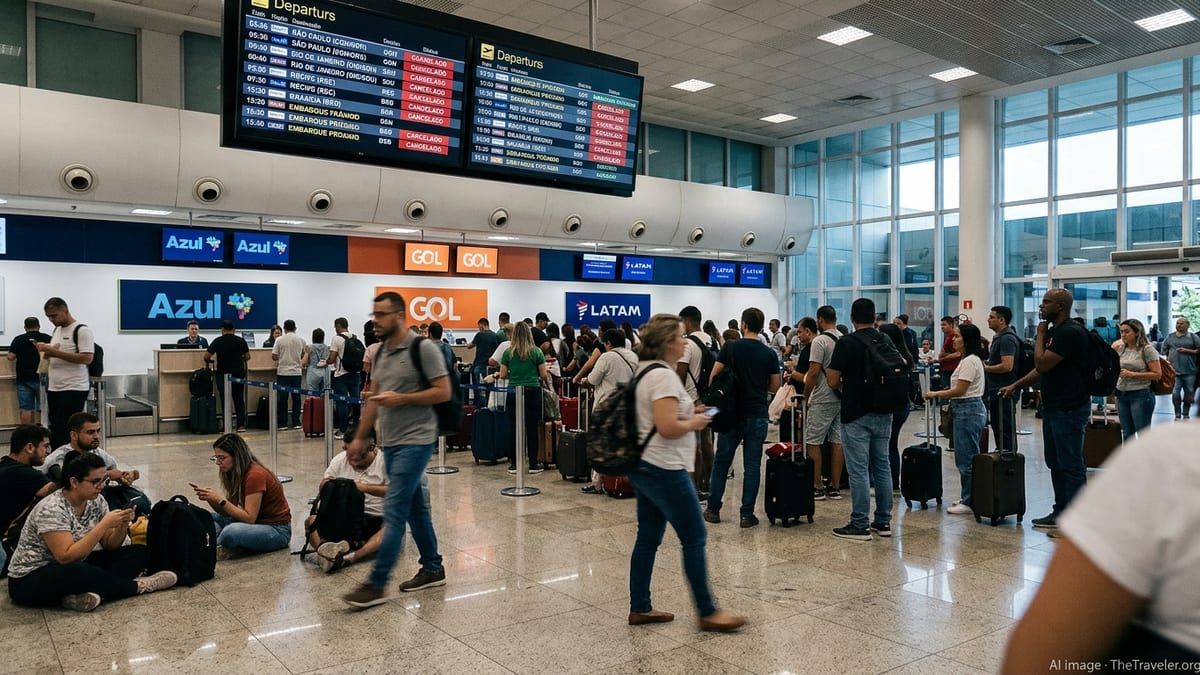
Brazil’s domestic aviation network is facing another wave of disruption as more than 20 newly canceled flights on GOL, LATAM and Azul hit routes to Fortaleza, Porto Seguro, Porto Alegre and critical corridors between São Paulo, Brasília and Rio de Janeiro, adding fresh strain to an already fragile travel season.
Get the latest news straight to your inbox!
Fresh Cancellations Hit an Already Stressed Summer Schedule
Published coverage in Brazil and international travel outlets indicates that over 20 new cancellations involving GOL Linhas Aéreas, LATAM Brasil and Azul Linhas Aéreas Brasileiras have been registered in recent days, compounding weeks of rolling delays and scrubbed services across the country’s main hubs. The latest cuts are concentrated on high demand leisure and business routes that connect coastal destinations with the country’s largest economic centers.
Domestic flights linking São Paulo, Rio de Janeiro and Brasília with Fortaleza, Porto Seguro and Porto Alegre are among those most visibly affected. These routes are central both to Brazil’s internal tourism flows and to corporate travel, particularly during the Southern Hemisphere summer when load factors typically run high and spare capacity is limited.
The cancellations come on top of earlier disruption this year that saw multiple days with double digit cancellations and extensive delays at São Paulo Congonhas and Guarulhos, Rio de Janeiro Galeão and Santos Dumont, as well as Brasília. Industry tracking data and airport reports suggest that even modest schedule changes can rapidly cascade through such a concentrated network, narrowing options for travelers who rely on a handful of daily departures.
While exact causes vary by flight, recent reporting has highlighted a mix of operational factors including crew availability, aircraft rotation challenges and weather instability around major hubs. Analysts note that the three dominant carriers collectively control the vast majority of Brazil’s domestic capacity, so any coordinated pattern of cancellations can quickly be felt nationwide.
Leisure Hotspots Fortaleza and Porto Seguro See Knock On Effects
The latest wave of cancellations is particularly visible on services to Fortaleza in Ceará and Porto Seguro in Bahia, two of Brazil’s most sought after beach destinations during school holidays and long weekends. Publicly available schedules show that these markets are heavily served by GOL, LATAM and Azul from São Paulo and Brasília, with additional seasonal frequencies added to absorb peak demand.
When even a single daily round trip is removed, passengers heading to these destinations can be forced onto less convenient routings via secondary hubs or different days of travel. Reports from consumer rights organizations and travel forums describe families facing unexpected overnight stays in gateway cities after losing direct flights to coastal resorts, often with limited notice.
Porto Seguro in particular functions as a key entry point for resorts along Bahia’s Discovery Coast, meaning that cancellations ripple beyond the airport itself. Tour operators may need to rearrange ground transfers and hotel check in times, while independent travelers must rebook domestic segments or shift itineraries altogether if connections from international arrivals no longer line up.
In Fortaleza’s case, disruptions on domestic feeders can also affect long haul connectivity. The city is marketed as both a sun and beach destination and a growing secondary hub, so interruptions on shuttle flights from São Paulo and Brasília risk undermining carefully timed itineraries involving onward connections to other parts of northeastern Brazil.
Business Corridors Between São Paulo, Brasília and Rio Under Pressure
Beyond leisure flows, the heart of the disruption lies on Brazil’s busiest corporate corridors, particularly the trunk routes linking São Paulo with Brasília and Rio de Janeiro. These shuttles typically see multiple daily departures operated by all three major carriers, allowing same day returns for government officials, executives and commuters between the country’s political and financial centers.
Recent operational data and media coverage show that a portion of the newly canceled flights falls within these high frequency corridors, especially at peak morning and late afternoon banks. Even small reductions in frequency during those windows can lead to fuller remaining services, tighter connection margins and fewer rebooking options when things go wrong.
Travel analysts note that Brazil’s domestic market has been operating close to capacity on core city pairs, with load factors elevated and airlines cautious about adding excess frequencies amid cost pressures. In that context, canceling 20 or more flights within a short window can shift the balance quickly, turning what might otherwise be manageable weather or staffing issues into a broader network event.
Passengers connecting via São Paulo or Brasília from secondary cities such as Curitiba, Belo Horizonte or Vitória may feel the disruption even if their first leg operates on time. Missed connections onto canceled or heavily delayed shuttles can lead to multi hour waits, forced rerouting via alternative airports or, in some cases, short notice overnight stays.
Porto Alegre and Southern Brazil Face Reduced Options
Porto Alegre and other southern Brazilian cities are also seeing knock on effects from the cancellation wave. Flight data and timetable comparisons show that GOL, LATAM and Azul collectively provide the bulk of capacity from São Paulo and Rio de Janeiro into Rio Grande do Sul, meaning any schedule cuts can swiftly limit travel choices in and out of the region.
Recent disruptions come at a sensitive time for southern Brazil, where earlier weather events and infrastructure challenges had already complicated air operations. The loss of specific departures between Porto Alegre and São Paulo or Brasília not only affects point to point travelers but also undermines onward connectivity to northern and northeastern destinations via those hubs.
For residents and businesses in the south, fewer daily departures translate into narrower windows for same day travel and tighter margins for making international connections. Travel planners caution that passengers originating in Porto Alegre and nearby cities should allow additional buffer time when connecting through São Paulo or Rio, particularly if they need to link up with evening long haul departures.
Some carriers have attempted to consolidate demand by upgauging aircraft or adjusting departure times on remaining flights, but these measures only partially offset the impact of outright cancellations. Seats on prime time services are reportedly selling out faster, leaving late bookers with either off peak slots or multi stop routings.
What Travelers Can Do If Their Flight Is Affected
Consumer advocates in Brazil emphasize that passengers affected by cancellations on GOL, LATAM or Azul have specific rights under national aviation and consumer protection rules, including the possibility of rebooking or refunds in many circumstances. Publicly available guidance from watchdog groups encourages travelers to document all communications with airlines and keep receipts for meals, transport and accommodation incurred because of disrupted journeys.
Given the current pattern of disruption, travel experts suggest that those flying in the coming days through São Paulo, Brasília, Rio de Janeiro, Fortaleza, Porto Seguro or Porto Alegre should closely monitor their reservations from at least 24 hours before departure. Checking airline apps and airport departure boards can help identify schedule changes early enough to adjust plans.
Passengers advised that their flight has been canceled are typically offered the choice of rerouting at no additional cost, shifting travel dates, or requesting reimbursement, although conditions can vary by fare type and length of notice. Travelers connecting on separate tickets or relying on tight self made connections may need to proactively contact all affected carriers to protect onward segments.
Travel planners also note that, during periods of widespread disruption, flexibility can be a valuable asset. Accepting alternative airports in the same region, traveling at less popular times of day, or splitting journeys across different airlines can sometimes open up options when nonstop services are no longer available. With more than 20 cancellations already recorded and further schedule adjustments possible, anyone planning to cross Brazil’s major corridors is being advised to build extra time and contingency into their itineraries.