


More news on this day
Travelers transiting Kuwait International Airport on May 12 faced a new wave of disruption, with a cluster of cancellations and delays affecting regional services operated by Egypt Air, Kuwait Airways, and Jazeera Airways.
Get the latest news straight to your inbox!
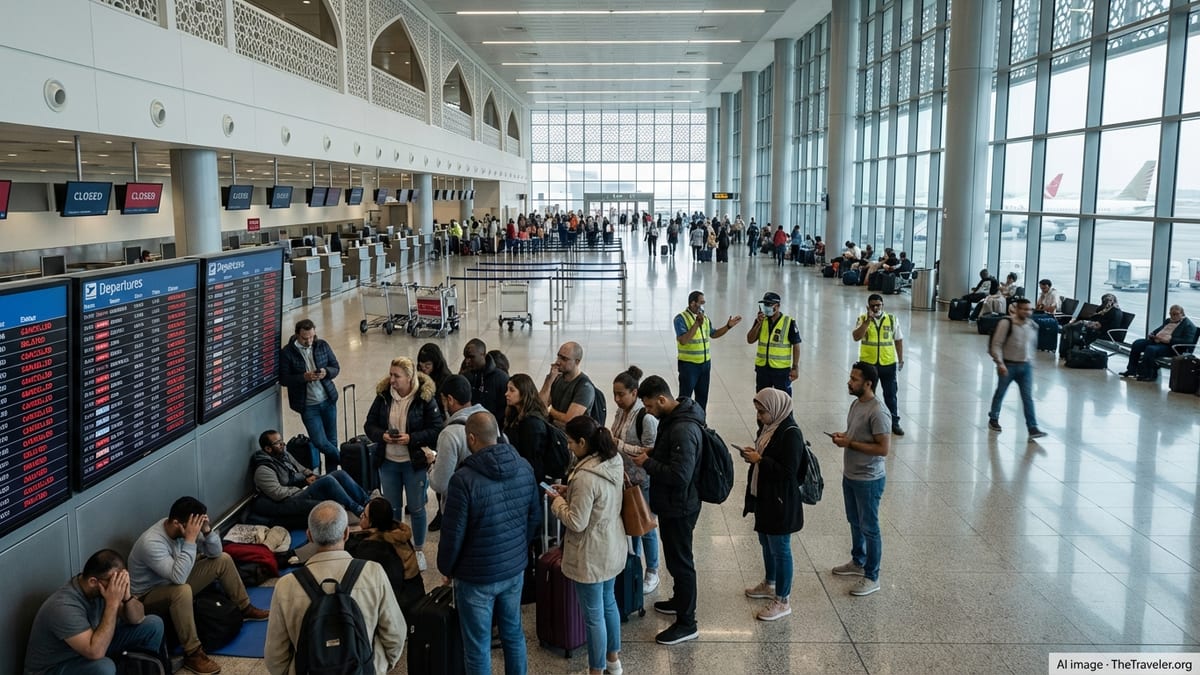
Cluster of Cancellations and Delays at Kuwait International
Publicly available live flight boards on May 12 indicated an unusually high number of disruptions at Kuwait International Airport, with a total of 18 services listed as either canceled or significantly delayed across several airlines. Among these, flights operated by Egypt Air, Kuwait Airways, and Jazeera Airways were prominently affected, disrupting connections from Cairo, Dubai, and other Middle Eastern and South Asian gateways.
Arrivals data showed multiple cancellations on Kuwait Airways services alongside a Cairo bound Egypt Air flight listed as canceled, while Jazeera Airways posted several delays on regional routes. These issues came at a sensitive moment for Kuwait’s aviation sector, which has been progressively restoring traffic after earlier airspace closures and operational constraints.
The disruption was concentrated across Kuwait International’s terminals, with Kuwait Airways services primarily routed through Terminal 4, Jazeera Airways through its dedicated Terminal 5, and other foreign carriers operating via the main terminal. For passengers, however, the impact was similar regardless of terminal: disrupted itineraries, missed connections, and extended airport waits.
While the total figure of nine canceled and nine delayed flights is modest relative to the airport’s daily schedule, the concentration on a limited number of regional carriers magnified the effect on certain high demand routes, particularly between Kuwait City and Egyptian and Gulf destinations.
Key Routes Hit: Cairo, Dubai and Regional Gateways
The day’s disruption was especially visible on Egypt linked services. Airport screens and third party flight trackers showed an Egypt Air arrival from Cairo marked canceled at Kuwait International, alongside cancellations and delays on Kuwait Airways flights serving other regional cities. Jazeera Airways, which operates a dense network from Kuwait City, also recorded delays on several departures and arrivals.
Cairo remains one of the most important origin and destination markets for Kuwait, driven by strong labor, family, and business ties. According to airline schedule data, Jazeera Airways, Kuwait Airways, and Egypt Air all serve the Kuwait Cairo corridor, supplemented by services linking Kuwait to Egypt’s secondary airports. Disruption on even a handful of these flights can ripple outward, affecting onward connections into North Africa, the Gulf, and beyond.
Dubai bound passengers also faced uncertainty, with Kuwait Airways operating the key Kuwait Dubai route out of Terminal 4. While not all Dubai services were directly affected, the broader pattern of schedule changes raised concerns among travelers about the reliability of itineraries across the wider Gulf network on the day.
The knock on effects extended to other cities on Jazeera Airways’ map, including points in the Levant and the Indian subcontinent that rely on Kuwait as a transfer point. For travelers connecting through Kuwait International, delayed departures from Cairo or other origins risked missed onward flights, forcing rebooking and overnight stays.
Operational Strains in a Recovering Aviation Hub
The disruption comes as Kuwait International Airport continues to rebuild and reconfigure operations following a period of airspace closures related to regional tensions earlier in the spring. Industry analysis indicates that Kuwait was among the last Gulf states to fully reopen its airspace to commercial traffic, and airlines have been gradually ramping up schedules since late April.
Jazeera Airways recently announced the restoration of full operations from its dedicated Terminal 5 within daytime operating windows, highlighting both the progress made and the fragility of the recovery. Company statements and local media coverage have pointed to large volumes of passengers being handled during earlier disruption phases, with carriers and airport staff working to normalize operations.
Kuwait Airways, the national carrier, has also been rebuilding its network from its Terminal 4 base. Historical performance data for some of its regional flights shows a pattern of occasional delays and cancellations even in more stable periods, reflecting the operational complexity of maintaining punctuality across a geographically concentrated yet high frequency network.
For Egypt Air, today’s cancellation at Kuwait International added to a region wide environment in which airlines are juggling schedule adjustments, fluctuating demand, and evolving airspace and airport operating conditions. The shared pressures across carriers help explain why disruptions can cluster on particular days, including on otherwise routine routes such as Cairo Kuwait or Kuwait Dubai.
Passenger Impact and Practical Responses
For passengers, the most immediate consequence of the nine cancellations and nine delays was uncertainty. Travelers arriving to find their flights canceled needed to seek alternative departures, often competing for limited seats on remaining services. Those facing delays were left to navigate changing departure times, gate shifts, and the possibility of missed onward connections.
Reports from publicly available traveler forums and regional media indicate that some passengers were able to rebook later flights on the same day, particularly on routes where multiple daily services operate between Kuwait, Cairo, and other major cities. Others, especially those with tight connections or limited onward options, faced the prospect of overnight stays and unplanned expenses.
Travel specialists commonly recommend that passengers in such situations monitor both airline apps and airport information boards, as discrepancies between third party trackers and official schedules can occur. In Kuwait, where several terminals and carriers share the same airfield but maintain separate systems, staying informed across multiple channels can be particularly important during disruption.
Travel insurance and flexible tickets can also play a role in mitigating disruption. Policies that cover missed connections, hotel costs, and rebooking fees are especially relevant on regional routes where alternative flights may not be available for many hours, and where ground travel alternatives are limited.
What Today’s Disruption Signals for Regional Travel
Although the number of affected flights at Kuwait International on May 12 is relatively small in absolute terms, the pattern of disruption underscores the sensitivity of Gulf and Middle East aviation to operational shocks. With Kuwait acting as both an origin market and a connecting hub for traffic between Egypt, the Gulf, and parts of South Asia, even localized schedule problems can strand travelers across several countries.
The fact that Egypt Air, Kuwait Airways, and Jazeera Airways were all touched by the same bout of disruption points to shared infrastructure and airspace challenges rather than isolated airline specific issues. For passengers, this means that diversifying carriers does not always eliminate exposure to delays and cancellations when the root causes are systemic.
Looking ahead, Kuwait’s aviation sector continues to pursue infrastructure expansions and terminal upgrades intended to enhance resilience and capacity. However, days like May 12 serve as a reminder that operational reliability depends not only on physical capacity but also on coordinated schedules, robust contingency plans, and clear communication with passengers when things go wrong.
For travelers planning journeys through Kuwait International in the coming weeks, the latest disruption may be a signal to build in longer connection times, verify flight status frequently, and consider backup options on key routes such as Cairo and Dubai, particularly while the region’s air traffic patterns are still in a period of adjustment.