


More news on this day
A nationwide strike in Belgium on 12 May has triggered severe disruption at Brussels Airport and Brussels South Charleroi Airport, with publicly available data indicating at least 163 flight cancellations and 37 delays affecting carriers including Ryanair, Buzz, Vueling Airlines and British Airways, leaving thousands of travellers facing missed connections, overnight stays and hastily improvised detours across Europe.
Get the latest news straight to your inbox!
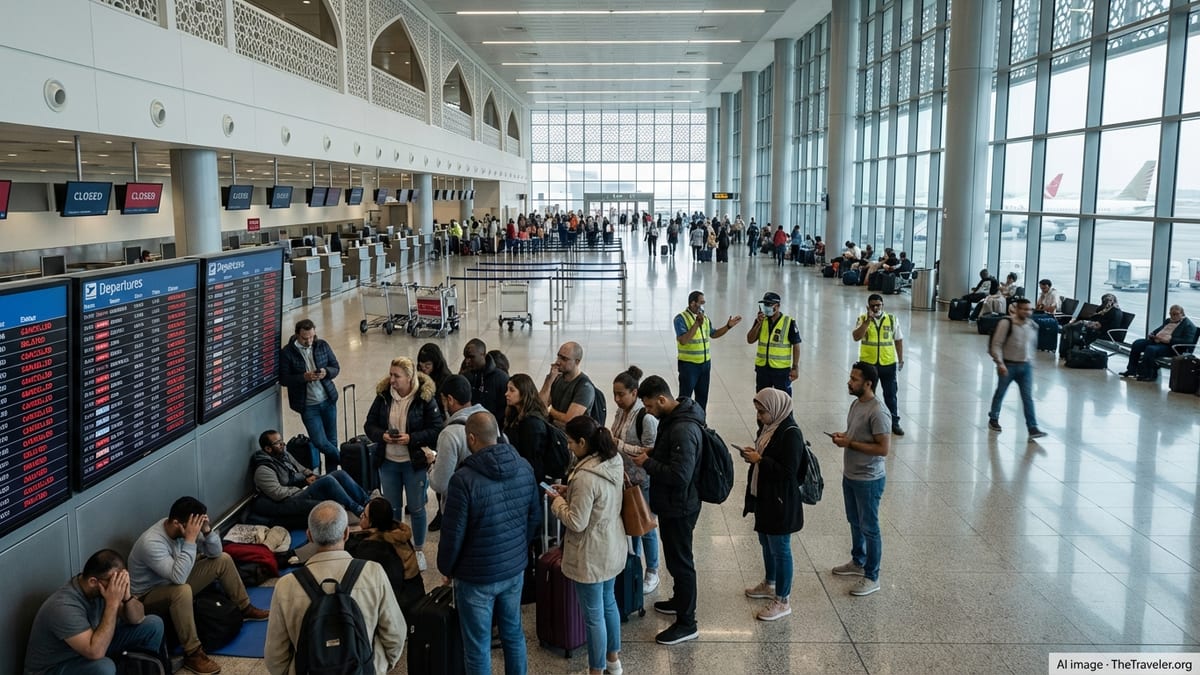
National Strike Shuts Charleroi and Cripples Brussels Operations
Advance notices from Charleroi indicate that every passenger flight to and from Brussels South Charleroi Airport scheduled for Tuesday, 12 May 2026 has been cancelled as a result of the 24-hour general strike by Belgium’s main trade union confederations. Airport management publicly reported that minimum staffing levels could not be guaranteed in security screening, airside operations and firefighting, leading to a full shutdown of the low-cost hub.
At Brussels Airport in Zaventem, the country’s primary international gateway, the impact is described as extremely severe rather than total. Pre-strike alerts issued on 11 May warned that a large share of departures would be grounded, with services that do operate expected to face long queues, limited staffing and possible last-minute schedule changes throughout the day.
Published coverage from Belgian and regional outlets shows that the combined effect across the two airports is a wave of short-haul European cancellations concentrated in the low-cost and leisure market, along with disrupted feeder flights that normally connect Belgium to major hubs in Spain, Italy, Portugal and the United Kingdom.
While the national strike primarily targets public services and transport, the immediate and visible consequence for air travel is the paralysis of ground operations, which has forced airlines to cut services even when aircraft and crews were available to fly.
Ryanair, Buzz and Vueling Bear Brunt of Charleroi Grounding
Ryanair and its affiliated operator Buzz, which together run a dense network of routes from Charleroi, appear among the most heavily affected carriers. Flight-tracking services and airline information pages show multiple Charleroi services for 12 May listed as cancelled, including departures to Spanish holiday destinations and key city pairs such as Brussels to Las Palmas.
Reports from regional airports across Europe highlight the knock-on effects. In Spain, local coverage from Cantabria notes that a Charleroi to Santander service and its returning sector have both been cancelled, removing an entire daily link between the northern Spanish region and Belgium. Similar patterns are being reported on other secondary routes where Charleroi functions as the primary Belgian gateway for low-cost traffic.
Vueling Airlines and British Airways also feature prominently in disruption tallies. Publicly available trackers list cancellations of Vueling and British Airways flights on the broader European network during the current disruption window, while Belgian-focused travel updates link some of these schedule cuts to the severe constraints at Brussels and Charleroi.
Industry data indicates that many of the affected flights are operated by single daily rotations. As a result, travellers whose services have been removed from the schedule often face waits of several days before the same airline can offer a comparable replacement, particularly on niche leisure routes and smaller city pairs.
Spillover to Neighboring Airports as Traffic Is Diverted
With Charleroi closed and Brussels operating at sharply reduced capacity, some diverted traffic has been routed through airports in neighboring countries. Dutch media report that Maastricht Aachen Airport in the Netherlands is handling additional flights today that were originally scheduled for Belgian airports, reflecting attempts by airlines to salvage at least part of their planned operations.
This diversion strategy helps certain passengers complete journeys with only moderate delays, but it also introduces new challenges. Travellers must often arrange last-minute ground transport across borders, sometimes at their own expense, and recheck luggage or clear immigration at unfamiliar airports. For those already en route when diversions were decided, the result can be unexpected overnight stays far from their intended destination.
Travel platforms and consumer forums are also recording an uptick in reports from passengers who have been rebooked via alternative hubs in Germany, France or the Netherlands. In many cases, the re-routed itineraries involve longer connections and additional segments, compounding the overall disruption caused by the Belgian strike.
Despite these mitigation efforts, the volume of cancellations in Belgium means that not all affected passengers can be accommodated on the same travel day. Airline networks and available aircraft are finite, and the sudden loss of capacity at two major airports has created what observers describe as a temporary bottleneck across several short-haul markets.
Passenger Rights, Rebooking Options and Compensation Questions
As cancellations and delays mount, attention is turning to what affected travellers can expect in terms of rebooking and financial redress. According to publicly accessible airline notices and travel rights portals, carriers are generally offering passengers a choice between rerouting at the earliest opportunity or receiving a refund for the unused portion of their ticket.
Because the disruption stems from a nationwide strike that is not directly controlled by individual airlines, many services are being classified under “extraordinary circumstances” in the context of European passenger-rights regulation. Under this framework, travellers typically retain the right to re-routing or refund, but eligibility for additional monetary compensation can be limited when strikes or other external events are deemed to be the primary cause.
Consumer organisations and travel advisers are encouraging passengers to keep detailed records of boarding passes, booking confirmations, receipts for meals or accommodation and any written communication from airlines about the reason for cancellations. Such documentation can be important in pursuing compensation claims, whether directly with carriers or through intermediary services that specialise in asserting passenger rights.
Insurance coverage is another key variable. Policies that include disruption or missed-connection clauses may reimburse certain out-of-pocket expenses, such as hotel stays or alternative travel arrangements, but conditions vary widely and may treat strikes differently from technical failures or weather-related problems.
Ongoing Disruption and Advice for Upcoming Travellers
Although the current national strike is formally limited to a 24-hour period, residual disruption is expected to ripple through flight schedules beyond 12 May. Aircraft and crews will not always be where they are supposed to be after a day of cancellations and diversions, which can lead to further adjustments on 13 May and potentially later in the week.
Travel information services recommend that anyone due to fly to or from Belgium in the coming days monitor their booking closely through airline apps or websites and avoid travelling to the airport until their flight is clearly confirmed as operating. For passengers with flexible itineraries, some experts advise considering alternative gateways in neighboring countries when booking new trips, at least until Belgian airports have fully stabilised their operations.
For those already stranded, rail and long-distance coach services remain important alternatives, though these too can experience crowding when large numbers of passengers seek last-minute options. Travellers are being urged, through public advisories and media reports, to check seat availability before heading to stations and to leave additional time for queues and border checks where applicable.
As Belgium works through the immediate impact of the strike, today’s events at Charleroi and Zaventem highlight the vulnerability of densely scheduled, low-cost air networks to sudden labour disputes. With thousands of passengers affected and scores of flights cancelled or delayed, the episode is likely to prompt renewed debate over staffing resilience, contingency planning and communication with customers across Europe’s budget aviation sector.