


More news on this day
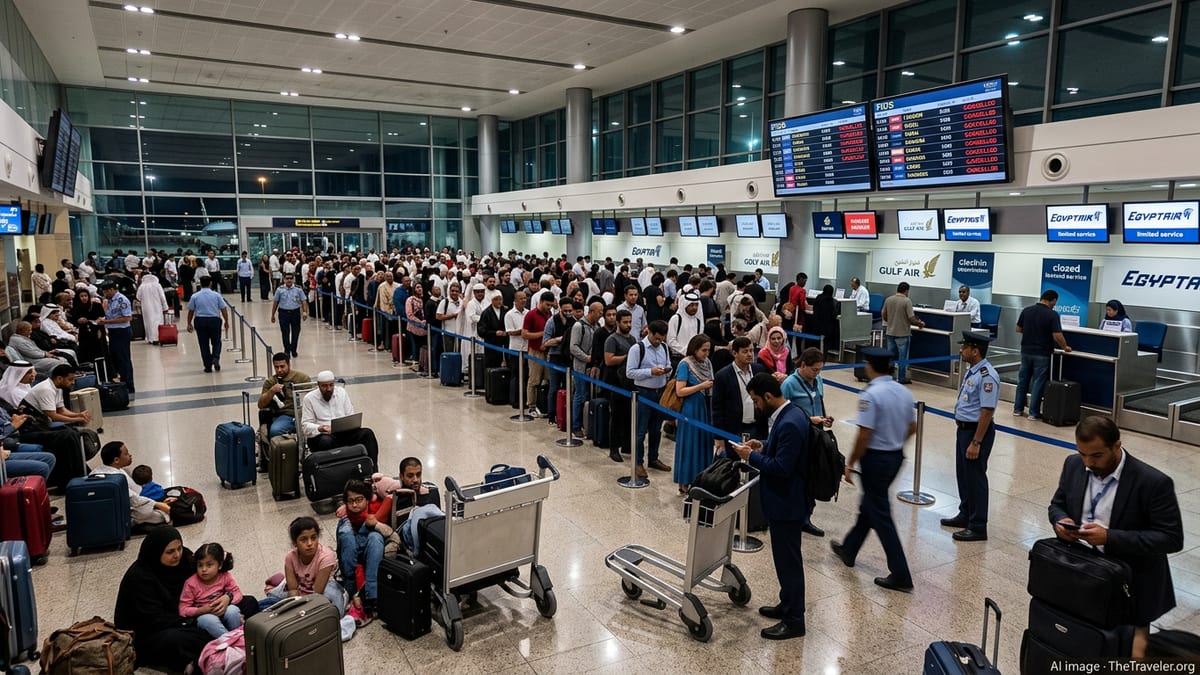
Air travel across the United Arab Emirates has come under renewed strain as Dubai, Sharjah, Abu Dhabi, Al Ain and other airports report widespread disruption, with around 80 flight delays and at least 10 cancellations affecting services operated by Emirates, Flydubai, Air Arabia, Etihad Airways and several international carriers.
Get the latest news straight to your inbox!
Regional Airspace Turbulence Reignites Disruption
Recent regional airspace restrictions and security concerns have again unsettled flight operations at key UAE hubs. Publicly available aviation updates describe a tightening of airspace conditions across parts of the Gulf, prompting airlines to adjust routings, extend flight times and, in a number of cases, hold aircraft on the ground. The result has been a new wave of operational challenges at Dubai International, Sharjah, Abu Dhabi’s Zayed International and secondary airports including Al Ain.
Industry trackers and airport status boards reviewed on 11 and 12 May 2026 show a pattern of rolling delays on both outbound and inbound services, particularly on routes intersecting conflict-affected flight information regions. This includes services run by Emirates and Flydubai through Dubai, Etihad Airways via Abu Dhabi and Air Arabia from Sharjah, as well as foreign airlines that rely on UAE stopovers for long haul connections between Europe, Asia and Africa.
Operational data and media coverage indicate that roughly 80 flights across the UAE’s main airports have been running significantly behind schedule, alongside at least 10 cancellations linked to airspace rerouting and aircraft repositioning. While overall traffic volumes remain below the levels seen before the late-February shock airspace shutdown, the latest disruption is compounding an already fragile recovery.
Carriers are continuing to publish ad hoc schedule changes as they respond to evolving restrictions, leaving passengers facing extended airport waits, missed connections and last minute rebookings. In several cases, turnaround times in Dubai and Abu Dhabi have lengthened due to altered flight paths, adding pressure to peak-hour banked departures.
Dubai and Sharjah Bear the Brunt of Network Stress
Dubai International, the world’s busiest airport for international passengers, remains the epicentre of the latest wave of travel chaos. Earlier shock events in late February triggered complete suspensions of operations at Dubai International and Dubai World Central, and while airports have since reopened, the network remains finely balanced. According to published aviation analysis, Emirates and Flydubai have been rebuilding their schedules in stages, but intermittent airspace alerts continue to ripple through departure and arrival banks.
Current departure boards at Dubai show clusters of delayed flights on high frequency routes to South Asia, Europe and the wider Middle East. These are the services most exposed to detours around restricted airspace, where even modest reroutings can extend flight times by 30 to 90 minutes. That, in turn, disrupts onward connections for passengers bound for destinations in Africa, North America and the Asia Pacific region.
Sharjah, the primary hub for low cost carrier Air Arabia, is also experiencing strain. Public reports describe a mixed operating picture in recent days, with large parts of the schedule running, but with an elevated incidence of delays on services to the Levant, North Africa and the Indian subcontinent. Air Arabia’s point to point model normally allows for rapid aircraft turnarounds, but extended flight times and crew duty limits are making it harder to keep aircraft in their planned rotations.
The cumulative effect of these disruptions is especially pronounced for budget conscious travellers using Dubai and Sharjah for regional hops. Many have found that relatively short flights now depart significantly behind schedule or arrive too late for previously reliable same day connections, forcing rebookings or overnight stays.
Abu Dhabi, Al Ain and Secondary Airports Feel Knock-On Effects
Abu Dhabi’s Zayed International Airport, which experienced widespread suspensions in late February and early March, is again navigating a delicate operational environment. Etihad Airways previously paused all scheduled commercial flights during the height of the airspace shutdown and then resumed services on a limited basis as restrictions eased. Recent travel updates show the carrier continuing to adjust frequencies and timings on select routes in response to changing overflight permissions.
Data from airport information screens and third party flight trackers on 11 May highlight a smaller, but still notable, cluster of delays and a handful of cancellations on Abu Dhabi departures to Europe and Asia. These appear linked to the same regional airspace dynamics affecting Dubai, with longer routings compressing turnaround windows and occasionally leading to aircraft and crew being out of position for subsequent sectors.
Smaller airports such as Al Ain are also reporting disruptions, largely through knock-on effects rather than direct airspace closures. When wide body aircraft and crews are reshuffled to protect core long haul services from Dubai and Abu Dhabi, regional and secondary routes are often the first to see timetable adjustments. This can mean same day cancellations or consolidated services for lower demand destinations.
Residents in outlying emirates who typically rely on secondary airports are therefore seeing increased volatility in flight availability. Travel forums and social media posts in early May have highlighted instances of passengers on regional carriers facing last minute postponements or being rebooked via larger hubs, extending travel times and complicating ground transport plans.
Airlines Adjust Schedules and Passenger Support Policies
In response to the latest disruption, UAE based airlines are leaning on schedule changes, aircraft swaps and flexible ticket policies to manage passenger flows. Emirates has recently outlined a series of operational notices on its travel updates portal, signaling that while most of its global network has been restored, pockets of instability remain, especially on routes intersecting conflict zone advisories. The carrier is prioritising network resilience by consolidating seat capacity on high demand sectors and offering rebooking options where flights are significantly delayed or cancelled.
Etihad Airways has followed a similar pattern. Earlier statements detailed temporary suspensions of Abu Dhabi operations until early March, with gradual restoration of flights as airspace conditions allowed. Current public guidance from the airline emphasises the importance of checking individual flight status before travelling to the airport and notes that affected passengers can often switch to alternative dates or destinations without additional change fees.
Flydubai and Air Arabia, both heavily exposed to short haul regional traffic, appear to be rebalancing their schedules toward routes that can operate consistently under existing airspace limitations. This includes prioritising corridors that avoid the most heavily restricted flight information regions, even when this means longer routings and increased fuel burn. Some passengers on these carriers have reported on community platforms that previously nonstop journeys now involve altered timings, extended layovers or, in isolated cases, rerouting via other regional hubs.
Industry observers note that airlines serving the UAE are also working closely with interline and codeshare partners to move stranded passengers. When cancellations occur, travellers are increasingly being accommodated on later departures or routed through alternative gateways in Saudi Arabia, Turkey or Europe as carriers seek to contain the impact on network reliability.
Passengers Confront Longer Journeys and Ongoing Uncertainty
For passengers, the most visible consequences of the latest disruption are longer total journey times, crowded terminals during peak hours and a heightened risk of missed connections. Travel advisories issued in recent days encourage travellers heading to or through the UAE to build additional buffer time into itineraries, particularly when connecting between separate tickets or different airlines.
Reports from recent travellers suggest that while some flights are operating close to schedule, others suffer delays of several hours, often with limited advance notice. This uneven pattern has made it difficult for passengers to predict whether their specific journey will be affected, even when broader indicators show that operations are gradually stabilising compared with the height of the February airspace shutdown.
Travel management firms and corporate booking platforms are advising clients to monitor flight status regularly in the 24 hours before departure and to remain flexible about routing choices. Some are temporarily shifting corporate traffic onto carriers and corridors perceived as less exposed to sudden airspace changes, even if this entails higher fares or indirect routings.
With the summer travel season approaching, analysts caution that capacity constraints and lingering operational fragility could amplify the effect of any new airspace alerts. For now, publicly available information points to a system that is functioning but fragile, with roughly 80 delays and 10 cancellations across Dubai, Sharjah, Abu Dhabi, Al Ain and other UAE airports serving as a reminder of how quickly regional tensions can reverberate through global travel plans.