


More news on this day
Drivers heading to London Gatwick Airport are being warned to expect long delays after a serious collision shut a main road serving the terminals, disrupting access for early summer travellers.
Get the latest news straight to your inbox!
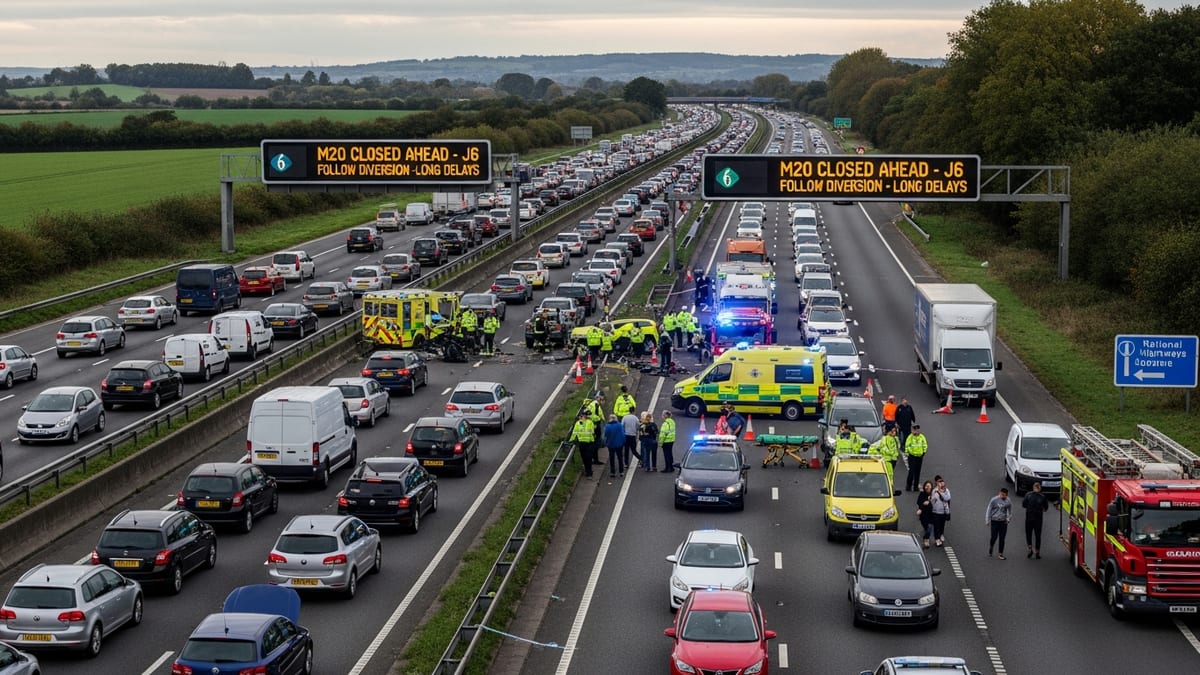
Serious crash closes key approach to Gatwick
Reports from UK traffic services and local media indicate that a multi vehicle collision has forced the closure of a primary route linking the M23 corridor with London Gatwick Airport. The incident, which occurred during a busy travel period, has left sections of the road impassable while recovery and investigation work take place.
The affected stretch forms part of the main highway access to Gatwick, funnelling traffic from London, the M25 orbital and the wider South East. Publicly available information shows that all lanes in at least one direction have been closed, with traffic being held for extended periods as responders manage the vehicles involved and clear debris.
Early indications suggest that congestion is spreading swiftly along connecting routes, including the M23 near the dedicated airport spur. Tailbacks are building in both directions as drivers are diverted away from the scene, significantly increasing journey times for passengers trying to reach flights and for those leaving the airport by road.
While detailed information on injuries has not yet been widely reported, the severity of the collision is reflected in the length of the closure and the scale of disruption on surrounding roads.
Long delays and diversions for airport passengers
Traffic monitoring services and roadside message boards are advising motorists to avoid the affected corridor where possible, warning that delays of an hour or more are likely at peak times. Diversion routes are being used to keep traffic moving around the closure, but these alternative roads are now experiencing heavy congestion as volumes build.
Travel industry reports note that the disruption is particularly acute for passengers driving to Gatwick for departing flights. Many are encountering stop start conditions well before reaching the airport perimeter, with queues forming back towards the M25 and other key junctions. Publicly available updates describe slow moving traffic on local A roads as drivers attempt to bypass the main closure.
Passengers collecting arrivals are also being caught in the disruption, with some car parks and forecourts experiencing knock on congestion as vehicles arrive later than planned or circulate while waiting for travellers whose journeys from elsewhere have been delayed.
Coaches, long distance buses and airport shuttles that rely on the same road network are reporting extended journey times, adding further uncertainty for those with tight connections to onward rail services or domestic flights from Gatwick.
Impact on flights and wider travel patterns
Although the collision is confined to the road network, disruption is rippling into the wider travel system. Gatwick Airport, one of the United Kingdom's busiest hubs, depends heavily on road access via the M23 and surrounding A roads, in addition to its rail links. When the main highway routes are partially closed, published analyses of previous incidents show that missed check in windows and security queues can quickly follow as large numbers of passengers arrive late.
Airlines at Gatwick generally advise passengers to arrive several hours before departure, particularly for long haul or peak time flights. On days with serious road incidents, travel planners and consumer advisers often recommend adding at least an extra hour to normal driving times, especially for those coming from London, Surrey, Kent and Sussex.
Rail services to Gatwick remain a key alternative for many travellers, with Thameslink and Southern trains linking the airport to central London and regional destinations. However, recent weeks have seen their own share of disruption on routes in and out of the airport, meaning that some passengers who might normally rely on rail had already switched to road travel before this latest collision.
Travel commentators note that this combination of factors is likely to amplify the effect of today's road closure, placing additional pressure on remaining open routes and on airport operations that rely on steady passenger arrival patterns.
Advice for travellers heading to Gatwick
Publicly available travel guidance in response to the incident urges anyone with a flight from Gatwick to check conditions on the roads before setting out and to consider alternative modes where practical. Journey planners recommend using rail where services are running normally, or routing via less affected corridors rather than relying solely on the main motorway approach.
Motorists who must drive are being encouraged to allow significantly more time than usual, travel outside of peak periods if possible and follow posted diversion signs rather than relying on satellite navigation alone, as some smaller roads near the closure are becoming gridlocked by redirected traffic.
Airport passengers are also being advised to stay in close contact with their airlines through official channels to monitor any knock on delays to check in, bag drop or boarding times. While there is currently no wide scale indication of flight cancellations linked directly to the road collision, late arriving passengers can cause congestion at security checkpoints and departure gates.
Travel experts suggest that those with early morning or late evening departures may wish to consider overnight accommodation near Gatwick if feasible, reducing reliance on a time sensitive drive during periods when traffic patterns can be unpredictable after a major incident.
Ongoing disruption highlights vulnerability of access routes
The latest collision underlines the vulnerability of airport access when a single major incident closes a key stretch of road. Studies of the transport corridor serving Gatwick have repeatedly highlighted the risk of long delays when accidents, bad weather or unplanned works reduce capacity on the M23 and its feeder routes, given the high proportion of passengers who arrive by car, taxi or coach.
Transport policy reports for the South East region note that even short term closures on these strategic roads can lead to widespread congestion, missed flights and a build up of delays across the wider motorway and A road network. The incident adds to ongoing debates about resilience measures, including better real time information for drivers, improved diversion planning and greater use of public transport connections to major airports.
For now, travellers heading to Gatwick are being reminded that road conditions around the airport may remain difficult for some time after the collision scene is cleared, as residual queues work their way through the system. Anyone with an imminent departure is strongly advised, according to published travel guidance, to treat journey times as highly uncertain and to plan with generous margins to avoid last minute stress at the terminal.