


More news on this day
Transport Canada has appointed a departmental observer to monitor the response and ongoing safety review after a Canadian National freight train derailed in Repentigny, Quebec, disrupting rail traffic northeast of Montreal and renewing scrutiny of freight operations that run through densely populated suburban areas.
Get the latest news straight to your inbox!
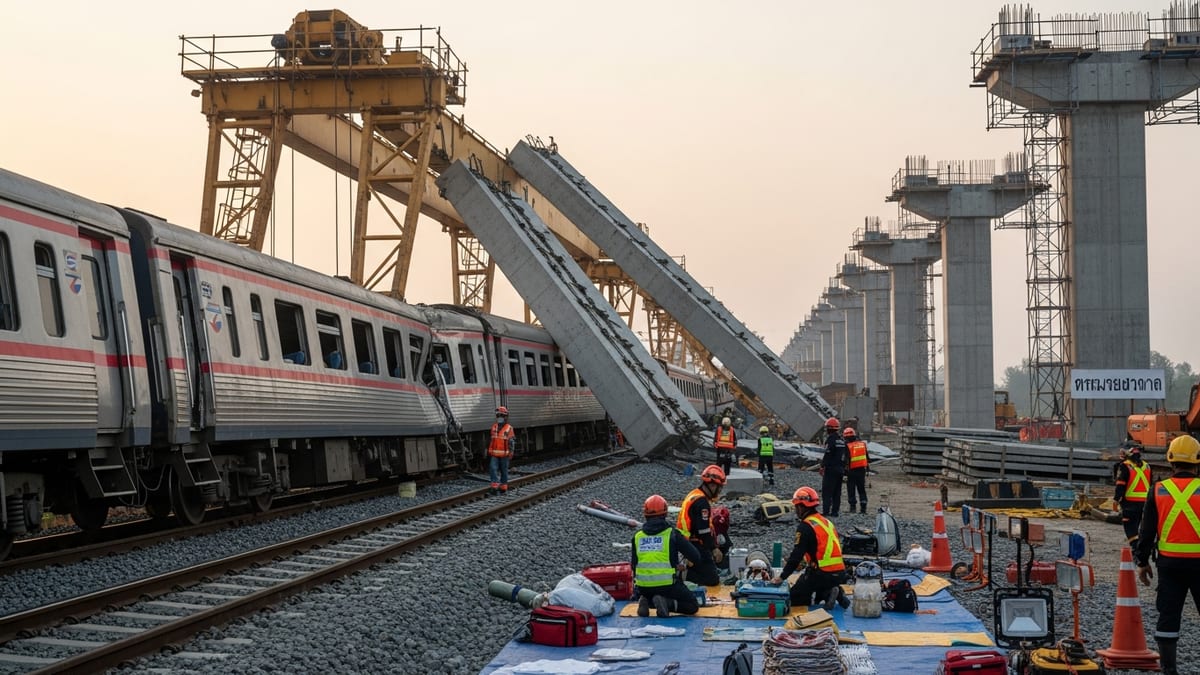
Federal oversight steps up after Quebec derailment
Published information indicates that the appointment of a departmental observer follows the derailment of roughly four dozen railcars on a CN freight train in Repentigny on Sunday, July 5, 2026. The incident occurred in the Le Gardeur sector, a residential area northeast of Montreal, and prompted a large emergency response as crews worked to stabilize the site and evaluate potential risks to nearby homes.
According to publicly available reports, early assessments suggested that the train was primarily carrying non dangerous consumer and industrial goods. There were no reported injuries, but the scale of the derailment and the proximity to homes and local roads led to temporary closures and detours, affecting both residents and travellers passing through the region.
By appointing a departmental observer, Transport Canada is inserting a direct federal presence into the follow up to the derailment. The role typically involves monitoring the railway’s recovery operations, reviewing emerging technical information from inspectors and the Transportation Safety Board of Canada, and ensuring that any immediate safety actions identified through the investigation are communicated quickly to decision makers.
The observer’s mandate does not replace the independent work of the Transportation Safety Board, which is responsible for determining causes and contributing factors. Instead, it places a senior Transport Canada representative in a position to track developments in real time and to help the department evaluate whether additional regulatory or compliance measures are needed while the investigation is still underway.
What is known so far about the Repentigny incident
Travel and commuter reports from the Montreal region describe a sudden freight train derailment that left dozens of railcars strewn along the right of way in Repentigny, affecting a key rail corridor that carries both freight and, on nearby routes, passenger services. Images circulated by Canadian media show overturned and jackknifed cars blocking multiple tracks, as well as heavy machinery brought in to remove damaged rolling stock.
Available coverage indicates that there was no large scale fire or toxic release, a factor that sharply distinguishes the Repentigny event from past crude oil derailments in Quebec that had devastating human and environmental consequences. Even so, local residents experienced noise, vibration, and uncertainty as emergency teams moved in and rail traffic halted while safety checks were carried out.
Rail operations through the corridor were gradually restored as track repairs progressed and damaged cars were cleared. For travellers, this meant delays and potential rerouting for certain passenger services that share parts of the broader Montreal rail network, as dispatchers adjusted timetables around the blocked section and subsequent repair windows.
The Transportation Safety Board has deployed investigators to the site to document the condition of the track, rolling stock, and signalling systems. Public information to date emphasizes that it remains too early to identify a precise cause, and that detailed analysis of data recorders, inspection reports, and maintenance histories will take time.
Why a departmental observer matters for travellers
For those moving through the Montreal region by train, the presence of a departmental observer signals heightened federal attention to an occurrence on an important corridor. Transport Canada’s observer is positioned to track interim findings, coordinate with internal safety and compliance teams, and help ensure that any urgent risks identified by investigators are acted on swiftly.
In practical terms, this can influence how quickly temporary speed restrictions, additional inspections, or targeted maintenance programs are ordered on specific sections of track. Travellers could notice these measures in the form of slower running times on some routes, schedule adjustments, or visible maintenance activity around known bottlenecks near Repentigny and other suburban communities.
The observer also plays a role in documenting how rail operators manage traffic and recovery after a major incident. Publicly available material on past derailments in Canada shows that Transport Canada increasingly uses such on site insight when considering future rule changes or when deciding whether to require technology and infrastructure upgrades on high volume freight and passenger routes.
Although the departmental observer’s work is largely internal, the decision to assign one in Repentigny signals that the derailment is being treated as a significant event in a busy metropolitan rail hub. For the travelling public, this level of oversight is intended to reinforce confidence that the corridor will only return to full normal operations once regulators are satisfied that immediate safety concerns have been addressed.
Context: Quebec rail safety under renewed scrutiny
The Repentigny derailment comes in a province where rail safety has been a sensitive topic for more than a decade, especially following the Lac Mégantic disaster in 2013 and other high profile incidents that involved crude oil and hazardous materials moving through small towns and city neighbourhoods. Travel industry observers note that each new derailment, even without injuries, tends to revive questions about how freight and passenger trains share limited rail infrastructure.
In the greater Montreal region, multiple freight lines intersect with commuter and intercity passenger routes that carry both local residents and visitors. Published investigation reports from earlier collisions and derailments in Quebec have highlighted issues ranging from signal compliance and train handling to track maintenance and traffic management. These findings continue to influence discussions about risk controls on busy suburban corridors.
For travel planners and tourism operators, the incident underscores the importance of reliable rail infrastructure in supporting both day to day commuting and longer distance itineraries that pass through Montreal. When freight disruptions occur near key junctions, ripple effects can spread quickly across rail networks, affecting connections to other parts of Quebec and neighbouring provinces.
In this environment, the Repentigny derailment and Transport Canada’s visible involvement through a departmental observer are likely to feed into broader national conversations about rail capacity, route planning, and the balance between freight demand and passenger expectations for punctual, predictable services.
Next steps in the investigation and potential safety measures
Over the coming months, the Transportation Safety Board is expected to continue collecting evidence from the Repentigny site, examining track components, rolling stock, and operational records. Once sufficient data has been analyzed, the Board typically publishes updates and, eventually, a full report that may include safety recommendations aimed at regulators, railway companies, or other stakeholders.
Transport Canada’s departmental observer will be closely following this process, providing the department with an ongoing picture of emerging safety lessons. If early findings point to specific technical or operational issues, the department has a range of short term instruments available, including targeted inspections, safety notices, and compliance orders focused on particular routes or practices.
Longer term outcomes could include changes to engineering standards, operating rules, or oversight strategies applied to freight trains traversing urban and suburban areas. For travellers using rail to explore Quebec or to connect through Montreal, such measures are designed to reduce the likelihood of major disruptions and to mitigate the consequences when incidents do occur.
Until the full picture is known, rail users in the Montreal region can expect continued monitoring and, where necessary, temporary adjustments to operations on corridors affected by the Repentigny derailment. The appointment of a departmental observer indicates that federal authorities intend to maintain a close watch on how safety lessons from this event are translated into practical protections for people living and travelling along one of Quebec’s busiest rail arteries.