


More news on this day
Transport Canada has appointed an observer to monitor rail operations following a major Canadian National freight train derailment in Repentigny, northeast of Montreal, intensifying scrutiny of safety practices along one of Quebec’s busiest freight corridors.
Get the latest news straight to your inbox!
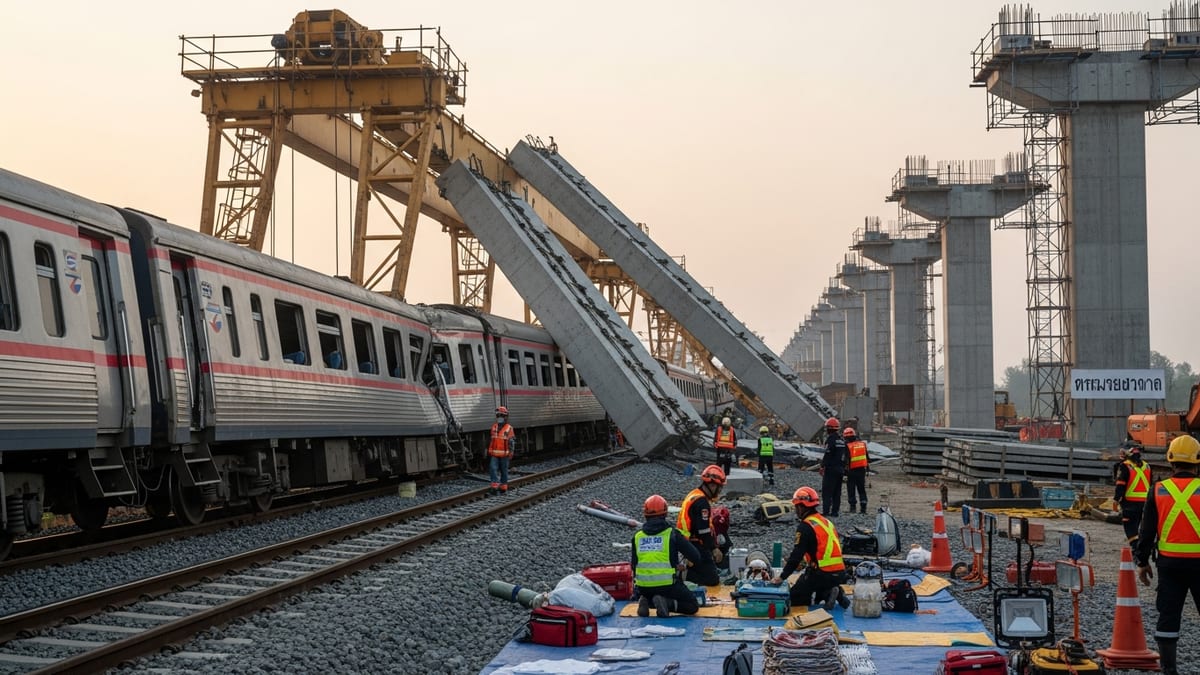
Observer Appointed After 46-Car Freight Train Derails
According to recent Canadian media coverage, the Transport Canada observer was assigned in the days after the July 5 derailment, which sent dozens of freight cars off the tracks near residential neighbourhoods in Repentigny, roughly 25 kilometres northeast of Montreal. Publicly available information indicates the train was operated by Canadian National Railway and that no serious injuries were reported, but the scale of the incident has drawn national attention.
Reports describe as many as 46 to 49 railcars leaving the tracks, ending up in what investigators called various positions along the right of way. The train was carrying a mix of goods, and early coverage indicates that the derailed cars did not release hazardous materials that would have required large-scale evacuations. Nonetheless, images of crumpled cars close to homes have fuelled unease among local residents.
Deployment notices from the Transportation Safety Board of Canada show that a team of investigators was sent to the site on July 6 to conduct an independent safety investigation. The appointment of a Transport Canada observer adds a regulatory presence alongside that investigation, focused on monitoring the railway’s own response and safety practices as service resumes.
Publicly available summaries of the observer’s role suggest that such appointments are intended to provide the federal department with real-time information on how railway companies manage operations and remediation following significant incidents, without taking over the investigation itself.
Cleanup Efforts and Gradual Resumption of Rail Service
CN Railway’s public notices following the incident describe crews and contractors working around the clock to clear derailed cars, repair damaged track and restore the line to service. Media images from the scene show heavy equipment lifting twisted freight cars and workers rebuilding sections of ballast and rail infrastructure that were torn up during the derailment.
Local and national coverage indicates that limited train movements resumed relatively quickly at reduced speeds as cleanup progressed, with full operations restored later in the week. CN’s statements emphasize that safety is presented as the company’s top priority as trains begin to move again through the Repentigny corridor, which is a key freight route serving the Montreal region.
Residents living near the tracks have voiced concern in interviews carried by television and online outlets about the proximity of long, heavy freight trains to homes and schools. Some describe feeling vibrations and noise as long-standing issues that the derailment has now pushed into sharper focus, even though emergency officials did not order mass evacuations at the time of the incident.
Public information about the cleanup indicates that environmental assessments were carried out as crews removed debris and inspected soil and nearby drainage. While there have been no widely reported large-scale spills, both the railway and federal agencies are expected to continue monitoring for any lingering impacts on the surrounding area.
Investigators Say Cause Still Under Review
Updates from the Transportation Safety Board of Canada released earlier this week note that it is too early to identify the cause of the Repentigny derailment. Investigators have been documenting the position of railcars, examining track conditions, collecting data from locomotive event recorders and interviewing railway personnel.
Media briefings summarized in recent coverage stress that the investigation will look at a range of potential factors, including train handling, track and signal conditions, equipment performance and any external influences such as weather or ground stability. This process typically takes months before a final report is issued, sometimes accompanied by safety recommendations directed at Transport Canada or the railway industry.
Transport Canada’s observer role runs in parallel to the independent investigation. Publicly available descriptions of the program indicate that observers may review how the company manages risk during recovery operations, including speed restrictions, track inspections and communication protocols with communities and local responders.
Until more information is released, reports suggest that trains are operating under heightened monitoring on the affected stretch, with reduced speeds and additional inspections that are common after a major derailment. Both the regulator and the safety board are expected to publish further updates as the technical work advances.
Broader Rail Safety Context in Quebec and Across Canada
The Repentigny derailment has revived public discussion of rail safety in Quebec, a province that still carries strong memories of the Lac Mégantic tragedy in 2013. That disaster, which destroyed part of a downtown area and resulted in dozens of fatalities, led to extensive changes in federal regulations and industry practices concerning the handling of dangerous goods and train securement.
More than a decade later, publicly available reports from the Transportation Safety Board and Transport Canada show that main-track derailments continue to occur across the country, although most do not involve fatalities or major spills. Recent deployment notices list several freight train derailments in Quebec and Ontario in 2026 alone, underscoring that incidents remain a focus of regulatory and investigative attention.
Rail safety advocates, community groups and municipal leaders frequently call for stronger measures such as stricter speed limits through urban areas, upgraded track infrastructure and additional physical barriers between homes and rail corridors. The Repentigny incident has added new urgency to those conversations, particularly in suburbs where residential development has grown close to long-established freight lines.
Federal news releases from earlier this month highlight Transport Canada initiatives aimed at tightening training and certification standards for railway workers, part of a wider effort to address human and organizational factors that have been flagged in past investigations. The appointment of an observer in Repentigny is being viewed in that broader context of heightened oversight and renewed attention to frontline safety practices.
What Comes Next for Residents and Rail Operations
In the short term, residents near the derailment site are adapting to the return of freight traffic alongside the visible reminder of recent events. Some media reports describe a sense of unease each time a train rumbles past, even as track repairs and cleanup work near completion and the most obvious signs of the derailment are removed.
Municipal officials have indicated through public statements and local coverage that they are monitoring developments closely and are in contact with provincial and federal partners. Community questions are centering on what concrete changes, if any, will be made to operating practices, speed limits or infrastructure improvements along the corridor.
From the rail industry’s perspective, the Repentigny derailment is likely to become another case study in how companies and regulators manage complex freight operations close to dense urban and suburban populations. The findings of the Transportation Safety Board investigation and any subsequent steps by Transport Canada will be watched closely by municipalities across the country that host major freight routes.
For now, the appointment of a Transport Canada observer signals that federal oversight is being intensified at the Repentigny site, even as the technical investigation continues. How that heightened scrutiny translates into long-term policy or operational change will depend on what investigators ultimately find about how and why the train left the tracks northeast of Montreal.