


Monaco looks tiny on the map and looms huge in the imagination. Travelers arrive expecting nonstop glamour, easy casino nights and yacht-filled sunsets, only to discover practical snags they did not plan for: a misjudged dress code at the Monte Carlo Casino, a surprise restaurant bill on Casino Square, or a missed last train back to Nice. The principality is safe, efficient and genuinely beautiful, but it rewards visitors who understand how it really works. Here are the most common mistakes travelers make in Monaco – and how to avoid them with a bit of smart planning.
Get the latest updates straight to your inbox!
Assuming Monaco Is Just a Quick Photo Stop
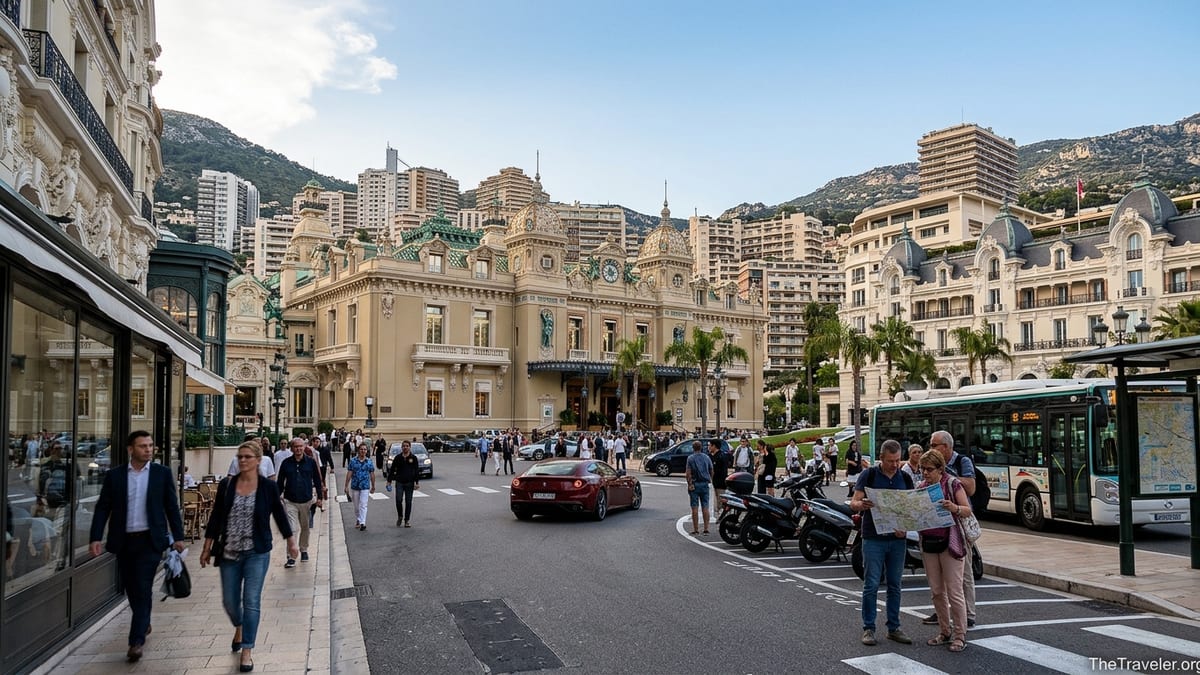
Many visitors treat Monaco as a 30-minute detour on a French Riviera itinerary: step off the train, snap a photo at Casino Square, and head straight back to Nice. While the train ride from Nice Ville to Monaco Monte-Carlo takes only about 20 minutes and often costs around 4 euros each way in 2026, assuming Monaco is nothing more than a selfie backdrop is a mistake. That mindset pushes you into the most crowded, expensive corners and leaves no time for the quieter experiences that actually justify the trip.
A better approach is to plan at least half a day, ideally a full day, and structure it by neighborhood. For example, you might spend the morning in Monaco-Ville on the Rock, visiting the Prince’s Palace square and the cathedral, then take the cliffside path down toward Fontvieille for lunch by the marina where prices and atmosphere are often more relaxed than directly around Casino Square. In the afternoon, you can move through La Condamine and Port Hercule before ending around Monte Carlo for an early evening drink. Simply having a loose plan shifts your visit from a rushed checklist to something closer to how residents actually move through the city.
Another variant of the same error is assuming Monaco only “works” during big events such as the Formula 1 Grand Prix or the Monaco Yacht Show. Those days are spectacular but also involve extreme hotel rates, barricaded streets and heavy crowd control. Travelers who choose an ordinary weekday outside peak events often discover a calmer, more navigable city with space to appreciate the cliffs, the sea views and yes, the supercars, without being squeezed against crash barriers or fenced-off VIP zones.
Finally, some travelers expect Monaco to feel like another French coastal town and are disappointed by how polished and curated it can seem. If you arrive prepared for a high-density, vertical micro-city instead of a languid beach resort, you will make better choices about what to see beyond the postcard shots.
Underestimating Costs and Getting Caught by “Luxury Pricing”
Monaco’s reputation for wealth is not just branding, and first-time visitors are often shocked when a casual stop turns into a painful bill. A simple croissant and coffee at a café on or near Casino Square can easily reach 15 to 20 euros in 2026, while the same order at a bakery-style spot a few blocks inland can be closer to 6 to 8 euros. An early-evening cocktail at a terrace in Monte Carlo typically falls in the 15 to 25 euro range, and main courses at mid-range restaurants in the center cluster more around Western European big-city prices than Mediterranean village budgets.
The common mistake is sitting down at the most prominent terrace simply because it is directly facing the casino or the harbor, without glancing at the menu first. Many venues in Monaco display prices outside, but people still assume it cannot be that much higher than Nice or Menton. That assumption is how two coffees and a shared dessert near the Hôtel de Paris become a 40-euro pause instead of a quick recharge.
It is perfectly possible to enjoy Monaco without overspending if you are deliberate. Grabbing a coffee from a bar counter rather than at a prime-view terrace, picking up sandwiches at a bakery in La Condamine’s market area, or choosing casual places in Fontvieille or around the train station can keep a day’s food budget reasonable. As a rough guide in 2026, a basic café breakfast away from the most famous squares might run 8 to 12 euros per person, while a simple sit-down lunch with a main dish and a soft drink might total 20 to 30 euros.
Another financial pitfall is assuming that staying overnight inside Monaco is the only way to experience it properly. Room rates in the principality can climb into several hundred euros per night even in shoulder season, while hotels just across the border in Beausoleil, Cap-d’Ail or in Nice often cost significantly less for more space. Many experienced visitors choose to base themselves in France and treat Monaco as an easy day trip by train or coastal bus, visiting two or three times if they want to explore different areas without absorbing the full accommodation premium.
Misreading Dress Codes and Social Norms
Monaco is not a place where you need a tuxedo to walk the streets, but clothing misjudgments are surprisingly common. Visitors who arrive straight from the beach in flip-flops and swim shorts can find themselves turned away from smarter hotel lobbies or feeling conspicuously underdressed in certain parts of Monte Carlo. At the other extreme, some travelers overcompensate by packing formalwear they never use, imagining every evening will resemble a red-carpet gala.
The most sensitive spot is the Monte Carlo Casino. The public gaming rooms have a dress code that expects “smart” clothing, particularly after late afternoon. While requirements evolve over time, wearing tidy trousers or a dress, closed shoes and a decent shirt is a safer choice than turning up in athletic shorts or worn sneakers. You do not need a bow tie to play a few hands of roulette at 4 p.m., but if you want to enjoy a full evening session, assume standards will be closer to those of an upscale European hotel bar than a beach club.
Elsewhere in Monaco, smart casual works almost everywhere: clean jeans or chinos, a polo or blouse, and comfortable but presentable shoes. The real mistake is packing only beachwear and gym clothes and then discovering that you feel out of place in restaurants around Port Hercule or that a rooftop bar refuses entry because of sportswear. In summer, many locals and workers dress down in shorts and T-shirts in the heat, so you will not stand out for being comfortable. The difference is in fabrics and fit: a simple linen shirt and neat shorts look at home; a sleeveless undershirt and swim trunks do not.
Socially, some travelers misinterpret Monaco’s reserved atmosphere as unfriendliness. Service staff are generally professional rather than effusive, and much of the principality’s population is either commuting in for work or focused on business. Polite basics will serve you well: greet with a “bonjour” when entering a shop, switch to English only after that if needed, avoid photographing people without permission, and remember that many of the supercars and yachts attracting cameras are privately owned, not displays. Respectful curiosity is welcomed; intrusive stares and photo sessions inches from someone’s parked car are not.
Ignoring Monaco’s Vertical Layout and Public Transport
On a map, Monaco looks flat and walkable. On the ground, it is built into steep hillsides, with neighborhoods stacked in layers. A frequent mistake is to underestimate the vertical distance between the harbor, the old town on the Rock and the Monte Carlo plateau, then waste time and energy trudging up long staircases in the midday sun. Visitors sometimes arrive in peak summer, decide to walk from Port Hercule to Monaco-Ville via stairs, and arrive overheated before they have seen anything.
The principality has invested heavily in elevators, escalators and an efficient bus system. Several public lifts connect lower and upper levels for free, and six main bus lines operated by the local bus company crisscross the territory. In 2026, a single bus ticket purchased on board is typically a few euros, while pre-purchased multi-trip cards lower the per-ride cost. Night buses operate on core routes until late, and an on-demand minibus service supplements regular lines in some residential areas, mirroring the standard bus fare.
Travelers who ignore these options end up with a very limited impression of Monaco, sticking to whatever lies directly on their chosen level. A smarter strategy is to use a bus or lift to jump up to Monaco-Ville or the Exotic Garden level, then stroll downhill through viewpoints rather than slogging uphill in the heat. For example, you could ride a bus up to the Exotic Garden stop, enjoy the panorama over the harbor and the Mediterranean, then descend through residential streets and public escalators to reach the Port and, from there, the Monte Carlo area.
Public transport also matters at the beginning and end of your visit. Many travelers staying in Nice assume they can linger in the casino and then “grab a late train” back, only to discover that evening train frequencies drop and that track works or seasonal schedules may restrict very late services. Coastal night buses run between Menton, Monaco and Nice, but they operate on specific timetables that require checking in advance. If you plan to stay in Monaco into the early hours, verify the last train or bus for your exact date and keep taxi prices in mind as a potential fallback.
Fixating Only on the Casino and Supercars
If you ask a random traveler what they associate with Monaco, they will usually say the Monte Carlo Casino, fast cars and the Grand Prix. Those are genuinely part of the story, but making them your sole focus is one of the most common mistakes. It leads visitors to spend almost all their time orbiting Casino Square and the start-finish straight of the Formula 1 circuit, missing the quieter streets and sea views that give the place texture.
For example, travelers often rush through Monaco-Ville, where the Prince’s Palace and the oceanographic museum sit, treating it like a quick detour instead of a neighborhood to wander. The narrow lanes behind the main squares have small cafés, viewpoints and residential corners that feel quite different from the polished marble of Monte Carlo. Similarly, Fontvieille, built on reclaimed land, has a pleasant marina lined with restaurants that feel less like a catwalk and more like a normal Mediterranean evening scene.
Another overlooked experience is simply walking the coastal paths and elevated promenades that ring parts of the principality. Sections of pavement double as Formula 1 track in May, but for the rest of the year they are scenic walkways with views back to the Rock and the cliffs. Spending an hour doing a loop from Port Hercule up toward the Rock, then over to Fontvieille and back via the waterfront gives a sense of scale and geography that a quick peek at Casino Square never will.
None of this means you should skip the casino or ignore the thrill of seeing a rare supercar pull away from the Hôtel de Paris. It just means building your day so that these iconic moments are one element among many rather than the entire agenda. Ten minutes watching the arrivals at Casino Square, followed by a walk through the gardens, a visit to the cathedral and an evening drink by the Fontvieille marina, will leave you with a more rounded memory than three hours of people-watching on a single bench.
Overlooking Seasonal Crowds, Events and Practical Security
Monaco’s calendar is packed with high-profile events that dramatically change the feel of the city. The Monaco Grand Prix, the Historic Grand Prix and the Monaco Yacht Show, among others, bring in large crowds, temporary grandstands, restricted zones and surging accommodation prices. A frequent mistake is to land in nearby Nice, decide spontaneously to day trip to Monaco, and only then realize that a major event is in full swing and that streets you expected to walk are fenced off or ticketed.
Even outside headline events, peak summer weekends can be busy, especially along the harbor and around the casino. If you are sensitive to crowds or simply want to explore at a more relaxed pace, consider visiting on a weekday or outside the very hottest weeks. Shoulder seasons, such as late April or late September, often offer pleasant weather, fewer tour groups and slightly more forgiving prices on the French side of the border.
In terms of safety, Monaco is widely regarded as one of the safest urban environments in Europe, with a dense network of cameras and a visible police presence. Travelers sometimes misunderstand this and are startled when plainclothes officers ask for identification on the street or in and around the train station. Random checks do happen and are usually routine; refusing to show ID or assuming it is a scam can generate unnecessary tension. Carry a copy of your passport or national ID and hand it over calmly if requested.
Scams are rarer here than in many European capitals, but the city is not entirely immune during busy seasons. Stories circulate of staged smartphone drops where someone asks you to take a photo, fumbles the device so it appears to crack on the pavement and then demands money, or of high-pressure sales tactics in certain souvenir areas that lean on the “exclusive Monaco” label to justify eye-watering prices. The remedy is the same as anywhere else: keep your belongings close, be cautious when a stranger creates a sudden drama involving expensive objects, and feel free to walk away from any sales pitch that feels pushy.
Mismanaging Time: Rushing or Staying Too Late
Because Monaco is so compact, visitors either underestimate or overestimate how much time they need. One group arrives at midday with a hard return train at 3 p.m. and barely manages to see the Rock from a distance before sprinting back to the station. Another group assumes they can easily fill two or three full days inside the principality itself and ends up bored by the second evening because they have not planned excursions into the surrounding Riviera.
A balanced approach is to allow one well-planned day for Monaco proper and then decide, based on your interests, whether to return. You could, for instance, spend a first day focused on Monaco-Ville, the harbor and part of Monte Carlo, then return another evening specifically for a dressed-up dinner and a short casino visit. This pattern works particularly well if you are staying in Nice or Menton and can hop on regional trains or buses without much friction.
Staying too late without transport planning is another recurring mistake. The sight of the casino lit up and the harbor at night is genuinely beautiful, but last regional trains toward Nice or Italy may depart earlier than visitors expect, especially outside summer. Public night buses along the coast operate on limited schedules and can be crowded after big events. If you intend to stay in Monaco past midnight, budget for a taxi and check rough prices in advance so you are not negotiating from a position of surprise on the pavement outside the station.
Finally, do not forget that many attractions have specific opening hours and that some streets or viewpoints close temporarily during event setups. The oceanographic museum, for instance, operates on regular daytime hours; the Prince’s Palace square may be partially blocked during ceremonies. Arriving late in the day without checking schedules can mean paying for transport and meals only to miss the very sites you came to see.
The Takeaway
Monaco rewards realistic expectations and small bits of homework far more than it rewards blind luxury chasing. The travelers who complain that it feels like an overpriced film set are often the ones who spent an hour at Casino Square, overpaid for a coffee directly in front of the fountains and left without ever climbing to the Rock or riding a bus across the hillsides. Those who treat it as a compact, walkable city-state with its own rhythm, prices and quirks tend to appreciate both the spectacle and the subtler corners.
If you give yourself enough time, watch your budget in the most famous spots, respect the dress codes where they matter, and use the public transport and vertical shortcuts the locals rely on, Monaco transforms from a stereotype into a memorable day in one of Europe’s strangest and most distinctive urban landscapes. You are unlikely to forget the first time you stand above Port Hercule at sunset, looking down at yachts and grandstands and apartment towers squeezed between cliff and sea. Avoid the common mistakes, and that moment will feel less like a mispriced postcard and more like the highlight of a well-planned trip.
FAQ
Q1. Do I need to be rich to enjoy a day in Monaco?
You do not need to be wealthy, but you should budget more than for nearby French towns. Avoid the priciest terraces, use public transport and eat slightly off the main squares to keep costs manageable.
Q2. What should I wear to visit the Monte Carlo Casino?
Smart casual is usually sufficient for daytime gaming rooms: trousers or a dress, closed shoes and a shirt or blouse. Avoid beachwear, sports shorts and flip-flops, and expect slightly stricter standards in the evening.
Q3. Is Monaco easy to walk around?
Distances are short, but the terrain is steep. Expect lots of stairs and hills. Make use of public elevators, escalators and buses to move between levels and save your energy for actual sightseeing.
Q4. Can I visit Monaco as a simple day trip from Nice?
Yes. Trains and coastal buses connect Nice and Monaco in around 20 to 40 minutes. Many travelers base in Nice and visit Monaco once or twice rather than staying overnight in the principality.
Q5. Is Monaco safe for solo travelers at night?
Monaco is considered very safe, with a strong police presence and extensive surveillance. Normal precautions still apply: keep valuables secure, stay aware in crowds and plan your late-night transport back to your accommodation.
Q6. How expensive are food and drinks in Monaco?
Prices vary widely. A simple coffee at a bar counter might cost a few euros, while a coffee and pastry on Casino Square can approach 15 to 20 euros. Cocktails in Monte Carlo bars often start around 15 euros.
Q7. Are there beaches in Monaco I can use for free?
Yes. Larvotto Beach is a popular public option where access to the sand and sea is free, though you will pay extra if you choose to rent loungers, umbrellas or order from beach clubs.
Q8. Do I need to book tickets in advance for attractions?
For major sites like the oceanographic museum or during big events such as the Grand Prix period, advance booking is sensible. At quieter times, you can often buy tickets on the day, but checking current advice before you travel is wise.
Q9. Will I have problems speaking only English in Monaco?
Probably not. French is the official language, but English is widely spoken in hotels, restaurants and tourist areas. Learning a few basic French greetings is still appreciated and sets a polite tone.
Q10. What is the biggest mistake first-time visitors make?
Many people underestimate costs and overfocus on Casino Square, rushing through the rest of the city. Planning your route, checking transport times and exploring beyond the most obvious glamour spots will give you a far better experience.