


The Vatican Museums are one of the most rewarding and exhausting experiences in Rome. With more than seven kilometers of galleries, millions of annual visitors and strict security and dress rules, it is also one of the easiest places for travelers to get things wrong. From misunderstandings about “skip the line” tickets to dress code surprises at the entrance, certain mistakes crop up again and again. Understanding how the museums really work in 2026 will help you avoid frustration and focus on Michelangelo, Raphael and the extraordinary collections all around you.
Get the latest updates straight to your inbox!
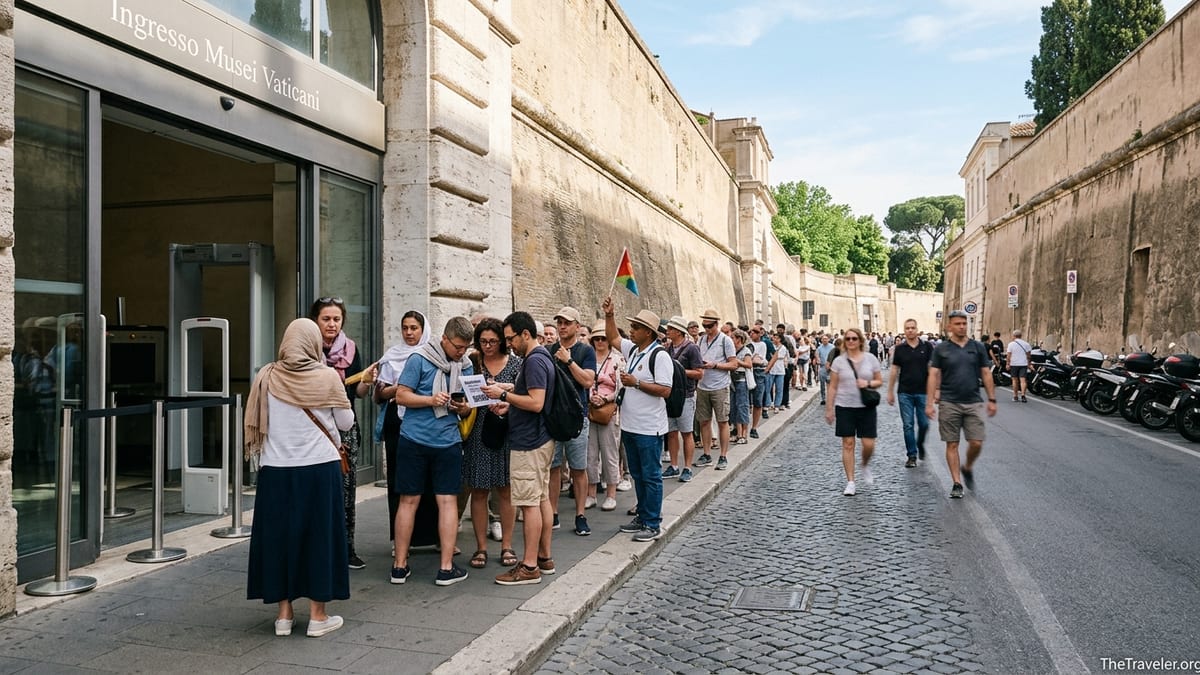
Misunderstanding “Skip the Line” Tickets
One of the most common frustrations at the Vatican Museums begins before visitors even enter the building. Many people arrive believing that a “skip the line” ticket means they will walk straight in without waiting, only to find a long security queue snaking along Viale Vaticano. In reality, all visitors, including those with priority tickets, must pass through the same airport‑style security screening. What priority or “fast track” tickets typically skip is the long, slow line of people who still need to buy tickets at the ticket office outside the museums. On a busy morning in May or July, that ticket‑purchase line can easily stretch into a two‑hour wait, while holders of timed online tickets join a much shorter, faster moving queue directly in front of the entrance doors.
For a first‑time visitor, the terminology can be confusing, especially when third‑party resellers advertise “VIP entry” or “no lines.” In practice, a timed ticket bought in advance from the official Vatican Museums system usually provides the same real benefit as most more expensive “skip the line” products sold by tour platforms: you bypass the outdoor ticket counter and go straight to the entrance at your booked time. During peak season many travelers pay significantly more through an intermediary expecting to skip every line inside the museums, and then feel misled when they find themselves shoulder to shoulder with everyone else at security. Treat any promise to avoid security queues with caution and expect at least 10 to 30 minutes in line even with a reservation during busy hours.
Where premium options really can differ is in the level of service, not the physical door you enter. For example, a guided tour sold as “early access” might bring you to the museums before general opening time, which can translate into noticeably thinner crowds in the Sistine Chapel. Another tour may include headsets, a professional guide and a reserved group entrance, all of which make the logistics smoother. The key is to read what you are actually buying: if the main added value is a guide and small group, that may be worth the extra money, but if the only advantage is described vaguely as “skip the line,” you can usually get the same timing benefit by reserving directly yourself.
Arriving at the Wrong Time of Day
Another classic mistake is showing up at the Vatican Museums at exactly the same time as almost everyone else. Mid‑morning slots between about 9:30 and 11:30 are often the most crowded, as large coach tours, cruise passengers and day trippers from other Italian cities converge. In high season, that can mean dense crowds in the Raphael Rooms and shoulder‑to‑shoulder movement in the corridors leading to the Sistine Chapel. Many visitors then leave feeling overwhelmed, having spent more energy avoiding elbows and selfie sticks than looking at the artworks.
If your schedule is flexible, booking the earliest morning or the latest afternoon entry can dramatically change your experience. An 8:00 or 8:30 ticket on a normal weekday often encounters shorter security lines and lighter foot traffic in the first hour, before school groups fully arrive. On the other end of the day, late‑afternoon entries after 3:30 can also be calmer, especially outside of the peak summer months and key Jubilee periods. Travelers who entered around 4:00 in shoulder seasons like March or November often report that the crowds thin noticeably by the time they reach the Sistine Chapel.
Another timing miscalculation is underestimating how long the museums take. The collection stretches roughly 4.5 miles and the standard one‑way visitor route is not something you can power through in under an hour without stress. Many first‑timers book a late morning visit followed immediately by timed tickets for the Colosseum or a lunch reservation across town, only to find themselves rushing through the final galleries and the Sistine Chapel or abandoning part of their plan. Even a focused visit that prioritizes the highlights typically takes at least two and a half to three hours from the moment you join the security line to exiting onto the street.
Ignoring the Dress Code and Security Rules
The Vatican Museums follow the same modesty standards that apply throughout Vatican City, and those rules are enforced at the entrance. Shoulders must be covered, and shorts or skirts should reach at least to around the knee. Many visitors assume that these requirements apply only inside St Peter’s Basilica and are surprised when museum security turns away people in tank tops, very short shorts or sheer clothing before they even reach the ticket scanners. This can be particularly painful for travelers who have already paid for non‑refundable timed tickets or tours, since being denied entry for dress code violations does not typically entitle you to a refund.
In real terms, this means that a sleeveless sundress might be fine if you carry a light scarf or cardigan to drape over your shoulders in the queue, but a crop top with bare midriff and high‑cut shorts is very likely to be rejected. Flip‑flops are technically allowed, but closed shoes or secure sandals are far more comfortable for walking on stone floors for several hours. Security staff make judgment calls at the entrance, and stories of travelers scrambling to buy an emergency scarf or Vatican‑branded T‑shirt from the souvenir stands across the street are common. Packing a thin shawl in your day bag is a simple way to avoid last‑minute purchases and delays.
Security rules also cover what you can bring inside. Large backpacks, tripods, glass bottles and certain types of umbrellas may be held at the cloakroom near the entrance. Visitors who arrive with big luggage from the train station sometimes assume they can wheel it through, only to be told it must be checked and collected on exit. While the cloakroom service is free, retrieving items adds time to the end of your visit, which can be stressful if you are hurrying to a flight or timed ticket elsewhere. Bringing only a small daypack or handbag, a refillable plastic or metal water bottle, and minimal valuables is the simplest way to keep things moving.
Underestimating the Distance and Physical Effort
Photographs of the Vatican Museums tend to focus on ceiling frescoes and ornate galleries, but they do not always convey how physically demanding a visit can be. The main visitor path involves a long succession of corridors, staircases and occasional ramps, with relatively few opportunities to sit. It is not unusual to walk five or more kilometers during a standard visit. Travelers who arrive after a jet‑lagged first night in Rome, wearing brand‑new shoes or carrying heavy bags, often find themselves exhausted halfway through, just as they reach the Raphael Rooms.
One very specific point catches many people off guard: the spiral Bramante staircase is famous but not the only major staircase you may encounter. Depending on the route and crowds, it can feel like a continual series of steps up and down. While the museums are equipped with elevators and accessible routes for visitors with mobility difficulties, these pathways are not always obvious without asking staff for directions. Arriving with realistic expectations, comfortable walking shoes and a willingness to pace yourself makes a big difference in how much you enjoy the galleries.
Another overlooked detail is the indoor climate. In summer, even with climate control, parts of the museums can feel warm and stuffy due to crowd density. Visitors in heavy fabrics or carrying thick jackets quickly overheat as the day progresses. Bringing a light layer that you can easily stow in a small bag, together with water and perhaps a small snack if permitted, will help you maintain energy. There are cafés and refreshment points inside the museums, but they can be crowded at peak times, and prices are understandably higher than in a neighborhood bar around the corner.
Rushing Straight to the Sistine Chapel and Skipping Context
For many visitors, the Sistine Chapel is the reason they book Vatican Museum tickets in the first place, and it is easy to see why. However, treating the museums as nothing more than a long corridor you must endure on the way to Michelangelo’s ceiling is a mistake that can leave you frustrated and oddly unsatisfied. By the time some travelers reach the chapel, they are hot, tired and annoyed from having marched past masterpieces without really looking, only to find themselves in an intensely crowded, silent space where photography and talking are forbidden.
A more rewarding approach is to identify a few key rooms or collections that will give you context for what you see in the Sistine Chapel. For example, the Raphael Rooms, with their famous School of Athens fresco, offer an earlier High Renaissance vision of theology, philosophy and history that complements Michelangelo’s work. Spending ten focused minutes in that room, rather than ten unfocused minutes shuffling along Instagramming every painted ceiling, makes the whole visit feel more coherent. Similarly, the Gallery of Maps, with its green and gold frescoed maps of the Italian peninsula, can be an engaging highlight if you take a moment to find your own region or hometown.
Guidebooks and audio guides can help enormously here. Even if you decide against a full guided tour, renting the official audio guide or downloading a reputable Vatican Museums app gives you short, structured explanations at major points along the route. Many independent travelers also print or screenshot a basic map of the museums before arrival, so they can prioritize a handful of areas that interest them most, from ancient sculpture to modern religious art, without feeling obliged to stop at every single gallery. Treating the museums as a curated experience rather than a gauntlet to the Sistine Chapel will leave you with richer memories.
Mishandling the St Peter’s Basilica Connection
Another frequent source of confusion involves the relationship between the Vatican Museums, the Sistine Chapel and St Peter’s Basilica. Physically, these are linked, but ticketing and security are handled in different ways. Some guided tours include a special group exit from the Sistine Chapel that leads directly toward St Peter’s, allowing you to enter the basilica without passing through the general security line on St Peter’s Square. Independent visitors, however, usually need to exit the museums back onto the street near Viale Vaticano and then walk around the Vatican walls to join the main security queue in the square, which can easily be well over an hour at busy times.
Many travelers schedule a morning in the museums and an afternoon in the basilica assuming they will be able to move directly between the two. They leave the Sistine Chapel following the crowd, unaware that they have just passed the group exit used by authorized tours, and only realize the difference when they find themselves back outside the museum main exit. If you want a seamless transition, booking a tour specifically advertised as including “direct access to St Peter’s Basilica from the Sistine Chapel” is usually the safest option. Otherwise, build the extra walking and waiting time into your schedule, and consider visiting the basilica very early on a different morning when security queues in the square are typically shorter.
Another timing pitfall is visiting on a morning when the basilica is partly or fully closed for a papal liturgy or large event. Travelers sometimes emerge from a crowded museum visit hoping to climb the dome or see the Pietà, only to find access restricted. Checking the basilica’s planned liturgy and audience schedule shortly before your trip and keeping your plans flexible will help you avoid those surprises. When in doubt, doing the basilica on one day and the museums on another can be less exhausting and gives you more room for changes if something unexpected appears on the papal calendar.
Booking the Wrong Type of Ticket or Tour
With so many booking options available, it is easy to purchase the wrong ticket for your needs. Some visitors unknowingly reserve museum‑only tickets when they really want a guided tour, then try to join a guide inside and are disappointed to learn that tours with headsets and group entrances must be pre‑booked. Others go in the opposite direction, paying a premium for a group tour when all they really wanted was fast‑track entry. Being clear about whether you primarily want commentary, convenience or savings will help you choose wisely.
For budget‑conscious travelers, a straightforward timed entry ticket from the official Vatican Museums booking system is usually the best starting point. You enter through the main door on Viale Vaticano at your allocated time, present either a printed voucher or a barcode on your phone, pass through security and explore at your own pace. Independent platforms often sell essentially the same timed entry with an added booking fee, sometimes bundled with a basic audio guide. The difference in price might be modest per person, but for a family of four it can easily add up to the cost of a very good dinner in Rome.
On the other hand, certain tours can genuinely transform the experience if they match your interests. For example, a small‑group early‑morning tour might begin in relatively quiet galleries and finish in the Sistine Chapel before the heaviest crowds arrive. A specialist art‑history tour can bring the logic of the collections to life, connecting Etruscan artifacts, classical statues and Renaissance frescoes into a coherent story. Families with children sometimes find that a kid‑focused guide who knows how to spot Egyptian animals or hidden symbols keeps everyone engaged much better than a self‑guided wander.
The Takeaway
Visiting the Vatican Museums can be one of the high points of a trip to Rome, but it is not a simple walk into a single gallery. The most common mistakes fall into a few broad categories: misunderstanding what “skip the line” really means, underestimating the time and physical effort involved, misjudging the dress code and security rules, and failing to think through how the museums relate to St Peter’s Basilica. All of these are avoidable with a bit of clear, up‑to‑date information.
If you book a timed ticket in advance, dress modestly, pack light, wear comfortable shoes and plan at least half a day with some flexibility, you will be far ahead of the average first‑time visitor. Choose your entry time to avoid the peak mid‑morning crowds, decide in advance which parts of the museums matter most to you, and do not assume that every premium‑priced ticket will give you magical shortcuts the Vatican does not actually offer. With realistic expectations and a few smart choices, the Vatican Museums shift from daunting maze to extraordinary journey through centuries of art and faith.
FAQ
Q1. Do “skip the line” Vatican Museum tickets really let me walk straight in?
They usually let you skip the outdoor line for buying tickets, but you still have to go through the same airport‑style security queue as everyone else, which can take 10 to 30 minutes at busy times.
Q2. How far in advance should I book Vatican Museum tickets?
In high season and around major church events, it is wise to book at least several weeks ahead for popular morning slots. For quieter months, you can often find afternoon times a few days in advance, but last‑minute availability is never guaranteed.
Q3. What should I wear to be sure I meet the Vatican Museums dress code?
Wear clothing that covers your shoulders and reaches to about the knee, such as knee‑length shorts, trousers or skirts plus a T‑shirt or blouse. Bring a light scarf or cardigan if you prefer sleeveless tops, and avoid very sheer or tight, revealing outfits.
Q4. How long does a typical visit to the Vatican Museums take?
Allow at least two and a half to three hours from joining the security line to exiting the building for a focused visit. If you enjoy stopping frequently, visiting a café or exploring smaller collections, four hours is more realistic.
Q5. Can I go straight from the Sistine Chapel into St Peter’s Basilica?
Only certain guided tours are currently allowed to use the special group exit from the Sistine Chapel leading toward the basilica. Independent visitors normally exit back onto the street and then walk around to join the main security line on St Peter’s Square.
Q6. Is an official guided tour worth paying for?
For many visitors, yes. A good guide helps you navigate the crowds, focus on key works such as the Raphael Rooms and the Gallery of Maps, and understand what you are seeing. If you prefer independence, combining a timed ticket with an audio guide is a good compromise.
Q7. Are there days or times when the Vatican Museums are less crowded?
Early morning openings and late‑afternoon entries on weekdays outside the main summer months are usually the least busy. Mid‑mornings, Saturdays and days close to major religious events tend to be the most crowded.
Q8. Can I bring a backpack or suitcase into the museums?
Small daypacks are generally fine, but large backpacks, suitcases and bulky items must be checked at the cloakroom near the entrance. You can collect them on your way out, but plan extra time if you are on a tight schedule.
Q9. Are photos allowed inside the Vatican Museums and the Sistine Chapel?
Photography without flash is allowed in most parts of the museums, but taking photos or videos inside the Sistine Chapel is strictly forbidden. Staff regularly ask visitors to put phones and cameras away in that space.
Q10. What is the single most important thing to avoid when visiting?
The biggest mistake is trying to do too much in too little time. Rushing through after booking a tight schedule of other attractions, or expecting to “see everything” in an hour or two, almost always leads to stress. Plan fewer things, allow breathing room and enjoy the highlights properly.