


It was 10:15 on a bright May morning when I finally saw the queue. It wrapped like a concrete serpent along Viale Vaticano, two and three people wide, barely shuffling. Somewhere inside those Vatican walls waited the Sistine Chapel, Raphael’s Rooms, and seven kilometers of art. Outside, I stood with a rapidly overheating crowd and realized, with painful clarity, that I had planned everything for this visit except the one factor that mattered most: timing.
Get the latest updates straight to your inbox!
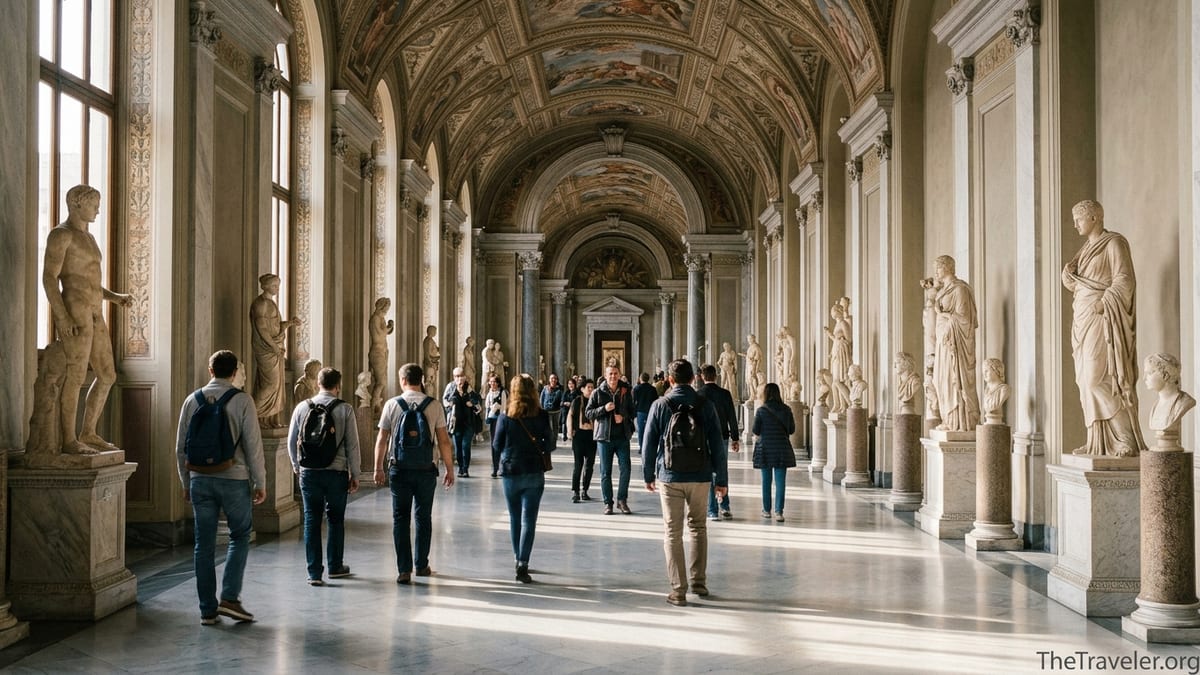
How I Got Vatican Timing Completely Wrong
I thought I had done what every organized traveler is supposed to do. I checked opening hours, booked a flight that landed in Rome the night before, and circled “Vatican Museums” in my notebook for the next morning. What I did not do was look beyond the surface. I showed up without a timed-entry reservation, on a peak-season weekday, at what turns out to be almost the worst possible window: late morning.
By the time I reached the walls at around 10:15, the general admission line already hugged the entire curve of the street. Recent crowd reports put spring and summer queues at 60 to 90 minutes on typical days, stretching to two or even three hours when buses of tour groups keep arriving. From my spot, watching the line barely move, that estimate felt conservative. I had not just misjudged the crowd size. I had misjudged the rhythm of the entire place.
Inside, the Vatican Museums are meticulously organized; outside, the chaos rests mainly on visitors who all choose the same hours without thinking about it. I had fallen into that funnel. My afternoon plans for Trastevere and a relaxed dinner in Campo de’ Fiori evaporated as I calculated how much of the day I was about to sacrifice to a single mistake: confusing “morning” with “good timing.”
That day taught me a lesson that applies not only to the Vatican, but to almost every world-class attraction that draws millions each year. You cannot treat timing as an afterthought. It is not a detail. It is a strategy, and it begins long before you step off the metro at Ottaviano.
What I Learned About the Vatican’s Daily Rhythm
To recover the day, I gave up on the general line, ducked into a nearby café, and used the free Wi-Fi to understand what I should have done in the first place. Within 20 minutes of reading recent guides and firsthand accounts, a pattern emerged. The Vatican Museums do not simply “open and get busy.” They follow a very particular rhythm that travelers ignore at their peril.
First, the basics: in 2026 the Vatican Museums typically open from around 8:00 a.m. to early evening on Monday through Saturday, with the last entry about two hours before closing. They are generally closed on Sundays, with one major exception: the last Sunday of the month, when entry is free but crowds spike dramatically and lines begin forming long before 9:00.
Second, not all hours are equal. The standard high-pressure period inside the museums runs from roughly 9:30 a.m. to early afternoon. This is when coach tours, school groups, and independent visitors with mid-morning tickets converge in the same corridors. Reports in the last peak seasons consistently describe shoulder-to-shoulder traffic in the Gallery of Maps and long, slow shuffles into the Sistine Chapel. Late morning is when the photos look worst, tempers run shortest, and audio guides become impossible to hear over the murmur of thousands of voices.
Third, timing is seasonal. From April through October, daily visitor numbers can push past 25,000, with days in the heart of summer sometimes edging toward 30,000 or more. In the cooler months, especially November through February, the rhythm softens. A 9:00 a.m. timed ticket on a Tuesday in November might feel like a blessing of space compared to the same slot in mid-June. The lesson was simple but powerful: the Vatican is not just a place. It is a living schedule, and you can either fight it or surf along its calmer edges.
The Power of a Timed Ticket (And What It Really Skips)
As I sipped my espresso and dug deeper, I realized I had also misunderstood what “skip the line” means in Vatican vocabulary. The phrase appears on countless tour descriptions and ticket sites. It sounds like a magic key. In reality, it is much more specific and, if you know how to use it, very effective.
Skip-the-line or timed-entry tickets do one crucial thing: they allow you to bypass the long, slow queue for buying tickets at the door. On busy days, that ticket-buying line alone can eat up 60 to 180 minutes as it crawls along the walls. By purchasing in advance, whether from the official Vatican booking system or a reputable reseller, you step directly into a dedicated line for people who already have reservations.
What these tickets cannot skip is security. Every visitor, regardless of how glamorous their tour title sounds, must pass through metal detectors and bag checks. At peak hours, this security bottleneck can still mean 10 to 30 minutes of waiting, even with a timed slot. On the morning I visited, tour groups with reserved entry were moving much faster than the walk-up line, yet still pausing regularly as security throttled the flow to keep galleries from becoming unsafe.
Prices vary widely. In 2026, standard Vatican Museum entry hovers around 17 to 20 euros when bought directly, with an added reservation fee for online bookings. Third-party operators bundle timed entry with extras such as guided tours, early access or hosted entry, often pushing prices into the 30 to 50 euro range and beyond. At first glance, that premium may feel steep. But when you watch a family of four spend two hours in a sidewalk queue to save about 20 euros total, the economics of time versus money become brutally clear.
Morning vs Afternoon: Two Very Different Vaticans
I eventually managed to secure an early afternoon timed ticket for the same day through a reseller, which meant I had a front-row lesson in how the Vatican feels at different hours. That afternoon entry, just after 1:30 p.m., dropped me into the tail end of the mid-day surge. The museums were packed, but not quite as suffocating as late morning. The real revelation came two days later, when I went back with an 8:00 a.m. guided entry I had hastily booked after my first ordeal.
Walking toward the entrance at 7:40 a.m. felt like approaching a different institution. Instead of a roiling mass of people, there was a calm, loosely organized line of early risers: a mix of retirees, serious art enthusiasts with notebooks, and jet-lagged travelers clutching cappuccinos. Inside, the quiet was tangible. The long galleries were not empty, but they were navigable. I could stand in front of a tapestry without someone’s camera wedged into my shoulder blade.
Conversely, travelers who choose late afternoon, especially the final entry window, often report a noticeable easing of pressure. Around 3:30 or 4:00 p.m., many tour groups have already come and gone, and families with young children retreat for naps or early dinners. In recent seasons, frequent visitors have described near-miraculous scenes in winter: entire stretches of the Pinacoteca with only a handful of people, and a Sistine Chapel where you can stand for several minutes without being jostled every few seconds.
Neither timing is objectively “better.” Early morning demands discipline and sometimes sells out weeks ahead of busy dates. Late afternoon shortens how long you have before closing. But both slots share one advantage over the late morning crush: you have room to think. When you are not constantly bumping shoulders, you notice details in the frescoes, hear snatches of your guide’s commentary, and feel the difference between checking a landmark off a list and actually seeing it.
When Days, Seasons, and Special Events Change Everything
Timing at the Vatican is not only about the hour on the clock. The day of the week, the month on the calendar, and the presence or absence of special events reshape the experience in ways first-timers rarely anticipate. My own trip fell on a Thursday in May, deep in spring high season, with perfect weather and no rain in the forecast. In other words, conditions that encourage every tour operator in Rome to send their groups marching to the same place at once.
Travelers who shift just a few variables often tell a completely different story. A couple I met at a Trastevere wine bar, visiting from Canada, had gone in early December. They booked a 9:00 a.m. timed ticket on a Tuesday, arrived 30 minutes early, and walked straight into security with only a short pause. Inside, they described corridors that were busy but breathable, with none of the swarming intensity I experienced in May. Their only complaint was the chill in the courtyards when they stepped outside between sections.
Another factor is the Papal Audience, held on most Wednesday mornings in St. Peter’s Square. On those days, crowds that might have headed straight to the museums instead cluster in the square, and tour operators adjust their schedules. Some guides deliberately avoid early museum slots on audience days, while others lean into them, knowing not everyone wants to attend the audience. Recently published advice often singles out non-audience Tuesdays and Thursdays as ideal, but the reality is more nuanced: on certain Wednesdays the museums open later, which can concentrate visitors into a shorter window and drive up density after lunch.
Then there are the free-entry Sundays at the end of each month. On paper, they are a gift to budget travelers: the usual museum entry fee drops to zero, and the doors open for a shorter, more compressed schedule. In practice, these mornings produce some of the longest lines of the year, forming at dawn and filled with visitors willing to trade hours of waiting for saved euros. Even locals who adore the museums will quietly advise: if your time in Rome is limited, and you can afford standard admission on another day, avoid the free Sunday unless your primary goal is simply to be there, not to see comfortably.
Synchronizing the Museums With St. Peter’s Basilica
The Vatican experience does not end when you step out of the Sistine Chapel. For many visitors, it continues at St. Peter’s Basilica, just a few minutes’ walk away. Here, timing becomes even more important, because the basilica introduces its own queues and limitations that can double your frustration if you have not planned them alongside your museum visit.
One of the most common mistakes is tackling the Vatican Museums first, then wandering over to the basilica in mid-afternoon, assuming it will be easier. In reality, security lines to enter St. Peter’s often stretch to 60 to 120 minutes in the busiest summer months, snaking back across the piazza under the sun. This line is independent of any museum ticket you hold. There is no official combined “skip everything” pass; like at the museums, every visitor must pass through security screening.
On my first day, leaving the museums around 4:30 p.m., I walked into the square and saw another massive queue for the basilica. Even with my earlier mistake as a warning, I still naively assumed late afternoon would mean lighter crowds. Instead, I found hundreds of people who had wrapped up museum visits, Roman Forum tours, or city walks and converged on St. Peter’s to check it off their list before dinner.
When I returned a few mornings later, I tested a different approach: basilica first, museums second. Arriving at the square just after 7:30 a.m., I passed through security in under 15 minutes and enjoyed a near-quiet St. Peter’s, sunlight threading through the high windows while custodians polished the floors. By the time I exited, a little before 9:00 a.m., the line outside had grown steadily but was nowhere near the brutal length I had seen late in the day. I reached the museum entrance in time for a late-morning timed ticket, accepting a busier museum in exchange for a serene basilica. The experience confirmed a simple truth: you cannot just time the museums. You must time the entire Vatican.
How to Build a Vatican Day Around Timing, Not Luck
Looking back, the core lesson of my visit is that timing is not about squeezing in more attractions. It is about choosing which moments you want to remember. Do you want the lasting image of the Sistine Chapel to be Michelangelo’s frescoes or the back of a stranger’s backpack? That choice begins when you open your laptop months earlier to buy a ticket.
For many travelers who can plan ahead, the ideal pattern in recent years has looked something like this: visit in the shoulder seasons of March, April (avoiding Easter week), late October, or November; choose a Tuesday or Thursday; secure a timed-entry ticket for as close to opening time as possible; and arrive at the entrance at least 20 to 30 minutes early. With this combination, reports from 2024 and 2025 describe visitors moving through the early galleries in relative calm, reaching the Sistine Chapel before it fills to capacity, and still leaving time for a leisurely lunch afterward in Prati or across the river.
If you cannot secure an early slot, late afternoon can be your ally. Experienced Rome guides increasingly recommend 3:00 or 3:30 p.m. tickets, particularly outside high summer. By then, the worst of the wave has broken. You may give up some hours of possible museum time, but what you gain is mental space. Instead of trying to see every single gallery, you choose your priorities: the Raphael Rooms, the Gallery of Maps, the Pio-Clementino sculptures, the Sistine Chapel. You move deliberately instead of defensively.
Finally, keep your expectations flexible. In the last few seasons, travelers have reported days when even well-timed visits still felt crowded because of special events, temporary gallery closures, or security adjustments. Other days, a forecast of light rain has scared off enough visitors to create unexpectedly peaceful mornings. Timing is a powerful tool, not a guarantee. But if you ignore it, you are effectively letting chance design your Vatican experience for you.
The Takeaway
Standing in that first monstrous queue on Viale Vaticano, I realized the real cost of my mistake was not just lost hours. It was what those hours would have been worth if I had spent them inside the museums instead of outside their walls. Travel is full of things we cannot control: weather, strikes, delayed flights, sudden closures. Timing, at least in places like the Vatican, is one of the few variables we can shape with a bit of forethought.
My biggest lesson from the Vatican Museums is simple. Do not treat timing as a footnote to your plans. Treat it as the foundation. Decide whether you want your memories of the Sistine Chapel framed by quiet awe or by the crush of a crowd. Book accordingly, arrive early, and build the rest of your Roman day around those choices. In a city layered with centuries of history, the difference between a rushed visit and a transformative one often comes down to something as ordinary, and as powerful, as what time you set your alarm.
FAQ
Q1. What are the usual opening hours of the Vatican Museums in 2026?
The Vatican Museums generally open around 8:00 a.m. and close in the early evening from Monday to Saturday, with last entry about two hours before closing. Always check the official schedule for your exact travel dates, as hours can shift for holidays or special events.
Q2. Is it really necessary to buy a timed-entry or skip-the-line ticket?
In busy months from roughly April to October, a timed-entry ticket is strongly recommended. It skips the long ticket-purchase queue outside, which can reach one to three hours on peak days, and gives you a specific entry window. You will still pass through security, but your overall wait is usually much shorter and more predictable.
Q3. When is the best time of day to visit the Vatican Museums?
Early morning near opening time and late afternoon in the final entry windows are generally the most comfortable. Mid-morning to early afternoon tends to be the most crowded, especially in high season, when tour groups and independent visitors all converge at once.
Q4. Which months are least crowded at the Vatican Museums?
Visitor numbers typically dip from November through February, excluding Christmas and New Year holidays. During these months, a 9:00 a.m. visit on a weekday can feel significantly calmer than the same time in May, June, or July, though some galleries can still be busy.
Q5. Should I visit St. Peter’s Basilica before or after the museums?
If you are an early riser, many travelers find it rewarding to visit St. Peter’s Basilica first thing in the morning, when security lines are shorter, and then head to the museums with a late-morning or early-afternoon entry. Others prefer the opposite, going straight to the museums at opening and tackling the basilica later. The key is to avoid arriving at both places during the peak late-morning rush.
Q6. Are the free-entry Sundays a good idea for budget travelers?
The last Sunday of the month offers free entry, but the lines are among the longest of the year, forming well before opening and often lasting hours. If you have limited time in Rome, it may be wiser to pay standard admission on a quieter day and save the free Sunday for those with very flexible schedules.
Q7. How early should I arrive before my timed-entry slot?
Plan to arrive at the Vatican Museums entrance at least 20 to 30 minutes before your booked time. This buffer allows for security checks, finding the correct entrance, and any minor delays so you do not miss your slot.
Q8. Can I see everything in one visit if I choose the right timing?
The Vatican Museums are enormous, and even with perfect timing it is difficult to see everything in one day. A better strategy is to prioritize a few key areas, such as the Raphael Rooms, the Gallery of Maps, and the Sistine Chapel, and accept that a focused visit is more enjoyable than a rushed attempt to see every gallery.
Q9. What should I do if official tickets are sold out for my dates?
If your preferred day shows no availability on the official site, try adjusting the time of day or checking nearby dates first. If that fails, reputable ticket resellers and guided-tour companies sometimes hold reserved allocations, though at higher prices. Act quickly, as these can sell out as well in busy seasons.
Q10. How does weather affect the best time to visit?
Hot, sunny days in late spring and summer make outdoor queues far more uncomfortable, so early morning or later afternoon entries are preferable. On cool or lightly rainy days, some visitors stay away, which can unexpectedly soften crowds. Checking the forecast a few days before your visit can help you fine-tune your timing.