


San Francisco’s famous fog has a personality of its own. It can swallow the Golden Gate Bridge in minutes, chill a summer afternoon, or suddenly clear to reveal perfect blue skies. For travelers who want clear views, pleasant temperatures and fewer weather surprises, timing a visit is just as important as choosing a neighborhood or hotel. This guide uses recent climate data and on-the-ground experience to pinpoint the best months and even the best times of day to see San Francisco at its brightest.
Get the latest updates straight to your inbox!
Understanding San Francisco’s Seasons and Fog
San Francisco has a mild, marine climate, with cool Pacific currents and the waters of the bay keeping temperatures relatively steady across the year. Highs hover in the 60s Fahrenheit for much of the year, and true heat waves are rare. What changes more dramatically is the mix of sun, cloud, and fog. The city is famous for its summer fog, which forms when warm inland air pulls in cool, moist air from the Pacific. That marine layer creeps through the Golden Gate overnight and in the early morning, often blanketing the western and northern parts of the city.
Locals joke about “May Gray,” “June Gloom,” “No-Sky July” and “Fogust” for a reason: late spring and summer mornings can be cloudy and chilly along the ocean and around the Golden Gate, even when inland California is baking. In contrast, September and October are often the clearest and warmest months, when the inland heat weakens and the persistent summer fog finally thins. Visitors who arrive in early fall are often surprised to find daytime highs in the upper 60s or low 70s Fahrenheit and long stretches of blue sky, especially around the bayfront.
Rain is concentrated in winter. Weather Service climate summaries show that more than 80 percent of San Francisco’s annual rainfall typically arrives between November and March, often over a handful of rainy days each month. Outside those months, significant rain is uncommon. That means the period from late spring through fall generally offers dry weather, but you need to navigate around the fog to maximize your chances of those iconic views.
Microclimates complicate the picture further. A clear afternoon in the Mission District may coincide with a thick gray blanket over Ocean Beach, and the Golden Gate can be completely socked in while downtown basks in sunshine. Understanding where you plan to be in the city, and at what time of day, is essential if your priority is clear views rather than just mild temperatures.
Best Months for Clear Views: September to Early November
If your main goal is clear views of the Golden Gate Bridge, skyline, and bay, the most reliable window is typically from early September through late October, sometimes stretching into early November. Travel guides and recent 2026 planning tools increasingly highlight this early fall period as San Francisco’s “secret summer,” with many days offering sunshine and relatively warm temperatures, especially away from the immediate oceanfront.
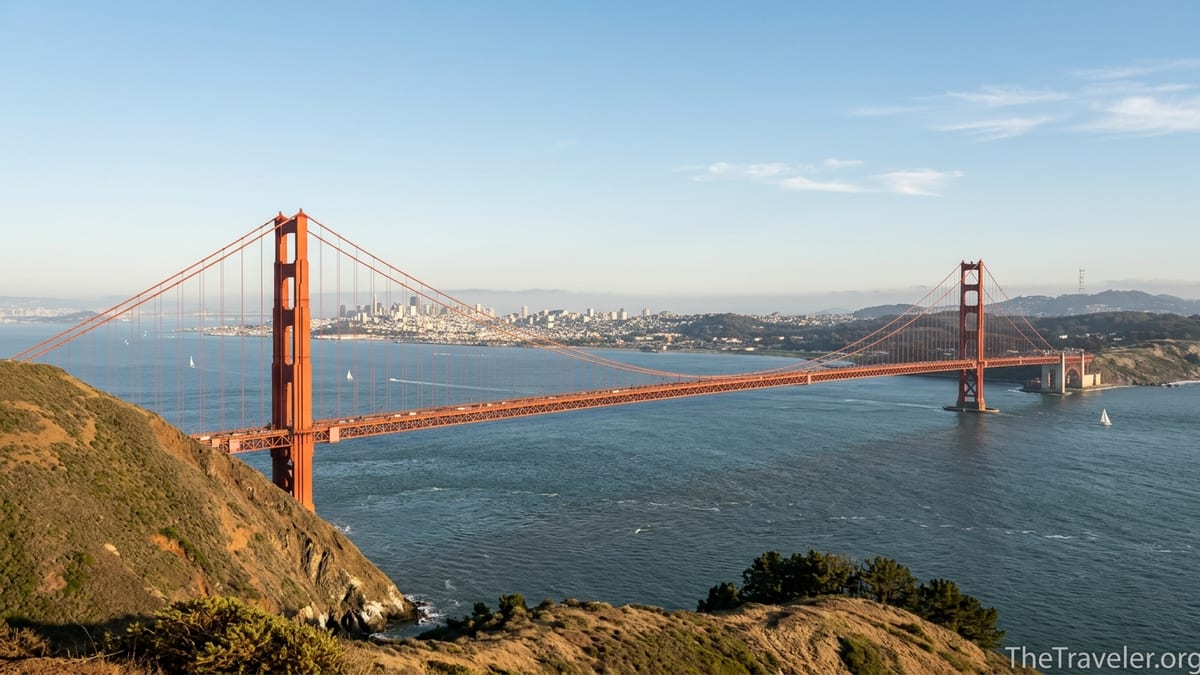
In practical terms, this is when you are most likely to stand on the Battery Spencer overlook in Marin or at Crissy Field and see the Golden Gate Bridge fully visible against a crisp blue sky. On a typical October afternoon, you might experience temperatures around 68 to 72 degrees Fahrenheit at the Embarcadero, light breezes, and little or no fog over the central bay. Hotel workers in Fisherman’s Wharf often tell guests that late September is when they finally put on short sleeves after shivering through foggy July weekends.
This early fall period also offers advantages beyond clear skies. Napa and Sonoma are in grape harvest, making side trips for wine tasting and vineyard views particularly appealing. The city hosts festivals like Fleet Week in October, when air shows over the bay are far more enjoyable under clear skies. Hotel prices are not as low as mid-winter, but they are often more reasonable than peak July and August, when family travel drives demand despite the less predictable weather.
One example: a visitor booking a midweek stay in mid-October at a standard hotel near Union Square may find nightly rates noticeably lower than a prime Saturday in July, while enjoying better odds of clear late-afternoon views from rooftop bars. For photographers hoping to capture sunset over the Pacific from Land’s End or Marshall’s Beach, this is the sweet spot when the sun angle is golden and the fog is less prone to roll in by mid-afternoon.
Spring Shoulder Season: March to May for Mild Weather and Blossoms
Spring, from March through May, is another excellent time for travelers prioritizing comfortable weather and generally clearer skies than mid-summer. By late March, the bulk of winter storms have usually passed, and the city’s parks and nearby coastal hills are still green and dotted with wildflowers. While fog can appear in late spring, the classic thick summer marine layer is often not yet at its peak strength.
A traveler visiting in April might wake to some low cloud near the ocean but find it burns off by late morning. Afternoons in neighborhoods like North Beach, Hayes Valley, and the Marina regularly reach the 60s with bright sun, making it ideal for walking tours or bike rides across the Golden Gate. Golden Gate Park’s botanical gardens and the Conservatory of Flowers grounds are particularly lush at this time, and the Japanese Tea Garden’s cherry blossoms often draw photographers who prefer soft spring light over stark summer contrasts.
Spring also tends to bring fewer crowds than summer. Families tied to school schedules have not yet launched their big vacations, and many international visitors still default to July and August for their California itineraries. As a result, it is easier to reserve Alcatraz tours for early morning departures that coincide with clearer skies, or to snag a window seat at bayfront restaurants with bridge views without booking weeks in advance.
Travel costs can be friendlier too. Midweek rates at major hotels such as those near Moscone Center or in SoMa may dip between big conventions, and airfare into San Francisco International often undercuts peak summer fares. For travelers who do not mind the possibility of a lingering shower or two in March or early April, this season offers a strong balance of value, visibility, and pleasant temperatures.
Why Summer Is Not Always Ideal for Views
Summer sounds like the obvious time to visit, but in San Francisco it can be the trickiest season if you care most about clear vistas. From June through August, the inland Central Valley heats up, drawing in cool marine air from the Pacific. That fuels the famous fog that funnels through the Golden Gate and spreads over the western half of the city and the bridge itself. Afternoons that look promising at 10 a.m. can turn gray and windy by 2 p.m. as the marine layer thickens and low clouds sweep back in.
Visitors staying near Fisherman’s Wharf in July frequently report wearing jackets and beanies while friends back home post photos of swimming pools and barbecues. A common summer experience goes like this: a traveler heads to Baker Beach at lunchtime under patchy blue sky, sets up a picnic, and within 20 minutes the bridge vanishes and temperatures drop as the fog pours in. Those postcard shots turn into moody, atmospheric images rather than clear red span against bright blue.
That does not mean you should avoid summer entirely. It simply requires more strategic planning. You may find clearer conditions in the mornings before the fog has fully rebuilt or in the early evenings when breaks open in the cloud deck. East-side neighborhoods like the Mission and Potrero Hill often sit under sunnier skies than the Sunset District or the Presidio at the same moment. On a typical July day, you could enjoy a warm late breakfast on Valencia Street in full sun, then drive ten minutes to the Cliff House area and find yourself wrapped in mist.
Another consideration is cost and crowds. Despite the foggier weather, July and August remain peak months for tourism, which means higher hotel prices and more competition for key attractions like Alcatraz. If your travel dates are locked to school holidays and you must visit in summer, it becomes even more important to choose the right time of day and specific viewpoints to improve your odds of clear views.
The Role of Microclimates: Where You Stay Matters
San Francisco’s microclimates can vary dramatically within a few kilometers. Western neighborhoods such as the Richmond and Sunset, along with areas near the zoo and Ocean Beach, tend to be cooler, windier, and foggier because they sit directly in the path of the marine layer. Eastern districts, including SoMa, the Financial District, the Mission, and Dogpatch, often enjoy sunnier, slightly warmer conditions on the same day.
For visitors focused on clear views and outdoor time, this pattern has real consequences. Booking a hotel around Union Square or along the Embarcadero usually provides better odds of afternoon sunshine than choosing a property close to the Pacific. A traveler checking into a boutique hotel near the Ferry Building in late September might enjoy warm, clear afternoons suitable for waterfront walks, while a friend staying near the outer Richmond the same week may encounter gray skies and cool winds each morning.
Viewpoints also feel very different depending on which side of the bridge or which hill you choose. For example, on a typical October morning when a thin belt of fog lingers at the Golden Gate, you might stand at Crissy Field and see the bridge towers rising above a low cloud band. Cross to Battery Spencer or Hawk Hill on the Marin side, and you could be above the fog entirely, looking down at the roadway peeking through white mist with the downtown skyline beyond. Understanding this vertical layering lets photographers turn marginal conditions into memorable images.
Public transport and rideshares make it relatively easy to chase sunshine. A visitor staying in a foggy Inner Sunset rental on a July afternoon might watch the live sky conditions from neighborhood webcams or simply hop on the N Judah streetcar toward downtown, emerging 20 minutes later to find clear blue above the Ferry Building and better conditions for bay cruises or rooftop drinks.
Best Times of Day for Iconic Views
Even within the best months, the time of day can dramatically change your experience. Early mornings and late afternoons often offer the clearest, most photogenic conditions, especially around the Golden Gate Bridge. Local photographers frequently recommend arriving between about 7 and 9 a.m. on non-winter days for bridge viewpoints such as Battery Spencer, Golden Gate Overlook, or the eastern side of Crissy Field. By then, the overnight fog has often started to thin, but the low sun still paints warm light on the bridge and the city skyline.
Late afternoon into early evening can be equally rewarding. From roughly 4 to 6 p.m. in September and October, it is common to have stable, clear air over the bay, ideal for sailing trips, sunset cruises, or walking the waterfront from the Ferry Building to Aquatic Park. The golden-hour light at this time makes the red-orange of the bridge stand out sharply against the water and hills. On cruise boats, guides often warn guests that jackets are still essential on deck, but many passengers end up unzipping them as they bask in a surprisingly warm fall sun.
Midday, particularly in summer, is when you are most vulnerable to surprise fog. A traveler who books a noon catamaran cruise in August may board under blue skies, only to watch as the boat sails directly into a cold wall of fog near the Golden Gate where visibility drops to a few hundred meters. If your schedule is flexible, favor morning or late-afternoon time slots for bay tours and bridge visits, and leave the middle of the day for museums, cable car rides through downtown, or exploring inner neighborhoods less affected by the marine layer.
Nighttime has its own appeal, but not for far-reaching views. After dark, the city’s lights reflect off any lingering low cloud, creating a glowing dome that can obscure stars and higher landmarks. While this makes for atmospheric photographs from Twin Peaks or Treasure Island, those hoping to see distant ridges or the full expanse of the bay are better off planning daytime outings and reserving evenings for dining in North Beach, cocktail bars in the Tenderloin or SoMa, or night tours of Alcatraz that emphasize ambiance rather than panoramas.
Planning Sample Itineraries Around the Weather
To translate these patterns into concrete trip planning, consider a long weekend in early October. A visitor arriving on a Thursday evening might find pleasant, clear conditions downtown. On Friday morning, they could schedule an early Alcatraz ferry, catching views of the skyline and bridge in the crisp morning light. Midday could be reserved for exploring the island’s interior or the Embarcadero, with a late-afternoon walk through North Beach up to Coit Tower for sweeping city views in soft light.
On Saturday, that same traveler could start with an early ride-sharing trip to Battery Spencer in Marin for sunrise or early-morning views of the Golden Gate, then head back into the city for brunch in the Marina District. Afternoon might be devoted to Golden Gate Park and the de Young Museum’s observation tower, which offers a 360-degree perspective that is often clearer in fall than in foggy July. Evening could end at Ocean Beach, where sunsets are more likely to be visible at this time of year, though a light jacket is still wise.
For a March visit, a traveler might build more flexibility into their schedule to account for possible showers. Day one could focus on indoor attractions like the California Academy of Sciences or the Exploratorium, with windows of clear weather used to walk nearby waterfronts. Day two might be reserved for the Golden Gate and the Presidio if forecasts suggest a brighter day, with a backup plan of visiting the Legion of Honor and staying near the sheltered courtyard if clouds and wind pick up.
Even in July, you can design around the fog. A family with school-age children could plan early-morning bridge walks followed by afternoon activities in sunnier districts. For example, they might cross the Golden Gate shortly after breakfast, enjoy a picnic at Crissy Field while the sky is still relatively open, then head to the Mission District or Dolores Park for the warmer part of the day. Evening baseball games at Oracle Park often feel significantly milder than the conditions at Lands End on the same date, thanks to the stadium’s more sheltered, bayfront location.
The Takeaway
When it comes to clear views and comfortable weather, timing a San Francisco visit can significantly improve your experience. The most dependable conditions typically arrive in September and October, when the summer fog retreats and warm, sunny days become common. Spring months like April and May offer another appealing window, combining mild temperatures, greenery, and generally lighter crowds. Even in less ideal periods, understanding how fog behaves by neighborhood and time of day lets you stack the odds in your favor.
Rather than assuming that “summer is best,” think like a local photographer or sailor: pick the season when the sky is most likely to cooperate, and plan your daily schedule around morning and late-afternoon light. Choose accommodation in sunnier districts if long walks and views are priorities, and keep a flexible mindset when marine clouds drift in. San Francisco’s fog is part of its character, but with thoughtful planning, it becomes a dramatic backdrop instead of an obstacle to those classic bay and bridge panoramas.
FAQ
Q1. What month is best for clear views of the Golden Gate Bridge?
September and October usually offer the best combination of clear skies and mild temperatures, making them ideal for unobstructed Golden Gate Bridge views.
Q2. Is summer a bad time to visit San Francisco for weather?
Summer is not necessarily bad, but it is often foggier and windier near the ocean and the bridge, so views can be less reliable than in early fall or late spring.
Q3. What is the warmest time of year in San Francisco?
The warmest and sunniest stretch often comes from early September through early November, when inland heat weakens the fog and days can reach the upper 60s or low 70s Fahrenheit.
Q4. When should I avoid visiting if I dislike rain?
If you strongly dislike rain, try to avoid December through February, when most of the city’s annual rainfall typically occurs over several storm systems.
Q5. Which neighborhood should I stay in for the best chance of sun?
Areas on the eastern side of the city, such as Union Square, SoMa, the Financial District, and the Mission, usually see more sunshine than western ocean-facing neighborhoods.
Q6. What is the best time of day to see the Golden Gate Bridge?
Early morning around 7 to 9 a.m. and late afternoon from about 4 to 6 p.m. often bring the clearest skies and best light for bridge photography.
Q7. Can I still get good views in July or August?
Yes, but you should be flexible. Aim for morning or late-afternoon visits to viewpoints, and consider higher overlooks like Battery Spencer that can sometimes sit above low fog.
Q8. Are winter visits worthwhile for scenery?
Winter can deliver crisp, crystal-clear days between storms, with dramatic views and fewer crowds, but you must be ready for rain and cooler temperatures.
Q9. How many days do I need in San Francisco to enjoy the views?
A three to four day stay gives you enough time to work around pockets of fog or rain and still fit in bay cruises, bridge viewpoints, and hilltop overlooks.
Q10. Do I need to pack warm clothes even in September?
Yes. Even in September you should bring layers, including a light jacket or fleece, because evenings near the water and sudden fog banks can feel surprisingly chilly.