


Travelopia sits quietly behind some of the world’s best known specialist travel brands, from yacht charters in the British Virgin Islands to small‑group treks in the Himalaya and polar expeditions to Antarctica. Because many of these companies market themselves as independent brands, travelers often do not realize they share the same parent. That can make it surprisingly easy to compare apples with oranges, misunderstand what is included, or miss value that appears under a different Travelopia label. This guide unpacks the most common mistakes people make when comparing Travelopia brands, and how to choose the one that actually fits your style, budget and expectations.
Get the latest updates straight to your inbox!
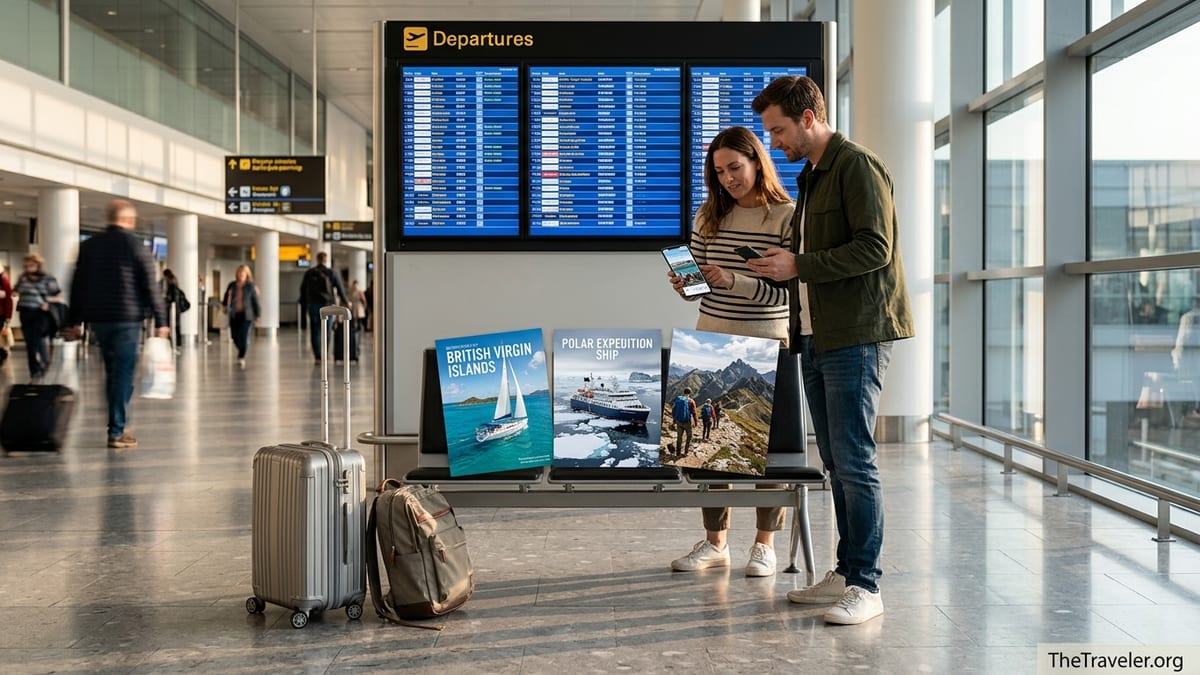
Confusing Brand Positioning Within the Same Travelopia Family
One of the easiest mistakes is assuming that two Travelopia brands offering similar trips are interchangeable. A classic example is Sunsail and The Moorings in the yacht charter space. Both are part of Travelopia’s marine division and often share bases in destinations like Tortola in the British Virgin Islands and Procida in Italy. Yet The Moorings deliberately positions itself as the more premium, service‑focused label, while Sunsail is designed to appeal to more independent sailors who want sporty boats and are comfortable with a slightly more stripped‑back product. Travelers who only look at the shared parent company and destination list can miss these deliberate differences in tone and service.
The same pattern shows up in adventure travel. Exodus Adventure Travels sits within Travelopia’s Adventure division and sells small‑group hiking, cycling and cultural trips, often competing directly with global players like Intrepid or G Adventures. Quark Expeditions, also part of Travelopia, is focused almost entirely on polar expedition cruising. A traveler who simply wants an “Antarctica trip” might compare a Quark voyage with a generalist adventure tour on price alone, without realizing that Quark operates purpose‑built expedition ships and leans heavily into expert lectures and off‑ship activities such as Zodiac cruises and ice landings that justify a very different price point.
This confusion can play out in real‑world booking decisions. A couple used to chartering with smaller local outfits in Greece might see a Sunsail flotilla and a Moorings bareboat in the same marina and assume the higher price on the Moorings boat is arbitrary, when it often reflects newer or more spacious models, additional base staff and higher service expectations. Conversely, someone choosing an Antarctic cruise based purely on the Travelopia connection might pick a more expensive Quark itinerary without realizing a land‑based small‑group tour with Exodus in Patagonia could deliver the wilderness experience they are truly after at a fraction of the cost.
The remedy is to treat each Travelopia brand as if it were fully independent at the comparison stage. Look at how the company describes its core guest: is it talking to first‑time sailors who need hand‑holding, or confident skippers who want performance? Is the adventure company emphasizing comfort and cultural immersion, or technical mountaineering? Reading beyond the logo and asking a few targeted questions of the sales team usually reveals that Travelopia uses different brands specifically to segment the market rather than to offer identical products under multiple names.
Comparing Prices Without Understanding What Is Included
Another common trap is to line up prices from multiple Travelopia brands without reading the inclusions. In the yacht world, a bareboat charter with Sunsail in the British Virgin Islands might list a weekly rate that looks several hundred dollars cheaper than a similar‑sized catamaran with The Moorings in the same week. Only later does the traveler realize that the Moorings fare may include extras such as Wi‑Fi, a higher‑spec dinghy outboard, or more generous support from local technicians, while the Sunsail quote leaves more items as add‑ons.
Adventure itineraries show the same pattern. Exodus often structures its small‑group trips so that core activities and most transport are included, but some meals are deliberately left out to encourage guests to explore local restaurants. Quark Expeditions, in contrast, may bundle almost everything on board the ship into one upfront price, from guided landings to most meals and lectures, while leaving optional activities such as sea kayaking or camping on the ice to a separate fee. A traveler who simply searches for “Antarctica cruise price” and sees a Quark voyage costing several thousand dollars more than a mainstream cruise line can easily misjudge the value if they are not comparing the same set of inclusions and off‑ship experiences.
There are even nuances within similar categories. A tailor‑made operator in Travelopia’s portfolio, such as Hayes & Jarvis, might quote a safari in Kenya that appears pricier than a brochure‑style tour from a mass‑market brand. On closer examination it may include private game drives, a higher category of tented camp and transfers tailored to a specific flight schedule. Without unpacking every line of the quote, a traveler can wrongly assume the premium is pure markup rather than a different level of product.
To avoid this mistake, interrogate each quote line by line. Ask what currency is used, whether port charges, park fees, local transfers, kayak rentals or equipment hire are built in, and which meals and activities are extra. When comparing two Travelopia brands in the same destination, create your own simple summary that lists what is included and what is not. That process often reveals that a seemingly cheaper option becomes more expensive once you add realistic on‑the‑ground costs, or that a higher‑priced quote is actually better value for the level of service you expect.
Overlooking Regional Strengths and Operational Expertise
Travelopia’s brands have distinct regional strengths that are not always obvious from glossy brochures. Sunsail and The Moorings, for instance, both appear to offer global coverage in Europe, the Caribbean and beyond. In practice, The Moorings has long been dominant in North America, especially for yacht charters out of the British Virgin Islands, while Sunsail’s roots and strongest repeat customer base are in the UK and wider Europe. This history affects everything from flight inclusive packages to how easily you can reach customer service during your local business hours.
In adventure travel, Exodus has decades of experience running small‑group trips that thread into local communities across Europe, Africa and Asia. Many of their classic itineraries, such as trekking in the Alps or cycling through Vietnam, have evolved over years of feedback from British and European guests. Quark, by contrast, pours its operational expertise into polar expedition routes that require careful ice navigation, coordination with local authorities and specialist expedition staff. A traveler who picks an Exodus trip in a completely new region for the company or a Quark itinerary in a shoulder season without understanding how the operator’s experience maps to their specific dates may be disappointed by weather‑affected schedules or limited alternatives if conditions change.
Real‑world examples show how this plays out. A Canadian group booking a European yacht charter might instinctively choose The Moorings because that is the brand they know from the Caribbean, yet Sunsail could actually offer more convenient flotilla dates, a better‑developed local partner base and more competitive pricing in a specific French or Greek marina. Similarly, a traveler who wants a deep cultural experience in Morocco might search “Travelopia tours Morocco” and end up on a high‑end tailor‑made brand’s site, when Exodus has long‑running group departures at a very different price point and style.
To make a like‑for‑like comparison, travelers should ask each brand where its operational “home turf” lies. Which destinations account for the largest share of their departures? Where have they invested in their own local bases or long‑term partners? A company that runs dozens of departures each season in one country is often better equipped to handle disruptions, recommend lesser‑known routes and maintain consistent quality guides than a sister brand that only dips into that market a few times a year.
Assuming Service Levels and Policies Are Identical
Because Travelopia owns the parent companies, many travelers assume that customer service, booking conditions and on‑trip support must be the same across all brands. In reality, each brand typically maintains its own booking terms, payment schedules and service standards. For instance, yacht charter contracts for Sunsail and The Moorings are regularly updated with separate booking conditions for different markets. Travelers who only skim the documents may miss important differences in payment deadlines, security deposit structures or what happens if a technical problem with the boat interrupts the charter.
In the expedition cruise market, Quark’s terms around voyage interruptions due to ice or weather can differ from what a traveler might expect from a classic ocean‑cruise brand. While both might offer alternative landings or adjusted routes, expedition operators often reserve broader rights to modify the itinerary for safety reasons. Someone used to mainstream cruising might book an Antarctic voyage with Quark through a travel agent, assume “cruise rules” will apply, and then feel blindsided when rough ice conditions lead to major schedule changes that were clearly spelled out in the expedition terms but never properly explained.
Customer support also varies. A guest who has chartered repeatedly with The Moorings in the Caribbean may be accustomed to extensive base briefings, early access to technical staff and a higher staff‑to‑boat ratio. If that same traveler books a Sunsail charter in a different region purely because they recognize the parent company, they might encounter a leaner team that expects skippers to be more self‑reliant. Neither experience is inherently better; each is calibrated to a slightly different target guest. The frustration comes when the traveler expects one level of service and receives another.
The solution is to read the fine print and ask direct questions before booking. Request the exact cancellation policy, payment schedule, and what support is available in destination if something goes wrong. Clarify whether there is a 24‑hour emergency line staffed by the brand itself or a local partner. If you are switching from one Travelopia brand to another, tell the salesperson what you are used to and ask how their offering compares. Small details such as whether you receive daily cabin cleaning on an expedition ship or how quickly spare parts can be sourced for a charter yacht can have a real impact on your experience.
Ignoring Brand Evolution, Mergers and Retirements
Travelopia frequently refines its portfolio, retiring some brands while expanding others. A mistake many travelers make is relying on outdated assumptions based on a brand’s reputation from years ago rather than checking its current role within the group. In adventure travel, for example, some legacy brands have gradually been folded into larger labels. Travelers who once booked with niche operators like International Expeditions or Zegrahm Expeditions may now find their style of trip offered under the Exodus banner as Travelopia consolidates similar products.
The yacht division has also evolved. Over the years, The Moorings and Sunsail have revamped their fleets with new lines of monohulls and catamarans, often in partnership with builders such as Robertson & Caine for catamarans sold under the Leopard name. Charter guests who sailed with these brands a decade ago might remember older designs and assume the current fleet is similar in age and layout. In reality, many bases now feature much newer boats with very different cabin configurations, on‑board electronics and comfort levels.
Ignoring this evolution can lead to both missed opportunities and misplaced complaints. A traveler might dismiss Exodus out of hand because they remember it primarily as a rugged overland company from the 1990s, not realizing that the brand now offers a broad spectrum of trips ranging from premium lodges in Costa Rica to leisurely walking holidays on Europe’s long‑distance paths. Conversely, someone who last sailed with a specific base before a major refit might be pleasantly surprised by the upgrades but could also encounter new systems, from bow thrusters to advanced navigation screens, that require an updated briefing and a bit more learning time.
To stay current, travelers should check the “About” or “Our Story” sections for each brand before drawing conclusions. Look for mentions of recent fleet renewals, newly added regions or changes in corporate structure. If you are returning to a brand after a long gap, treat it as if you were a first‑time customer and ask what has changed in the last five years. Doing so can help you spot when a beloved itinerary has moved to a different label within Travelopia or when a previously basic product has quietly become more upmarket.
Focusing on the Logo Instead of the Actual Itinerary Design
Because Travelopia is a portfolio company, there is a natural temptation to compare brands based on logo recognition alone. In practice, what matters far more is the specific itinerary and departure you are considering. Two itineraries to the same destination sold by different Travelopia brands can produce very different experiences depending on group size, pacing and optional activities. For example, a classic Exodus trekking trip in Nepal might use simple tea houses and spend most of each day on the trail, while a tailor‑made Travelopia brand could design a Nepal journey around boutique hotels in the Kathmandu Valley, optional helicopter flights and shorter day walks that never stray far from paved roads.
In polar regions, travelers sometimes fixate on the ship’s brand without looking at the route map. Quark might run multiple Antarctica sailings in a single season: some that simply cross the Drake Passage for a week of peninsula landings, others that add South Georgia for wildlife enthusiasts, and still others that attempt less common itineraries toward the Weddell Sea. Prices can differ by many thousands of dollars, but so do wildlife encounters, time on land and comfort levels. A traveler who just sees “Quark Antarctica” on a brochure may book the cheapest sailing, then later discover that their dream was actually to see the king penguin colonies on South Georgia that only appear on the longer route.
The same applies to yachting. Sunsail may offer a flotilla week in Croatia that visits a different set of islands and marinas than a bareboat charter from The Moorings, even though both are based in the same coastal town. One might focus on quieter anchorages and local konobas, the other on easy mooring fields and larger town quays. If you choose purely on brand familiarity, you risk ending up on an itinerary whose rhythm does not match your expectations for nightlife, sailing hours or sheltered bays.
The best approach is to temporarily ignore the logo while you compare. Print or save the day‑by‑day itineraries from each Travelopia brand you are considering and read them side by side. Note start and end times, distances covered, nights spent at sea versus on land, and how much free time is built in. Then match those details to your personal priorities. Only after you have narrowed down which specific itinerary suits you should you bring brand considerations like loyalty programs or past experience back into the decision.
The Takeaway
Travelopia’s portfolio is designed to give travelers a spectrum of styles, comfort levels and destinations, not to sell the same trip under different names. Mistakes arise when people compare brands superficially, assuming that a shared owner means shared product, pricing and service. Confusing Sunsail with The Moorings, assuming every Antarctic voyage is equivalent regardless of operator, or ignoring how Exodus has evolved from overland pioneer to modern small‑group specialist are all symptoms of the same problem: focusing on labels instead of details.
If you are considering a Travelopia brand, begin with an honest assessment of what you want from the trip: independence or hand‑holding, expedition conditions or hotel comfort, social flotillas or private space. Then look closely at inclusions, itinerary design, regional expertise and current booking conditions. When in doubt, ask specific, concrete questions and do not be shy about telling each brand what you are comparing it against. Used thoughtfully, Travelopia’s ecosystem can offer finely tuned options for almost every kind of traveler. Used casually, it can lead to mismatches that are entirely avoidable with a bit of careful comparison.
FAQ
Q1. Are Sunsail and The Moorings basically the same yacht charter brand?
Sunsail and The Moorings share the same Travelopia marine division and even some bases, but they target slightly different guests. The Moorings positions itself as more premium and service oriented, while Sunsail appeals to confident, often price‑sensitive sailors who are comfortable with a sportier, more independent style of charter.
Q2. How do Exodus Adventure Travels and Quark Expeditions differ if they are both part of Travelopia?
Exodus focuses on land‑based small‑group adventures such as trekking, cycling and cultural journeys worldwide. Quark Expeditions specializes in polar expedition cruising, operating ships with ice‑strengthened hulls and extensive off‑ship activities. They may visit some of the same regions but offer very different styles of travel.
Q3. Why do prices vary so much between Travelopia brands in the same destination?
Price differences usually reflect inclusions, comfort levels and style rather than arbitrary markups. One brand may bundle almost everything, from transfers to most excursions, while another leaves more meals and activities as optional extras. Fleet age, guide ratios and regional expertise also influence the final cost.
Q4. Do Travelopia brands share the same booking terms and cancellation policies?
No. Each brand typically maintains its own booking conditions tailored to its product and markets. Deposit amounts, final payment dates, cancellation penalties and policies for itinerary changes can differ, so you need to read each contract separately rather than assuming a group‑wide standard.
Q5. If I liked a trip with one Travelopia brand, should I always stick with that brand?
Not necessarily. Your positive experience is valuable, but another Travelopia brand might be a better match in a different travel style or region. It is worth using your past trip as a benchmark while still comparing itineraries, inclusions and service levels across the portfolio for each new journey.
Q6. How can I tell which Travelopia brand has the strongest expertise in a particular region?
Look at how many departures they run there, how long they have been operating in that area and whether they maintain their own base or long‑standing local partners. Asking directly which destinations they consider their “core” markets will usually reveal where their operational strengths really lie.
Q7. Do Travelopia brands recognize loyalty across the whole group?
Some brands have their own repeat‑guest benefits, but these are not always shared across the entire Travelopia portfolio. If you are a frequent customer, ask whether your history with one brand can be noted or rewarded when you book with a sister company, but do not assume automatic cross‑brand perks.
Q8. How often do Travelopia brands change or merge, and does that affect bookings?
The portfolio is periodically refined, with some brands retired or integrated into larger labels and others refreshed or expanded. Existing bookings are usually honored under the original terms, but it is wise to stay in touch with your travel advisor and watch for announcements so you understand if your preferred style has moved under a different name.
Q9. What is the best way to compare two Travelopia brands fairly?
Start by ignoring the logos and comparing specific itineraries, inclusions, group sizes and accommodation or vessel types. Once you know which trip structure suits you, then look at brand‑level factors such as customer service reputation, booking terms and any loyalty benefits that might tip the balance.
Q10. Should I book directly with a Travelopia brand or through a travel advisor?
Both approaches can work. Booking direct gives you a straight line to the operator, while a knowledgeable advisor who understands the Travelopia portfolio can help you navigate differences between brands and ensure you are comparing like with like. For complex or expensive trips, many travelers find using a specialist advisor worthwhile.