


Behind many of the world’s most memorable safaris, polar cruises, yacht charters and school expeditions sits a company most travelers have never heard of: Travelopia. This quietly influential group owns dozens of specialist tour operators and niche travel brands, helping to shape how high-value experiential travel is designed, marketed and delivered across the globe. Understanding what Travelopia is, and how it operates, offers a window into some of the most powerful forces reshaping modern tourism.
Get the latest updates straight to your inbox!
What Is Travelopia?
Travelopia is a UK-based collection of specialist travel brands focused on experiential and adventure-led trips rather than mass-market package holidays. Originally assembled inside TUI Group as its Specialist division, the portfolio was carved out and acquired in 2017 by private equity firm KKR with a stated ambition to build one of the world’s leading experiential travel businesses. Today, Travelopia brings together independently run brands that operate everything from polar expeditions and African safaris to yacht charters, school expeditions and tailor-made cultural tours.
In practice, that means a traveler booking an Antarctic cruise with Quark Expeditions, a small-group trek with Exodus Adventure Travels, a school expedition with World Challenge or a canal boat holiday with Le Boat is often traveling with a Travelopia-owned company, even if they never encounter the group name. Each brand has its own identity, product design and loyal customer base, but behind the scenes they share ownership, certain standards and sometimes technology and support services.
Travelopia positions itself squarely at the higher-value end of the travel spectrum, where trips are less about flights and hotels and more about specialist guiding, logistics in remote places and once-in-a-lifetime experiences. The group emphasizes “experiential” travel: a polar scientist explaining sea ice on deck in Antarctica, a naturalist guiding a walking safari in Botswana, or a skipper showing guests how to handle a yacht in the British Virgin Islands.
Compared with online travel agencies that sell commoditized inventory, Travelopia’s power lies in control of the product itself. Its brands charter expedition ships, operate their own yacht fleets, contract specialist local partners and develop itineraries that can take years to refine. That level of control is a major reason the group has become important in the global travel industry.
How Travelopia Is Structured and Where It Operates
Travelopia operates as a holding group with more than 2,500 employees spread across roughly 30 countries, supporting guests from over 130 source markets and sending them to more than 120 destinations worldwide. The brands are typically grouped into verticals such as adventure travel, marine and yachting, educational and school travel, and tailor-made or luxury travel. Each brand has its own management team and product focus, while core corporate functions like finance, some technology platforms and certain sustainability frameworks are coordinated at group level.
On the ground, this structure translates into a wide geographic footprint. For example, Exodus Adventure Travels runs hiking and cycling trips across Europe, Latin America, Asia and Africa; Quark Expeditions operates primarily in the Arctic and Antarctic; Le Boat focuses on self-drive boating holidays on inland waterways in France, the UK, Ireland, Canada and elsewhere; and The Moorings and Sunsail charter fleets of sailing yachts in classic yachting hubs such as the British Virgin Islands, Croatia, Greece and Thailand. World Challenge and other educational brands send school and youth groups on structured expeditions to countries from Peru and Nepal to Tanzania and Vietnam.
Most of the group’s operational hubs are in traditional outbound markets such as the United Kingdom, mainland Europe, North America and Australia. Sales offices in cities like London, Toronto, Sydney and Denver handle customer enquiries, while operational teams coordinate with local partners and field staff in destination. A growing capability center in Bangalore supports technology, data and back-office functions, reflecting a broader industry shift toward shared services for efficiency.
For travelers, the structure is largely invisible. What they experience is a brand with deep specialization in one corner of travel: a polar cruise operator, a yacht charter company, or a tailor-made safari specialist. The fact that these brands share ownership and certain systems behind the scenes helps Travelopia scale, negotiate better supplier terms and roll out best practices across its portfolio.
Travelopia’s Key Brands and Real-World Trip Examples
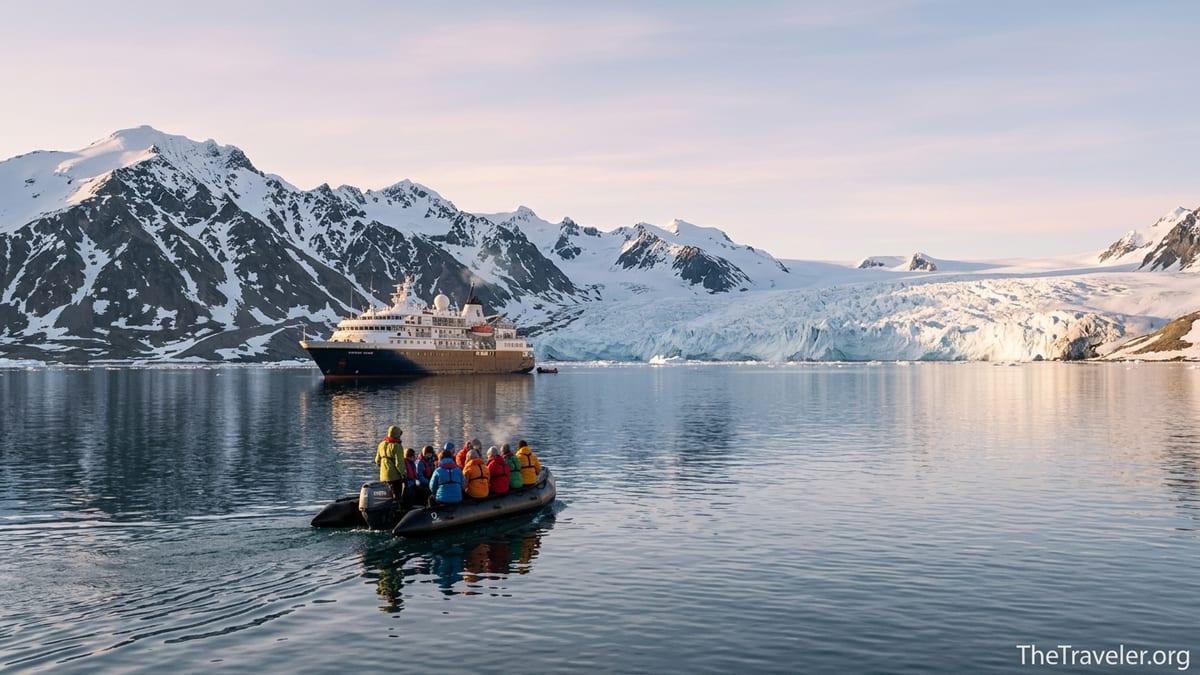
Travelopia’s importance in global travel becomes clearer when you look at specific brands and the kinds of trips they operate. Quark Expeditions, for example, is one of the best-known names in polar cruising. A typical 10 to 12 day voyage from Ushuaia to the Antarctic Peninsula on a modern expedition ship can easily start in the high four figures per person, depending on cabin category and season. These trips include Zodiac landings, lectures by polar experts and activities such as kayaking or camping on the ice, which require significant operational expertise and specialized vessels.
Exodus Adventure Travels, another Travelopia brand, offers hundreds of small-group itineraries, from trekking the Inca Trail in Peru to cycling through Vietnam. A week-long guided walking holiday in Italy or Spain might be priced in the low to mid four figures per person including accommodation, most meals, guiding and local transport, aimed at travelers who want an active holiday with like-minded people rather than a generic coach tour. Many itineraries limit group size to around a dozen people, keeping the experience intimate while still benefiting from group logistics.
In the marine segment, The Moorings and Sunsail run large fleets of sailing yachts and catamarans in destinations such as the British Virgin Islands, Seychelles and the Mediterranean. A family or group of friends might charter a 40-foot yacht in high season for about the cost of a mid-range resort stay, gaining the freedom to explore coves and islands on their own route. Le Boat applies a similar concept to inland waterways: self-drive canal boats on rivers and canals from the Canal du Midi in France to the Rideau Canal in Canada, no prior boating license required in many destinations.
Educational and youth-focused brands like World Challenge organize multi-week expeditions where school students plan and undertake treks, community projects or conservation activities overseas under supervision. A typical program might combine several days of trekking in the Andes with time volunteering on a locally led project, building personal resilience and global awareness. Tailor-made specialists acquired by Travelopia, such as Enchanting Travels, design bespoke high-end itineraries, for instance a multi-country safari in East Africa or a private cultural journey through Japan, often with private guides, hand-picked accommodation and customized experiences.
Why Travelopia Matters in the Global Travel Industry
Travelopia plays an outsized role in several strategic parts of the global travel industry: high-margin experiential trips, polar and expedition cruising, specialist yachting and educational travel. These are segments where barriers to entry are high, logistics are complex and brand reputation is critical. For cruise lines, airlines and tourism boards, a company like Travelopia is a valuable partner because it can deliver consistent volumes of well-qualified, often high-spending travelers to remote or emerging destinations.
Economically, experiential travel is one of the fastest-growing parts of the tourism market. While a mainstream beach package might be price-driven and easily substituted, a small-ship Arctic cruise or a carefully curated walking holiday commands a premium. Travelopia’s brands typically operate with higher per-trip revenue than mass-market operators, which allows them to invest in better guides, safety protocols and product development. When a destination like Svalbard or the Galapagos wants to manage tourism carefully while attracting high-value visitors, operators of this sort are central to the strategy.
Travelopia is also part of a broader consolidation trend in travel, where portfolios of specialist brands sit behind what appear to be independent operators. Similar to how large groups control many online booking sites, Travelopia controls a significant set of on-the-ground operators and ship charters. This consolidation gives it negotiating power with shipyards, ports, local ground handlers and technology vendors, and it can influence how safety, sustainability and guest experience standards evolve across the sector.
From a traveler’s perspective, the group’s importance shows up in subtle ways. For instance, a couple might book an Exodus trekking trip in Nepal one year and later choose a Quark polar voyage, unknowingly staying within the same corporate family. Loyalty programs, common service standards and shared know-how about risk management and sustainability can travel with them, even though the brand names and product styles are very different.
Travelopia’s Approach to Sustainability and Responsible Travel
Like many large travel companies, Travelopia has had to respond to growing scrutiny around climate impacts, community benefits and labor practices. The group has developed minimum standards for sustainable and responsible travel that its brands are expected to follow, covering areas such as environmental footprint, wildlife welfare, community engagement and working conditions in the supply chain. While implementation varies by brand and destination, the standards give a framework for phasing out problematic activities and supporting better practices over time.
On the environmental side, polar and expedition cruise brands under the group typically highlight measures such as lower-emission ships, waste management plans and strict rules around wildlife viewing distances and visitor numbers at landing sites. In yacht chartering and boating, some bases have introduced more efficient engines, better waste facilities and briefings for guests on anchoring responsibly to avoid damaging coral or seagrass. Adventure brands often promote lower-impact modes of travel once in destination, such as trekking, cycling and public transport, alongside carbon reduction or offsetting initiatives.
Social responsibility is also central in educational and community-based trips. For example, school expeditions and volunteering components are increasingly structured to prioritize locally led projects, fair wages for porters and guides, and longer-term partnerships rather than one-off visits. Tailor-made and luxury brands often work with family-owned lodges, community conservancies or locally run safari camps, channeling a higher share of spend into local economies compared with anonymous chain hotels.
Travelopia has also published statements acknowledging the risks of modern slavery and human trafficking in complex global supply chains, outlining steps such as supplier codes of conduct, staff training and risk assessments. Although these initiatives are far from unique in the industry, the group’s size and focus on remote, logistically challenging destinations means its policies can meaningfully influence what is considered acceptable practice among local partners and contractors.
How Travelopia Shapes Traveler Expectations and Innovation
By controlling specialist brands at scale, Travelopia helps to define what travelers expect from adventure and experiential trips. For instance, early expedition cruises to Antarctica were spartan and primarily functional. As operators like Quark and its peers invested in newer ships, better accommodations and more diverse activities such as kayaking, camping and helicopter excursions, customer expectations shifted. What was once considered cutting-edge becomes standard, encouraging the next round of innovation in ship design, onboard science programming and sustainability features.
Similarly, small-group adventure brands have helped normalize ideas like traveling in groups of 10 to 16 with a locally based guide, staying in simple guesthouses rather than large resorts, and focusing on authentic cultural encounters instead of staged shows. When a company with global reach adopts these models and proves that they can be profitable at scale, competitors and new entrants are more likely to follow. This ripple effect has contributed to the growth of specialized segments like cycling holidays, wildlife photography tours and hiking-focused itineraries.
Technology is another area where a group structure accelerates change. Travelopia has invested in platforms that centralize customer data, booking flows and post-trip feedback across multiple brands, allowing it to spot trends quickly. If customers on yacht charters increasingly request onboard Wi-Fi or new water toys, or if trekkers consistently mention a particular viewpoint or homestay as a highlight, that information can feed into product improvements across different brands and regions. Case studies with technology partners have highlighted how the group uses digital tools to improve service and personalize communication without losing the specialist feel of each brand.
At the same time, the group faces tension between maintaining the independence and authenticity of long-established brands and realizing the efficiencies of scale. Adventure travelers, in particular, can be skeptical of large corporate ownership and may prefer companies they perceive as small and founder-run. Travelopia’s strategy of keeping brand identities distinct while sharing back-end resources is a direct response to this challenge.
What Travelopia Means for Destinations, Partners and Travelers
For destinations, a relationship with a Travelopia brand can bring predictable visitor flows, marketing exposure and often higher-spending guests. A polar port like Ushuaia or Longyearbyen, a yachting harbor in Greece, or a trekking hub in Nepal might see substantial seasonal business from just a handful of specialist operators. When one of those operators is part of a group with global reach, joint marketing campaigns, product development and long-term planning become more feasible.
Local partners such as small lodges, transport providers, guides and activity operators often benefit from multi-year contracts and training programs. A lodge that becomes a regular stop on a high-profile adventure itinerary might be able to invest in better facilities or expand its season. At the same time, reliance on a small number of large international buyers carries risks: changes in group strategy, ownership or risk appetite can quickly affect local livelihoods. The sale of certain brands or shifts in geographic focus, such as divesting a mainstream tour operator or adding a new specialist acquisition, can have knock-on effects in the destinations those brands serve.
For travelers, the influence of Travelopia manifests in product choice, consistency and price. The presence of multiple strong brands in adventure and experiential segments generally expands the range of itineraries and departure dates available, from introductory-level trips suitable for first-time trekkers to challenging expeditions aimed at experienced travelers. Shared safety standards and quality controls can reassure customers choosing complex trips to remote areas. On the other hand, consolidation can limit true competition in niche markets, affecting pricing and making it harder for very small independent operators to compete.
Ultimately, understanding that a favorite polar cruise line, trekking company or yacht charter brand sits within a larger group helps travelers ask better questions: about sustainability policies, labor practices, risk management and how their money flows through the value chain. It also makes it easier to recognize when seemingly different brands may deliver similar underlying standards and philosophies, even if the logos and brochures look unrelated.
The Takeaway
Travelopia is not a household name, but it is one of the quiet powerhouses behind modern experiential travel. By bringing together specialist brands in adventure, marine, educational and tailor-made travel, it helps shape everything from how polar cruises are priced and operated to how school expeditions are designed. Its scale gives it influence over sustainability standards, product innovation and destination development, particularly in remote or sensitive environments.
For travelers, this influence cuts both ways. On the positive side, Travelopia’s brands typically offer well-tested itineraries, seasoned guides and robust safety frameworks, making it easier and safer to tackle ambitious trips like crossing the Drake Passage, trekking at altitude or chartering a yacht for the first time. On the more critical side, consolidation raises questions about competition, transparency and how much local communities truly benefit from high-value tourism.
As experiential travel continues to grow, understanding the role of groups like Travelopia helps travelers, destinations and industry partners navigate a complex landscape. Whether you are considering a polar cruise, an active small-group adventure or a bespoke safari, looking beneath the surface of the brand name to see who ultimately stands behind the trip is an important step in making informed, responsible choices.
FAQ
Q1. Is Travelopia a tour operator or a parent company?
Travelopia is a parent company that owns and manages a portfolio of specialist tour operators and travel brands. Travelers typically book with one of those brands, such as a polar cruise operator, yacht charter company or adventure travel specialist, rather than directly with Travelopia itself.
Q2. Which well-known travel brands are part of Travelopia?
The portfolio has included brands such as Quark Expeditions in polar cruising, Exodus Adventure Travels in small-group adventure, World Challenge in school expeditions, Le Boat in self-drive boating holidays, and yacht charter brands like The Moorings and Sunsail, among others. Specific brand lineups can evolve over time as the group acquires or divests businesses.
Q3. How does booking with a Travelopia brand affect my trip experience?
From a customer perspective, you primarily interact with the individual brand. The impact of Travelopia’s ownership is usually behind the scenes, in areas like safety frameworks, supplier standards, technology, staff training and product development resources that support the brand’s operations.
Q4. Are Travelopia brands more expensive than mainstream tour operators?
Trips with Travelopia brands generally sit in the mid to premium price range because they focus on specialist, often small-group or expedition-style travel. Prices reflect factors such as expert guiding, complex logistics, small ship or yacht capacity and remote destinations, rather than simply flights and hotel nights.
Q5. What is Travelopia doing about sustainability and climate impact?
Travelopia has developed group-wide minimum standards for sustainable and responsible travel that cover environmental impact, community engagement and labor practices. Individual brands implement these through measures like wildlife viewing guidelines, lower-impact transport choices, supplier codes of conduct and, in some cases, emissions reduction or offsetting initiatives.
Q6. How safe are polar cruises and remote expeditions with Travelopia brands?
Travelopia’s expedition and adventure brands operate within detailed safety and risk management frameworks that address vessel standards, crew training, emergency procedures and guest briefings. While travel to remote regions always carries inherent risks, established operators invest heavily in mitigation measures, contingency planning and coordination with local authorities.
Q7. Does Travelopia own the ships and yachts used on its trips?
Ownership structures vary by brand. Some Travelopia brands charter ships or yachts from specialist owners under long-term agreements, while others operate or partly own vessels and fleets. In all cases, the brand is responsible for the guest experience on board and for ensuring that contracted hardware meets regulatory and internal safety standards.
Q8. How does Travelopia influence local communities in the destinations it serves?
Through its brands, Travelopia channels visitor spending to local guides, lodges, transport providers and activity operators, and often supports longer-term partnerships or community projects. At the same time, reliance on a few large buyers can create dependency, so responsible operators work to spread benefits, respect local decision-making and minimize negative impacts.
Q9. Can I tell if the company I am booking with is part of Travelopia?
Many brands mention their ownership on their “About” or corporate information pages, and industry news coverage of acquisitions often notes Travelopia as the parent. If ownership is important to you, it is reasonable to ask the company directly whether it is part of a larger group and what that means in practice.
Q10. How might Travelopia’s role in the industry change in the coming years?
As demand for experiential and adventure travel grows, Travelopia is likely to keep refining its portfolio, investing in new product types and upgrading ships, fleets and technology. The group’s future influence will depend on how well it balances growth with sustainability commitments, transparent partnerships and the authentic, specialist character that attracts travelers in the first place.