

Thailand remains one of the world’s most welcoming and rewarding destinations, but like any busy tourist hotspot it has its share of petty crime, tourist scams and regional security concerns. Understanding the most common tricks and knowing how local systems work will help you enjoy the country’s beaches, temples and food scene with confidence instead of anxiety. The goal is not to scare you away, but to equip you with realistic, up to date information so you can travel smart.
The Big Picture: How Safe Is Thailand for Travelers?
Thailand receives tens of millions of international visitors most years, and the vast majority experience no serious problems. Violent crime against foreigners is relatively rare in main tourist areas compared with many destinations worldwide. Most issues visitors encounter involve nonviolent theft, scams around transportation or shopping, and misunderstandings about local laws or police procedures. If you prepare for those risks and stay aware of your surroundings, you can usually avoid major trouble.
Government advisories from several countries currently rate Thailand as a place where travelers should exercise increased caution, largely because of periodic unrest and low level insurgent activity in some southern provinces and along sections of the Thailand Cambodia border. These security concerns are geographically limited and far from typical holiday spots such as Bangkok, Chiang Mai, Phuket or Koh Samui, but they are a reminder to check the latest official advice before you go and avoid any areas that are flagged as higher risk.
Thai authorities, including the Tourist Police Bureau, have stepped up efforts in recent years to protect visitors. Dedicated tourist police units operate in major destinations, and new technology such as AI assisted camera systems is being used to identify suspects and monitor crowded sites. Those measures help reduce opportunistic crime, but they are not a substitute for your own common sense. Basic precautions such as keeping valuables out of sight, staying sober enough to make good decisions and avoiding confrontations at night still go a long way.
Overall, Thailand remains a relatively safe destination for street savvy travelers. Understanding where the risks actually lie will help you distinguish between normal travel hassles and genuinely dangerous situations, so you can respond appropriately instead of either overreacting or letting your guard down completely.
Tuk Tuks, Taxis and Transport Tricks
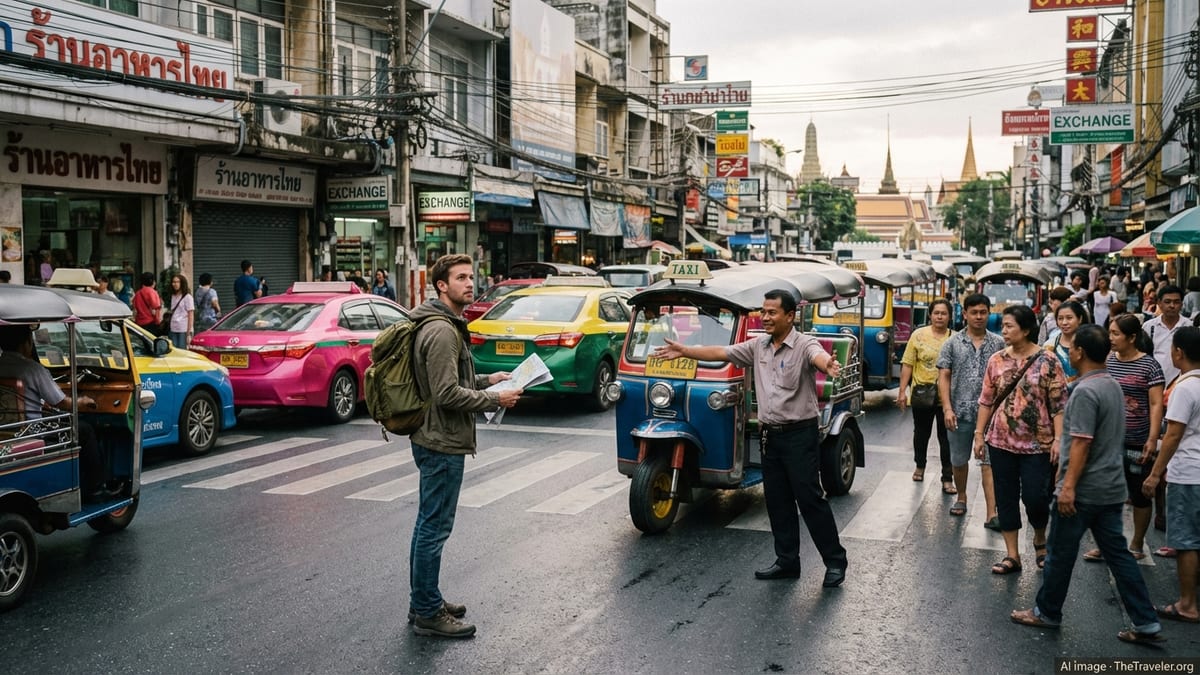
Transport related scams are among the most common problems visitors report in Thailand’s cities and resort areas. The classic example is the tuk tuk or taxi driver who offers an extremely cheap ride to a major sight, only to insist that the attraction is closed and divert you to a tailor, gem shop or travel agency where you are pressured to buy something. Alternatively, a driver may agree on a route and then take a longer way around, inflate the fare at the end or claim there was a misunderstanding about price.
Meter refusal is another recurring issue, especially in Bangkok and from airports. Some drivers will quote a flat fare that sounds high, insist the meter is broken or simply refuse passengers who demand the meter. In resort areas, unlicensed taxis or “private cars” may operate at inflated prices without clear signage, making it hard for newcomers to judge what is reasonable.
You can reduce your exposure to these tricks with a few habits. In cities where taxis have meters, politely insist that the meter be used and be prepared to step out if the driver refuses before the ride starts. Where ride hailing services are available, many travelers find them more transparent because fares are estimated in advance and routes are tracked. If you take a tuk tuk, agree clearly on the total price for the whole journey before you get in and avoid deals that sound unrealistically cheap, especially if they come with promises of “special shopping stops” or “government promotions.”
Avoid handing over your luggage or valuables until you are sure you are dealing with a legitimate driver at an authorized taxi rank, especially at airports and bus terminals. If something feels off, it often is. It is better to walk away and find another vehicle than to stay in a situation where you feel cornered over money at the end of the ride.
Classic Tourist Scams: From Gem Stores to Jet Skis
Several long running scams in Thailand target tourists who are relaxed, trusting or focused on a bargain. One of the best known is the so called gem scam. The setup often starts with a friendly stranger or tuk tuk driver near a major attraction who announces that a temple or palace is closed for a ceremony and suggests another site instead. Along the way you are taken to a jewelry shop where staff tell convincing stories about special government sales, tax free deals or gems that can supposedly be sold for a big profit at home. The stones are usually overpriced, of poor quality or misrepresented, and refunds are hard to secure once you have left the country.
Beach destinations such as Phuket and Pattaya are known for jet ski and motorbike damage scams. Visitors rent a vehicle, often leaving their passport as collateral, only to be accused of causing scratches or mechanical damage when they return it. The operator demands a large payment before the passport is released or the police are called. In some cases the damage was preexisting or exaggerated, and arguing on the spot rarely ends well for the tourist.
To protect yourself, avoid buying gems or high value items on the basis of unsolicited advice or time limited offers. If you genuinely want to purchase jewelry, do so from well established retailers you have chosen yourself, ideally recommended by a trusted source, not by someone who approaches you on the street. When renting jet skis or motorbikes, use reputable companies with clear contracts, never leave your passport as security and take time stamped photos or video of the vehicle from all angles before you ride. If a rental operator insists on an unreasonable sum for alleged damage, keep your cool, request an itemized explanation and, where safe, ask for assistance from your hotel or tourist police office.
Other lower level scams include bars or massage shops that pad the bill with hidden charges, “free” tours that end in aggressive tipping demands and street games that are impossible to win. In all of these, the principle is the same. Know the price before you agree to a service, be skeptical of anything presented as free and be willing to walk away from high pressure situations, even if it means leaving a few drinks unfinished.
Money, ATMs and Digital Payment Safety
Handling money safely is just as important as avoiding obvious scams. Thailand still relies heavily on cash, especially in markets, small restaurants and rural areas, which means carrying physical banknotes is unavoidable. That can make you a target for pickpockets and more subtle frauds if you are not careful. Common risks include short changing at busy counters, inflated prices for tourists who do not know local rates and distraction techniques at night markets where your wallet or phone can disappear in a crowd.
ATM related crime exists in Thailand as it does elsewhere. While large scale card skimming operations are less common than in the past, they have not disappeared entirely. Travelers occasionally report ATMs that capture cards or appear to malfunction before charging fees or allowing unauthorized withdrawals later. Using machines attached to bank branches or inside shopping malls during business hours is generally safer than using isolated street units late at night.
You can reduce money related risks by splitting your cash into several locations rather than carrying it all in a single wallet, using hotel safes appropriately and storing photos of your passport and bank cards in a secure digital format. When paying in cash, count change carefully but discreetly and avoid flashing thick wads of notes. Watch your card at restaurants and shops so it is not taken out of sight. If possible, use contactless or chip and PIN transactions instead of swiping.
Digital payments and local ride hailing or food delivery apps are widely used in Bangkok and larger cities, but not all services are regulated to the same standard. Download apps only from official stores, check that any QR codes you scan for payment match the business name in front of you and be suspicious of anyone who urges you to transfer money in advance to a personal account for a service that can normally be booked with standard methods.
Regional Security, Protests and Local Laws
While everyday crime and tourist scams are the most likely risks for visitors, it is also important to understand Thailand’s wider security picture and legal environment. Some southern provinces, particularly Yala, Pattani and Narathiwat, have experienced a long running low level insurgency, resulting in periodic attacks on security forces and occasional civilian casualties. Several governments currently advise their citizens to avoid non essential travel to those provinces and to exercise increased caution near parts of the Thailand Cambodia border where armed clashes have occurred in recent years. These areas are far from typical resort zones, but itineraries that include overland crossings or remote border temples should be planned carefully in light of current advice.
Thailand also has strict laws that can catch unaware visitors off guard. Criticizing the monarchy is a serious criminal offense and can lead to long prison sentences. Drug laws are enforced harshly, and although cannabis was decriminalized under certain conditions, the regulatory framework is changing and authorities have announced plans to tighten controls again. Exporting cannabis or carrying it through airports without proper permission is illegal and has led to foreign travelers being detained or prosecuted.
Other regulations can be unexpected. Vaping devices have been treated as illegal imports, and there have been cases of tourists fined or detained for using e cigarettes in public. Overstaying a visa, working without the correct permit or taking part in political demonstrations can also result in arrest or deportation. Thai police have wide discretionary powers, and reports from foreign nationals describe encounters ranging from professional and helpful to frustrating or marred by requests for informal payments.
To stay on the right side of the law, avoid political activities, double check the current visa and entry rules before travel, and treat all interactions with officials respectfully and calmly. If you are detained or face a legal problem, contact your embassy or consulate as soon as possible in addition to cooperating with local authorities. Carry a photocopy or digital image of your passport data page with you and keep the original in a secure location when possible, except when you are required to present it.
Staying Healthy, Connected and Prepared
Health and personal safety are closely linked to how prepared and connected you are while traveling. Thailand’s healthcare system in major cities and tourist areas is generally good, with private hospitals that meet international standards. However, accidents such as motorbike crashes, slips on wet pavements and alcohol related incidents are among the most common reasons visitors need medical care. Many travelers underestimate distances and road conditions, rent scooters without prior experience or ride without helmets, especially on islands where traffic feels relaxed.
To reduce health and accident risks, be realistic about your driving skills and consider whether you truly need a motorbike. Taxis, songthaews and ride hailing services are often safer options. If you do ride, wear a helmet, avoid driving at night on unfamiliar roads and never mix alcohol with driving. Choose reputable tour operators for adventure activities, check that life jackets and safety gear are provided and trust your instincts if equipment looks poorly maintained.
Having travel insurance that covers medical emergencies, evacuation and theft is vital. Before departure, confirm that your policy is valid in Thailand and understand what it does and does not cover, particularly for hired motorbikes or high risk sports. Save emergency numbers in your phone, including the nationwide tourist police hotline and local ambulance services, and learn how to ask for help in simple English in case you need to communicate quickly with bystanders or hotel staff.
Communication tools in Thailand are improving rapidly. Prepaid local SIM cards and eSIM options provide affordable data for maps and messaging apps, which can be invaluable if you are lost, feel uncomfortable in a neighborhood or need to check whether a story you have been told about a “closed” attraction is actually true. Keeping friends or family updated with your movements and sharing your live location when meeting strangers for tours or rides adds another layer of security.
Practical Safety Habits That Make a Big Difference
A few simple habits will go further than any single gadget or app in keeping you safe from scams and crime in Thailand. The first is to control how much you drink, especially in unfamiliar bars or nightlife districts. Alcohol lowers situational awareness and makes it easier for others to take advantage, whether through drink spiking, overcharging or theft. If you are going out late, stick with people you trust, watch your drinks being poured and avoid leaving them unattended.
Second, manage your valuables strategically. Carry only what you need for the day, keep your passport and backup bank card locked in your accommodation when you can and consider using a money belt or under clothing pouch in crowded markets and transport hubs. In busy nightlife zones, use bags that close securely and wear them across your body rather than loosely on one shoulder. Avoid leaving phones on café tables or bar counters where they can be snatched quickly.
Third, learn to say no firmly but politely. Many scams in Thailand rely on social pressure rather than outright force. A stranger might insist on guiding you, a shopkeeper may claim a deal is only available “today” or a tout might stand in your path. Practicing phrases such as “No thank you” and continuing to walk without engaging in long conversations helps you avoid being drawn into situations you never intended to enter. Scammers usually target those who seem uncertain or easily flattered.
Finally, pay attention to your own intuition. If a person, place or offer makes you uncomfortable, you do not owe anyone an explanation for leaving. Move to a busier area, return to your hotel, contact friends or, if necessary, call local emergency services. Most travelers who run into serious trouble later recall moments when they felt that something was not right but stayed to be polite or save face. Giving yourself permission to prioritize your safety is one of the most powerful tools you have.
FAQ
Q1. Is Thailand generally safe for solo travelers, including women?
Thailand is broadly considered safe for solo travelers, including women, in mainstream tourist areas. Petty theft and harassment can occur, particularly at night or in nightlife districts, so standard urban precautions apply. Choosing well reviewed accommodation, arranging trusted transport at night and letting someone know your plans are sensible steps.
Q2. Which areas of Thailand should tourists avoid for security reasons?
Most holiday itineraries focus on places that are considered lower risk, such as Bangkok, Chiang Mai and the main islands. Many governments currently advise against non essential travel to the southernmost provinces affected by insurgent activity, and to some districts close to the Thailand Cambodia border where armed clashes and landmine risks have been reported. Always check the latest advisory from your own government before travel.
Q3. What should I do if a tuk tuk or taxi driver tries to overcharge me?
If a driver demands far more than the agreed fare, stay calm and avoid escalating the situation. Politely restate the price you agreed or point to the meter reading, and if you feel safe, pay that amount and walk away. If the driver becomes aggressive or you feel threatened, move to a public, well lit area and seek help from hotel staff, security personnel or tourist police rather than arguing beside the vehicle.
Q4. How can I avoid the gem scam and other shopping rip offs?
The simplest rule is to ignore unsolicited advice about special sales, investment opportunities or “government promotions.” Do your own research, browse several shops before making major purchases and take extra care with gems, tailor made clothing and antiques. If a deal seems too good to be true or comes with pressure to decide immediately, it is usually best to walk away.
Q5. Is it safe to rent motorbikes and jet skis in Thailand?
Millions of visitors rent motorbikes and jet skis without incident, but the risks are real. Accidents are common and some operators use alleged damage as a way to demand extra money. Only rent if you are experienced and licensed to ride, always wear a helmet on motorbikes, photograph the vehicle thoroughly before use and avoid handing over your passport as collateral. If any rental contract feels unfair, choose another provider.
Q6. What emergency numbers should tourists know in Thailand?
The main emergency number for police is 191 in many parts of Thailand. There is also a national tourist police hotline, often reached by dialing 1155, which offers assistance in foreign languages in key tourist areas. It is wise to confirm current numbers after arrival, save them in your phone and note the emergency contacts provided by your hotel or tour operator.
Q7. Are scams more common in certain Thai cities or islands?
Scams tend to concentrate where there are many first time visitors, such as central Bangkok, Pattaya, Phuket, some islands and popular border crossings. That does not mean those destinations are unsafe overall, but it does mean you should expect more touts, overpricing attempts and nightlife related schemes. In less touristy areas the pace is calmer, but normal precautions still apply.
Q8. How can I protect my passport and important documents?
Carry your passport only when necessary and store it in a secure place, such as a hotel safe, at other times. Keep digital copies of your passport, visa and insurance documents in a password protected cloud account. Avoid leaving your passport as a deposit for rentals or accommodation; offer a photocopy and cash deposit instead. If your passport is lost or stolen, report it to local police and contact your embassy promptly.
Q9. What should I know about drugs and vaping in Thailand?
Drug laws in Thailand are strict, and penalties for possession, trafficking or distribution can be severe, including long prison sentences. Regulations around cannabis are evolving and may tighten further, and exporting it is illegal. Vaping devices have also been treated as restricted imports, and travelers have reported fines or other problems for using e cigarettes publicly. The safest approach is to avoid all illegal drugs and be cautious about vaping, especially in public places.
Q10. If I feel I have been scammed, who can I contact?
If you believe you have been scammed but are not in immediate danger, gather as much information as possible, including receipts, business names and photos, and speak with your hotel or tour operator for local guidance. You can also contact tourist police in major destinations to file a report or seek advice. For serious incidents, notify your embassy or consulate, which can provide information on local legal procedures and help you understand your options.