


More news on this day
Rail passengers across several major networks have faced severe disruption in recent weeks, with power failures, derailments and infrastructure faults leaving commuters stranded on trains and platforms during peak travel periods.
Get the latest news straight to your inbox!
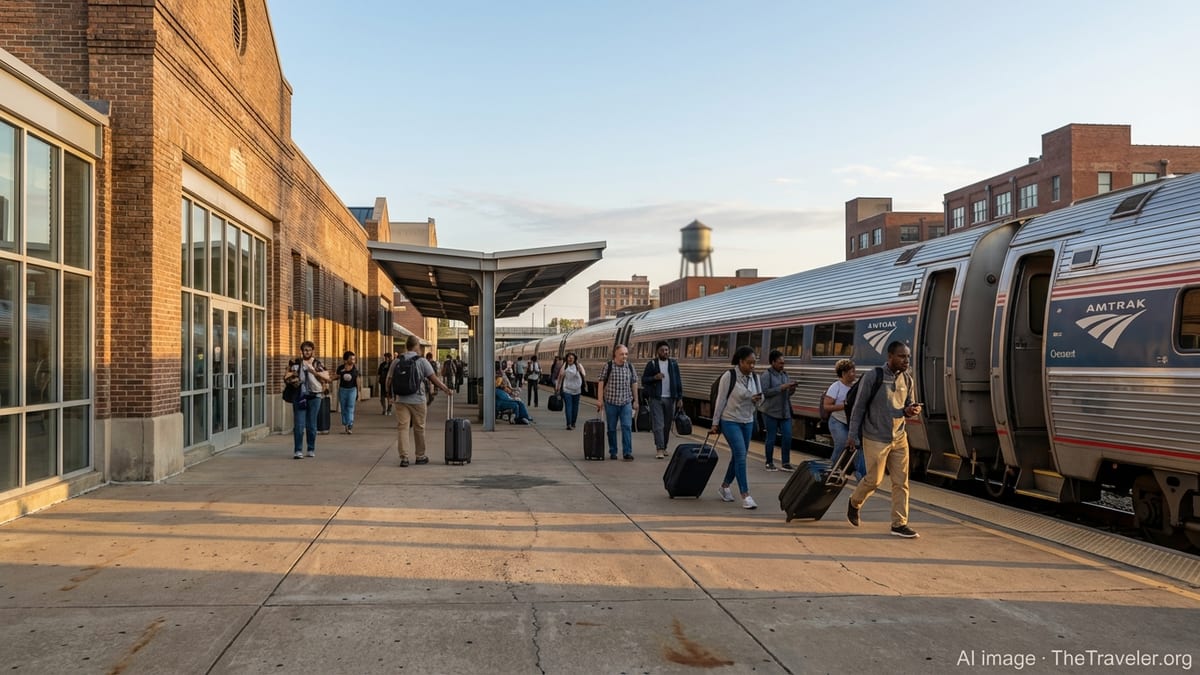
Power Outage Triggers Widespread Delays in North West England
Rail users in north west England were hit by two consecutive days of disruption after a brief power failure at a signalling and communications centre near Manchester halted services across a large part of the regional network. Reports indicate that a power cut lasting around 90 seconds forced signals to red and stopped trains over a wide area served by the Manchester rail operating centre, which manages routes for multiple train companies including long-distance and regional operators.
Published coverage shows that the incident left trains stranded between stations and passengers facing cancellations or extended delays as engineers worked to restore systems and clear backlogs. Some services were still affected into the following day as rolling stock and staff were displaced from normal positions, underlining how a short technical fault can cascade through a complex timetable.
Publicly available information from industry sources notes that the outage has prompted questions about the concentration of control in a limited number of large signalling centres, which have been introduced in recent years to replace traditional local signal boxes. Analysts point out that while these hubs can improve efficiency, they can also create single points of failure where even a temporary loss of power causes extensive disruption for commuters.
Commentary following the disruption has also focused on the vulnerability of peak-time commuting patterns. With many passengers relying on tightly timed connections to reach workplaces or airports, congestion at key hubs such as Manchester Piccadilly quickly translated into missed onward journeys and crowded concourses as services were progressively withdrawn or curtailed.
Derailment Near Lewes Adds to UK Network Strain
In southern England, a separate major incident near Lewes in Sussex added further strain to the UK rail system and left more commuters experiencing travel chaos. According to information released by British Transport Police, three carriages of a Southern service from London Victoria to Eastbourne derailed onto their side close to Lewes station on 13 August, trapping a number of passengers on board.
Emergency responders evacuated those on the train, with initial assessments indicating multiple injuries of varying severity. Rail accident specialists have begun examining the scene and equipment to determine the sequence of events, while the line through Lewes remained heavily disrupted as recovery and investigation work continued. Services on nearby routes were diverted or cancelled, prompting warnings of residual disruption beyond the immediate area.
The derailment occurred at a time when the rail network was already managing heightened summer and holiday-season travel. Rail planners had been preparing for busy services ahead of the late August bank holiday, with guidance from National Rail urging passengers to check journeys and expect timetable changes linked to planned engineering works. The additional unplanned closure near Lewes further complicated route planning for operators and passengers alike.
Industry observers note that while serious derailments remain rare, each incident has a significant operational impact on surrounding lines and junctions. Commuters in the wider region are often advised to seek alternative modes of transport, leading to increased pressure on local bus services and road networks when key rail corridors are blocked.
Wiring Failure Brings Sydney’s Evening Commute to a Standstill
On the other side of the world, an overhead wiring fault in Sydney caused extensive delays across one of Australia’s busiest urban rail systems, stranding passengers on multiple trains during the evening peak. Public reporting by Australian broadcasters describes how overhead wires came down onto a South Coast Line service between Redfern and Erskineville on Friday 14 August, forcing power to be cut and halting trains on several lines through the inner west.
Hundreds of commuters had to be assisted off three trains that were immobilised on the network. Images shared through local media show crowded carriages and escorted evacuations along the tracks, with passengers transferred to nearby stations after prolonged waits on board. Although no serious injuries were reported, delays and cancellations rippled through the network into the night, affecting those travelling home from central Sydney and nearby employment hubs.
Transport operators stated that teams worked through the night to inspect infrastructure and restore services, with all six affected lines reported back in operation the following day. Nonetheless, passengers returning to the network were advised to account for planned track work and residual adjustments to timetables over the weekend, illustrating how an evening failure can continue to shape travel patterns into subsequent days.
The incident has renewed discussion in New South Wales about the ageing of some parts of the overhead power system and the challenges of maintaining reliability under heavy daily loads. Commuter advocates have pointed to the importance of both routine inspections and contingency planning, arguing that clear communication and accessible alternatives are essential when faults immobilise trains between stations.
Holiday Peaks Expose Limited Options for Stranded Travellers
The recent disruptions have coincided with seasonal peaks in mobility, placing additional pressure on passengers seeking alternative routes when rail services fail. In Spain, for example, mid-August public holidays traditionally trigger one of the busiest travel weekends of the year, with highways, stations and airports reaching high occupancy as residents take advantage of the long weekend.
Coverage from Catalonia indicates that Barcelona’s main rail hub and El Prat airport both anticipated sharply elevated demand around the 15 August Assumption Day holiday, with hundreds of trains and thousands of flights scheduled over a single weekend. At the same time, ground-handling strikes and stricter border controls for some international arrivals added further constraints to capacity at key gateways.
These seasonal surges reduce the flexibility available to passengers when unexpected rail faults occur. With many long-distance trains fully booked and flights operating close to capacity, stranded rail commuters often struggle to find same-day alternatives, especially on popular domestic corridors. Road congestion near major cities further complicates attempts to shift to private vehicles or intercity buses.
Similar pressures are expected in the UK later in August, when bank holiday travel combines with ongoing engineering works and lingering operational issues from earlier incidents. National Rail’s advisory for the late August bank holiday already points to reduced services on some main lines, meaning passengers affected by fresh disruption may have even fewer options for re-routing.
Resilience Measures and Planned Closures Aim to Reduce Future Chaos
In response to mounting concerns over reliability, infrastructure managers and operators have highlighted a series of planned upgrades and timetable adjustments designed to strengthen resilience, albeit at the cost of short-term disruption. In the United States, Amtrak has announced a nine-day interruption to train movements through the First Street Tunnel in Washington, D.C., scheduled for 16 to 26 October 2026, to replace ageing track components at a critical junction.
According to information released by the company, the temporary outage at the location known as A-Interlocking is intended to modernise signalling and track equipment used by both intercity and commuter services operating south of the capital. While the upgrade is framed as a long-term reliability investment for the Northeast Corridor and routes into Virginia and North Carolina, it will require service reductions and re-routings for thousands of daily passengers during the works.
In Britain, National Rail has been using travel advisories ahead of major holiday periods to flag both scheduled engineering projects and the potential for knock-on effects from unplanned incidents. The organisation’s guidance for the August 2026 bank holiday emphasises that essential upgrades will affect multiple routes simultaneously, and urges passengers to check journeys close to departure and allow additional time for connections.
Specialists in transport policy argue that such measures reflect an attempt to balance urgent maintenance and modernisation with the need to maintain continuity for commuters. However, they also note that the cluster of recent failures, from signalling power cuts near Manchester to overhead wiring issues in Sydney and derailments in Sussex, demonstrates the scale of the challenge in safeguarding daily travel against infrastructure shocks.
For passengers, the immediate priority remains clear information and practical alternatives when services fail without warning. As more networks move toward centralised control and high-frequency timetables, the experience of stranded commuters over recent weeks is likely to feed into broader debates about redundancy, emergency procedures and investment priorities in rail systems worldwide.
How a short power outage disrupted rail commuters in north west England
Rail passengers face second day of disruption across north-west England
Details of the Lewes train derailment and response