


For many travelers, the name Waldorf Astoria is shorthand for old-world glamour reinvented for a modern, global audience. From the original New York legend to contemporary flagships in Beverly Hills, Dubai and the Maldives, the brand has become a kind of luxury shorthand: high-touch service, statement architecture and a sense of occasion that starts long before you reach the lobby clock. This guide unpacks what the Waldorf Astoria experience really feels like today, how it differs from other luxury brands and how to make the most of your stay, whether you are booking a once-in-a-lifetime resort escape or a quick city break.
Get the latest updates straight to your inbox!
The Waldorf Astoria Signature: What Defines the Brand Today
Waldorf Astoria is Hilton’s top-tier luxury brand, now counting dozens of hotels and resorts across major cities and resort destinations worldwide. While each property reflects its location, there are recurring signatures: a dramatic lobby, a prominent clock as a design centerpiece, a strong emphasis on personal butler-style service in suites and villas, and a culinary program that often includes destination restaurants. At the Waldorf Astoria Dubai International Financial Centre, for example, arrival revolves around a mid-century-styled Peacock Lounge and its sculptural clock, setting an immediate tone of urban glamour before guests ever reach their rooms.
Heritage is a key part of the story. The original Waldorf Astoria New York, now undergoing a long-term transformation into a combined hotel and residences tower in Midtown Manhattan, helped define 20th-century luxury with its Art Deco interiors, grand ballrooms and early adoption of amenities such as room service and in-house spa treatments. That sense of being slightly ahead of its time is carried through to younger properties: Waldorf Astoria Las Vegas, occupying a sleek tower on the Strip, deliberately operates without an on-site casino, appealing to guests who want Strip access without gaming noise and smoke.
Today the brand tends to focus on high-value locations with either strong leisure appeal or strategic city-center addresses. In the Middle East, for instance, you find a beach resort on Dubai’s Palm Jumeirah and a contemporary tower in the city’s financial district, both under the Waldorf Astoria flag. Pricing reflects this positioning: in busy periods, entry-level city rooms can start around the mid-300 to 500 US dollar range per night, while marquee resorts such as the Waldorf Astoria Maldives Ithaafushi often price entry villas at several thousand dollars per night in peak season, before taxes and service charges.
For travelers, this means that “Waldorf Astoria luxury” is less about a fixed checklist of features and more about a consistent promise: a dedicated team that learns your preferences quickly, public spaces that feel like places to see and be seen, and rooms or villas that prioritize comfort, materials and views over cutting-edge design experiments. The brand is accessible through Hilton Honors, but still feels deliberately rarefied compared with the group’s mainstream flags.
Choosing the Right Waldorf Astoria: Cities vs Iconic Resorts
One of the first choices to make is whether you want an urban Waldorf Astoria or a resort-style property. Urban hotels, like Waldorf Astoria Beverly Hills or Waldorf Astoria Dubai International Financial Centre, tend to draw a mix of business travelers, weekend leisure guests and locals who treat the restaurants and bars as places to celebrate. Resort properties, like Waldorf Astoria Dubai Palm Jumeirah or Waldorf Astoria Maldives Ithaafushi, are more about all-day stays, with guests rotating between pools, beaches, spas and long dinners overlooking water.
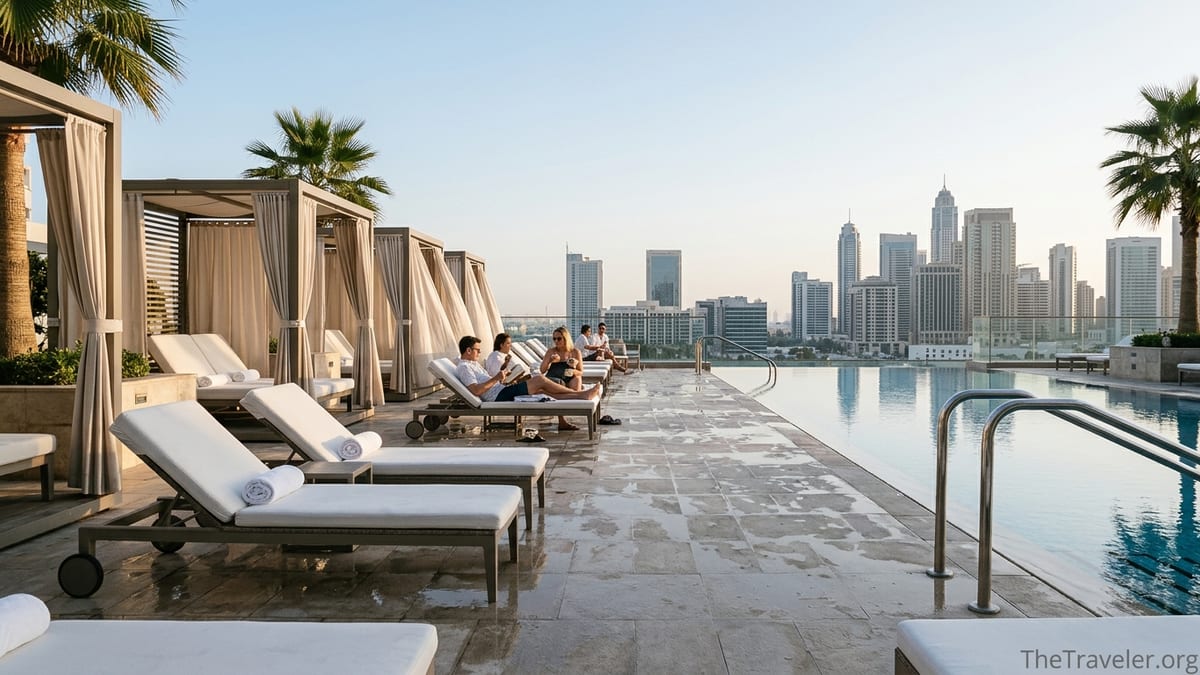
Take Beverly Hills as an example. Waldorf Astoria Beverly Hills rises near the intersection of Wilshire and Santa Monica Boulevards, offering a rooftop pool deck with views of the Hollywood Hills and the Wilshire corridor. Guests often spend the morning shopping in nearby Rodeo Drive boutiques, then retreat to the rooftop in the afternoon, renting a cabana that might cost roughly 400 US dollars on a weekday or around 500 US dollars on a weekend day, including amenities like soft drinks and fruit. It is an urban resort, but with the convenience of being minutes from meetings or galleries.
Contrast that with Waldorf Astoria Dubai Palm Jumeirah, which sits on the East Crescent of the Palm. Here the daily rhythm feels more like a classic beach holiday: breakfast at Mezzerie, the all-day restaurant serving international buffets; late-morning by the family pool or quiet adults’ pool; lunch at Palm Avenue, the Californian-inspired poolside venue; then sunset drinks at the beach lounge, with the Dubai Marina skyline as backdrop. Many guests never leave the resort for several days, treating the private beach, water sports center, tennis court and spa as a self-contained bubble.
At the very top of the leisure ladder sits Waldorf Astoria Maldives Ithaafushi, set on its own cluster of islands reached by a roughly 40-minute luxury yacht transfer from Malé. Villas often start well above four figures per night in high season, with overwater units offering direct lagoon access and private infinity pools. Guests describe a rhythm of sunrise swims, elaborate à la carte breakfasts, mid-morning snorkeling or spa sessions, and multi-course dinners at one of 11 dining venues that range from a treetop restaurant to a grill helmed by a well-known chef. For many, this is the sort of place booked once for a honeymoon or major anniversary, sometimes using a mix of cash and Hilton Honors points.
Arrival, Service and Suite Life: What to Expect on the Ground
Regardless of address, Waldorf Astoria stays tend to begin before you physically arrive. At the Maldives resort, for instance, guests are met airside or at the arrivals hall by a resort representative who escorts them to a private lounge ahead of the yacht transfer. Luggage is tagged and appears later in your villa. In Dubai or Beverly Hills, pre-arrival teams commonly reach out by email to confirm arrival times, arrange airport transfers, and ask about pillow preferences or any dietary restrictions, especially if you have booked a suite or higher category.
Check-in itself is usually performed at a seated desk or even in your room. At Waldorf Astoria Maldives Ithaafushi, each villa is assigned a personal concierge, often referred to as a “personal concierge” or similar title, who handles everything from restaurant reservations to buggy transfers between different parts of the island. In city properties, Diamond-tier Hilton Honors members or guests in premium suites might be escorted directly to their room while formalities are completed in the background. This minimizes time in the lobby and emphasizes a sense of being looked after.
Suites and villas are a major part of the brand’s appeal. In Beverly Hills, a typical suite adds a separate living area, dressing room and terrace, while top-tier presidential suites feature wraparound terraces with panoramic views. In Dubai Palm Jumeirah, many suites come with large balconies overlooking either the Palm fronds or the open Gulf, marble bathrooms with separate soaking tubs and walk-in showers, and walk-in closets that make unpacking for a week-long stay easier. In the Maldives, even entry-level overwater villas feel like small houses, with outdoor decks, infinity pools and indoor-outdoor bathrooms that capitalize on the lagoon views.
Service style is generally formal but warm, more bespoke than standard Hilton properties yet less clubby than some ultra-boutique hotels. Guests often mention that staff learn names quickly and anticipate small needs, from remembering a regular coffee order at breakfast to placing extra still water in rooms for guests who have returned from a run. At city properties such as Waldorf Astoria Dubai International Financial Centre, front desk and concierge teams are used to last-minute restaurant reservations in busy neighborhoods and can often secure tables at sought-after venues nearby or within the hotel, such as the Bull & Bear restaurant.
Dining at Waldorf Astoria: From Lobby Lounges to Destination Restaurants
Food and beverage is central to the Waldorf Astoria promise, and properties often court both guests and locals with ambitious restaurants. In Dubai Palm Jumeirah, the main dining room Mezzerie serves international buffets for breakfast, lunch and dinner, blending Middle Eastern, Asian and Western dishes in a space with subtle Arabesque design details. LAO, another key venue, focuses on Southeast Asian cooking inspired especially by Vietnamese cuisine, with indoor and outdoor seating overlooking the gardens. Guests can take part in pasta masterclasses at the Italian restaurant Social by Heinz Beck, created by a Michelin-starred chef, or reserve private dinners on the beach during cooler months.
In Beverly Hills, dining often centers on rooftop experiences. The pool deck is served by a restaurant and bar that offers Californian dishes and a strong cocktail list, and cabana packages sometimes include a food and beverage credit. Even if you are not staying in-house, locals frequently come for lunch or sunset drinks, making the rooftop a kind of social hub. For a more intimate setting, lobby-level lounges serve afternoon tea and light bites, echoing the historic Peacock Alley concept from New York, which famously functioned as a promenade between the original Waldorf and Astoria hotels.
At the Waldorf Astoria Maldives Ithaafushi, the scale of culinary offerings is striking for a private-island resort. An elevated treetop venue serves tasting menus amid the canopy, while a beachside grill focuses on prime cuts and fresh seafood. There is also an all-day dining spot for more relaxed meals, a Middle Eastern restaurant, and even an overwater venue specializing in Chinese cuisine. Prices mirror the logistical challenges of provisioning a remote island: a casual lunch for two with drinks can easily reach a few hundred US dollars, while multi-course tasting menus in signature restaurants are priced in line with high-end city establishments.
Waldorf Astoria’s lobby lounges remain symbolic touchpoints. Many properties incorporate a Peacock Alley lounge, serving afternoon tea, pastries and light savories in a setting defined by a large clock. In Dubai International Financial Centre, for instance, the Peacock Lounge’s clock doubles as a sculptural art piece, and the venue is popular with business guests who schedule informal meetings there. For travelers, these lounges can be ideal places to arrive early, work for an hour with coffee and enjoy the hotel ambiance even before your room is ready.
Wellness, Pools and Beaches: Relaxation in Practice
Wellness at Waldorf Astoria usually goes beyond a standard hotel gym and treatment menu. At Waldorf Astoria Dubai Palm Jumeirah, the Waldorf Astoria Spa operates daily with a range of therapies from classic massages to regional treatments, complemented by saunas and steam rooms. Guests often reserve 60 or 90 minute treatments in the late afternoon, pairing them with time in thermal areas. The resort’s beachside setting adds another dimension, with personal trainers organizing sunrise boot camps on the sand or yoga sessions facing the Gulf.
Pool culture differs by property. In Beverly Hills, the rooftop pool is compact but dramatic, with daybeds facing the skyline and private cabanas that can be reserved for day use, typically including amenities like bottled water, a fruit platter and perhaps a spa discount at the La Prairie Spa. The atmosphere is social but controlled, with staff attentive to details like repositioning umbrellas as the sun shifts. In contrast, Dubai Palm Jumeirah’s resort has larger pools, including a family pool and quieter areas for adults, plus a shallow toddler pool with shade, catering to multi-generational groups.
In the Maldives, the natural environment effectively becomes the spa and pool combined. Many villas at Waldorf Astoria Maldives Ithaafushi have private infinity pools that appear to blend with the lagoon, so some guests skip the main resort pools altogether. Snorkeling directly from an overwater deck, stand-up paddleboarding in the calm lagoon early in the morning, or simply cycling along the island’s sandy paths are daily rituals. The resort still offers a full spa complex, including treatment pavilions and relaxation areas, for guests who want structured wellness programs.
Gyms at Waldorf Astoria properties tend to be fully equipped with modern cardio machines, free weights and functional training areas. At Dubai International Financial Centre, the fitness center shares the high-floor setting with the pool and spa, giving guests city views during workouts. In resort settings, gyms might also offer outdoor training spaces or host classes, from Pilates to high-intensity interval training, with outside instructors during peak travel periods.
Budgeting, Points and Practical Tips for Booking
Because Waldorf Astoria sits at the top of Hilton’s portfolio, rates can fluctuate significantly with season and demand. A shoulder-season weekend in an urban property might start in the mid-300 US dollar range, especially for advance purchase offers, whereas festive period stays or major events can push entry rates far higher. Beach resorts on the Palm Jumeirah or in Ras Al Khaimah generally price more gently than the Maldives, where even introductory offers rarely feel modest once taxes, transfers and service are factored in.
Hilton Honors is a powerful tool for bringing costs down, especially if you plan stays strategically. Waldorf Astoria Maldives Ithaafushi is often cited among the most aspirational redemptions in the program, with standard awards historically pricing at high but still finite points levels on selected dates. Travelers sometimes use a mix of cash and points, or combine free night certificates from co-branded credit cards to cover part of a stay. In cities such as Dubai or Las Vegas, points redemptions at Waldorf Astoria properties can offer better cents-per-point value during large events when cash rates spike.
When budgeting, consider extras carefully. Daily breakfast for two at a high-end resort, whether as part of a buffet in Dubai or à la carte in the Maldives, can easily add a significant amount per day if not included in your rate. Airport transfers at leisure properties may also be material: the yacht transfer to Waldorf Astoria Maldives Ithaafushi, for example, carries a separate per-person charge that can add several hundred US dollars per couple. Spa treatments, water sports and private dining experiences quickly add up, so it is worth sketching a rough per-day activity budget before you commit to travel dates.
Booking directly through Waldorf Astoria or Hilton channels often unlocks extras like daily breakfast, resort credits or flexible cancellation, especially in packages marketed to North American and European travelers. Luxury travel advisors who work with Hilton’s preferred partner programs can sometimes secure added-value perks such as room upgrades, early check-in or late check-out, subject to availability. For once-in-a-lifetime trips like honeymoons in the Maldives, many travelers find that spending extra time on the booking stage, comparing packages and inclusions, improves the experience more than upgrading to the next room category would.
Iconic Waldorf Astoria Experiences Around the World
While every Waldorf Astoria strives for a consistent standard, certain properties have acquired near-mythic status among frequent travelers. Waldorf Astoria Maldives Ithaafushi is one of them, repeatedly highlighted for its combination of natural beauty and hardware, from the long overwater jetties lined with villas to curated experiences like private sandbank picnics or sunset cruises. Guests report spotting celebrities during breakfast, but the layout of the resort makes it feel spread out enough that privacy is still preserved.
In the United States, Waldorf Astoria Beverly Hills has quickly become an anchor of the Los Angeles luxury scene. The rooftop pool and restaurant, framed by the Hollywood Hills, are favorites for daytime cabana rentals and evening cocktails, while the interiors blend mid-century hints with crisp contemporary detailing. Even non-hotel guests use the property as a venue for power lunches or media meetings, giving it a steady flow of local energy that some resort properties lack.
In Dubai, two very different Waldorf Astorias cater to distinct travelers. The beachside Palm Jumeirah resort attracts families and couples who want a resort feel close to the city, with a private beach, water sports and a spa-heavy daily rhythm. The Dubai International Financial Centre property, meanwhile, feels more like an urban members’ club: it occupies the upper floors of a tower, has a rooftop pool and Bull & Bear restaurant, and positions itself as an option for business travelers who still want a full-service spa and leisure deck in the middle of the city.
Back in New York, anticipation continues around the full reopening of the Waldorf Astoria New York after its transformation into a hybrid of hotel and branded residences. For luxury travelers, this matters not only because the hotel is an icon of Manhattan, but also because it signals how Waldorf Astoria may integrate residential components into more projects worldwide. Already, the brand has developed residences in markets like Miami and beyond, giving repeat guests a way to extend the Waldorf lifestyle beyond occasional stays.
The Takeaway
Staying at a Waldorf Astoria is about more than checking into a luxury hotel. It is about entering a curated world of service, design and ritual that draws on more than a century of hospitality history while adapting itself to the rhythms of places as different as Beverly Hills, Dubai and the Maldives. Whether you are renting a rooftop cabana overlooking the Hollywood Hills, planning sunset dinners at a beach resort on the Palm Jumeirah or stepping off a yacht into a Maldivian villa poised over turquoise water, the brand aims to deliver a consistent level of polish and personal attention.
For travelers considering a Waldorf Astoria stay, the key is to match the right property and room type to your purpose, then budget realistically for the extras that will define your days: meals, spa treatments, transfers and activities. Used thoughtfully, Hilton Honors points and well-timed promotions can make an aspirational trip more attainable. Above all, approaching your stay as an experience to be designed, rather than just a room to be booked, will help you unlock the full potential of the Waldorf Astoria world.
FAQ
Q1. What is the typical price range for a night at a Waldorf Astoria hotel?
Prices vary widely by location and season, but urban properties can sometimes start in the mid-300 to 500 US dollar range per night, while flagship resorts, especially in the Maldives, frequently run into four figures per night for entry-level villas during peak periods, before taxes and service charges.
Q2. Is Waldorf Astoria part of Hilton, and can I use Hilton Honors points?
Yes. Waldorf Astoria is Hilton’s top luxury brand, and all properties participate in Hilton Honors, allowing you to earn and redeem points, enjoy elite benefits and sometimes book aspirational stays, such as the Maldives resort, using points or free night certificates when standard award space is available.
Q3. How does Waldorf Astoria differ from Conrad or other Hilton luxury brands?
Conrad tends to skew slightly more contemporary and business-focused, while Waldorf Astoria leans into heritage storytelling, more individualized service and often more elaborate public spaces and suites or villas. In practice, many guests experience Waldorf Astoria as a small step above Conrad in both pricing and personalization, although specific properties vary.
Q4. Are Waldorf Astoria hotels suitable for families with children?
Yes. Many resorts, such as Waldorf Astoria Dubai Palm Jumeirah and Waldorf Astoria Maldives Ithaafushi, welcome families and offer kids’ clubs, children’s pools and family-friendly dining. The Maldives property, for example, hosts kids’ activities and has villas that can accommodate parents and children comfortably, though families should budget carefully for meals and activities.
Q5. What should I expect from spa and wellness facilities at Waldorf Astoria?
Most Waldorf Astoria properties offer full-service spas with treatment rooms, saunas or steam rooms and well-equipped gyms. In Dubai Palm Jumeirah, the Waldorf Astoria Spa operates daily with a broad treatment menu, while Beverly Hills pairs its La Prairie Spa with a rooftop pool deck. Wellness programming often includes fitness classes or personal training sessions, especially at resorts.
Q6. Do Waldorf Astoria hotels include breakfast in the room rate?
Breakfast policies depend on the rate you book. Some packages bundle daily breakfast, while others do not. Elite Hilton Honors members may receive complimentary or discounted breakfast in certain regions and properties, but it is always worth confirming at booking, since paying out-of-pocket for breakfast at luxury resorts can significantly increase your daily spend.
Q7. How far in advance should I book a Waldorf Astoria stay?
For peak-season dates at marquee resorts, particularly the Waldorf Astoria Maldives Ithaafushi and Dubai beach properties during regional holidays, it is wise to book several months in advance. Urban properties often have more flexibility, but major event periods, such as film awards season in Los Angeles or conferences in Dubai, also merit early planning for the best room types and rates.
Q8. Are there dress codes at Waldorf Astoria restaurants and lounges?
Dress codes vary but generally lean toward smart casual or above in signature restaurants and evening lounges. Beach and pool venues at resort properties allow more relaxed attire, but guests are usually expected to wear resort wear rather than swimwear when entering indoor venues, especially at dinner.
Q9. Is it realistic to visit a Waldorf Astoria just for dining or spa access without staying overnight?
Yes. Many locals treat Waldorf Astoria properties as destinations for special-occasion dinners, afternoon tea or spa days. In Beverly Hills and Dubai, for example, rooftop bars and restaurants attract outside guests, and some hotels sell spa or pool day passes, including cabana rentals, which provide a taste of the experience without the cost of an overnight stay.
Q10. What is the best way to make a Waldorf Astoria stay feel more personal and special?
Share your preferences and trip purpose with the hotel before arrival, whether it is a honeymoon, anniversary or business trip. Arrange airport transfers, note dietary needs and ask about special experiences such as private dinners, cabana rentals or bespoke excursions. Using a luxury travel advisor or Hilton’s premium booking channels can sometimes secure added amenities like credits or upgrades that further personalize your stay.