


More news on this day
Thousands of Israelis are heading for Egypt’s Sinai Peninsula during the Sukkot holiday period, forming long lines at the Taba border crossing despite Israel’s highest-level travel warning for the region and ongoing security concerns since the Gaza war.
Get the latest news straight to your inbox!
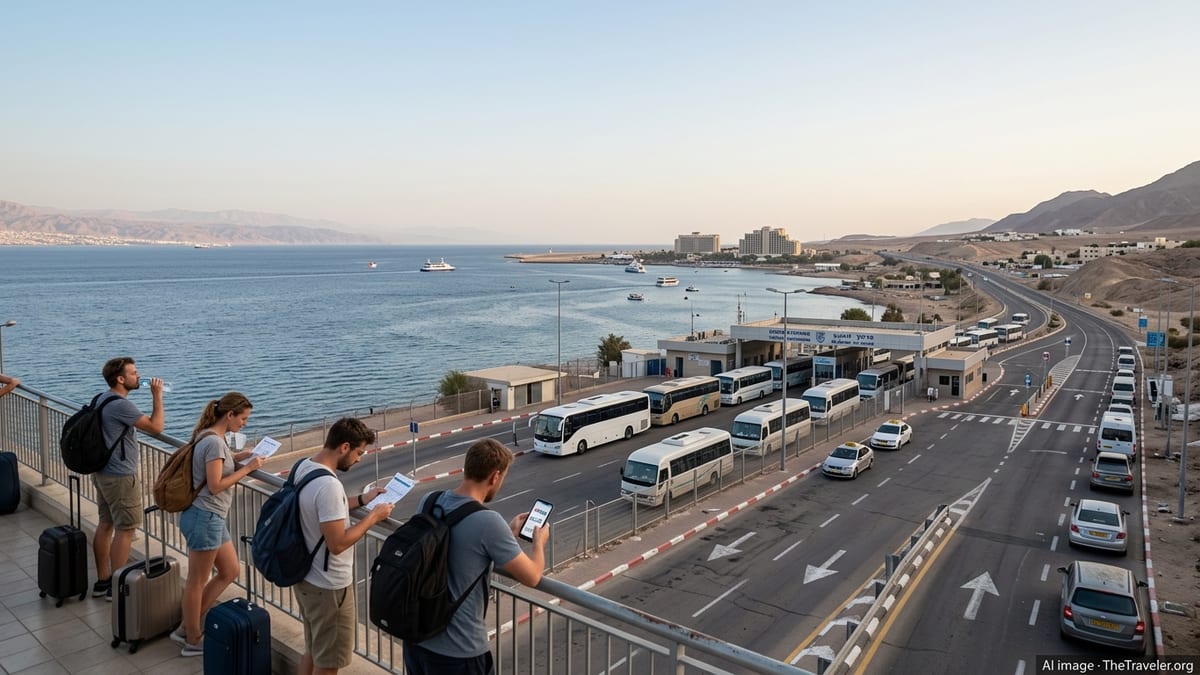
Holiday Crowds Return to a Familiar Escape
Published coverage from regional media on September 30, 2026, describes heavy holiday traffic at the Menachem Begin land crossing at Taba, as Israelis seek out the Red Sea beaches of Sinai for the week-long Sukkot break. Reports indicate that travelers queued for hours in intense late-season heat, with vehicles and foot passengers funneling through the tightly controlled terminal on the Israeli side before continuing into Egypt.
The flow marks the latest example of a long-standing pattern in which Israelis continue traveling to Sinai during peak Jewish holidays, even when official advisories are at their starkest. Over previous years, similar scenes were documented around Passover and Sukkot, with estimates at times reaching tens of thousands of holidaymakers crossing south for cheaper, laid-back beach vacations.
Travel industry accounts suggest that, in the lead-up to this year’s Sukkot period, Israeli visitors again booked popular beach areas such as Taba, Nuweiba, Dahab and the Sharm el-Sheikh corridor. Many travelers are drawn by relatively low accommodation prices compared with Eilat, simple beach camps along the Gulf of Aqaba and the sense of distance from the tensions and rocket alerts that have punctuated life in Israel since October 7, 2023.
Despite the security backdrop, publicly available information from Sinai tourism operators points to occupancy improvements compared with the early months of the Gaza war, when some beach camps stood nearly empty. While numbers have not returned to the pre-October 2023 peak, the Sukkot holiday window is being treated by many local businesses as an important test of whether Israeli tourism can recover in the shadow of ongoing conflict.
Highest-Level Travel Warning Remains in Force
In advance of the current Tishrei holiday season, Israel’s National Security Council reiterated that the Sinai Peninsula is categorized at the highest risk level in its global travel advisory system. According to the council’s publicly available threat map, the region is designated “high threat” at Level 4, a classification reserved for destinations where the terrorism danger is described as severe and where Israelis are urged not to visit at all.
The National Security Council, which coordinates intelligence assessments and prepares situation reports for the government, regularly publishes updated alerts for Israelis traveling abroad. The current guidance for Sinai cites a persistent risk of attacks by jihadist and other militant groups, as well as the challenges involved in evacuating and medically treating large numbers of Israelis in the event of an incident in a neighboring sovereign state.
Past advisories for Sinai have occasionally escalated into more urgent calls for immediate return, particularly when specific intelligence pointed to planned attacks. In previous years, border crossings were temporarily closed around holidays such as Passover when threat levels spiked. While such extreme steps are not reported during the present Sukkot break, the standing recommendation not to travel to Sinai remains unchanged.
Travelers who proceed regardless are also reminded, through public information campaigns and signage at the border, that the Israeli government’s ability to assist in a crisis on Egyptian territory is limited. Consular support depends on coordination with Egyptian security and medical authorities, and previous bus crashes and bombings in the peninsula have highlighted the logistical difficulties of rapid rescue and evacuation from remote desert and coastal areas.
Security Legacy of Sinai’s Tourism Industry
The tension between Sinai’s popularity and the security establishment’s caution is grounded in a long record of violent incidents. Open-source historical data points to the October 2004 bombings in Taba and Ras al-Shaitan, where coordinated attacks on resorts frequented by Israelis killed dozens of holidaymakers and severely disrupted travel patterns for years. Subsequent attacks, including a 2014 bus bombing near Taba that targeted tourists en route to Saint Catherine’s Monastery, cemented Sinai’s reputation among security professionals as a high-risk zone.
More broadly, the Sinai Peninsula has experienced an entrenched insurgency involving militant groups that have targeted Egyptian forces, local infrastructure and, at times, tourist routes and facilities. While the vast majority of recent violence has been directed at Egyptian security personnel and not foreign visitors, incident reports show that roadside attacks and clashes have occurred in areas not far from main highways connecting the northern and southern parts of the peninsula.
The aftermath of the October 7, 2023 attacks in Israel and the subsequent war in Gaza further complicated the picture. Reports from 2024 noted that Israeli visitor numbers to Sinai briefly collapsed amid fears of spillover violence and the possibility of copycat attacks on soft targets. In that period, some Sinai beach camps that once relied on large holiday crowds from Israel saw occupancy plummet, and Israeli travelers who did arrive often reported being among only a handful of guests.
Despite those shifts, recent holiday seasons suggest that the appeal of Sinai’s beaches for many Israelis continues to outweigh security concerns. For some travelers, the combination of affordable accommodation, diving and snorkeling opportunities in the Red Sea and the relaxed atmosphere of Bedouin-run beach camps is enough to justify the journey, even under a Level 4 warning.
How Israelis Navigate the Taba Crossing
According to the Israel Airports Authority, which manages the Menachem Begin terminal at Taba, Israelis heading into Sinai for up to 14 days can enter Egypt’s designated Red Sea coastal area without obtaining an Egyptian visa in advance, as long as they are bound for the stretch from Taba to Sharm el-Sheikh and Saint Catherine’s Monastery. This arrangement significantly simplifies short holiday trips centered on beach towns and resorts along the Gulf of Aqaba.
The Israeli side of the terminal requires standard passport control and security screening, and travelers must pay an exit fee before crossing. Publicly available guidance states that Israelis who stay in Sinai for 14 days or less under this arrangement are not required to apply for a full Egyptian tourist visa, though longer visits or travel beyond the designated coastal zone involve additional paperwork and fees.
Public information from transport operators shows that Egged bus line 15 runs between Eilat’s central bus station and the Taba terminal, allowing foot passengers to reach the crossing without private vehicles. Those who drive are subject to specific rules: commercial vehicles, rental cars and certain 4x4 models registered in Israel are not permitted to cross into Egypt, and Israelis planning to continue driving beyond the immediate border hotel zone must comply with Egyptian licensing and insurance requirements after entering.
Holiday surges such as Sukkot typically mean longer processing times at the terminal. Travelers have reported that both the Israeli and Egyptian authorities sometimes adjust operating hours or staffing levels around Jewish and Muslim holidays, although exact schedules can vary from year to year and are usually published only close to the dates in question. Prospective visitors are therefore advised, in open travel guidance, to confirm border hours and any special holiday arrangements before setting out.
Balancing Risk, Regulation and Holiday Demand
The decision by thousands of Israelis to proceed with Sukkot trips to Sinai despite a high-level warning underscores ongoing tensions between personal risk tolerance and official assessments. Publicly available commentary from security experts stresses that the absence of a major attack on Israeli tourists in Sinai in recent years does not equate to an absence of threat, particularly given the broader regional instability since 2023.
At the same time, Sinai’s tourism sector remains economically intertwined with Israeli holidaymakers, and local businesses have a strong incentive to project normality. Beach camp operators and hotels, reliant on repeat Israeli visitors, have invested in renovations and new amenities in recent seasons, hoping that each holiday period will bring back a more predictable flow of guests.
For travelers, the current Sukkot season presents a familiar calculus. Publicly accessible advice from Israeli and foreign travel advisories encourages those who choose to go to register with consular services, keep abreast of developments along main desert routes, and maintain access to reliable communications while in remote coastal areas. The message from official channels remains cautious, even as the lines at Taba suggest that, for many Israelis, Sinai’s turquoise waters and quiet beaches still exert a powerful pull.